Christmas: A Christmas Carol By Charles Dickens – Screen Versions

Image © of Liliboas via iStock

I LOVE A CHRISTMAS CAROL!

Obviously, the original book is the best version of any format because it is the original source material but as long as other versions stick close to that source then I will more than likely enjoy it.

Below are just some of the MANY film and TV versions out there for your viewing pleasure.  Enjoy.

Read more about A Christmas Carol here

1900’s

I haven’t watched this version but I have included it as it is a silent movie piece of history and the earliest screen version that was made.

Read more about Scrooge, or, Marley’s Ghost (1901), starring Daniel Smith, here.

1910’s

Another version I  haven’t watched but again I have included it as it is a silent movie piece of history.  This one was made in America by the Edison Film Company and is the second earliest screen version after Scrooge, or, Marley’s Ghost (1901)  

Read more about A Christmas Carol (1910), starring Marc McDermott, here.

1930’s

Another version I haven’t watched but I have included it as it is a very early screen version.

Read more about Scrooge (1935), starring Seymour Hicks, here.

1950’s

This is a great screen version.

Read more about Scrooge (1951), starring Alastair Sim, here.

1970’s

This is my all-time favourite screen version and always brings fond memories of my Mom as we watched this every year together.

Read more about Scrooge (1970, starring Albert Finney, here.

This is a good screen-animated version. 

Read more about A Christmas Carol (1971), starring Alastair Sim, here.

1980’s

This is a great screen version.

Read more about A Christmas Carol (1984), starring George C. Scott, here.

1990’s

This is a great screen version.

Read more about A Christmas Carol (1999), starring Patrick Stewart, here.

Blog Posts

Notes And Links

Liliboas on iStock.  The image shown at the top of this page of a Christmas tree and presents is the copyright of Liliboas.  You can find more great work from the photographer Lili and lots more free stock photos at iStock.

Charles Dickens Museum – Official website.  The museum is situated at 48 Doughty Street, Dickens’s London home from 1837-1839.  He moved there with his wife Catherine and their eldest son Charlie.   After the Dickenses left Doughty Street, the property was largely used as a boarding house until the Dickens Fellowship purchased it as their headquarters in 1923.  The house opened to the public in 1925 and houses a significant collection linked to Dickens and his works. 

Today the Charles Dickens Museum is set up as though Dickens himself had just left.  It appears as a fairly typical middle-class Victorian home, complete with furnishings, portraits and decorations which are known to have belonged to Dickens.  A visit to the museum allows you to step back into 1837 and to see a world which is at once both intimately familiar, yet astonishingly different.  A world in which one of the greatest writers in the English language, found his inspiration. 

Charles Dickens Museum official Facebook page.

Charles Dickens Museum official Twitter page.

Project Gutenberg – Project Gutenberg is an online library of free e-books and was the first provider of free electronic books.  Michael Hart, the founder of Project Gutenberg, invented e-books in 1971 and his memory continues to inspire the creation of them and related content today.

All videos are via YouTube and their copyright belongs to whoever. 
Books: A Christmas Carol By Charles Dickens

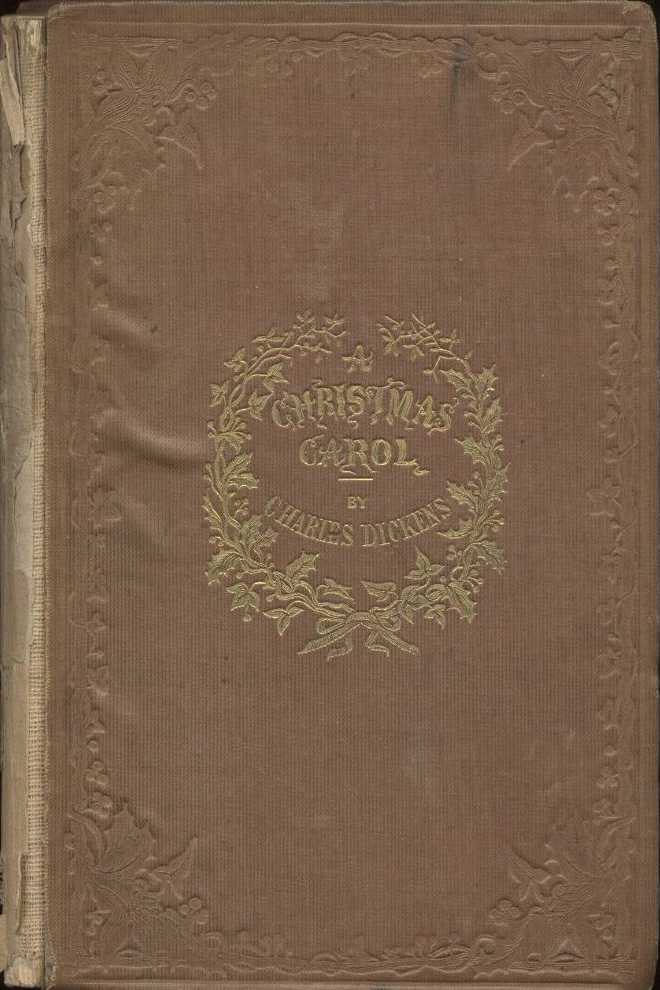
A Christmas Carol 1843 first edition front cover via Project Gutenberg

This original illustration by John Leech is from the 1843 edition and is in the public domain. 

If you really know me well then you will know that Charles Dickens is my favourite author and A Christmas Carol is my favourite book by him.  I LOVE IT.

I have film and TV versions on DVD.  I have books of it.  I have it via a e-book and audiobook too. I can’t get enough of it.  Obviously the original book is the best because it is the original source material but as long as other versions  sticks close to that source then I will more than likely enjoy it.

Dickens changed the face of Christmas and made it into what we know it is today.  He has inspired many writers, myself included.  If I could jump in a time machine I would go back to Victorian times on Christmas Day and shake his hand and say thank you Charles for everything you have done and MERRY CHRISTMAS!

Read this book online, and get more download options and a bibliographic record on Project Gutenberg by clicking here.

For screen versions click here.

Listen to Neil Gaiman, via Open Culture,  read A Christmas Carol just like Charles Dickens read it by clicking here.

Below is the 1939 radio play to listen to that features not one old star legend but two, the late greats Lionel Barrymore and Orson Wells. 

About A Christmas Carol

A Christmas Carol 1843 first edition front cover: This original illustration by John Leech is from the 1843 edition and is in the public domain. Image via Project Gutenberg

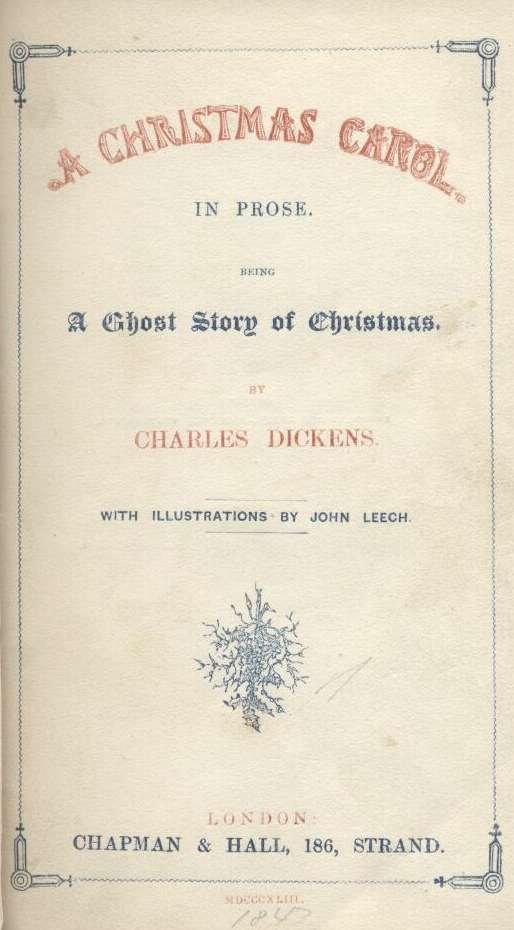
A Christmas Carol.  In Prose.  Being a Ghost Story of Christmas, commonly known as A Christmas Carol, is a novella by Charles Dickens, first published in London by Chapman & Hall in 1843 and illustrated by John Leech.  A Christmas Carol recounts the story of Ebenezer Scrooge, an elderly miser who is visited by the ghost of his former business partner Jacob Marley and the spirits of Christmas Past, Present and Yet to Come.  After their visits, Scrooge is transformed into a kinder, gentler man.

Dickens wrote A Christmas Carol during a period when the British were exploring and re-evaluating past Christmas traditions, including carols, and newer customs such as cards and Christmas trees.  He was influenced by the experiences of his own youth and by the Christmas stories of other authors, including Washington Irving and Douglas Jerrold.  Dickens had written three Christmas stories prior to the novella and was inspired following a visit to the Field Lane Ragged School, one of several establishments for London’s street children.  The treatment of the poor and the ability of a selfish man to redeem himself by transforming into a more sympathetic character are the key themes of the story.  There is discussion among academics as to whether this is a fully secular story, or if it is a Christian allegory.

Published on the 19th of December, the first edition sold out by Christmas Eve.  By the end of 1844 thirteen editions had been released.  Most critics reviewed the novella favourably.  The story was illicitly copied in January 1844 and Dickens took legal action against the publishers, who went bankrupt, further reducing Dickens’s small profits from the publication.  He went on to write four other Christmas stories in subsequent years.  In 1849 he began public readings of the story, which proved so successful he undertook 127 further performances until 1870, the year of his death.  A Christmas Carol has never been out of print and has been translated into several languages.  The story has been adapted many times for film, stage, opera and other media.

A Christmas Carol captured the zeitgeist of the mid-Victorian revival of the Christmas holiday.  Dickens had acknowledged the influence of the modern Western observance of Christmas and later inspired several aspects of Christmas, including family gatherings, seasonal food and drink, dancing, games and a festive generosity of spirit.

1843 first edition title page: This original illustration by John Leech is from the 1843 edition and is in the public domain. Image via Project Gutenberg
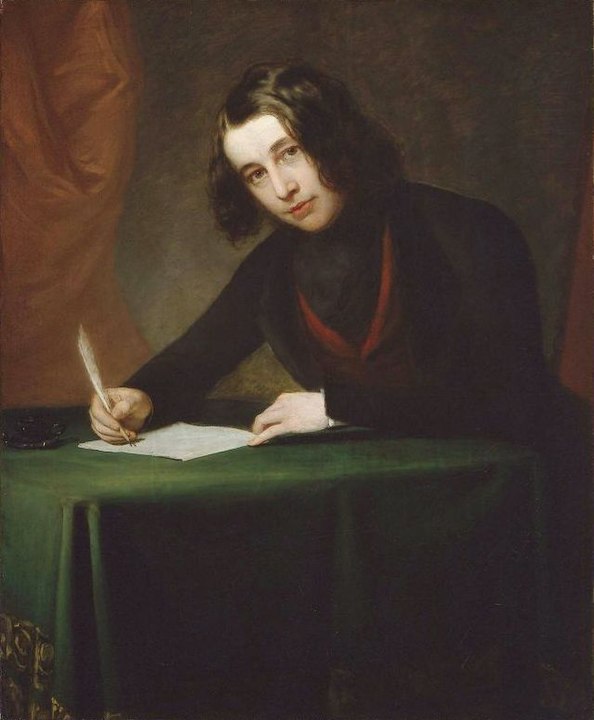
Charles Dickens (in 1842, the year before the publication of A Christmas Carol) by Francis Alexander. Image via Wikipedia
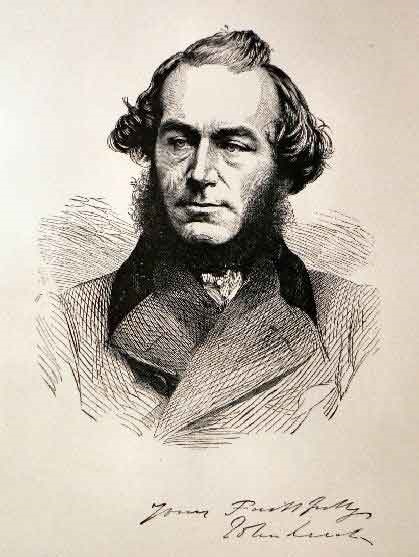
John Leech by unknown is in the public domain. Image via Wikipedia

Characters

The central character of A Christmas Carol is Ebenezer Scrooge, a miserly London-based businessman, described in the story as “a squeezing, wrenching, grasping, scraping, clutching, covetous old sinner!” Richard Michael Kelly, from Broadway Press noted that Scrooge may have been influenced by Dickens’s conflicting feelings for his father, whom he both loved and demonised.  This psychological conflict may be responsible for the two radically different Scrooges in the tale (one a cold, stingy and greedy semi-recluse, the other a benevolent, sociable man).  The professor of English literature Robert Douglas-Fairhurst considers that in the opening part of the book covering young Scrooge’s lonely and unhappy childhood, and his aspiration for money to avoid poverty “is something of a self-parody of Dickens’s fears about himself”.   The post-transformation parts of the book are how Dickens optimistically sees himself.

Scrooge could also be based on two misers.  One being the eccentric John Elwes, M.P. or Jemmy Wood, the owner of the Gloucester Old Bank and also known as The Gloucester Miser.  According to the sociologist Frank W. Elwell, Scrooge’s views on the poor are a reflection of those of the demographer and political economist Thomas Malthus, while the miser’s questions “Are there no prisons? … And the Union workhouses? … The treadmill and the Poor Law are in full vigour, then?” are a reflection of a sarcastic question raised by the philosopher Thomas Carlyle, “Are there not treadmills, gibbets; even hospitals, poor-rates, New Poor-Law?”

There are literary precursors for Scrooge in Dickens’s own works. Peter Ackroyd, Dickens’s biographer, sees similarities between the character and the elder Martin Chuzzlewit character, although the miser is “a more fantastic image” than the Chuzzlewit patriarch.  Ackroyd observes that Chuzzlewit’s transformation to a charitable figure is a parallel to that of the miser.  Douglas-Fairhurst sees that the minor character Gabriel Grub from The Pickwick Papers was also an influence when creating Scrooge.  It is possible that Scrooge’s name came from a tombstone Dickens had seen on a visit to Edinburgh.  The grave was for Ebenezer Lennox Scroggie, whose job was given as a meal man (a corn merchant).  Dickens misread the inscription as mean man.  This theory has been described as a probable Dickens hoax for which no one could find any corroborating evidence.

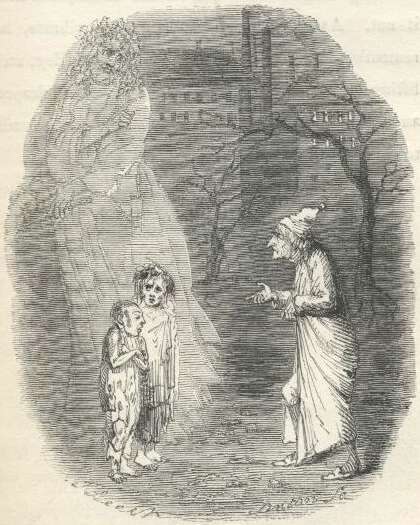
When Dickens was young he lived near a tradesman’s premises with the sign Goodge and Marney, which may have provided the name for Scrooge’s former business partner.  For the chained Marley, Dickens drew on his memory of a visit to the Western Penitentiary in Pittsburgh, Pennsylvania, in March 1842, where he saw, and was affected by seeing fettered prisoners.  For the character Tiny Tim, Dickens used his nephew Henry, a disabled boy who was five at the time A Christmas Carol was written.  The two figures of Want and Ignorance, sheltering in the robes of the Ghost of Christmas Present, were inspired by the children Dickens had seen on his visit to a ragged school in the East End of London. 

John Elwes by John Meggot Elwes is in the public domain. Image via Wikipedia

Reception

The transformation of Scrooge is central to the story.  Writer Paul Davis considers Scrooge to be “a protean figure always in process of reformation”.  Michael Kelly writes that the transformation is reflected in the description of Scrooge, who begins as a two-dimensional character, but who then grows into one who “possesses an emotional depth and a regret for lost opportunities”.  Some writers, including Grace Moore, the Dickens scholar, consider that there is a Christian theme running through A Christmas Carol, and that the novella should be seen as an allegory of the Christian concept of redemption.  Dickens’s biographer, Claire Tomalin, sees the conversion of Scrooge as carrying the Christian message that “even the worst of sinners may repent and become a good man”.  Dickens’s attitudes towards organised religion were complex.  He based his beliefs and principles on the New Testament.  Dickens’s statement that Marley “had no bowels” is a reference to the bowels of compassion mentioned in the First Epistle of John, the reason for his eternal damnation.

Other writers, including Kelly, consider that Dickens put forward a “secular vision of this sacred holiday”.  The Dickens scholar John O. Jordan argues that A Christmas Carol shows what Dickens referred to in a letter to his friend John Forster as his “Carol philosophy, cheerful views, sharp anatomisation of humbug, jolly good temper … and a vein of glowing, hearty, generous, mirthful, beaming reference in everything to Home and Fireside”.  From a secular viewpoint, the cultural historian Penne Restad suggests that Scrooge’s redemption underscores “the conservative, individualistic and patriarchal aspects” of Dickens’s “Carol philosophy” of charity and altruism.

Dickens wrote A Christmas Carol in response to British social attitudes towards poverty, particularly child poverty, and wished to use the novella as a means to put forward his arguments against it.  The story shows Scrooge as a paradigm for self-interest, and the possible repercussions of ignoring the poor, especially children in poverty (personified by the allegorical figures of Want and Ignorance).  The two figures were created to arouse sympathy with readers, as was Tiny Tim.  Douglas-Fairhurst observes that the use of such figures allowed Dickens to present his message of the need for charity, without alienating his largely middle-class readership.

William Makepeace Thackeray by unknown is in the public domain. Image via Wikipedia

The Plot

The book is divided into five chapters, which Dickens titled staves.

SPOILER ALERT: Skip this bit if you haven’t read the book and are planning to do so!

Stave One

A Christmas Carol opens on a bleak, cold Christmas Eve in London, seven years after the death of Ebenezer Scrooge’s business partner, Jacob Marley.  Scrooge, an ageing miser, dislikes Christmas and refuses a dinner invitation from his nephew Fred (the son of Fan, Scrooge’s dead sister).  He turns away two men who seek a donation from him to provide food and heating for the poor and only grudgingly allows his overworked, underpaid clerk, Bob Cratchit, Christmas Day off with pay to conform to the social custom.

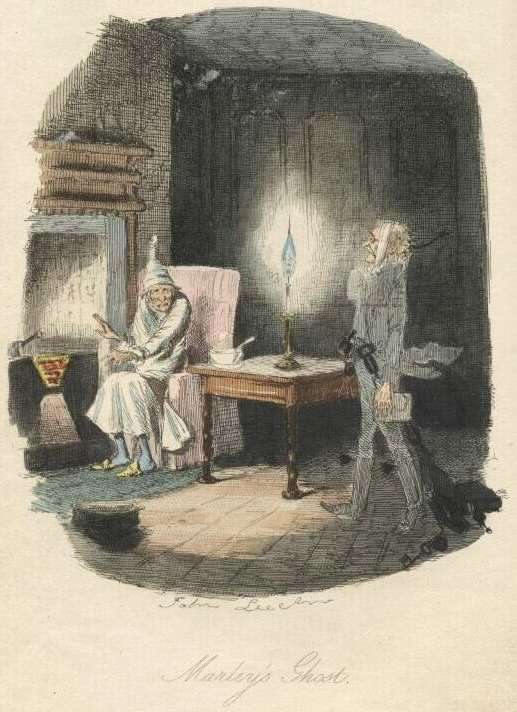
That night Scrooge is visited at home by Marley’s ghost, who wanders the Earth entwined by heavy chains and money boxes forged during a lifetime of greed and selfishness.  Marley tells Scrooge that he has a single chance to avoid the same fate and he will be visited by three spirits.  He must listen to them or be cursed to carry much heavier chains of his own.

Marley's Ghost: This original illustration is by John Leech is from the 1843 edition and is in the public domain. Image via Project Gutenberg
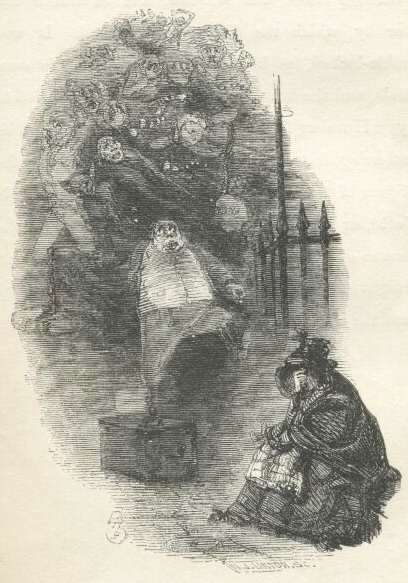
Wretched woman with an infant: This original illustration is by John Leech is from the 1843 edition and is in the public domain. Image via Project Gutenberg

Stave Two

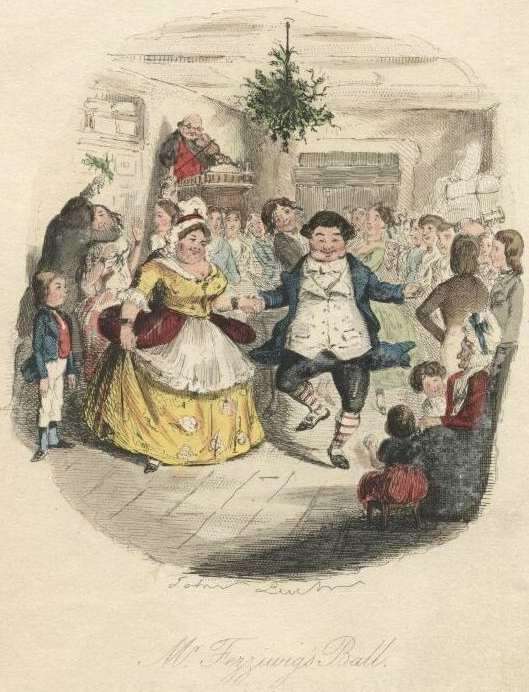
The first spirit, the Ghost of Christmas Past, takes Scrooge to the Christmas scenes of Scrooge’s boyhood, reminding him of a time when he was more innocent.  The scenes reveal Scrooge’s lonely childhood at boarding school, his relationship with his beloved sister Fan, and a Christmas party hosted by his first employer, Mr Fezziwig, who treated him like a son.  Scrooge’s neglected fiancée Belle is shown ending their relationship, as she realises that he will never love her as much as he loves money.  Finally, they visit a now-married Belle with her large, happy family on the Christmas Eve that Marley died.  Scrooge, upset by hearing Belle’s description of the man that he has become, demands that the ghost remove him from the house.

Mr. Fezziwig’s Ball: This original illustration is by John Leech is from the 1843 edition and is in the public domain. Image via Project Gutenberg
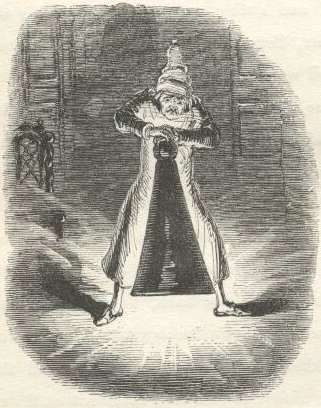
The Ghost of Christmas Past gets extinguished by Scrooge: This original illustration is by John Leech is from the 1843 edition and is in the public domain. Image via Project Gutenberg

Stave Three

The second spirit, the Ghost of Christmas Present, takes Scrooge to a joyous market with people buying the makings of Christmas dinner.  The Ghost then takes Scrooge to Bob Cratchit’s family feast and introduces his youngest son, Tiny Tim, a happy boy who is seriously ill.  The spirit informs Scrooge that Tiny Tim will die unless the course of events changes.  Afterwards, the spirit and Scrooge travel to celebrations of Christmas in a miner’s cottage, in a lighthouse, and on a ship at sea.  Scrooge and the ghost then visit Fred’s Christmas party.  Before disappearing, the spirit shows Scrooge two hideous, emaciated children named Ignorance and Want.  He tells Scrooge to beware them and mocks Scrooge’s concern for their welfare.

Scrooge’s Third Visitor: This original illustration is by John Leech is from the 1843 edition and is in the public domain. Image via Project Gutenberg
Ignorance and Want: This original illustration is by John Leech is from the 1843 edition and is in the public domain. Image via Project Gutenberg

Stave Four

The third spirit, the Ghost of Christmas Yet to Come, shows Scrooge a Christmas Day in the future.  The silent ghost reveals scenes involving the death of a disliked man whose funeral is attended by local businessmen only on condition that lunch is provided.  His charwoman, laundress and the local undertaker steal his possessions to sell to a fence.  When he asks the spirit to show a single person who feels emotion over his death, he is only given the pleasure of a poor couple who rejoice that his death gives them more time to put their finances in order.  When Scrooge asks to see tenderness connected with any death, the ghost shows him Bob Cratchit and his family mourning the death of Tiny Tim.  The ghost then allows Scrooge to see a neglected grave, with a tombstone bearing Scrooge’s name.  Sobbing, Scrooge pledges to change his ways.

Stave Five

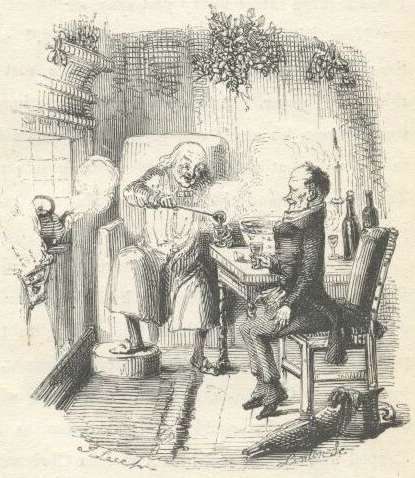
Scrooge awakens on Christmas morning a changed man.  He makes a large donation to the charity he rejected the previous day, anonymously sends a large turkey to the Cratchit home for Christmas dinner and spends the afternoon with Fred’s family.  The following day he gives Cratchit an increase in pay, and begins to become a father figure to Tiny Tim.  From then on Scrooge treats everyone with kindness, generosity and compassion, embodying the spirit of Christmas.

The Last of the Spirits: This original illustration is by John Leech is from the 1843 edition and is in the public domain. Image via Project Gutenberg
Scrooge and Bob Cratchit celebrate Christmas: This original illustration is by John Leech is from the 1843 edition and is in the public domain. Image via Project Gutenberg

Publication

As the result of the disagreements with Chapman and Hall over the commercial failures of Martin Chuzzlewit, Dickens arranged to pay for the publishing himself, in exchange for a percentage of the profits.  Production of A Christmas Carol was not without problems.  The first printing contained drab olive endpapers that Dickens felt were unacceptable, and the publisher Chapman and Hall quickly replaced them with yellow endpapers, but, once replaced, those clashed with the title page, which was then redone.  The final product was bound in red cloth with gilt-edged pages, completed only two days before the publication date of the 19th of December 1843.  Following publication, Dickens arranged for the manuscript to be bound in red Morocco leather and presented as a gift to his solicitor, Thomas Mitton.

Priced at five shillings (equal to £26 in 2022 pounds), the first run of 6,000 copies sold out by Christmas Eve.  Chapman and Hall issued second and third editions before the new year, and the book continued to sell well into 1844.  By the end of 1844 eleven more editions had been released.  Since its initial publication the book has been issued in numerous hardback and paperback editions, translated into several languages and has never been out of print.  It was Dickens’s most popular book in the United States, and sold over two million copies in the hundred years following its first publication there.

The high production costs upon which Dickens insisted led to reduced profits, and the first edition brought him only £230 (equal to £24,000 in 2022 pounds)  rather than the £1,000 (equal to £104,000 in 2022 pounds) he expected.  A year later, the profits were only £744, and Dickens was deeply disappointed.

Reception

According to Douglas-Fairhurst, contemporary reviews of A Christmas Carol “were almost uniformly kind”.  The Illustrated London News described how the story’s “impressive eloquence… its unfeigned lightness of heart… its playful and sparkling humour… its gentle spirit of humanity” all put the reader “in good humour with ourselves, with each other, with the season and with the author”.  The critic from The Athenaeum, the literary magazine, considered it a “tale to make the reader laugh and cry… to open his hands, and open his heart to charity even toward the uncharitable… a dainty dish to set before a King.”  William Makepeace Thackeray, writing in Fraser’s Magazine, described the book as “a national benefit and to every man or woman who reads it, a personal kindness.  The last two people I heard speak of it were women; neither knew the other, or the author, and both said, by way of criticism, ‘God bless him!'”

The poet Thomas Hood, in his own journal, wrote that “If Christmas, with its ancient and hospitable customs, its social and charitable observances, were ever in danger of decay, this is the book that would give them a new lease.”  The reviewer for Tait’s Edinburgh Magazine Theodore Martin, who was usually critical of Dickens’s work spoke well of A Christmas Carol, noting it was “a noble book, finely felt and calculated to work much social good”.  After Dickens’s death, Margaret Oliphant deplored the turkey and plum pudding aspects of the book but admitted that in the days of its first publication it was regarded as “a new gospel”, and noted that the book was unique in that it made people behave better.  The religious press generally ignored the tale but, in January 1884, Christian Remembrancer thought the tale’s old and hackneyed subject was treated in an original way and praised the author’s sense of humour and pathos.  The writer and social thinker John Ruskin told a friend that he thought Dickens had taken the religion from Christmas, and had imagined it as “mistletoe and pudding, neither resurrection from the dead, nor rising of new stars, nor teaching of wise men, nor shepherds”.

There were critics of the book. The New Monthly Magazine praised the story, but thought the book’s physical excesses, the gilt edges and expensive binding, kept the price high, making it unavailable to the poor.  The review recommended that the tale should be printed on cheap paper and priced accordingly.  An unnamed writer for The Westminster Review mocked Dickens’s grasp of economics, asking “Who went without turkey and punch in order that Bob Cratchit might get them for, unless there were turkeys and punch in surplus, someone must go without”.

Following criticism of the US in American Notes and Martin Chuzzlewit, American readers were less enthusiastic at first, but by the end of the American Civil War, copies of the book were in wide circulation.  In 1863 The New York Times published an enthusiastic review, noting that the author brought the “old Christmas… of bygone centuries and remote manor houses, into the living rooms of the poor of today”.

Aftermath

In January 1844 Parley’s Illuminated Library published an unauthorised version of the story in a condensed form which they sold for twopence.  Dickens wrote to his solicitor and said. “I have not the least doubt that if these Vagabonds can be stopped they must… Let us be the sledge-hammer in this, or I shall be beset by hundreds of the same crew when I come out with a long story.”

Two days after the release of the Parley version, Dickens sued on the basis of copyright infringement and won.  The publishers declared themselves bankrupt and Dickens was left to pay £700 in costs.  The small profits Dickens earned from A Christmas Carol further strained his relationship with his publishers, and he broke with them in favour of Bradbury and Evans, who had been printing his works to that point.

Dickens returned to the tale several times during his life to amend the phrasing and punctuation.  He capitalised on the success of the book by publishing other Christmas stories: The Chimes (1844), The Cricket on the Hearth (1845), The Battle of Life (1846) and The Haunted Man and the Ghost’s Bargain (1848).  These were secular conversion tales which acknowledged the progressive societal changes of the previous year, and highlighted those social problems which still needed to be addressed.  While the public eagerly bought the later books, the reviewers were highly critical of the stories.

Performances And Adaptations

By 1849 Dickens was engaged with David Copperfield and had neither the time nor the inclination to produce another Christmas book.  He decided the best way to reach his audience with his Carol philosophy was by public readings.  During Christmas 1853 Dickens gave a reading in Birmingham Town Hall to the Industrial and Literary Institute. The performance was a great success.  Thereafter, he read the tale in an abbreviated version 127 times, until 1870 (the year of his death), including at his farewell performance.

In the years following the book’s publication, responses to the tale were published by W. M. Swepstone (Christmas Shadows, 1850), Horatio Alger (Job Warner’s Christmas, 1863), Louisa May Alcott (A Christmas Dream, and How It Came True, 1882), and others who followed Scrooge’s life as a reformed man, or some who thought Dickens had got it wrong and needed to be corrected.

The novella was adapted for the stage almost immediately.  Three productions opened on the 5th of February 1844, one by Edward Stirling being sanctioned by Dickens and running for more than 40 nights.  By the close of February 1844 eight rival A Christmas Carol theatrical productions were playing in London.  The story has been adapted for film and television more than any of Dickens’s other works.  In 1901 it was produced as Scrooge, or, Marley’s Ghost, a silent black-and-white British film.  It was one of the first known adaptations of a Dickens work on film, but it is now largely lost.  The story was adapted in 1923 for BBC radio.  The story has been adapted to other media, including opera, ballet, animation, stage musicals and a BBC mime production starring Marcel Marceau.

Davis considers the adaptations have become better remembered than the original.  Some of Dickens’s scenes, such as visiting the miners and lighthouse keepers, have been forgotten by many, while other events often added, such as Scrooge visiting the Cratchits on Christmas Day are now thought by many to be part of the original story.  Accordingly, Davis distinguishes between the original text and the “remembered version”.

Read more here.

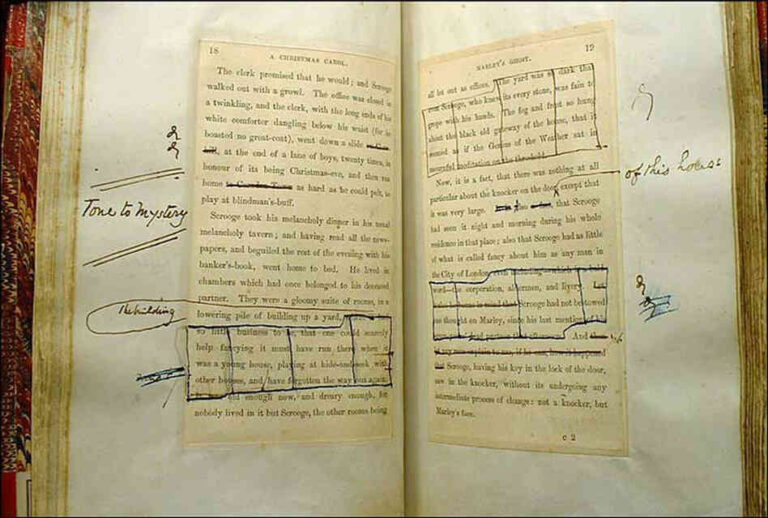
Charles Dickens’ hand-edited copy of A Christmas Carol. Image via Open Culture

You can read more about Charles Dickens’ hand-edited copy of A Christmas Carol here.

Legacy

The phrase Merry Christmas had been around for many years. The earliest known written use was in a letter in 1534 but Dickens’s use of the phrase in A Christmas Carol popularised it among the Victorian public.  The exclamation Bah! Humbug! entered popular use in the English language as a retort to anything sentimental or overly festive. The name Scrooge became used as a designation for a miser and was added to the Oxford English Dictionary as such in 1982

In the early 19th century the celebration of Christmas was associated in Britain with the countryside and peasant revels, disconnected to the increasing urbanisation and industrialisation taking place.  Davis considers that in A Christmas Carol, Dickens showed that Christmas could be celebrated in towns and cities, despite increasing modernisation.  The modern observance of Christmas in English-speaking countries is largely the result of a mid-Victorian revival of the holiday.  The Oxford Movement of the 1830’s and 1840’s had produced a resurgence of the traditional rituals and religious observances associated with Christmastide and, with A Christmas Carol, Dickens captured the zeitgeist while he reflected and reinforced his vision of Christmas.

Dickens advocated a humanitarian focus of the holiday, which influenced several aspects of Christmas that are still celebrated in Western culture, such as family gatherings, seasonal food and drink, dancing, games and a festive generosity of spirit.  The historian Ronald Hutton writes that Dickens “linked worship and feasting, within a context of social reconciliation”.

The novelist William Dean Howells, analysing several of Dickens’s Christmas stories, including A Christmas Carol, considered that by 1891 the “pathos appears false and strained; the humor largely horseplay; the characters theatrical; the joviality pumped; the psychology commonplace; the sociology alone funny”.   The writer James Joyce considered that Dickens took a childish approach with A Christmas Carol, producing a gap between the naïve optimism of the story and the realities of life at the time.

Ruth Glancy, the professor of English literature, states that the largest impact of A Christmas Carol was the influence felt by individual readers.  In early 1844 The Gentleman’s Magazine attributed a rise of charitable giving in Britain to Dickens’s novella.  In 1874, Robert Louis Stevenson, after reading Dickens’s Christmas books, vowed to give generously to those in need, and Thomas Carlyle expressed a generous hospitality by hosting two Christmas dinners after reading the book.  In 1867 one American businessman was so moved by attending a reading that he closed his factory on Christmas Day and sent every employee a turkey, while in the early years of the 20th century Maud of Wales (the Queen of Norway) sent gifts to London’s crippled children signed “With Tiny Tim’s Love”.  On the novella, the author G. K. Chesterton wrote “The beauty and blessing of the story… lie in the great furnace of real happiness that glows through Scrooge and everything around him… Whether the Christmas visions would or would not convert Scrooge, they convert us.”

Analysing the changes made to adaptations over time, Davis sees changes to the focus of the story and its characters to reflect mainstream thinking of the period.  While Dickens’s Victorian audiences would have viewed the tale as a spiritual but secular parable, in the early 20th century it became a children’s story, read by parents who remembered their parents reading it when they were younger.  In the lead-up to and during the Great Depression, Davis suggests that while some saw the story as a “denunciation of capitalism…most read it as a way to escape oppressive economic realities”.  The film versions of the 1930’s were different in the UK and US.  British-made films showed a traditional telling of the story, while US-made works showed Cratchit in a more central role, escaping the depression caused by European bankers and celebrating what Davis calls “the Christmas of the common man”.  In the 1960’s, Scrooge was sometimes portrayed as a Freudian figure wrestling with his past.  By the 1980’s he was again set in a world of depression and economic uncertainty.

Read more here

Blog Posts

Notes And Links

The images above are in the Public Domain via Wikipedia and Project Gutenberg.

Charles Dickens Museum – Official website.  The museum is situated at 48 Doughty Street, Dickens’s London home from 1837-1839.  He moved there with his wife Catherine and their eldest son Charlie.   After the Dickenses left Doughty Street, the property was largely used as a boarding house until the Dickens Fellowship purchased it as their headquarters in 1923.  The house opened to the public in 1925 and houses a significant collection linked to Dickens and his works. 

Today the Charles Dickens Museum is set up as though Dickens himself had just left.  It appears as a fairly typical middle-class Victorian home, complete with furnishings, portraits and decorations which are known to have belonged to Dickens.  A visit to the museum allows you to step back into 1837 and to see a world which is at once both intimately familiar, yet astonishingly different.  A world in which one of the greatest writers in the English language, found his inspiration. 

Charles Dickens Museum official Facebook page.

Charles Dickens Museum official Twitter page.

Project Gutenberg – Official website.  Project Gutenberg is an online library of free e-books and was the first provider of free electronic books.  Michael Hart, the founder of Project Gutenberg, invented e-books in 1971 and his memory continues to inspire the creation of them and related content today.

Open Culture – Official website.  Open Culture scours the web for the best educational media.  They find the free courses and audio books you need, the language lessons and educational videos you want, and plenty of enlightenment in between.

Jokes: More Adult Jokes (Part Three)

Image © of VHV.RS

Adult jokes are just that, aimed at adults and I take no credit for any on this page.  Their original source or words belong to whoever and started wherever.  I tell them my way.  If they make you smile or chuckle like they originally did to me then that is great.  If not then I hope you find your sense of humour one day.
As defined by Collins Online Dictionary: “An adult is a mature, fully developed person.  An adult has reached the age when they are legally responsible for their actions”.  Generally, that means 18 and over but if you are under 18 or easily offended then you are on the wrong page.

Turner Brown

There are two men in a lift.  One of them is a small skinny Irish bloke and the other is a huge guy.  The big man sees the little Irish man staring up at him and says to him, “7 feet,  25 stone, 20-inch cock, 3 pound balls,  Turner Brown.”

The little Irish man faints and falls to the floor.  The big guy kneels down and brings him to by softly shaking him.

In a weak voice, the little bloke says, ” What exactly did ya just say to me?”

The big bloke answered, “I saw your curious look and I figured I would give you the answers to the questions everyone always asks me when they see me… 7 feet,  25 stone, 20-inch cock, 3 pound balls, Turner Brown.”

The sweating little Irish man replied, ” Sweet Jasus, I tought you said TURN AROUND!” 

The Hillbilly Hunter

A hillbilly went hunting one day in West Virginia and bagged three ducks.  He put them in the bed of his pickup truck and was about to drive home when he was confronted by an ornery game warden who didn’t like hillbillies.

The game warden ordered to the hillbilly to show his hunting license, and the hillbilly pulled out a valid West Virginia hunting license.

The game warden looked at the license, then reached over and picked up one of the ducks, sniffed its arse, and said, “This duck ain’t from West Virginia.  This is a Kentucky duck. You got a Kentucky huntin’ license, boy?”

The hillbilly reached into his wallet and produced a Kentucky hunting license.

The game warden looked at it, then reached over and grabbed the second duck, sniffed its arse, and said, “This ain’t no Kentucky duck. This duck’s from Tennessee. You got a Tennessee license?”

The hillbilly reached into his wallet and produced a Tennessee license. 

The warden then reached over and picked up the third duck, sniffed its arse, and said, “This ain’t no Tennessee duck.  This here duck’s from Virginia.  You got a Virginia. huntin’ license?”

Again the hillbilly reached into his wallet and brought out a Virginia hunting license.

The game warden was extremely frustrated at this point, and he yelled at the hillbilly, “Just where the hell are you from?”

The hillbilly turned around, bent over, dropped his pants, and said, “You tell me, you’re the fuckin’ expert!”

Viagra

One day John went to see his 94-year-old grandpa at his nursing home.  When he got there he observed him looking happy and sprightly and that pleased him. 

“How are you doing grandpa?” he asks.

“I’m feeling fine son”, replied the old man.

“What’s the food like?” continued the grandson. 

“It’s lovely”, said the old man.  “The menus are fantastic.  We had beef stew today.  It was almost as good as your grandma’s was.”

“And the nursing? How is that?” John said.

“It couldn’t be any better.”  replied his grandad.  These young nurses really look after us all here.” 

“What about sleeping? Are you sleeping well enough?” asked John.

“There is no problem with that at all.” the old man replied.”  I get eight solid hours a night.  At 10 pm they bring me a hot cup of chocolate up and give me a viagra tablet, and that’s it, I go out like a light.”

John was alarmed to hear this and a bit confused so he rushed off to question the nurse in charge.

“Hello.” He said.  “I was wondering if you could clear something up for me please?” He then told her what his dad had just told him.

“Oh yes,” replied the nurse.  “He has told you correctly.  Every night at 10 pm we give him a hot cup of chocolate and a viagra, it works ever so well.  The hot chocolate makes him sleep right away and the viagra stops him from rolling out of the bed!”

In Heat

One day a young girl asks her mom, “Mom, can I take the dog for a walk around the block?”

Her mum replies, “No you can’t because she is in heat.”

“What does that mean?” asked the child.

“Go and ask your dad.  He is in his shed.”

The girl goes out to the shed and says, “Dad, can I take Lulu for a walk around the block? I asked Mom, but she said the dog was in heat, and to come to ask you.”

He took a rag, soaked it in petrol,  scrubbed the dog’s fanny with it to disguise the scent, and said, “OK, you can go now, but keep Lulu on her lead and only go one time around the block.”

The young girl left and returned a few minutes later with no dog on its lead.

The puzzled dad asked, “Where’s Lulu?”

His daughter replied, “She ran out of petrol about halfway around the block, so another dog is pushing her home!” 

Potato Clock

One day Paddy went into a John Lewis department store and asked one of the shop assistants, “Excuse me soir, but have ya got annie potato clocks?”

The assistant glares at him and says, “Are you taking the piss? We sell cuckoo clocks, carriage clocks, grandfather clocks and alarm clocks.  What the fuck is a potato clock?

Paddy replied, ” I don’t know but I start my new job at noin tomorrow and the woif said to me I better get a potato clock!”

The Midget

Me and this midget were in the pub toilets the other day taking a piss and he kept winking at me.

I said, ” Sorry mate, I am not gay.”

He replied, “Neither am I but you keep fucking splashing in my eye!”

Fugly

I was at a wedding recently and I whispered to the bloke next to me, “Isn’t that bride a right fucking ugly dog?”

“Do you mind?” came the angry reply, ” That is my daughter you are talking about.”

“Oh, I am sorry mate,” I said back rather embarrassed, ” I didn’t know you were her father.”

“I’m not!” Boomed the response, ” I am her fucking mother!”


STOP!

During my latest check-up at my doctor’s surgery, the very pretty nurse said to me, ” I think you should stop wanking!”

“Why nurse” I replied, “Will I go blind?”

“No” she answered, ” It’s because I am still talking to you!”

The Epileptic  

I was in the pub last night telling a friend a joke about an epileptic, “What would you do if an epileptic was having a fit in the bath?” My mate said he didn’t know and I told him, “Throw the washing in.”

There was a bloke at the next table who overheard the joke and said to me, “My brother is an epileptic and he had a fit in the bath and died.”

Fuck me, if the ground could have swallowed me up right there and then I would have been happy.  I replied, ” I am so sorry to hear that mate,  did he drown?”

“No”, he said, “He choked on one of my fucking socks!” 

Don’t Feed The Monkies

On his last day trip to Dudley Zoo Paddy was throwing lots of 20-pound notes into the monkey enclosure.  The zoo keeper tells him to stop right away as it is not allowed.

Paddy responded with, ” Of course it’s allowed!”

NO, IT IS NOT!” shouted the zoo keeper sternly.

“Bejasus, it is for sure it is!” replied Paddy.  ” It says roight here on this soign.. Don’t feed the monkeys.  £20 foin!”

Blog Posts

Notes And Links

GDJ on Pixabay – The image shown at the top of this page is the copyright of GDJ.  You can find more great work from the artist Gordon and lots more free stock photo’s at Pixabay.

Christmas: Nostalgic Christmas Adverts

Image © of Liliboas via iStock

The following adverts are from the 1980’s and 1990’s but may have the odd 1970’s thrown in!

These adverts are more entertaining than a lot of the drivel that is put on TV these days.  Enjoy your trip down memory lane.

Volume 1

Volume 2

Volume 3

Blog Posts

Notes And Links

Poetry: A Harley Davidson Christmas Poem By Unknown

Image © unknown via iStock

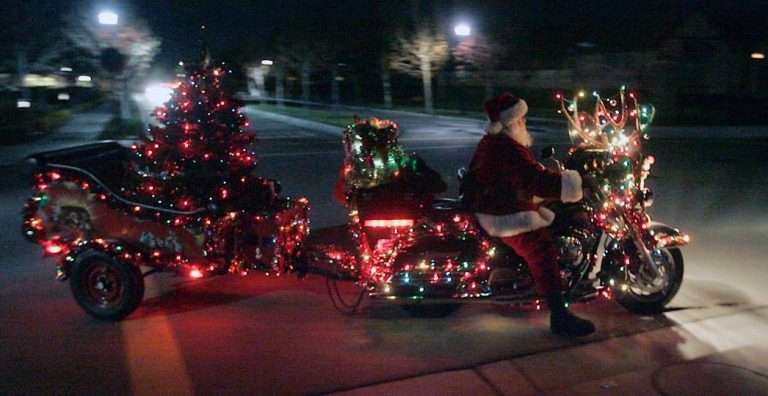
Here’s a Christmas poem that made me smile.  It is a parody of A Visit from St. Nicholas by Clement Clarke Moore.

In case you didn’t know fanny means something completely different in America, it means a person’s bottom so Father Christmas isn’t a pervert, ha ha. 

Image © Unknown via Giggle Palooza

Father Christmas On A Harley Davidson.

A Harley Davidson Christmas Poem 

‘Twas the night before Christmas, and all through the pad,
There was nada happenin’, now that’s pretty bad.
 
The woodstove was hung up in that stocking routine,
In hopes that the Fat Boy would soon make the scene.
 
With our stomachs packed with tacos and beer,
My girl and I crashed on the couch for some cheer.
 
When out in the yard there arose such a racket,
I ran for the door and pulled on my jacket.
 
I saw a large bro’ on a ’56 Pan
Wearin’ black leathers, a cap, and boots (cool biker, man).
 
He hauled up the bars on that bike full of sacks,
And that Pan hit the roof like it was running on tracks. 
 
I couldn’t help gawking, the old guy had class.
But I had to go in, I was freezing my ass.
 
Down through the stovepipe he fell with a crash,
And out of the stove, he came dragging his stash.
 
With a smile and some glee he passed out the loot,
A new jacket for her and some parts for my scoot.
 
He patted her fanny and shook my right hand,
Spun on his heel and up the stovepipe, he ran.
 
From up on the roof came a great deal of thunder,
As that massive V-twin ripped the silence asunder.
 
With beard in the wind, he roared off in the night,
Shouting, “Have a cool Yule, and to all a good ride!
 
By Unknown.
Blog Posts

Notes And Links

The image at the top of the page is from unknown and is via iStock.

The image of Father Christmas on a Harley Davidson and the poem above are from unknown people but were sourced from Giggle Palooza.

Read about Harley-Davidson here.

Mental Health: I Am A Domestic Violence Survivor By Paul Hibbert

Image © Paul Hibbert via Hibbert Home Tech

Let me start by saying Domestic Violence / Domestic Abuse is WRONG (albeit if it is physical, mental or both), end of, regardless of if it is a man or woman who is the victim.  However, you rarely hear it mentioned or shown about it happening to men.  This needs to change NOW!

Let me tell you from daily experience we don’t all cope well regarding our mental health, despite what others may think differently.

This video brought tears to my eyes and after watching it I knew I had to share it on my website.

Paul posted this video as part of men’s mental health awareness month.  He is an inspiration and has my total admiration and respect for his honesty here and his braveness in publicly speaking out the way he is here.  Like him I want men to know THEY ARE NOT ALONE and if I can help in any way to get that message across then I will.  The more this video is seen the better and hopefully it will help someone.

About Paul Hibbert

Paul Hibbert is a UK-based journalist creating a broad range of technical product reviews and tutorials primarily on the Youtube platform.

He creates videos using honesty and humour as his fundamental principles.

Audiences that would not usually be engaged with technology who watch him will get a unique perspective and an engaging presentation style that is otherwise absent from the technology sector.

Blog Posts

Notes And Links

Hibbert Home Tech – The image shown at the top of this page is the copyright of Paul Hibbert and comes from his official website.

Hibbert Home Tech on Facebook. 

Hibbert Home Tech on Twitter

Hibbert Home Tech on Instagram.

Hibbert Home Tech on TikTok.

Hibbert Home Tech on Patron.Like me, if you can, help support Paul with his funny, informative and entertaining content here or make a one-off payment on PayPal by clicking here.  In Paul’s own words, “There’s no pressure to donate anything at all, but if I’ve helped you and you’re feeling generous then your kindness is welcome.”

Regarding domestic abuse, this is advice from Gov.UK.  Click the link for more information.

If you are in immediate danger, call 999 and ask for the police.  If you can’t speak and are calling on a mobile press 55 to have your call transferred to the police.  Find out how to call the police when you can’t speak here

Household isolation instructions do not apply if you need to leave your home to escape domestic abuse.  

The Men’s Advice Line – This website is run by Respect and is a confidential helpline specifically for male victims.

ManKind Initiative – Official website.  Their confidential helpline is available for male victims of domestic abuse and domestic violence across the UK as well as their friends, family, neighbours, work colleagues and employers.

They provide information, support and a signposting service to men suffering from domestic abuse from their current or former wife, partner (including same-sex partner) or husband.  This can range from physical violence or object throwing to abuse such as constant bullying or insults.

Men’s Aid Charity – Official website.  Formed in 2006 to help provide practical advice and support to men who have been abused, Men’s Aid has grown to represent the views of many individuals both male and female and is committed to helping those who have suffered from bias in the legal system, Family Courts or any other areas.  They strive to remove bias and prejudice from all parts of our Society and focus on providing help and assistance to anyone, regardless of gender or sexual orientation, who may need it, in particular males.

For further help and advice for men being abused click here.

Women’s Aid – Official website.  They are coming together across society and communities to end domestic abuse.

UKSaysNoMore – Official website.  They seek to unite and strengthen a diverse community of members and organisations nationwide to actively take a stand against domestic abuse and sexual violence under one powerful, visual symbol.  The campaign provides open-source tools and resources for individuals and organisations to take action and get involved in making a difference.  Together they can challenge the myths and misconceptions around these issues, share resources and information, and ultimately work together to make real positive change.

Bright Sky – This is a mobile app and website for anyone experiencing domestic abuse, or who is worried about someone else.  The app can be downloaded for free from the app stores.  Only download the app if it is safe for you to do so and if you are sure that your phone isn’t being monitored.

If you are experiencing domestic abuse and need immediate help, ask for A.N.I. in a participating pharmacy. ‘It stands for Action Needed Immediately.  If a pharmacy has the Ask for A.N.I. logo (below) on display, it means they’re ready to help.  They will offer you a private space, provide a phone and ask if you need support from the police or other domestic abuse support services.

Image © Government via Gov.UK

Local History: The Birmingham Buddhist Vihara

Image © Frank Parker

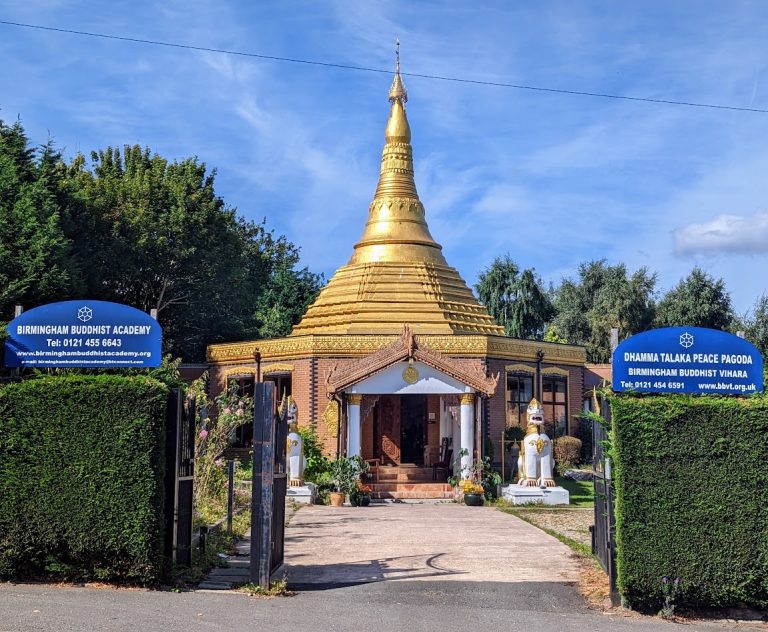
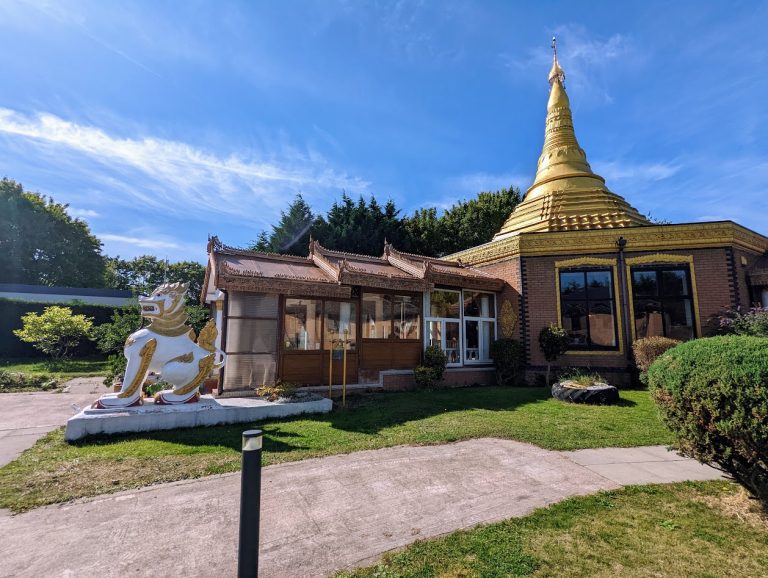
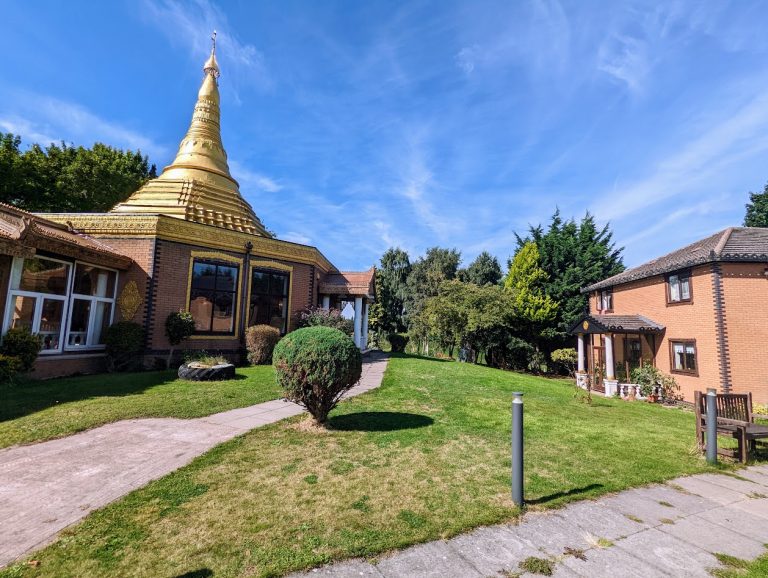
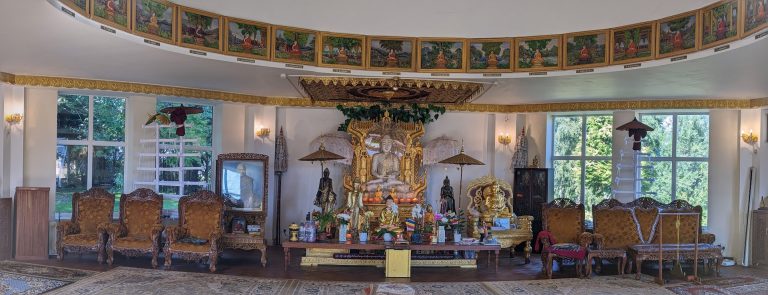
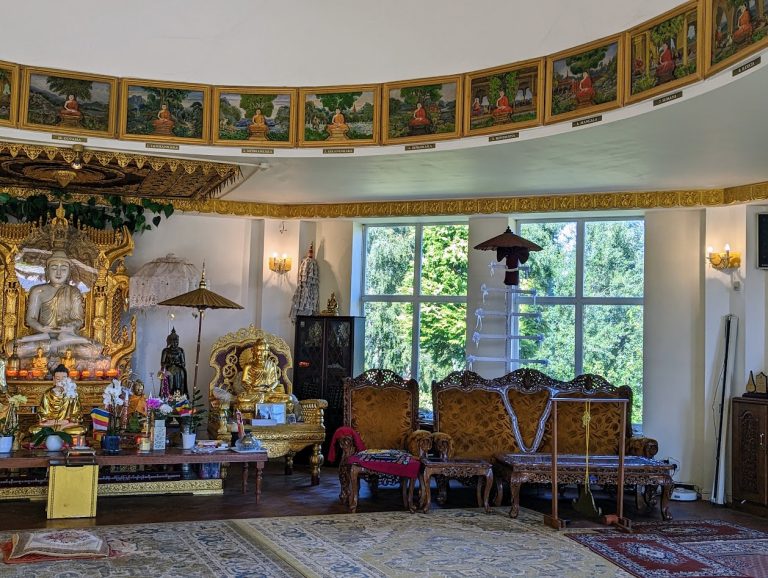
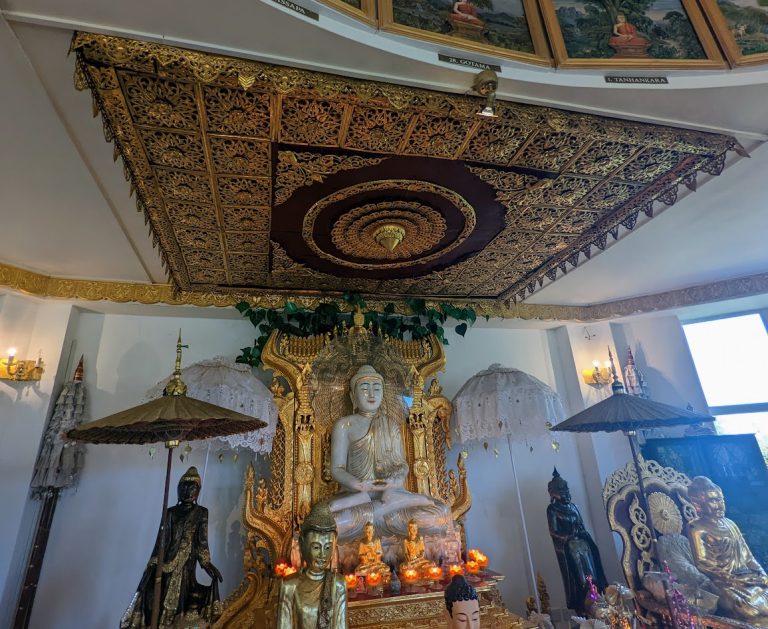
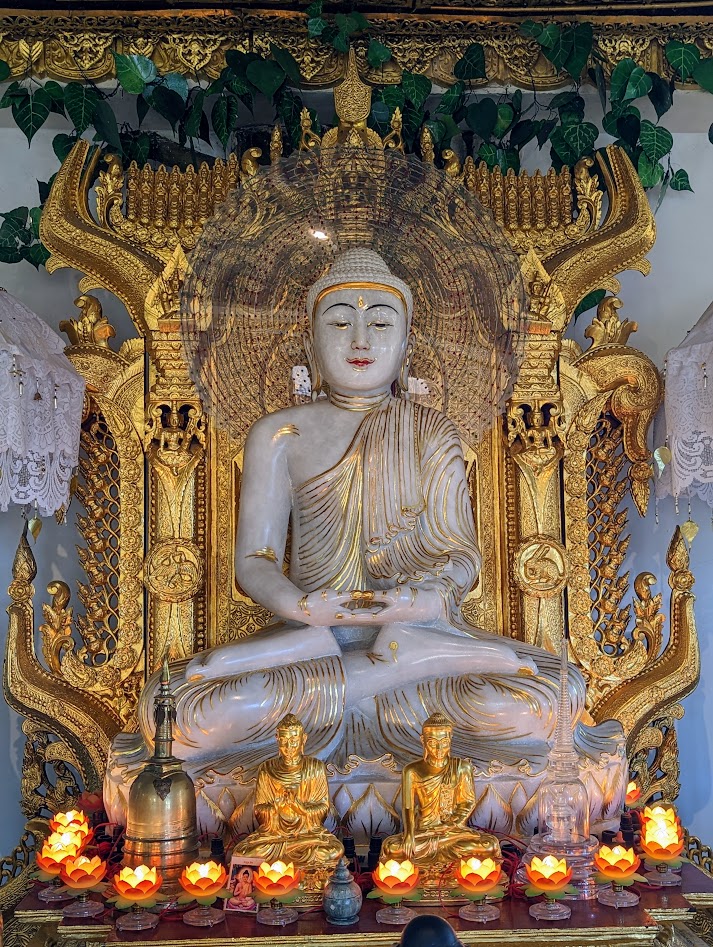
On Saturday 17th September 2022,  I visited the Birmingham Buddhist Vihara in Osler Street, Ladywood, Birmingham as part of Birmingham Heritage WeekI never realised there was a Buddhist Temple in Birmingham so it was a pleasant surprise to find out there was and I am glad I went.

It is such a peaceful, tranquil, and friendly place to visit. I HIGHLY RECOMMEND you visit this Peace Pagoda.  

The Birmingham Buddhist Vihara Photos

Click here to see photographic memories of my day out.  

About The Birmingham Buddhist Vihara

In 1975 Dr. Rewata Dhamma, the Founder and Spiritual Director of Birmingham Buddhist Vihara and Dhammatalaka Peace Pagoda, was invited to England where he established a Buddhist monastery in Birmingham as his base.

Since his arrival in England in 1975, the majority of those who have called on Venerable Dr. Rewata Dhamma for teaching have been English.  Impressed by this, and wishing well for the future of Buddhism in England, he realized that the teaching would only become truly established here once the British themselves took responsibility for its development. Buddhism is not a missionary religion in the sense that is usually understood.  Religion cannot be imposed from outside; it must develop in line with the culture in which it finds itself and how best to do this can only be truly understood by people who are native to that culture.  On the other hand, it is also necessary for these people to have some depth of understanding of Buddhism itself and so they must have training and information available to them which is suitable to their cultural background and age group.

Interest in Buddhism from schools, colleges and universities has steadily increased over the years and the Vihara has become one of the major centres in the West Midlands serving this need.  As Buddhism becomes increasingly an accepted part of comparative religious studies so they welcome the many groups and individuals who need information and guidance from them.  This encourages further development of Buddhism and practice for seekers of Buddhist knowledge.

In 1998 he accomplished the building of Dhamma Talaka Peace Pagoda, after years of planning, as a suitable resting place for the royal relics.

The Peace Pagoda is the only purpose-built Myanmar-style pagoda in the UK and can offer a unique educational and cultural experience to visiting students and groups of all ages.  The pagoda is a miniature replica of Shwedagon pagoda in Yangon, Myanmar, which is one of the most important pagodas in that country.  Visitors to the pagoda may learn about Theravada Buddhist beliefs, practices and meditation methods; students can also be given the opportunity to try meditation for themselves.

You can read more information and see what they have to offer on their website here.

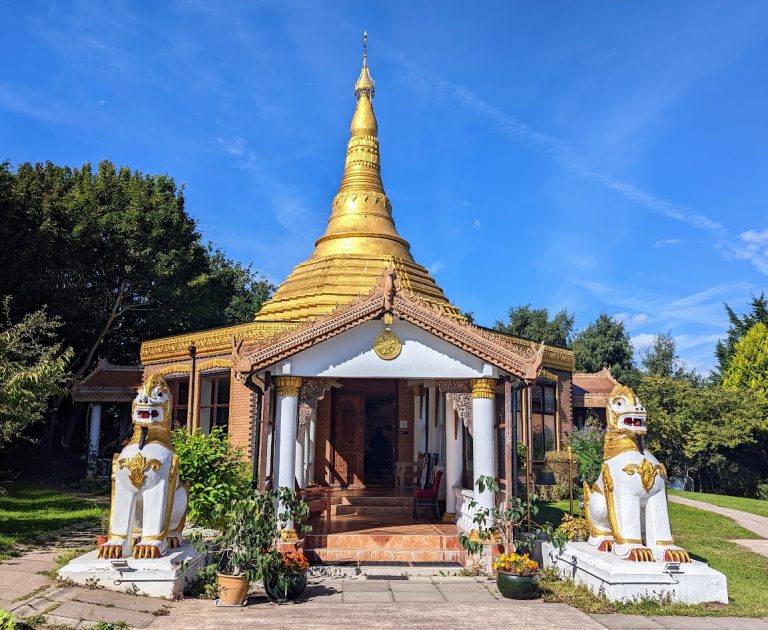
In front of the Birmingham Buddhist Vihara. Image © Frank Parker

A Guide To The Dhammatalaka Peace Pagoda

Read an online e-book version of A Guide To The Dhammatalaka Peace Pagoda here.

Download A Guide To The Dhammatalaka Peace Pagoda in PDF format by clicking here.

If you don’t have a PDF reader you can download one from here 

Opening Times

Opening times vary depending on what is going on at the time.

To see what events are happening and when click here.

Address

29-31 Osler Sreet

Ladywood

Birmingham

B16 9EU.

Telephone

0121 454 6591.

General Enquiries

For general enquiries click here.

School Visit Enquiries

For school visit enquiries click here.

Open Day

Visit the Birmingham Heritage Week website (link above) to find out when the next open day will be.

Blog Posts

Notes And Links

The image shown at the top of this page is copyright of Frank Parker.

The videos shown above are via YouTube.

The Birmingham Buddhist Vihara on Facebook.


The Birmingham Buddhist Vihara Photos – Page 1

© Frank Parker

Here are photos I took on my first visit to the Birmingham Buddhist Vihara on 17/09/22.  

In front of the Birmingham Buddhist Vihara © Frank Parker
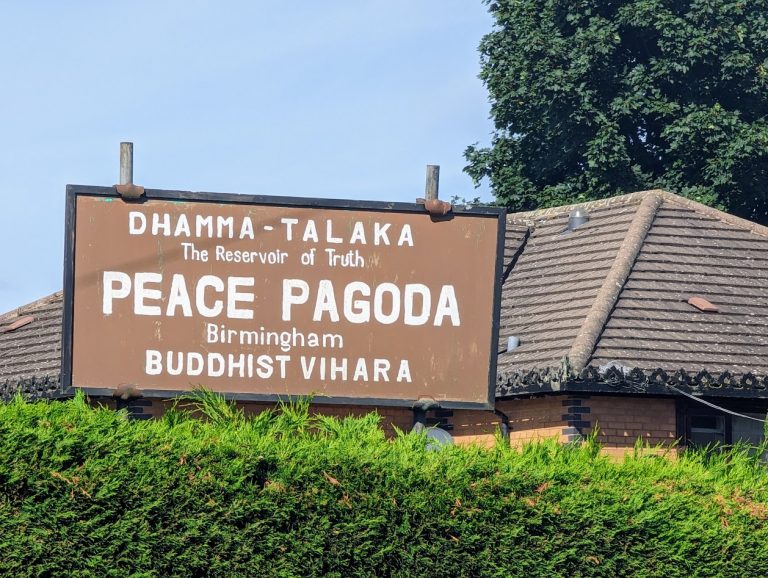
An older sign at the front of the Birmingham Buddhist Vihara © Frank Parker
The entrance to the Birmingham Buddhist Vihara © Frank Parker
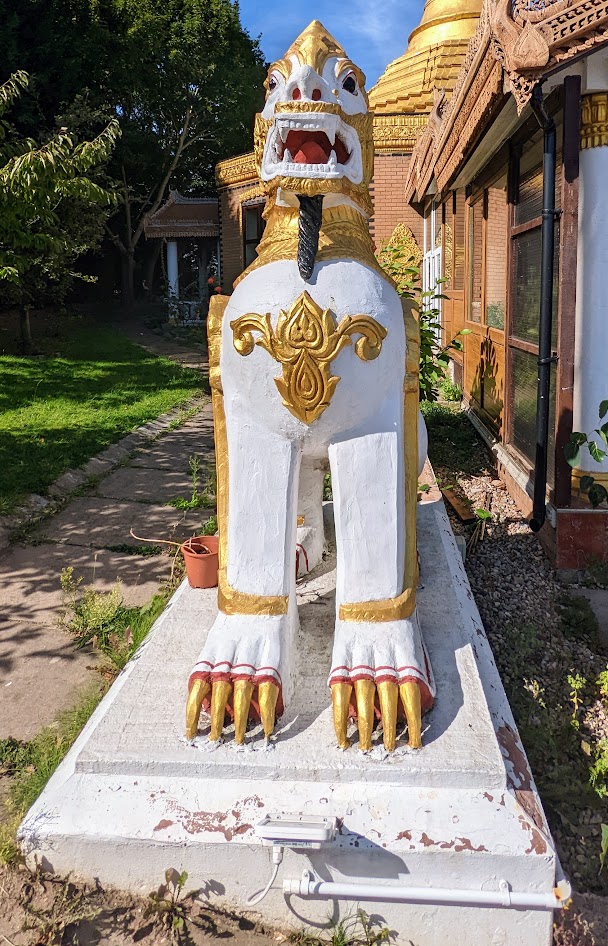
The left lion at the entrance © Frank Parker
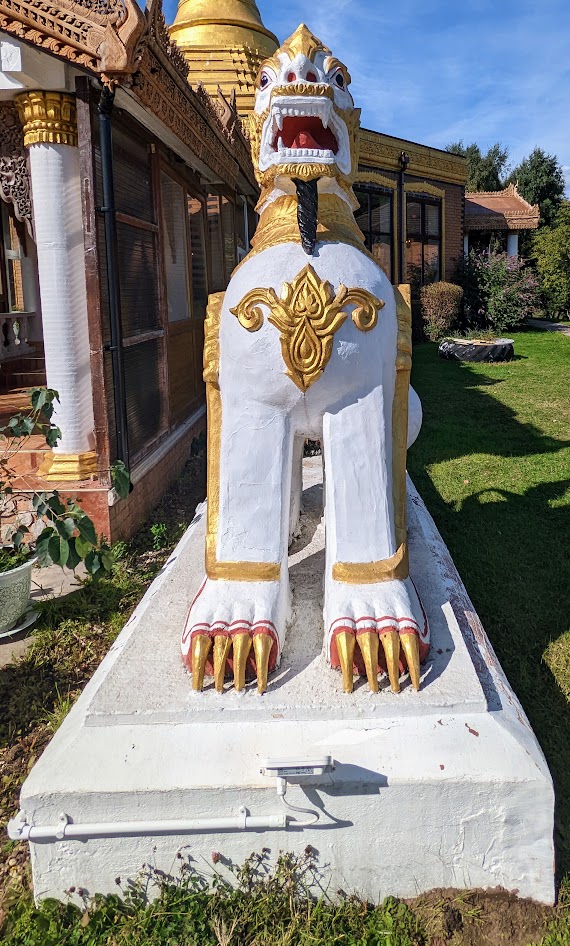
The right lion at the entrance © Frank Parker
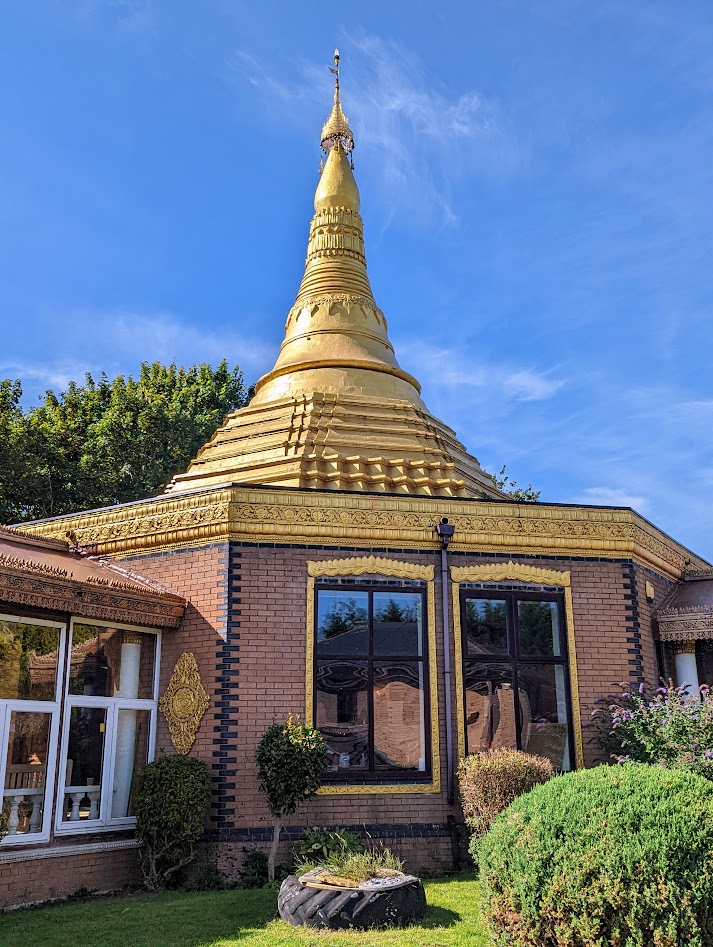
The Birmingham Buddhist Vihara © Frank Parker
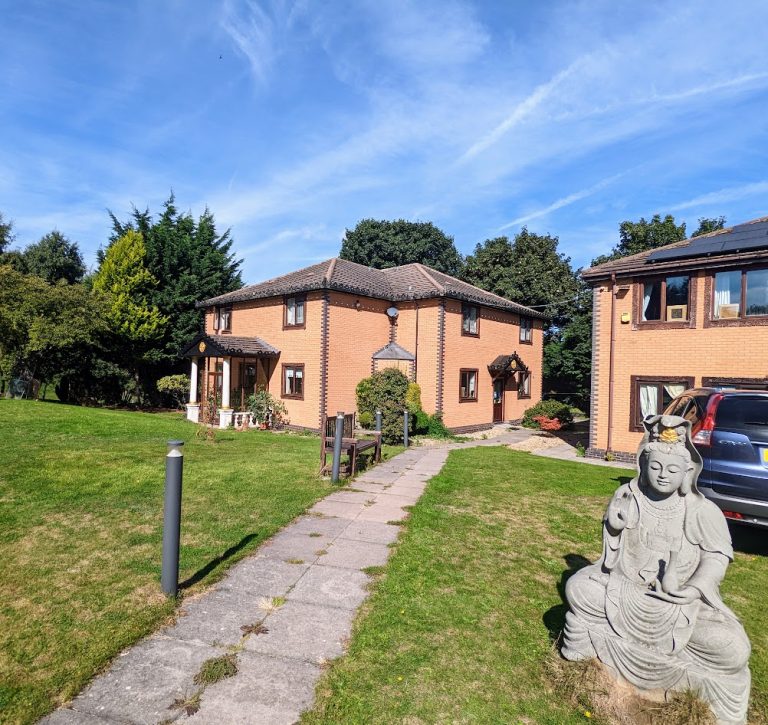
Outside the Birmingham Buddhist Vihara © Frank Parker
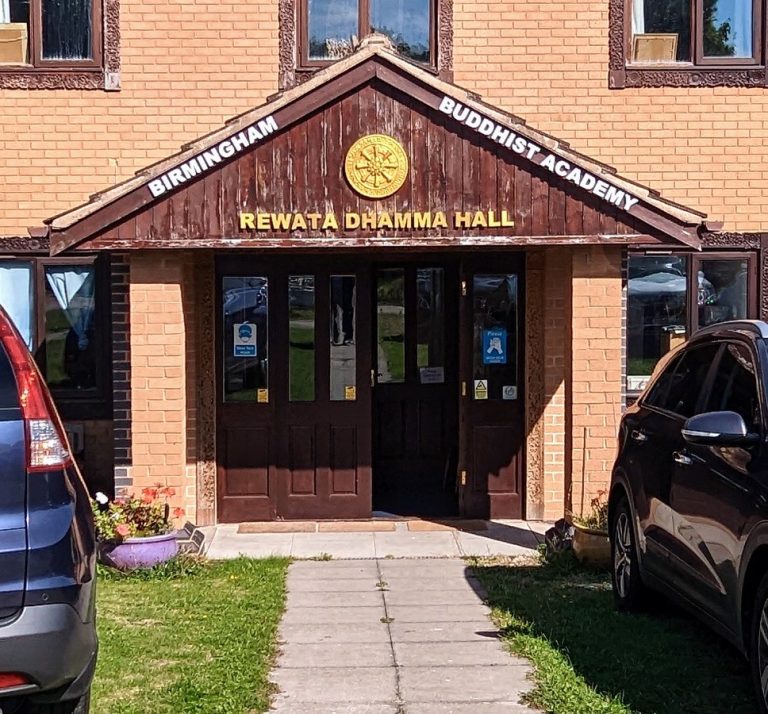
Rewata Dhamma Hall outside the Birmingham Buddhist Vihara © Frank Parker
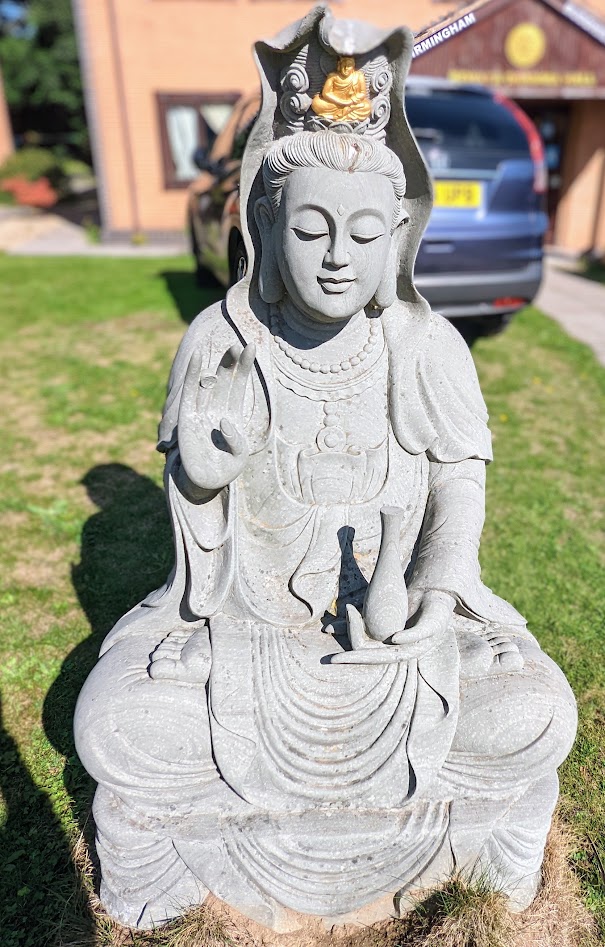
Buddha statue outside the Birmingham Buddhist Vihara © Frank Parker
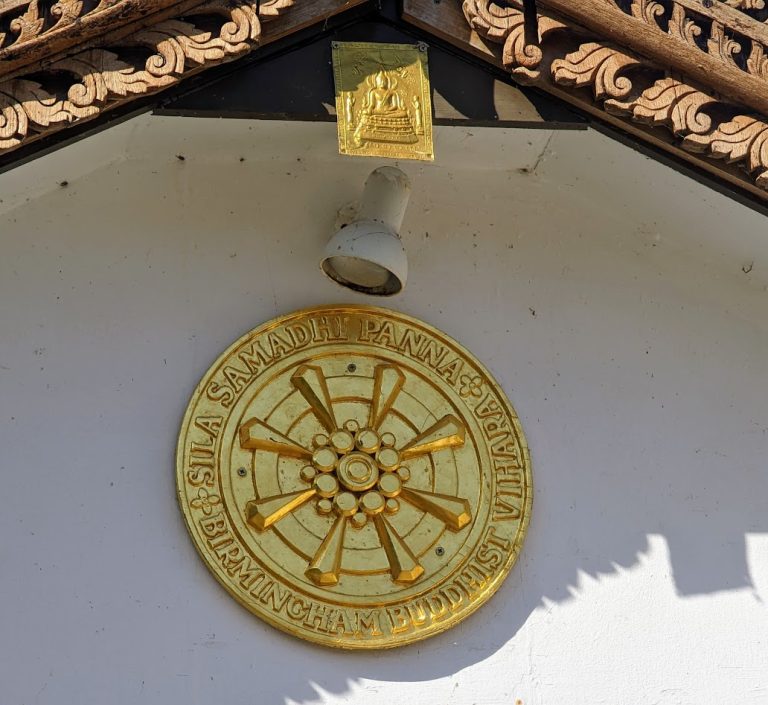
Writing above the front door of the Birmingham Buddhist Vihara © Frank Parker
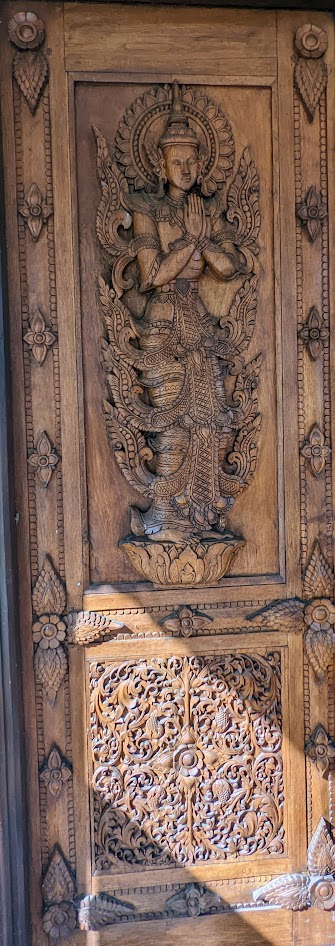
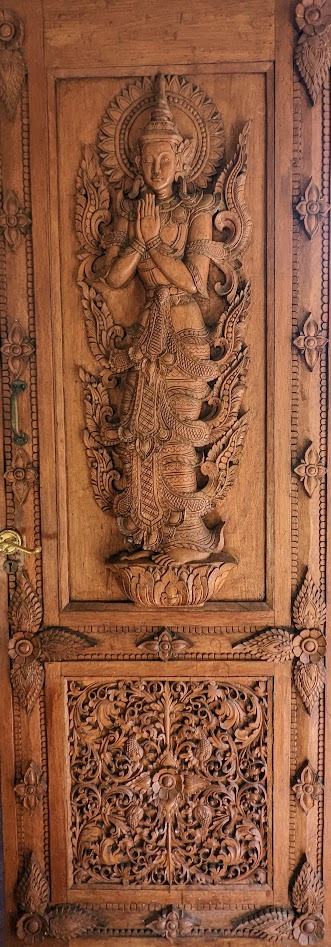
Wood carving on the front door at the Birmingham Buddhist Vihara © Frank Parker
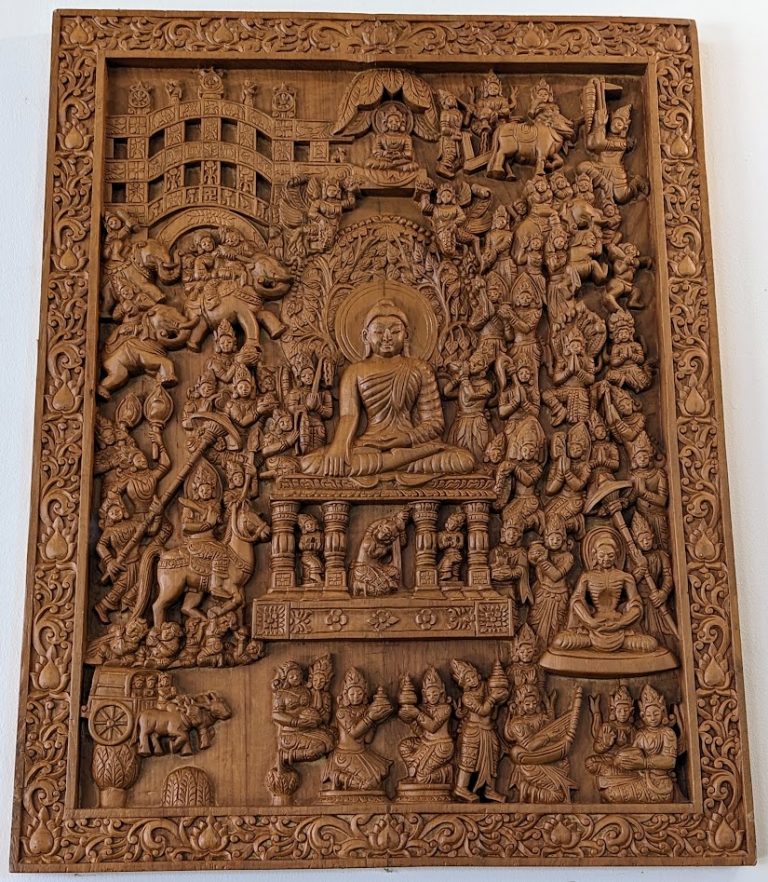
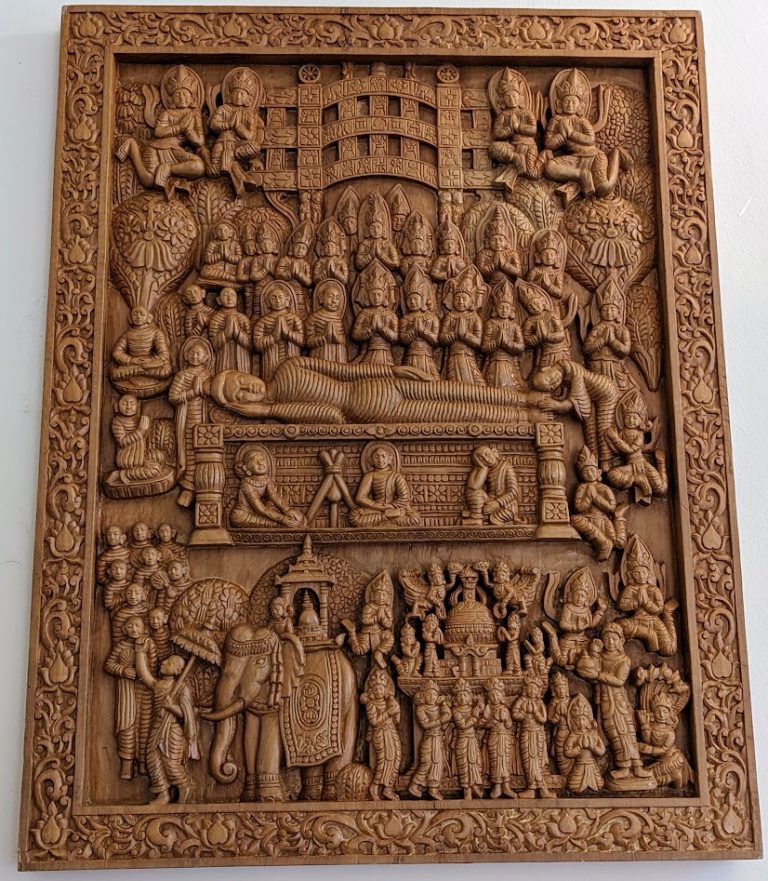
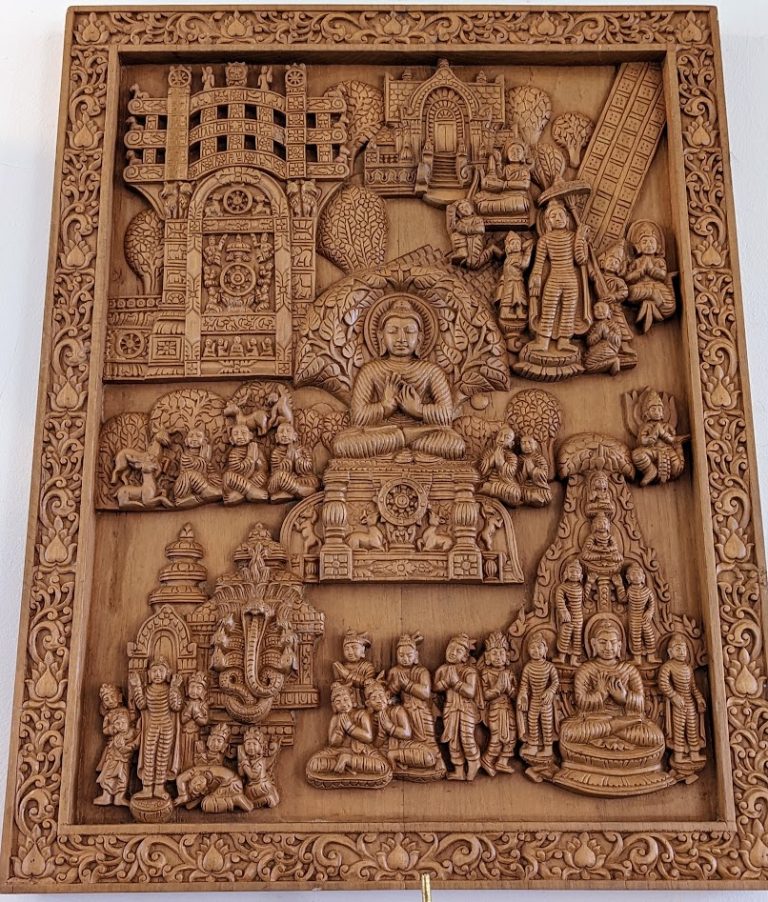
Wood carving inside the Birmingham Buddhist Vihara © Frank Parker
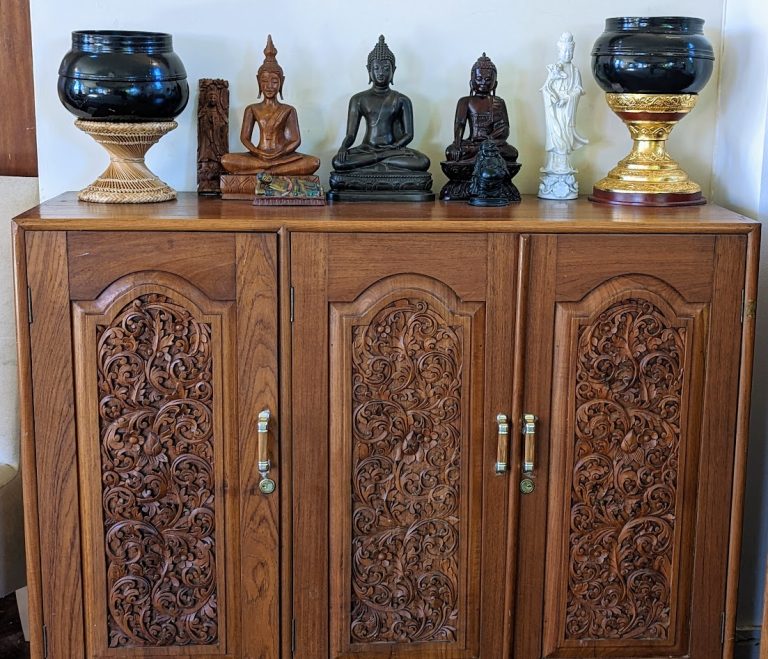
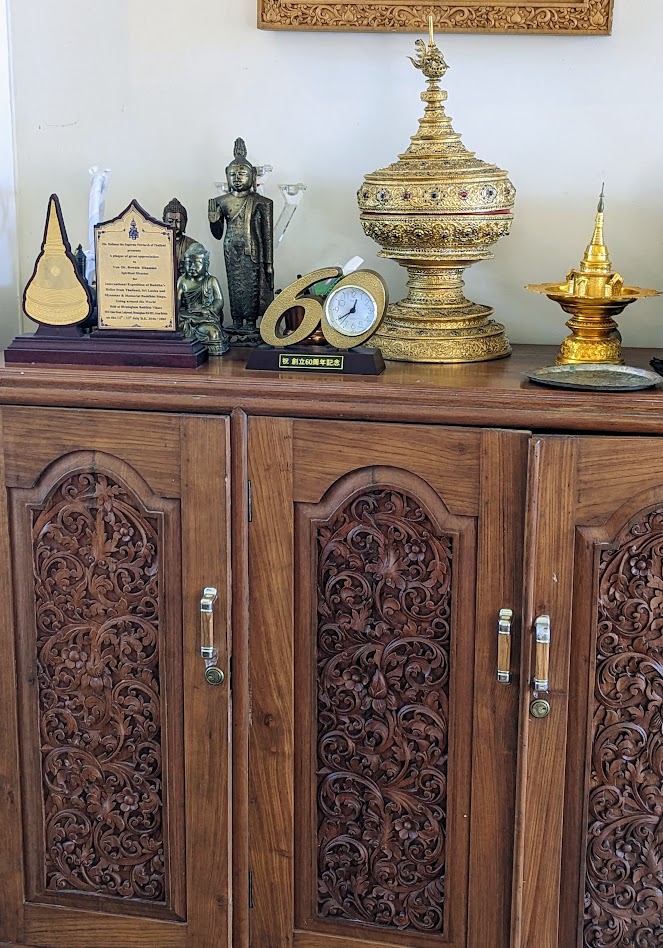
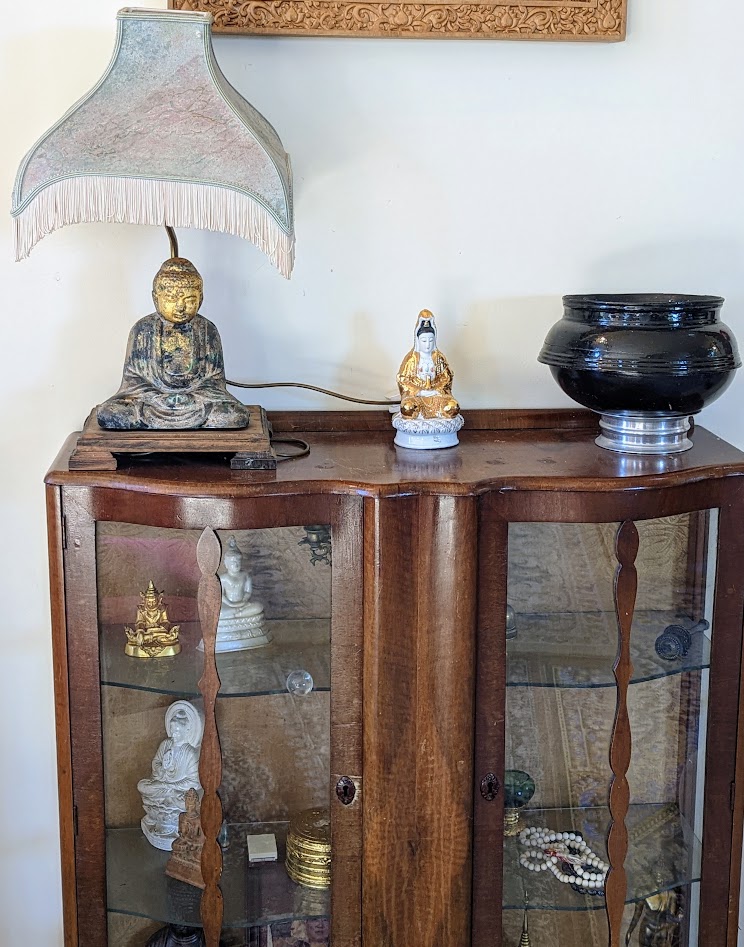
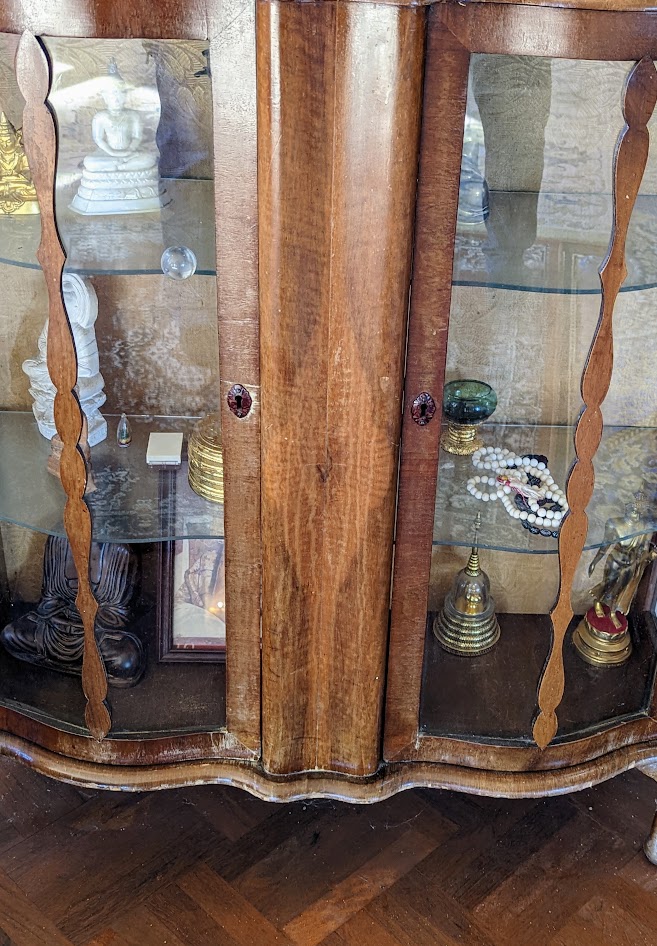
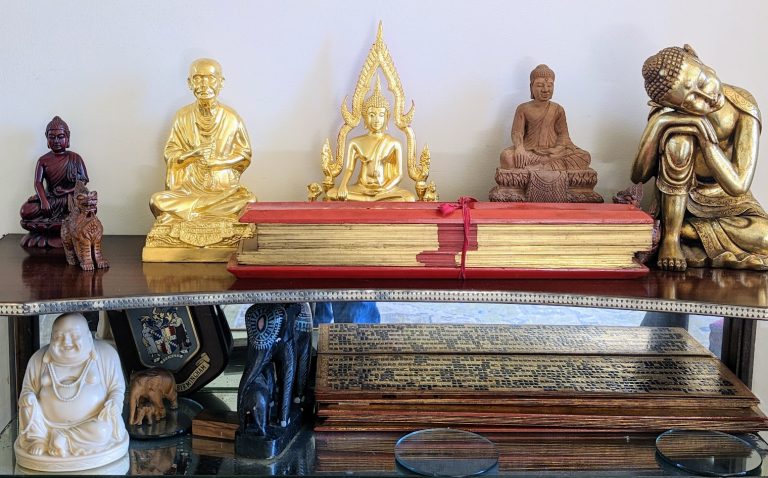
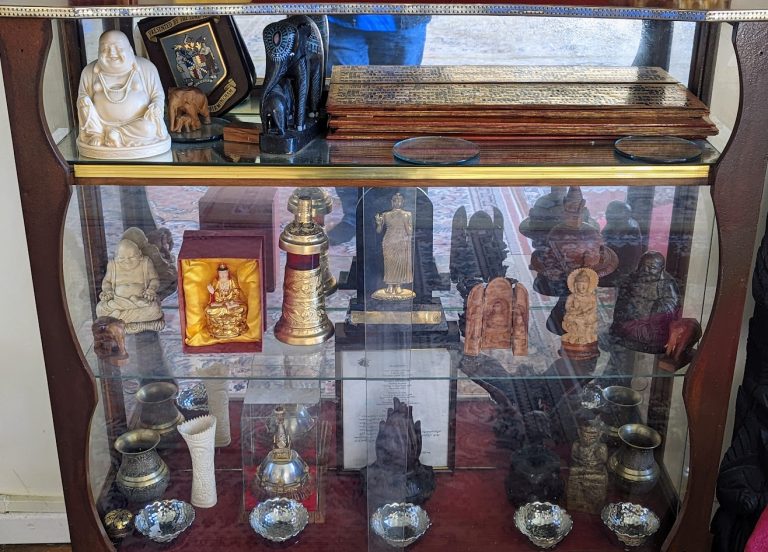
Wood carved cabinet and ornaments inside the Birmingham Buddhist Vihara © Frank Parker
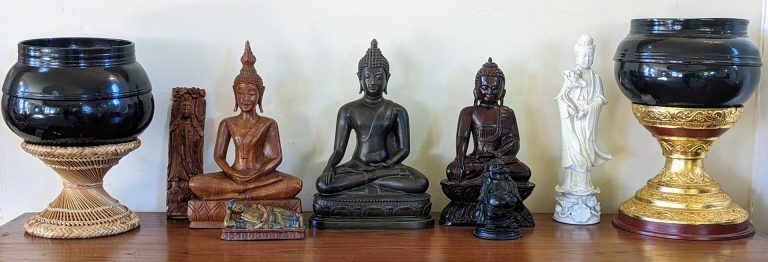
Ornaments inside the Birmingham Buddhist Vihara © Frank Parker
Wood carved cabinet and ornaments inside the Birmingham Buddhist Vihara © Frank Parker

Blog Posts

Links


The Birmingham Buddhist Vihara Photos – Page 2

© Frank Parker

Here are more photos I took on my first visit to the Birmingham Buddhist Vihara on 17/09/22.  

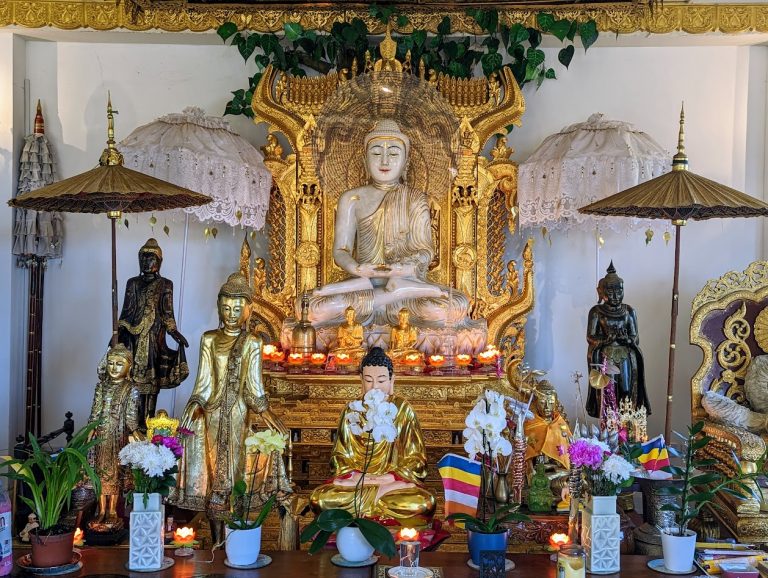
Ornaments inside the Birmingham Buddhist Vihara © Frank Parker
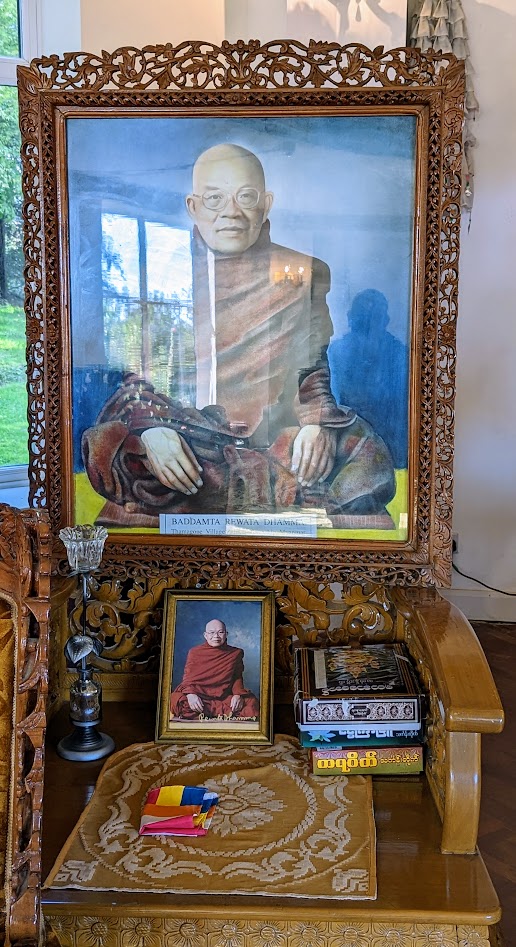
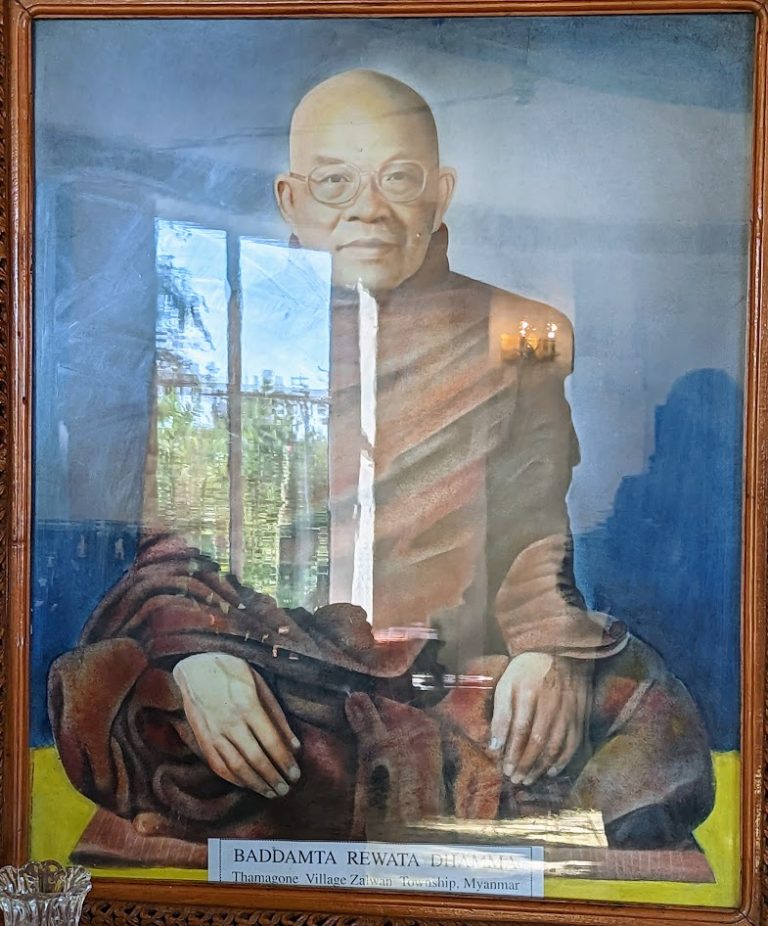
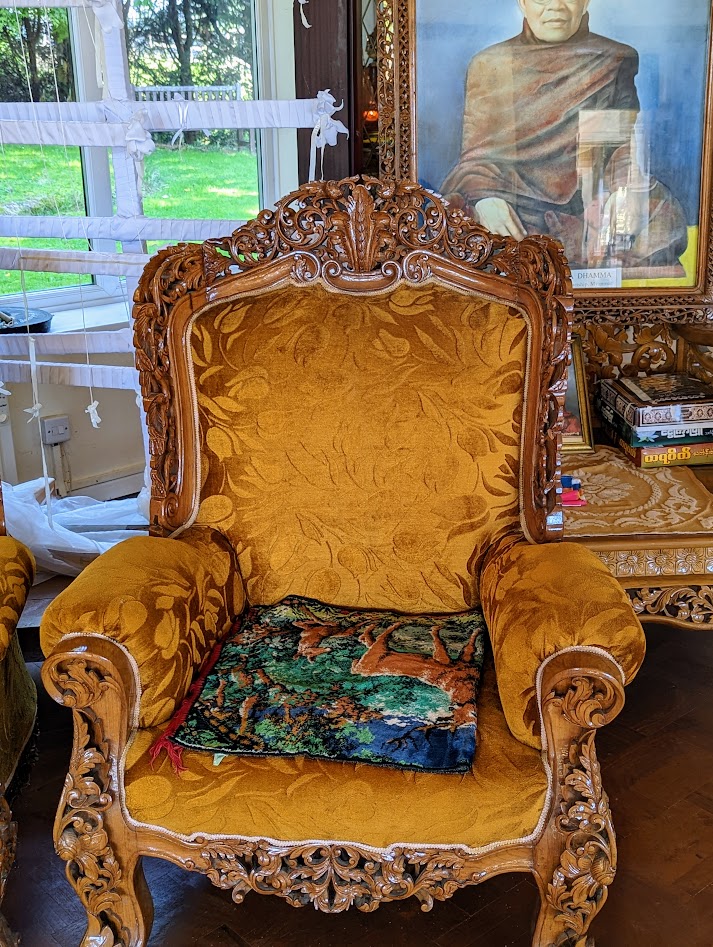
Baddamta Rewata Dhamma and wood carved chair inside the Birmingham Buddhist Vihara © Frank Parker
Baddamta Rewata Dhamma inside the Birmingham Buddhist Vihara © Frank Parker
Wood-carved chair inside the Birmingham Buddhist Vihara © Frank Parker
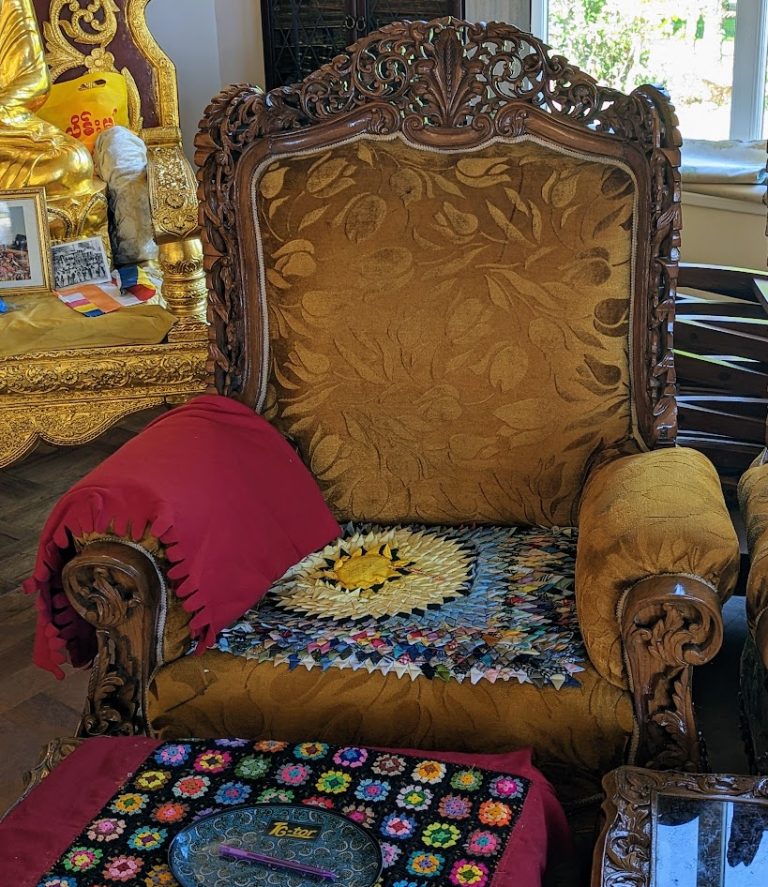
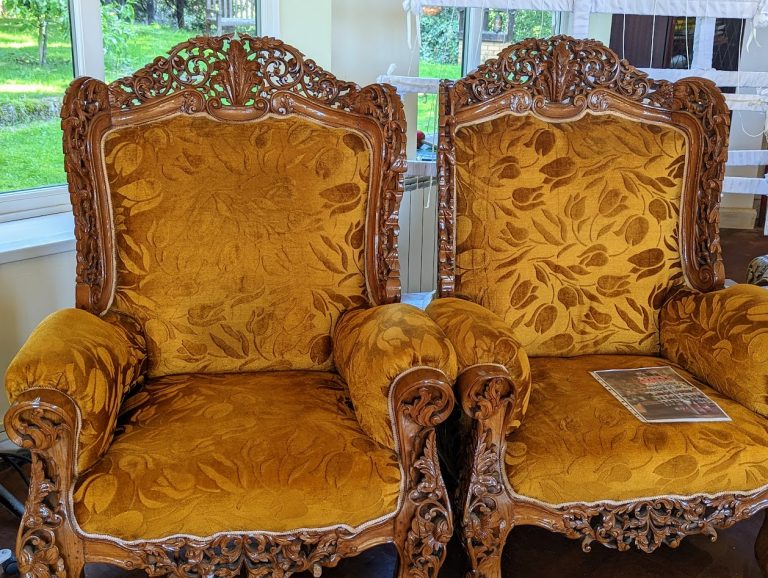
Wood-carved chairs inside the Birmingham Buddhist Vihara © Frank Parker
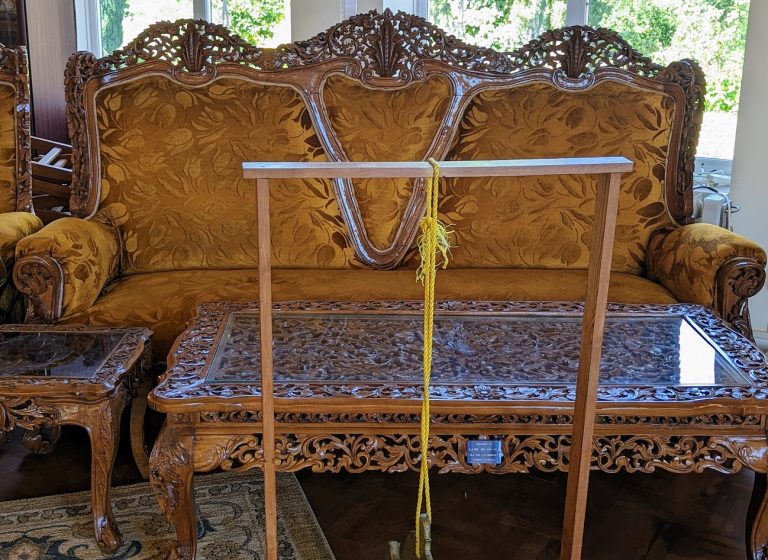
Wood-carved settee and gong inside the Birmingham Buddhist Vihara © Frank Parker
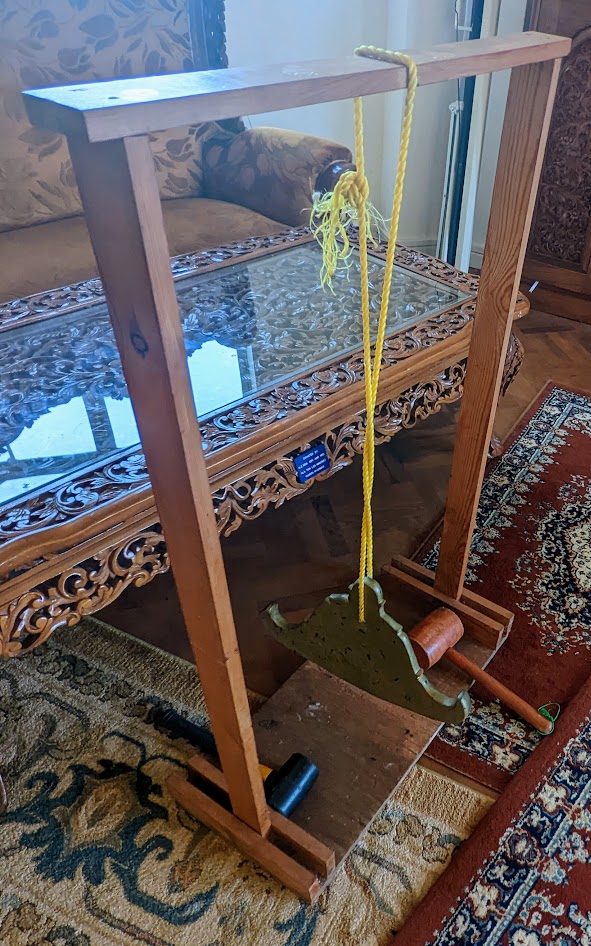
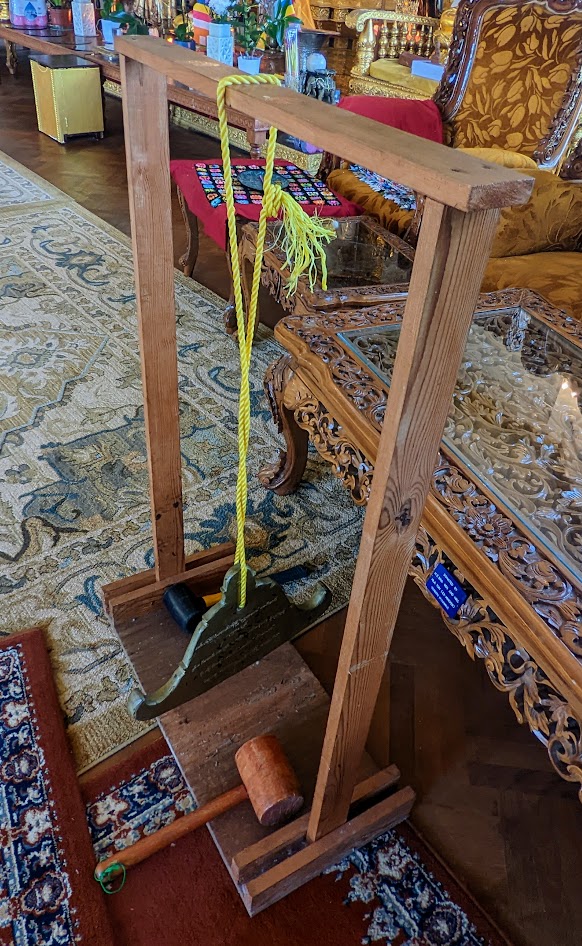
A gong inside the Birmingham Buddhist Vihara © Frank Parker
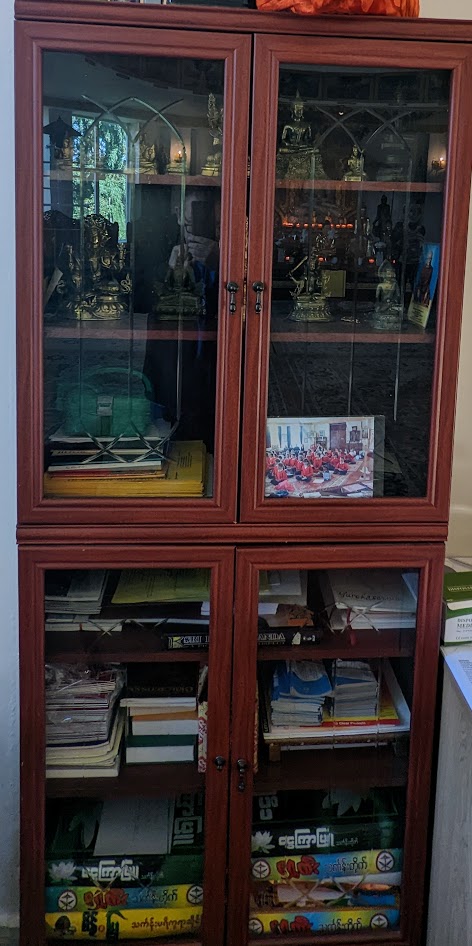
A wooden cabinet and ornaments inside the Birmingham Buddhist Vihara © Frank Parker
A wooden cabinet, ornaments and books inside the Birmingham Buddhist Vihara © Frank Parker
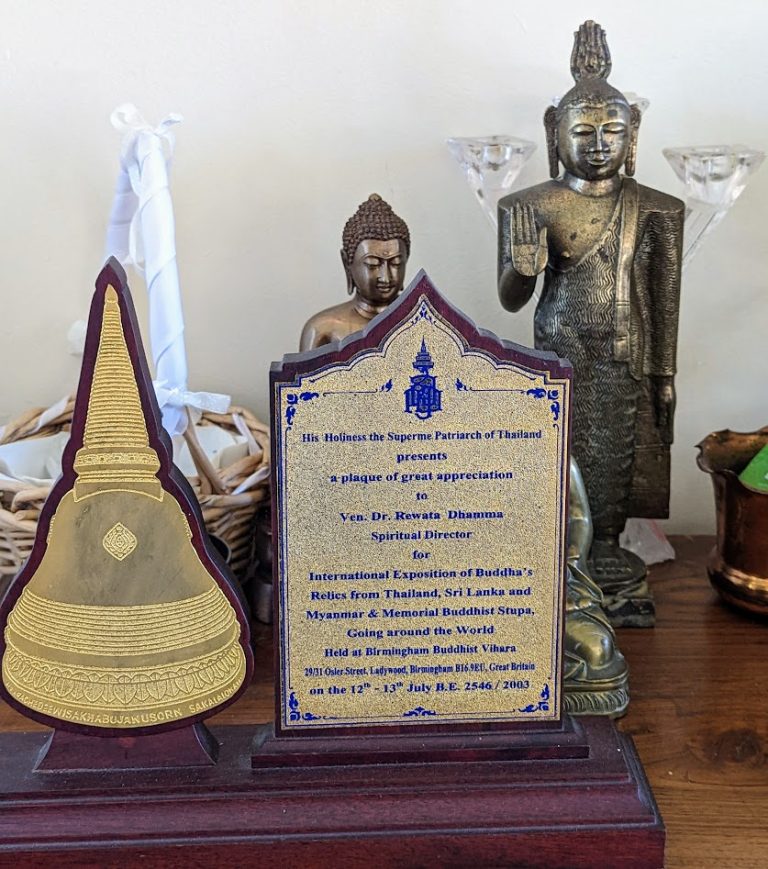
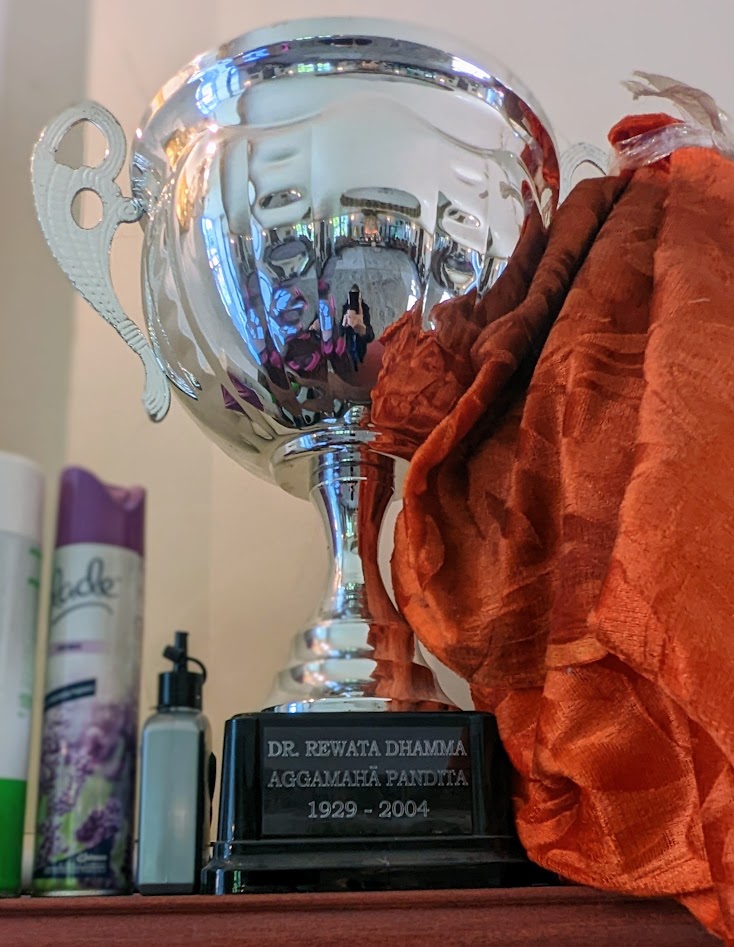
A trophy inside the Birmingham Buddhist Vihara © Frank Parker
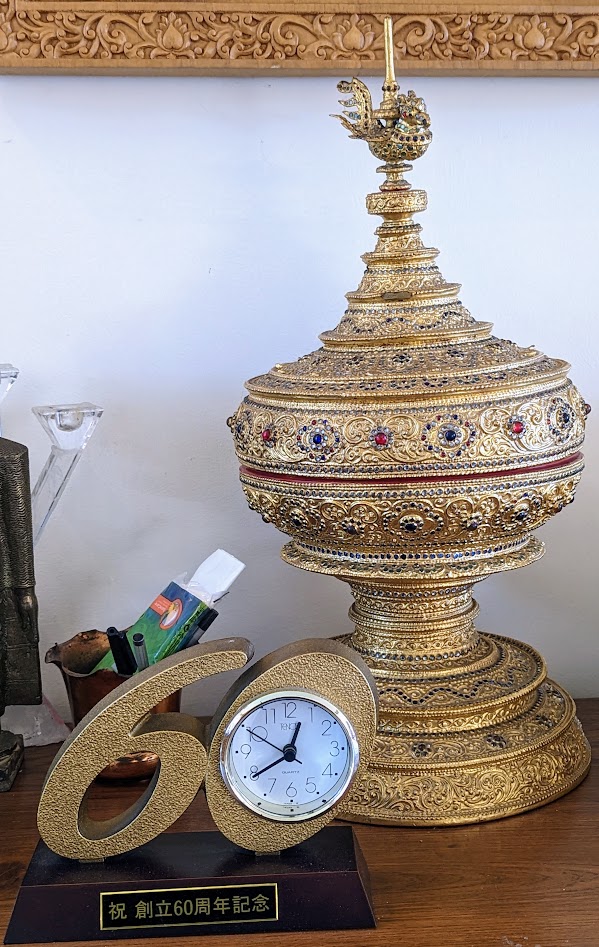
A cabinet and ornaments inside the Birmingham Buddhist Vihara © Frank Parker
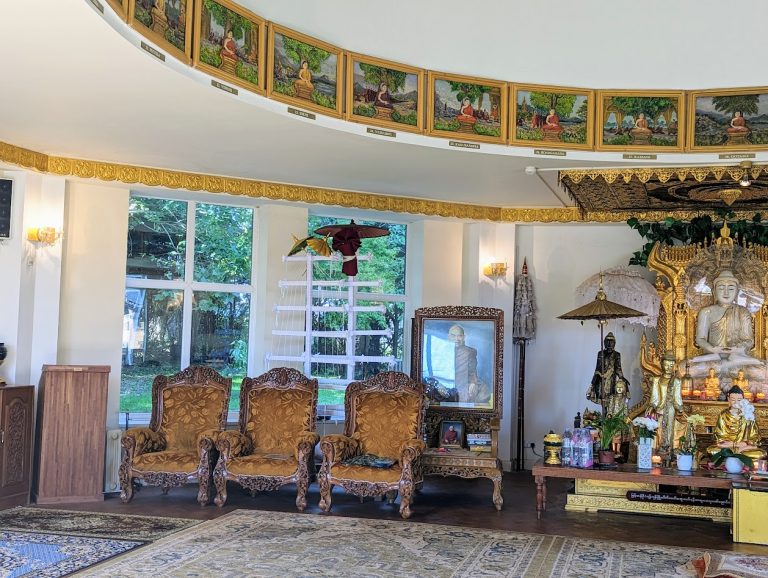
Inside the Birmingham Buddhist Vihara © Frank Parker

Blog Posts

Links


The Birmingham Buddhist Vihara Photos – Page 3

© Frank Parker

Here are more photos I took on my first visit to the Birmingham Buddhist Vihara on 17/09/22.  

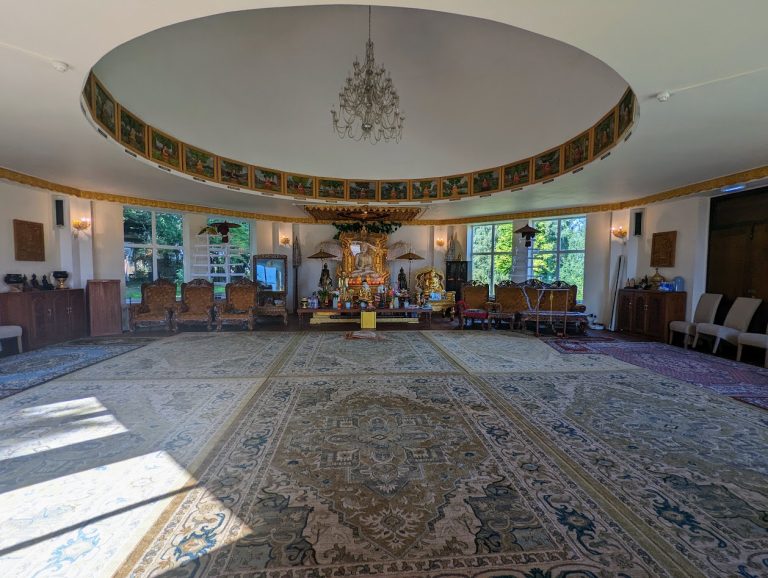
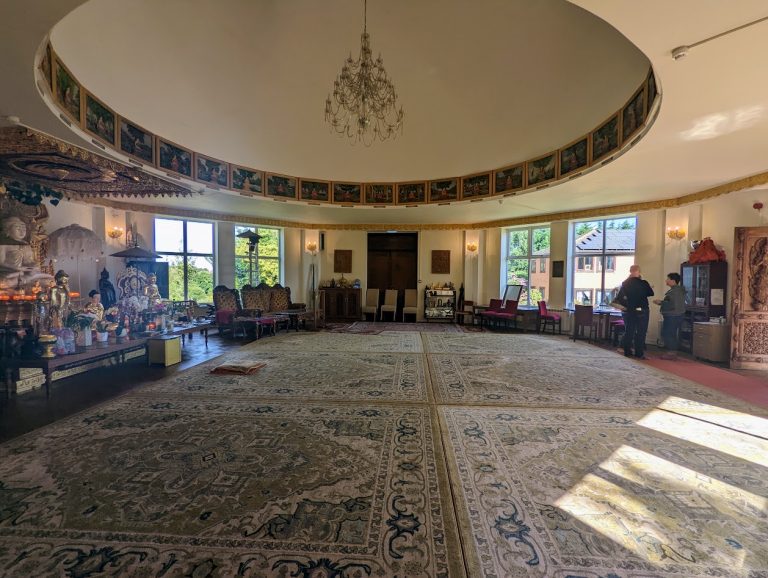
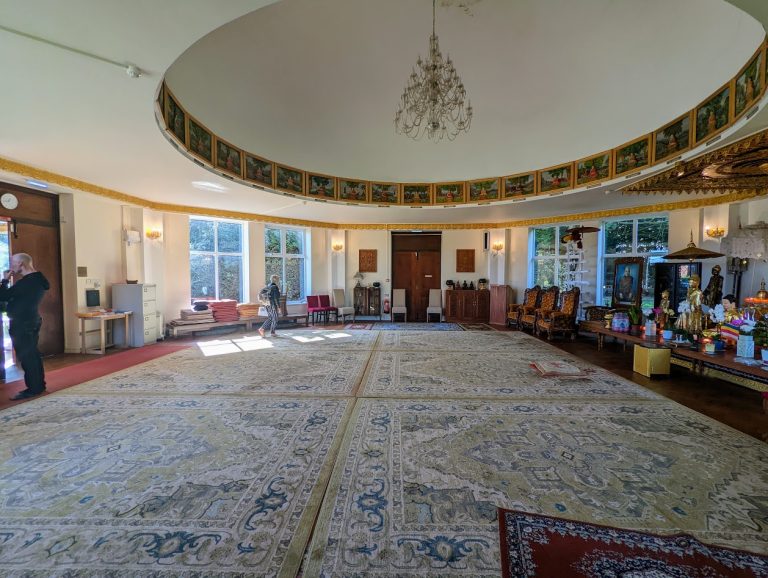
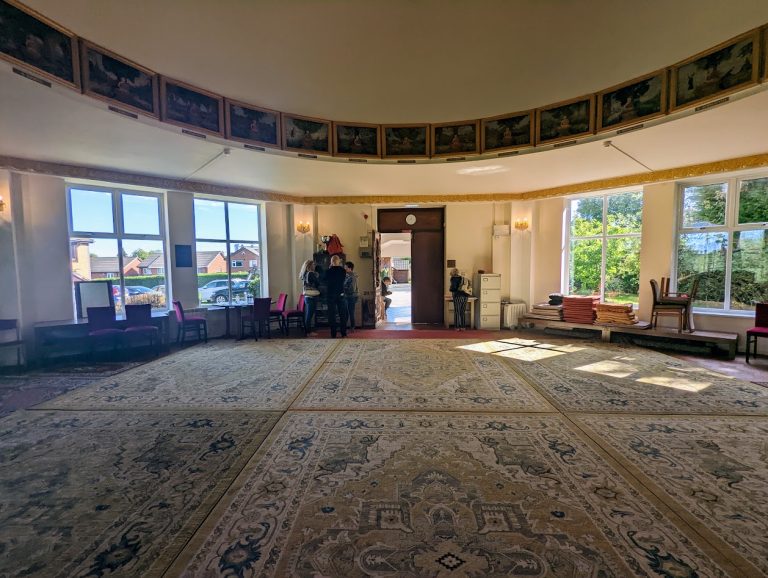
Inside the Birmingham Buddhist Vihara © Frank Parker

Blog Posts

Links