YouTube

YouTube Logo
Image © YouTube via Wikipedia

YouTube began in 2005, and most of you reading this are aware of it and have used it, or do use it often, unless you live on another planet!

I created my YouTube channel in 2006 and, sadly, I haven’t done much on it due to many personal and health reasons, mainly because of struggling with my Mental Health. I planned to do more, I planned to get better confidence wise and content wise and then my life got in the way and shit happened and often, but now, in 2026, I am trying hard to rectify all that.  I can’t change the past, and I am not looking into the future, but right now, I am doing the best I can to make the present a better place to live in for my state of mind.  I take every day as it comes, and working on My YouTube Channel and website is an important part of that for me.

The original videos I put up were about my favourite Football team Birmingham City, my beloved, and sadly missed, pets, Rocky and Rosie, a Black Country L.P. that was my Dad’s and one about fire! 

I added some short videos more recently and plan to add more related content that tie in with my website a.s.ap.   You can see my channel here.  However, on this page, you can read all about the history of YouTube. 

About YouTube 

YouTube is an American online video sharing platform owned by Google and is headquartered in San Bruno, California, U.S.A.  YouTube was founded on February the 14th, 2005 and is the second-most-visited website in the world, after Google itself.  In January 2024, YouTube had more than 2.7 billion monthly active users, who collectively consumed more than one billion hours of video content every day.  As of May 2019, videos were being uploaded to the platform at a rate of more than 500 hours of content per minute, and as of mid-2024, there were approximately 14.8 billion videos in total.

On November, the 13th, 2006, YouTube was purchased by Google for 1.65 billion dollars (equivalent to 2.44 billion dollars in 2025).  Google expanded YouTube’s business model from generating revenue through advertisements alone to offering paid content such as movies and exclusive content explicitly produced for YouTube.  It also offers YouTube Premium, a paid subscription option for watching content without ads.  YouTube incorporated the Google AdSense program, generating more revenue for both YouTube and approved content creators.  In 2023, YouTube’s advertising revenue totalled $31.7 billion, a 2% increase from the $31.1 billion reported in 2022.  From financial quarter 4 2023 to financial quarter 2024, YouTube’s combined revenue from advertising and subscriptions exceeded $50 billion.

Since its purchase by Google, YouTube has expanded beyond the core website, creating mobile apps, network television, games, and the ability to link with other platforms.  Video categories on YouTube include music videos, video clips, news, short and feature films, songs, documentaries, movie trailers, teasers, TV spots, live streams, vlogs, and more.  Most content is generated by individuals, including collaborations between YouTubers and corporate sponsors.  Established media, news, and entertainment corporations have also created and expanded their visibility on YouTube channels to reach bigger audiences.

YouTube has had unprecedented social impact, influencing popular culture, internet trends, and creating multimillionaire celebrities.  Despite its growth and success, the platform has been criticised for its facilitation of the spread of misinformation and copyrighted content, routinely violating its users’ privacy, excessive censorship, endangering the safety of children and their well-being, and for its inconsistent implementation of platform guidelines.

YouTube Logo Used Since 2025
Image © YouTube via Wikipedia

YouTube’s logo, used since June 2024.

The YouTube logo was introduced in June 2024, using a custom font based on YouTube New typeface.  It is similar to the 2017 logo except that the font is thinner and the play button symbol uses a more pinky shade of red.  As of February 2026, this logo has almost rolled out completely.  The 2017 logo is still used in a few instances.

The History Of YouTube

Founding And Initial Growth (2005 – 2006)

YouTube was founded by Chad Hurley, Steve Chen and Jawed Karim.  They were former employees of PayPal.  They had become wealthy after Google’s acquisition of the company on November the 13th, 2006.   It was purchased for 1.65 billion dollars (equivalent to 2.44 billion dollars in 2025).  Hurley had studied design at the Indiana University of Pennsylvania, and Chen and Karim studied computer science together at the University of Illinois Urbana-Champaign.

According to a story that has often been repeated in the media, Hurley and Chen developed the idea for YouTube during the early months of 2005, after they had experienced difficulty sharing videos that had been shot at a dinner party at Chen’s flat in San Francisco.  Karim did not attend the party and denied that it had occurred, but Chen remarked that the idea that YouTube was founded after a dinner party that was probably very strengthened by marketing ideas around creating a very digestible story.

Karim said the inspiration for YouTube came from the Super Bowl XXXVIII half-time show controversy when Janet Jackson’s breast was briefly exposed by Justin Timberlake during the half-time show.  Karim could not easily find video clips of the incident and the 2004 Indian Ocean tsunami online, which led to the idea of a video-sharing site.  Hurley and Chen said that the original idea for YouTube was a video version of an online dating service and had been influenced by the website Hot or Not.  They created posts on Craigslist asking attractive women to upload videos of themselves to YouTube in exchange for a $100 reward.  Difficulty in finding enough dating videos led to a change of plans, with the site’s founders deciding to accept uploads of any video.

YouTube began as a venture capital–funded technology startup. Between November 2005 and April 2006, the company raised money from various investors, with Sequoia Capital and Artis Capital Management being the largest two.  YouTube’s early headquarters were situated above a pizzeria and a Japanese restaurant in San Mateo, California.  In February 2005, the company registered www.youtube.com. The first video was uploaded on April the 23rd, 2005.  Titled Me at the zoo, it shows co-founder Jawed Karim at the San Diego Zoo and can still be viewed on the site.  The same day, the company launched a public beta and by November, a Nike ad featuring Ronaldinho became the first video to reach one million total views.  The site exited beta in December 2005, by which time the site was receiving 8 million views a day.  Clips at the time were limited to 100 megabytes, as little as 30 seconds of footage.

YouTube was not the first video-sharing site on the Internet, there was also Vimeo.  That was founded in November 2004, though that site remained a side project of its developers from CollegeHumor.  On December, the 17th, 2005, the same week YouTube exited beta, NBCUniversal Saturday Night Live ran a sketch called Lazy Sunday by The Lonely Island.  Besides helping to bolster ratings and long-term viewership for Saturday Night Live, the video‘s status as an early viral video helped establish YouTube as an important website.  Unofficial uploads of the skit to YouTube drew in more than five million collective views by February 2006 before they were removed when NBCUniversal requested it two months later based on copyright concerns.  Despite eventually being taken down, these duplicate uploads of the skit helped popularise YouTube’s reach and led to the upload of more third-party content.  The site grew rapidly.  In July 2006, the company announced that more than 65,000 new videos were being uploaded every day and that the site was receiving 100 million video views per day.

The choice of the name youtube.com led to problems for a similarly named website, utube.com.  That site’s owner, Universal Tube & Rollform Equipment (Universal Tube), filed a lawsuit against YouTube in November 2006, after being regularly overloaded by people looking for YouTube.  Universal Tube subsequently changed its website to www.utubeonline.com. 

Chad Hurley
Image © The Bui Brothers via Wikipedia

Chad Hurley.

Steve Chen
Image © TaiwanPlus via Wikipedia

Steve Chen.

Jawed Karim
Image © Robin Brown via Wikipedia and is in the public domain

Jawed Karim.

Original YouTube Logo Used Until 2007
Image © YouTube via Wikipedia and is in the public domain

The YouTube logo used from its launch until 2007.

It returned in 2008 before being removed again in 2010. Another version without “Broadcast Yourself” was used until 2011.

Broadcast Yourself Era (2006 – 2013)

On October the 9th, 2006, Google announced that they had acquired YouTube for 1.65 billion dollars in Google stock.  The deal was finalised on November the 13th, 2006.  Google’s acquisition launched newfound interest in video-sharing sites IAC, which now owned Vimeo, focused on supporting the content creators to distinguish itself from YouTube.  It was at this time that YouTube adopted the slogan Broadcast Yourself.  The company experienced rapid growth. The Daily Telegraph wrote that in 2007, YouTube consumed as much bandwidth as the entire Internet in 2000.  By 2010, the company had reached a market share of around 43% and more than 14 billion views of videos, according to comScore.  That year, the company simplified its interface to increase the time users would spend on the site.

In 2011, more than three billion videos were being watched each day with 48 hours of new videos uploaded every minute.  Most of these views came from a relatively small number of videos, according to a software engineer at that time, 30% of videos accounted for 99% of views on the site.  That year, the company again changed its interface and at the same time, introduced a new logo with a darker shade of red.  A subsequent interface change, designed to unify the experience across desktop, T.V., and mobile, was rolled out in 2013.  By that point, more than 100 hours were being uploaded every minute, increasing to 300 hours by November 2014.

During that time, the company also went through some organisational changes.  In October 2006, YouTube moved to a new office in San Bruno, California.  Hurley announced that he would be stepping down as chief executive officer of YouTube to take an advisory role and that Salar Kamangar would take over as head of the company in October 2010.  In April 2009, YouTube partnered with Vevo.  In April 2010, Lady Gaga’s Bad Romance became the most-viewed video, becoming the first video to reach 200 million views on May the 9th, 2010.

YouTube faced a major lawsuit by Viacom International in 2011 that nearly resulted in the discontinuation of the website.  The lawsuit was filed due to alleged copyright infringement of Viacom’s material by YouTube.  However, the United States Court of Appeals for the Second Circuit ruled that YouTube was not liable, and thus, YouTube won the case in 2012.

901 Cherry Avenue, San Bruno, California
Image © Coolcaesar via Wikipedia and is in the public domain

YouTube’s headquarters at 901 Cherry Avenue, San Bruno, California in April 2017.

Susan Wojcicki’s Leadership (2014 – 2023)

Susan Wojcicki was appointed C.E.O. of YouTube in February 2014.  In January 2016, YouTube expanded its headquarters in San Bruno by purchasing an office park for $215 million.  The complex has 51,468 square metres (554,000 square feet) of space and can house up to 2,800 employees.  YouTube officially launched the polymer redesign of its user interfaces based on Material Design language as its default, as well as a redesigned logo that is built around the service’s play button emblem in August 2017.

Through this period, YouTube tried several new ways to generate revenue beyond advertisements.  In 2013, YouTube launched a pilot program for content providers to offer premium, subscription-based channels.  This effort was discontinued in January 2018 and relaunched in June, with $4.99 channel subscriptions.  These channel subscriptions complemented the existing Super Chat ability, launched in 2017, which allows viewers to donate between $1 and $500 to have their comment highlighted.  In 2014, YouTube announced a subscription service known as Music Key, which bundled ad-free streaming of music content on YouTube with the existing Google Play Music service.  The service continued to evolve in 2015 when YouTube announced YouTube Red, a new premium service that would offer ad-free access to all content on the platform (succeeding the Music Key service released the previous year), premium original series, and films produced by YouTube personalities, as well as background playback of content on mobile devices.  YouTube also released YouTube Music, a third app oriented towards streaming and discovering the music content hosted on the YouTube platform.

The company also attempted to create products appealing to specific viewers.  YouTube released a mobile app known as YouTube Kids in 2015, which was designed to provide an experience optimised for children.  It features a simplified user interface, curated selections of channels featuring age-appropriate content, and parental control features.  Also in 2015, YouTube launched YouTube Gaming.  This is a video gaming-oriented vertical and app for videos and live-streaming, intended to compete with the Amazon.com owned Twitch.  In April 2018, a shooting occurred at YouTube’s headquarters in San Bruno, California, which wounded four and resulted in the death of the shooter.

By February 2017, one billion hours of YouTube videos were being watched every day, and 400 hours worth of videos were uploaded every minute.  Two years later, the uploads had risen to more than 500 hours per minute.  During COVID, when most of the world was under stay-at-home orders, usage of services like YouTube significantly increased.  Forbes estimated that YouTube accounted for 16% of all internet traffic, as of 2024, up from 11% in 2018, before COVID.  In response to E.U. officials requesting that such services reduce bandwidth to make sure medical entities had sufficient bandwidth to share information, YouTube and Netflix said they would reduce streaming quality for at least thirty days as to cut bandwidth use of their services by 25% to comply with the E.U.’s request.  YouTube later announced that they would continue with this move worldwide saying “We continue to work closely with governments and network operators around the globe to do our part to minimise stress on the system during this unprecedented situation.”

After a 2018 complaint alleging violations of the Children’s Online Privacy Protection Act (C.O.P.P.A.), the company was fined $170 million by the FTC for collecting personal information from minors under the age of 13.  YouTube was also ordered to create systems to increase children’s privacy.  Following criticisms of its implementation of those systems, YouTube started treating all videos designated as made for kids as liable under C.O.P.P.A. on January the 6th, 2020.  Joining the YouTube Kids app, the company created a supervised mode, designed more for tweens, in 2021.  Additionally, to compete with TikTok and Instagram Reels, YouTube released YouTube Shorts, a short-form video platform.  During that period, YouTube entered disputes with other tech companies.  For over a year, in 2018/ 19, no YouTube app was available for Amazon Fire products.  In 2020, Roku removed the YouTube TV app from its streaming store after the two companies were unable to reach an agreement.

After testing earlier in 2021, YouTube removed public display of dislike counts on videos in November 2021, claiming the reason for the removal was, based on its internal research, that users often used the dislike feature as a form of cyberbullying and brigading.  While some users praised the move as a way to discourage trolls, others felt that hiding dislikes would make it harder for viewers to recognise clickbait or unhelpful videos and that other features already existed for creators to limit bullying.  YouTube co-founder Jawed Karim referred to the update as a stupid idea and said that the real reason behind the change was not a good one, and not one that will be publicly disclosed.  He felt that users’ ability on a social platform to identify harmful content was essential, saying that the process works, and there’s a name for it –  the wisdom of the crowds.  He said the process breaks when the platform interferes with it and then, the platform invariably declines.  Shortly after the announcement, software developer Dmitry Selivanov created Return YouTube Dislike, an open-source, third-party browser extension for Chrome and Firefox that allows users to see a video’s number of dislikes.  In a letter published on January the 25th, 2022, by then YouTube C.E.O. Susan Wojcicki, acknowledged that removing public dislike counts was a controversial decision, but reiterated that she stands by this decision, claiming that it reduced dislike attacks.

In 2022, YouTube launched an experiment where the company would show users who watched longer videos on T,V,’s a long chain of short unskippable adverts, intending to consolidate all ads into the beginning of a video.  Following public outrage over the unprecedented amount of unskippable ads, YouTube ended the experiment on September the 19th of the same year.  In October, YouTube announced that they would be rolling out customisable user handles in addition to channel names, which would also become channel U.R.L’s.

YouTube Logo Used Since 2025
Image © YouTube via Wikipedia and is in the public domain

YouTube’s logo from 2015 until 2017.

Neal Mohan’s Leadership (2023 – Present)

On February the 16th, 2023, Wojcicki announced that she would step down as C.E.O., with Neal Mohan named as her successor.  Wojcicki took on an advisory role for Google and parent company Alphabet.  Wojcicki died a year and a half later from non-small-cell lung cancer, on August the 9th, 2024.  In late October 2023, YouTube began cracking down on the use of ad blockers on the platform.  Users of ad blockers may be given a pop-up warning saying “Video player will be blocked after 3 videos.” Users of ad blockers are shown a message asking them to allow ads or inviting them to subscribe to the ad-free YouTube Premium subscription plan.  YouTube says that the use of ad blockers violates its terms of service.  In April 2024, YouTube announced it would be strengthening their enforcement on third-party apps that violate YouTube’s Terms of Service, specifically ad-blocking apps.  Starting in June 2024, Google Chrome announced that it would be replacing Manifest V2 in favour of Manifest V3, effectively killing support for most ad-blockers.  Around the same time, YouTube started using server-side ad injection, which allows the platform to inject the ads directly into the video, instead of having the ad as a separate file which can be blocked.

In September 2023, YouTube announced an in-app gaming platform called Playables.  It was made accessible to all users in May 2024, expanding from an initial offering limited to premium subscribers.  In December 2024, YouTube began testing a new multiplayer feature for that service, supporting multiplayer functionality across desktop and mobile devices.  As of December 2024, the Playables catalogue has over 130 games in various genres, including trivia, action, and sports.  In December 2024, YouTube introduced new guidelines prohibiting videos with clickbait titles to enhance content quality and combat misinformation.  The platform aims to penalise creators using misleading or sensationalised titles, with potential actions including video removal or channel suspension.  According to YouTube, this guideline will gradually roll out in India first, but will expand to more countries in the coming months.

On February, the 14th, 2025, YouTube celebrated 20 years since its founding.  On July 30, 2025, amid the implementation of the Online Safety Act 2023 in the United Kingdom, Google announced that it would begin to enforce age assurance policies for selected users in the United States as a trial.  Machine learning will be used to determine the age of the user (regardless of any account information indicating their age) and restrict access to certain content and features across all Google properties, including YouTube (including, in particular, disabling personalised advertising and enabling certain digital wellbeing limits), if they are assumed to be under 18.  On YouTube, this will be based on factors such as searches and video history, and the age of the account.  The user must go through age verification via payment, scanned ID, or selfie to access all features if they are detected to be a minor.  On April, the 9th, 2025, YouTube expressed support for the NO FAKES Act of 2025, introduced by Senator Chris Coons (D-DE) and Senator Marsha Blackburn (R-TN), and announced an expansion of its pilot program that is designed to identify content generated by A.I.

YouTube's Logo From August 2017 Until February 2025
Image © YouTube via Wikipedia and is in the public domain

YouTube’s logo from August 2017 until February 2025.

YouTube Features

YouTube offers different features based on user verification, such as standard or basic features like uploading videos, creating playlists, and using YouTube Music, with limits based on daily activity (verification via phone number or channel history increases feature availability and daily usage limits), intermediate or additional features like longer videos (over 15 minutes), live-streaming, custom thumbnails, and creating podcasts, advanced features like content I.D. appeals, embedding live streams, applying for monetisation, clickable links, adding chapters, and pinning comments on videos or posts.

Read more here.

YouTube Videos

In January 2012, it was estimated that visitors to YouTube spent an average of 15 minutes a day on the site, in contrast to the four or five hours a day spent by a typical U.S. citizen watching television.  In 2017, viewers on average watched YouTube on mobile devices for more than an hour every day.  In December 2012, two billion views were removed from the view counts of Universal and Sony Music videos on YouTube, prompting a claim by The Daily Dot that the views had been deleted due to a violation of the site’s terms of service, which ban the use of automated processes to inflate view counts.  That was disputed by Billboard, which said that the two billion views had been moved to Vevo, since the videos were no longer active on YouTube.

On August, the 5th, 2015, YouTube patched the formerly notorious behaviour, which caused a video’s view count to freeze at 301 (later 301+) until the actual count was verified to prevent view count fraud.  YouTube view counts again began updating in real time.  Since September 2019, subscriber counts are abbreviated.  Only three leading digits of channels’ subscriber counts are indicated publicly, compromising the function of third-party real-time indicators such as Social Blade.  Exact counts remain available to channel operators inside YouTube Studio.

On November, the 11th, 2021, after testing out this change in March of the same year, YouTube announced it would start hiding dislike counts on videos, making them invisible to viewers.  The company stated the decision was in response to experiments which confirmed that smaller YouTube creators were more likely to be targeted in dislike brigading and harassment.  Creators will still be able to see the number of likes and dislikes in the YouTube Studio dashboard tool, according to YouTube.  YouTube has an estimated 14.8 billion videos with about 4% of those never having a view.  Just over 85% have fewer than 1,000 views.

Read more here.

Copyright Issues

YouTube has faced numerous challenges and criticisms in its attempts to deal with copyright, including the site’s first viral video, Lazy Sunday, which had to be taken down due to copyright concerns.  At the time of uploading a video, YouTube users are shown a message asking them not to violate copyright laws.  Despite this advice, many unauthorised clips of copyrighted material remain on YouTube.  YouTube does not view videos before they are posted online, and it is left to copyright holders to issue a D.M.C.A. takedown notice pursuant to the terms of the Online Copyright Infringement Liability Limitation Act.  Any successful complaint about copyright infringement results in a YouTube copyright strike.  Three successful complaints for copyright infringement against a user account will result in the account and all of its uploaded videos being deleted.   From 2007 to 2009 organisations including Viacom, Mediaset, and the English Premier League have filed lawsuits against YouTube, claiming that it has done too little to prevent the uploading of copyrighted material.

In August 2008, a U.S. court ruled in Lenz v. Universal Music Corp. that copyright holders cannot order the removal of an online file without first determining whether the posting reflected fair use of the material.  YouTube’s owner Google announced in November 2015 that they would help cover the legal cost in select cases where they believe fair use defences apply.  In the 2011 case of Smith v. Summit Entertainment LLC, professional singer Matt Smith sued Summit Entertainment for the wrongful use of copyright takedown notices on YouTube.  He asserted seven causes of action, and four were ruled in Smith’s favour.  In April 2012, a court in Hamburg ruled that YouTube could be held responsible for copyrighted material posted by its users.  On November, the 1st, 2016, the dispute with G.E.M.A. was resolved, with Google content I.D. being used to allow advertisements to be added to videos with content protected by G.E.M.A.

In April 2013, it was reported that Universal Music Group and YouTube have a contractual agreement that prevents content blocked on YouTube by a request from U.M.G. from being restored, even if the uploader of the video files a D.M.C.A. counter-notice.  As part of YouTube Music, Universal and YouTube signed an agreement in 2017, which was followed by separate agreements other major labels, which gave the company the right to advertising revenue when its music was played on YouTube.  By 2019, creators were having videos taken down or demonetised when Content I.D. identified even short segments of copyrighted music within a much longer video, with different levels of enforcement depending on the record label.  Experts noted that some of these clips said qualified for fair use.

Read more here and here.

Content I.D.

In June 2007, YouTube began trials of a system for automatic detection of uploaded videos that infringe copyright.  Google C.E.O. Eric Schmidt regarded this system as necessary for resolving lawsuits such as the one from Viacom, which alleged that YouTube profited from content that it did not have the right to distribute.  The system, which was initially called Video Identification and later became known as Content I.D., creates an I.D. File for copyrighted audio and video material, and stores it in a database.  When a video is uploaded, it is checked against the database, and flags the video as a copyright violation if a match is found.  When this occurs, the content owner has the choice of blocking the video to make it unviewable, tracking the viewing statistics of the video, or adding advertisements to the video.

An independent test in 2009 uploaded multiple versions of the same song to YouTube and concluded that while the system was surprisingly resilient in finding copyright violations in the audio tracks of videos, it was not infallible.  The use of Content I.D. to remove material automatically has led to controversy in some cases, as the videos have not been checked by a human for fair use.  If a YouTube user disagrees with a decision by Content I.D., it is possible to fill in a form disputing the decision.  Before 2016, videos were not monetised until the dispute was resolved.  Since April 2016, videos continue to be monetised while the dispute is in progress, and the money goes to whoever won the dispute.  Should the uploader want to monetise the video again, they may remove the disputed audio in the Video Manager.  YouTube has cited the effectiveness of Content I.D. as one of the reasons why the site’s rules were modified in December 2010 to allow some users to upload videos of unlimited length.

Read more here.

Russia

In 2021, two accounts linked to RT DE, the German channel of the Russian state-owned RT network, were removed for breaching YouTube’s policies relating to COVID.  Russia threatened to ban YouTube after the platform deleted two German RT channels in September 2021.  Shortly after the Russian invasion of Ukraine in 2022, YouTube removed all channels funded by the Russian state.  YouTube expanded the removal of Russian content from its site to include channels described as pro-Russian.  In June 2022, the War Gonzo channel run by Russian military blogger and journalist Semyon Pegov was deleted.

In July 2023, YouTube removed the channel of British journalist Graham Phillips, active in covering the war in Donbas from 2014.  In August 2023, a Moscow court fined Google 3 million rubles, around $35,000, for not deleting what it said was fake news about the war in Ukraine.  In October 2024, a Russian court fined Google 2 undecillion rubles (equivalent to $20 decillion) for restricting Russian state media channels on YouTube.  State news agency TASS reported that Google is allowed to return to the Russian market only if it complies with the court’s decision.  Kremlin spokesperson Dmitry Peskov labelled the court decision as symbolic and warned Google that it should not be restricting the actions of their broadcasters on its platform.

April Fools Gags

YouTube featured an April Fools’ prank on the site on April the 1st of every year from 2008 to 2016.  In 2008, all links to videos on the main page were redirected to Rick Astley’s music video Never Gonna Give You Up, a prank known as rick rolling.  The next year, when clicking on a video on the main page, the whole page turned upside down, which YouTube claimed was a new layout.  In 2010, YouTube temporarily released a TEXTp mode which rendered video imagery into A.S.C.I.I. art letters in order to reduce bandwidth costs by $1 per second.

The next year, the site celebrated its 100th anniversary with a range of sepia-toned silent, early 1900’s style films, including a parody of Keyboard Cat.  In 2012, clicking on the image of a D.V.D. next to the site logo led to a video about a purported option to order every YouTube video for home delivery on D.V.D.   In 2013, YouTube teamed up with satirical newspaper company The Onion to claim in an uploaded video that the video-sharing website was launched as a contest which had finally come to an end, and would shut down for ten years before being re-launched in 2023, featuring only the winning video.  The video starred several YouTube celebrities, including Antoine Dodson.  A video of two presenters announcing the nominated videos streamed live for 12 hours.

In 2014, YouTube announced that it was responsible for the creation of all viral video trends, and revealed previews of upcoming trends, such as Clocking, Kissing Dad, and Glub Glub Water Dance.  The next year, YouTube added a music button to the video bar that played samples from Sandstorm by Darude.  In 2016, YouTube introduced an option to watch every video on the platform in 360-degree mode with Snoop Dogg.

Read more here

YouTube Services

YouTube Premium

YouTube Premium (formerly Music Key and YouTube Red) is YouTube’s premium subscription service.  It offers advertising-free streaming, access to original programming, and background and offline video playback on mobile devices.  YouTube Premium was originally announced on November the 12th, 2014, as Music Key, a subscription music streaming service, and was intended to integrate with and replace the existing Google Play Music All Access service.  On October, the 28th, 2015, the service was relaunched as YouTube Red, offering ad-free streaming of all videos and access to exclusive original content.  As of November 2016, the service has 1.5 million subscribers, with a further million on a free-trial basis.  As of June 2017, the first season of YouTube Originals had received 250 million views in total.

Read more here.

YouTube's Premium Logo In 2024
Image © YouTube via Wikipedia and is in the public domain

YouTube’s Premium logo in 2024.

YouTube Kids

YouTube Kids is an American children’s video app developed by YouTube, a subsidiary of Google.  The app was developed in response to parental and government scrutiny on the content available to children.  The app provides a version of the service oriented towards children, with curated selections of content, parental control features, and filtering of videos deemed inappropriate viewing for children aged under 13, 8 or 5, depending on the age grouping chosen.  First released on February the 15th, 2015, as an Android and iOS mobile app, the app has since been released for LG, Samsung, and Sony smart T.V.’s, as well as for Android TV.  On May, the 27th, 2020, it became available on Apple TV.  As of September 2019, the app is available in 69 countries, including Hong Kong and Macau, and one province.  YouTube launched a web-based version of YouTube Kids on August the 30th, 2019.

Read more here.

YouTube's Kids Logo In 2019
Image © YouTube via Wikipedia and is in the public domain

YouTube’s Kids logo in 2024.

YouTube Music

On September, the 28th, 2016, YouTube named Lyor Cohen, the co-founder of 300 Entertainment and former Warner Music Group executive, the Global Head of Music.  In early 2018, Cohen began hinting at the possible launch of YouTube’s new subscription music streaming service, a platform that would compete with other services such as Spotify and Apple Music.  On May, the 22nd, 2018, the music streaming platform named YouTube Music was launched for people who mostly listen to music on YouTube.

Read more here.

YouTube's Music Logo In 2024
Image © YouTube via Wikipedia and is in the public domain

YouTube’s Music logo in 2024.

YouTube Movies & TV

YouTube Movies & TV is a video on demand (V.O.D.) service that offers movies and television shows for purchase or rental, depending on availability, along with a selection of movies (encompassing between 100 and 500 titles overall) that are free to stream, with interspersed ad breaks.  YouTube began offering free-to-view movie titles to its users in November 2018.  Selections of new movies are added and others removed, unannounced each month.  In March 2021, Google announced plans to gradually deprecate the Google Play Movies & TV app, and eventually migrate all users to the YouTube app’s Movies & TV store to view, rent and purchase movies and T.V. shows (first affecting Roku, Samsung, LG, and Vizio smart TV users on July the 15th).  Google Play Movies & TV formally shut down on January the 17th, 2024, with the web version of that platform migrated to YouTube as an expansion of the Movies & T.V. store to desktop users.  Other functions of Google Play Movies & TV were integrated into the Google TV service.

Read more here.

YouTube Primetime Channels

On November the 1st, 2022, YouTube launched Primetime Channels, a channel store platform offering third-party subscription streaming add-ons sold a la carte through the YouTube website and app, competing with similar subscription add-on stores operated by Apple, Prime Video and Roku.  The add-ons can be purchased through the YouTube Movies & TV hub or through the official YouTube channels of the available services.  Subscribers of YouTube TV add-ons that are sold through Primetime Channels can also access their content via the YouTube app and website.  A total of 34 streaming services (including Paramount+, Showtime, Starz, MGM+, AMC+ and ViX+) were initially available for purchase.

NFL Sunday Ticket, as part of a broader residential distribution deal with Google signed in December 2022 that also made it available to YouTube TV subscribers, was added to Prime-time Channels as a standalone add-on on August the 16th, 2023.  The ad-free tier of Max was added to Prime-time Channels on December the 12th, 2023, coinciding with YouTube TV converting its separate HBO (for base plan subscribers) and HBO Max (for all subscribers) linear/V.O.D. add-ons into a single combined Max offering.

Read more here.

YouTube TV

On February, the 28th, 2017, in a press announcement held at YouTube Space Los Angeles, YouTube announced YouTube TV, an over-the-top M.V.P.D.-style subscription service that would be available for United States customers for $65 per month.  Initially launching in five major markets (New York City, Los Angeles, Chicago, Philadelphia and San Francisco) on April the 5th, 2017, the service offers live streams of programming from the five major broadcast networks (ABC, CBS, The CW, Fox and NBC, along with selected MyNetworkTV affiliates and independent stations in certain markets), as well as approximately 60 cable channels owned by companies such as The Walt Disney Company, Paramount Global, Fox Corporation, NBCUniversal, Allen Media Group and Warner Bros. Discovery (including among others Bravo, USA Network, Syfy, Disney Channel, CNN, Cartoon Network, E!, Fox Sports 1, Freeform, FX and ESPN).

Subscribers can receive premium cable channels (including HBO (via a combined Max add-on that includes in-app and log-in access to the service), Cinemax, Showtime, Starz and MGM+) and other subscription services (such as NFL Sunday Ticket, MLB.tv, NBA League Pass, Curiosity Stream and Fox Nation) as optional add-ons for an extra fee, and can access YouTube Premium original content.  In September 2022, YouTube TV began allowing customers to purchase most of its premium add-ons (excluding certain services such as NBA League Pass and AMC+) without an existing subscription to its base package.

Read more here.

YouTube's TV Logo In 2018
Image © YouTube via Wikipedia and is in the public domain

YouTube’s TV logo in 2018.

YouTube Go

In September 2016, YouTube Go was announced, as an Android app created for making YouTube easier to access on mobile devices in emerging markets.  It was distinct from the company’s main Android app and allowed videos to be downloaded and shared with other users.  It also allowed users to preview videos, share downloaded videos through Bluetooth, and offered more options for mobile data control and video resolution.

In February 2017, YouTube Go was launched in India, and expanded in November 2017 to 14 other countries, including Nigeria, Indonesia, Thailand, Malaysia, Vietnam, the Philippines, Kenya, and South Africa.  On February, the 1st, 2018, it was rolled out in 130 countries worldwide, including Brazil, Mexico, Turkey, and Iraq.  Before it shut down, the app was available to around 60% of the world’s population.  In May 2022, Google announced that they would be shutting down YouTube Go in August 2022.

YouTube's Go Logo In 2025
Image © YouTube via Wikipedia and is in the public domain

YouTube’s Go logo in 2025.

YouTube Shorts

In September 2020, YouTube announced that it would be launching a beta version of a new platform of 15-second videos, similar to TikTok, called YouTube Shorts.  The platform was tested in India and later expanded to other countries, including the United States in March 2021, with videos allowed up to 1 minute long.  The platform is not a standalone app, but is integrated into the main YouTube app. Like TikTok, it gives users access to built-in creative tools, including the possibility of adding licensed music to their videos.  The platform had its global beta launch on July the 13th, 2021.  On October, the 15th, 2024, the platform officially extended the length of shorts to 3 minutes.

Read more here.

YouTube Stories

In 2018, YouTube started testing a new feature initially called YouTube Reels.  The feature was nearly identical to Instagram Stories and Snapchat Stories.  YouTube later renamed the feature YouTube Stories.  It was only available to creators who had more than 10,000 subscribers and could only be posted/seen in the YouTube mobile app.  On May the 25th, 2023, YouTube announced that they would be shutting down this feature on June the 26th, 2023.

YouTube VR

In November 2016, YouTube released YouTube VR, a dedicated version with an interface for V.R. devices, for Google’s Daydream mobile V.R. platform on Android.  In November 2018, YouTube VR was released on the Oculus Store for the Oculus Go headset.  YouTube VR was updated since for compatibility with successive Quest devices, and was ported to Pico 4.

YouTube VR allows for access to all YouTube-hosted videos, but particularly supports headset access for 360° and 180°-degree video (both in 2D and stereoscopic 3D).  Starting with the Oculus Quest, the app was updated for compatibility with mixed-reality pass-through modes on V.R. headsets.  In April 2024, YouTube VR was updated to support 8K SDR video on Meta Quest 3.

Read more here.

Playables

In 2010, YouTube added Snake as a hidden game inside their video player.  In May 2024, YouTube introduced Playables, a set of around 75 free-to-play games that can be played on the platform.

Automatic Language Dubbing

In December 2024, YouTube added the functionality of automatic language dubbing, which uses A.I. to produce translations of videos into different languages.  However, the feature has initially been criticised for providing robotic-sounding dubs, mistranslations, and lack of an option for the user to disable auto-dubbed voices.

Criticism And Controversies

YouTube has faced various criticisms over the years, particularly regarding content moderation, offensive content, and monetisation.  YouTube has faced criticism over aspects of its operations, its recommendation algorithms perpetuating videos that promote falsehoods and hosting videos ostensibly targeting children but containing violent or sexually suggestive content involving popular characters, videos of minors attracting paedophilic activities in their comment sections, and fluctuating policies on the types of content that is eligible to be monetised with advertising.

YouTube has also been blocked by several countries.  As of 2018, public access to YouTube was blocked by countries including China, North Korea, Iran, Turkmenistan, Uzbekistan, Tajikistan, Eritrea, Sudan and South Sudan.

Read more here.

Privacy Concerns

Since its founding in 2005, YouTube has been faced with a growing number of privacy issues, including allegations that it allows users to upload unauthorised copyrighted material and allows personal information from young children to be collected without their parents’ consent.

In September 2024, the Federal Trade Commission released a report summarising 9 company responses (including from YouTube) to orders made by the agency pursuant to Section 6(b) of the Federal Trade Commission Act of 1914 to provide information about user and non-user data collection (including of children and teenagers) and data use by the companies that found that the companies’ user and non-user data practices put individuals vulnerable to identity theft, stalking, unlawful discrimination, emotional distress and mental health issues, social stigma, and reputational harm.

Read more here.

Censorship And Bans

Read more here.

State Censorship Of YouTube Content

YouTube has been censored, filtered, or banned for a variety of reasons, including:

Limiting public access and exposure to content that may ignite social or political unrest.

Preventing criticism of a ruler (e.g. in North Korea), government (e.g. in China) or its actions (e.g. in Morocco), government officials (e.g. in Turkey and Libya), or religion (e.g. in Pakistan).

Morality-based laws, e.g. in Iran.

Access to specific videos is sometimes prevented due to copyright and intellectual property protection laws (e.g. in Germany), violations of hate speech, and preventing access to videos judged inappropriate for youth, which is also done by YouTube with the YouTube Kids app and with restricted mode.  Businesses, schools, government agencies, and other private institutions often block social media sites, including YouTube, due to its bandwidth limitations and the site’s potential for distraction.

As of 2018, public access to YouTube is blocked by China, North Korea, Iran, Turkmenistan, Uzbekistan, Tajikistan, Eritrea, Sudan and South Sudan mostly due to freedom of speech laws.  In some countries, YouTube is blocked for more limited periods of time, such as during periods of unrest, the run-up to an election, or in response to upcoming political anniversaries.  In cases where the entire site is banned due to one particular video, YouTube will often agree to remove or limit access to that video to restore service.

Reports emerged that since October 2019, comments posted with Chinese characters insulting the Chinese Communist Party (共匪 communist bandit or 五毛 50 Cent Party, referring to state-sponsored commentators) were being automatically deleted within 15 seconds.  Specific incidents where YouTube has been blocked include:

Thailand blocked access in April 2007 over a video said to be insulting the Thai king.

Morocco blocked access in May 2007, possibly as a result of videos critical of Morocco’s occupation of Western Sahara.  YouTube became accessible again on May the 30th, 2007, after Maroc Telecom unofficially announced that the denied access to the website was a mere technical glitch.

Turkey blocked access between 2008 and 2010 after controversy over videos deemed insulting to Mustafa Kemal Atatürk.  In November 2010, a video of the Turkish politician Deniz Baykal caused the site to be blocked again briefly, and the site was threatened with a new shutdown if it did not remove the video.  During the two and a half-year block of YouTube, the video-sharing website remained the eighth-most-accessed site in Turkey.  In 2014, Turkey blocked the access for the second time, after a high-level intelligence leak.

Libya blocked access on January the 24th, 2010, because of videos that featured demonstrations in the city of Benghazi by families of detainees who were killed in Abu Salim prison in 1996, and videos of family members of Libyan leader Muammar Gaddafi at parties.  The blocking was criticised by Human Rights Watch.  In November 2011, after the Libyan Civil War, YouTube was once again allowed in Libya.

Social Impact

Read more here.

Private individuals, as well as large production corporations, have used YouTube to grow their audiences.  Indie creators have built grassroots followings numbering in the thousands at very little cost or effort, while mass retail and radio promotion proved problematic.  Concurrently, old media celebrities moved into the website at the invitation of a YouTube management that witnessed early content creators accruing substantial followings and perceived audience sizes potentially larger than that attainable by television.  While YouTube’s revenue-sharing Partner Program made it possible to earn a substantial living as a video producer, its top five hundred partners each earning more than $100,000 annually and its ten highest-earning channels grossing from $2.5 million to $12 million (in 2012 C.M.U. business editor), characterised YouTube as a free-to-use promotional platform for the music labels.  In 2013, Katheryn Thayer of Forbes asserted that digital-era artists’ work must not only be of high quality, but must elicit reactions on the YouTube platform and social media.  Videos of the 2.5% of artists categorized as mega, mainstream and mid-sized received 90.3% of the relevant views on YouTube and Vevo in that year.  By early 2013, Billboard had announced that it was factoring YouTube streaming data into calculation of the Billboard Hot 100 and related genre charts.

Observing that face-to-face communication of the type that online videos convey has been fine-tuned by millions of years of evolution, TED curator Chris Anderson referred to several YouTube contributors and asserted that what Gutenberg did for writing, online video can now do for face-to-face communication.  Anderson asserted that it is not far-fetched to say that online video will dramatically accelerate scientific advance, and that video contributors may be about to launch the biggest learning cycle in human history.  In education, for example, the Khan Academy grew from YouTube video tutoring sessions for founder Salman Khan’s cousin into what Forbes Michael Noer called the largest school in the world, with technology poised to disrupt how people learn.  YouTube was awarded a 2008 George Foster Peabody Award, the website being described as a Speakers’ Corner that both embodies and promotes democracy.  The Washington Post reported that a disproportionate share of YouTube’s most-subscribed channels feature minorities, contrasting with mainstream television in which the stars are largely white.  A Pew Research Center study reported the development of visual journalism, in which citizen eyewitnesses and established news organisations share in content creation.  The study also concluded that YouTube was becoming an important platform by which people acquire news.

Some YouTube videos have themselves had a direct effect on world events, such as TED curator Chris Anderson who described a phenomenon by which geographically distributed individuals in a certain field share their independently developed skills in YouTube videos, thus challenging others to strengthen their own skills, and spurring invention and evolution in that field.  Journalist Virginia Heffernan stated in The New York Times that such videos have surprising implications for the dissemination of culture and even the future of classical music. 

In response to fifteen-year-old Amanda Todd’s video My story: Struggling, bullying, suicide, self-harm, legislative action was undertaken almost immediately after her suicide to study the prevalence of bullying and form a national anti-bullying strategy.  In May 2018, after London Metropolitan Police claimed that drill music videos glamorising violence gave rise to gang violence, YouTube deleted 30 videos.

Read more here.

Jordan Hoffner
Image © Anders Krusberg via Wikipedia

YouTube’s Finances

Before 2020, Google did not provide detailed figures for YouTube’s running costs, and YouTube’s revenues in 2007 were noted as not material in a regulatory filing.  In June 2008, a Forbes magazine article projected the 2008 revenue at 200 million dollars, noting progress in advertising sales.  In 2012, YouTube’s revenue from its ads program was estimated at 3.7 billion dollars.  In 2013, it nearly doubled and estimated to hit 5.6 billion dollars according to e-Marketer, while others estimated 4.7 billion dollars.  The vast majority of videos on YouTube are free to view and supported by advertising.  In May 2013, YouTube introduced a trial scheme of 53 subscription channels with prices ranging from 99 cents to $6.99 a month.  The move was seen as an attempt to compete with other providers of online subscription services such as Netflix, Amazon Prime, and Hulu.

Google first published exact revenue numbers for YouTube in February 2020 as part of Alphabet’s 2019 financial report.  According to Google, YouTube had made 15.1 billion dollars in ad revenue in 2019, in contrast to 8.1 billion dollars in 2017 and 11.1 billion dolars in 2018.  YouTube’s revenues made up nearly 10% of the total Alphabet revenue in 2019.  These revenues accounted for approximately 20 million subscribers combined between YouTube Premium and YouTube Music subscriptions, and 2 million subscribers to YouTube TV.  YouTube had 29.2 billion dollars ads revenue in 2022, up by 398 million dollars from the prior year.  In the financial quarter 2, 2024, ad revenue rose to 8.66 billion dollars, up 13% in the financial quarter 1.

Partnership With Corporations

YouTube entered into a marketing and advertising partnership with NBC in June 2006.  In March 2007, it struck a deal with the B.B.C. for three channels with B.B.C. content, one for news and two for entertainment.  In November 2008, YouTube reached an agreement with MGM, Lions Gate Entertainment, and CBS, allowing the companies to post full-length films and television episodes on the site, accompanied by advertisements in a section for U.S. viewers called Shows.  The move was intended to create competition with websites such as Hulu, which features material from NBC, Fox, and Disney.  In November 2009, YouTube launched a version of Shows available to U.K. viewers, offering around 4,000 full-length shows from more than 60 partners.  In January 2010, YouTube introduced a film rentals service, available in many countries, and T.V. shows can be bought in several countries.  The service offers over 6,000 films.  

YouTuber Earnings

In May 2007, YouTube launched its Partner Program (Y.P.P.), a system based on AdSense which allows the uploader of the video to share the revenue produced by advertising on the site.  YouTube typically takes 45 percent of the advertising revenue from videos in the Partner Program, with 55 percent going to the uploader.  There are over two million members of the YouTube Partner Program.  According to TubeMogul, in 2013 a pre-roll advertisement on YouTube (one that is shown before the video starts) cost advertisers on average $7.60 per 1000 views.  Usually, no more than half of the eligible videos have a pre-roll advertisement, due to a lack of interested advertisers.

YouTube’s policies restrict certain forms of content from being included in videos being monetised with advertising, including videos containing violence, strong language, sexual content, controversial or sensitive subjects and events, including subjects related to war, political conflicts, natural disasters and tragedies, even if graphic imagery is not shown (unless the content is usually newsworthy or comedic and the creator intends to inform or entertain), and videos whose user comments contain inappropriate content.

In 2013, YouTube introduced an option for channels with at least a thousand subscribers to require a paid subscription for viewers to watch videos.  In April 2017, YouTube set an eligibility requirement of 10,000 lifetime views for a paid subscription.  On January, the 16th, 2018, the eligibility requirement for monetisation was changed to 4,000 hours of watch-time within the past 12 months and 1,000 subscribers.  The move was seen as an attempt to ensure that videos being monetised did not lead to controversy, but was criticised for penalising smaller YouTube channels.  YouTube Play Buttons, a part of the YouTube Creator Rewards, are a recognition by YouTube of its most popular channels.  The trophies are made of nickel-plated copper-nickel alloy, golden-plated brass, silver-plated metal, ruby, and red-tinted crystal glass.  They are given to channels with at least one hundred thousand, a million, ten million, fifty million, and one hundred million subscribers, respectively.

YouTube’s policies on advertiser-friendly content restrict what may be incorporated into videos being monetised.  This includes strong violence, language, sexual content, and controversial or sensitive subjects and events, including subjects related to war, political conflicts, natural disasters and tragedies, even if graphic imagery is not shown, unless the content is usually newsworthy or comedic and the creator’s intent is to inform or entertain.  In September 2016, after introducing an enhanced notification system to inform users of these violations, YouTube’s policies were criticised by prominent users, including Philip DeFranco and Vlogbrothers.  DeFranco argued that not being able to earn advertising revenue on such videos was censorship by a different name. A YouTube spokesperson stated that while the policy itself was not new, the service had improved the notification and their appeal process to ensure better communication to creators.   In the United States as of November 2020, and June 2021 worldwide, YouTube reserves the right to monetise any video on the platform, even if their uploader is not a member of the YouTube Partner Program.  This will occur on channels whose content is deemed advertiser-friendly, and all revenue will go directly to Google without any share given to the uploader.

Revenue To Copyright Holders

The majority of YouTube’s advertising revenue goes to the publishers and video producers who hold the rights to their videos; the company retains 45% of the ad revenue.  In 2010, it was reported that nearly a third of the videos with advertisements were uploaded without permission from the copyright holders.  YouTube gives an option for copyright holders to locate and remove their videos or to have them continue running for revenue.  In May 2013, Nintendo began enforcing its copyright ownership and claiming the advertising revenue from video creators who posted screenshots of its games.  In February 2015, Nintendo agreed to share the revenue with the video creators through the Nintendo Creators Program.  On March, the 20th, 2019, Nintendo announced on Twitter (now known as X) that the company will end the Creators program.  Operations for the program ceased on March the 20th, 2019.

See Also

Lawsuits:

Ouellette v. Viacom International Inc.

Viacom International, Inc. v. YouTube, Inc.

Lists:

Comparison of video hosting services.

List of Google Easter eggs.

List of Internet phenomena.

List of most-disliked YouTube videos.

List of most-liked YouTube videos.

List of most-subscribed YouTube channels.

List of most-viewed YouTube videos.

List of online video platforms.

List of YouTubers.

Alternative mediaMedia sources that differ from established or dominant types of media.

blip.tvAmerican media platform for web series.

BookTube YouTube book community.

BreadTube Group of left-wing YouTubers.

Criticism of Google.

Google Video – Discontinued free video hosting service.

iFilm – Defunct video sharing website.

Invidious – A free and open-source alternative frontend to YouTube.

Metacafe – Defunct Israeli video-sharing website.

Multi-channel network – Type of online media organisation.

Reply girl – Female YouTube user uploading video responses.

Revver – Former video hosting website.

VideoSift – Video aggregation website.

vMix – Multimedia mixing software for Windows.

YouTube Awards – Promotion that rewarded YouTubers with the best video on the platform.

YouTube copyright issues.

YouTube Creator Awards – Media awards.

YouTube Instant – Real-time search engine.

YouTube Music Awards.

YouTube Poop – Video genre.

YouTube Rewind – Discontinued annual event on YouTube (2010–2019).

YouTube Theater – Music and theatre venue in Inglewood, California.

The above articles were taken from Wikipedia and are subject to change.

Blog Posts

Links

The YouTube image shown at the top of this page and the ones below of YouTube’s logo used since June 2024, the YouTube logo used from its launch until 2007, YouTube’s logo from 2015 until 2017, YouTube’s logo from August 2017 until February 2025, YouTube’s Premium logo in 2024, YouTube’s Kids logo in 2019, YouTube’s Music logo in 2024 and YouTube’s TV logo in 2018 are copyright of YouTube via Wikipedia and are in the public domain.

The image above of Chad Hurley is the copyright of Wikipedia users The Bui Brothers.   It comes with a Creative Commons licence (CC BY-SA 2.0).  You can see more of their photos on Flikr here.

The image above of Steve Chen is the copyright of Wikipedia user TaiwanPlus.  It comes with a Creative Commons licence (CC BY-SA 3.0).  

The image above of Jawed Karim is the copyright of Robin Brown and is in the public domain.

The image above of YouTube’s headquarters at 901 Cherry Avenue, San Bruno, California in April 2017 is the copyright of Wikipedia user Coolcaesar and is in the public domain.  It comes with a Creative Commons licence (CC BY-SA 4.0).

The image above of Jordan Hoffner is the copyright of Robin Brown.  It comes with a Creative Commons licence (CC BY-SA 2.0). 

YouTube on Facebook.

YouTube on X.

YouTube on Instagram


My YouTube Channel: Playlists

YouTube Logo
Image © YouTube via Wikipedia

YouTube began in 2005, and most of you reading this are aware of it and have used it, or do use it often, unless you live on another planet!

I created My YouTube Channel in 2006 and, sadly, I haven’t done much on it due to many personal and health reasons, mainly because of struggling with my Mental Health.  I planned to do more, I planned to get better confidence wise and content wise and then my life got in the way and shit happened and often, but now, in 2026, I am trying hard to rectify all that.  I can’t change the past, and I am not looking into the future, but right now, I am doing the best I can to make the present a better place to live in for my state of mind.  I take every day as it comes and working on my YouTube channel and website are an important part of that for me.

The original videos I put up were about my favourite Football team Birmingham City, my beloved, and sadly missed, pets, Rocky and Rosie, a Black Country L.P. that was my Dad’s and one about fire! 

Since then, I added short videos to update the channel with more short and long website related content to come.

Below are all links to my YouTube channel playlists, blog posts, etc. 

To all my original subscribers, if you are still around THANK YOU so much for sticking with me, and if you are new, then THANK YOU equally as much for joining.

I hope you enjoy looking at my videos and if you do please like them, share them and subscribe. This means a lot to me and helps me grow my channel, which will only boost my confidence further.

Playlists

Anything Goes

Anything Goes YouTube Logo

Click here for Anything Goes related videos.

These videos are Anything Goes which basically means they are miscellaneous videos that don’t have a category/playlist of their own so get gathered on there.  They don’t appear in any other playlists.

Animals 

Animals YouTube Logo

Click here for Animals related videos.

I love animals.  These videos cover anything to do with Animals.

Birmingham 

Birmingham YouTube Logo

Click here for Birmingham related videos.

These videos cover anything to do with my hometown, Birmingham.

Birmingham City 

Birmingham City YouTube Logo

Click here for Birmingham City related videos.

These videos cover anything to do with my favourite football team, the mighty Blues.

Football 

Football YouTube Logo

Click here for Football related videos.

These videos cover anything to do with Football. I refuse to call it Soccer! 

Horror 

Horror YouTube Logo

Click here for Horror related videos.

Ever since I was younger, I have loved Horror. These videos  cover anything to do with Horror.

Humour 

Humour YouTube Logo

Click here for Humour related videos. 

The world needs humour more than anything right now and that is what these videos are about to hopefully put a smile on your face and/or make you chuckle.  These videos cover anything to do with Humour.

Mental Health 

Mental Health YouTube Logo

Click here for Mental Health related videos. 

These videos cover anything to do with Mental Health. Mental Health plays a huge part in my life and that is what these videos are about.  Hopefully, they will inspire and or motivate you or just help in any way possible.  

DON’T GIVE UP.  YOU ARE NOT ALONE

Music 

Music YouTube Logo

Click here for Music related videos.

I love music. I have since I was little. It is my drug, my therapy, my life, my everything. It keeps me alive every day. These videos cover anything to do with Music.

History  

History YouTube Logo

Click here for History related videos.

I love History.  These videos cover anything to do with History.

Inspiration 

Inspiration YouTube Logo

Click here for Inspiration related videos.

These videos cover anything to do with Inspiration. Hopefully, they will inspire you or just help in any way possible. 

Motivation

Motivation YouTube Logo

Click here for Motivation related videos.

These videos cover anything to do with Motivation. Hopefully, they will motivate you or just help in any way possible. 

Pets

Pets YouTube Logo

Click here for Pets related videos.

These videos are dedicated to the family pets that I have had the fortune of having in my life, or other family members pets they have owned and have crossed the rainbow bridge and are no longer with us now.   They cover anything to do with mine and my families pets.

Sports

Sports YouTube Logo

Click here for Sports related videos.

The videos are about sports that I like to watch and/or have participated in.  They cover anything to do with sports.

The West Midlands 

The West Midlands YouTube Logo

Click here for The West Midlands related videos. 

These videos are of anything that links to the county that I live in, The West Midlands.  They cover anything to do with The West Midlands.

Blog Posts

Links

The image shown at the top of this page and the ones below it are the copyright of YouTube and are edited by Frank Parker.

YouTube on Facebook.

YouTube on X.

YouTube on Instagram.

My YouTube Channel

Facebook And Instagram Profile Picture
Image © Frank Parker

YouTube began in 2005, and most of you reading this are aware of it and have used it, or do use it often, unless you live on another planet!

I created my YouTube channel in 2006 and, sadly, I haven’t done much on it due to many personal and health reasons, mainly because of struggling with my Mental Health.  I planned to do more, I planned to get better confidence wise and content wise and then my life got in the way and shit happened and often, but now, in 2026, I am trying hard to rectify all that.  I can’t change the past, and I am not looking into the future, but right now, I am doing the best I can to make the present a better place to live in for my state of mind.  I take every day as it comes and working on my YouTube channel and website are an important part of that for me.

The original videos I put up were about my favourite Football team Birmingham City, my beloved, and sadly missed, pets, Rocky and Rosie, a Black Country L.P. that was my Dad’s and one about fire! 

Since then, I added short videos to update the channel with more short and long website related content to come.

Below are links to all my YouTube channel playlists, blog posts, etc. 

To all my original subscribers, if you are still around THANK YOU so much for sticking with me, and if you are new, then THANK YOU equally as much for joining.

I hope you enjoy looking at my videos and if you do please like them, share them and subscribe. This means a lot to me and helps me grow my channel, which will only boost my confidence further.

Playlists

Click here to view a list of all my current playlists.

Blog Posts

Links

The image shown at the top is the copyright of Frank Parker.

YouTube on Facebook.

YouTube on X.

YouTube on Instagram.


My YouTube Channel Playlists: History

History YouTube Logo
Image © YouTube and edited by Frank Parker

YouTube began in 2005, and most of you reading this are aware of it and have used it, or do use it often, unless you live on another planet!

I created my YouTube channel in 2006 and, sadly, I haven’t done much on it due to many personal and health reasons, mainly because of struggling with my Mental Health I planned to do more, I planned to get better confidence wise and content wise and then my life got in the way and shit happened and often, but now, in 2026, I am trying hard to rectify all that.  I can’t change the past, and I am not looking into the future, but right now, I am doing the best I can to make the present a better place to live in for my state of mind.  I take every day as it comes and working on My YouTube Channel and website are an important part of that for me.

The original videos I put up were about my favourite Football team Birmingham City, my beloved, and sadly missed, pets, Rocky and Rosie, a Black Country L.P. that was my Dad’s and one about fire! 

Since then, I added short videos to update the channel with more short and long website related content to come.

Below are all links to my History playlist and other playlists, blog posts, etc. 

To all my original subscribers, if you are still around THANK YOU so much for sticking with me, and if you are new, then THANK YOU equally as much for joining.

I hope you enjoy looking at my videos and if you do please like them, share them and subscribe. This means a lot to me and helps me grow my channel, which will only boost my confidence further.

History

On this page is anything related to History. The videos that are in its playlist below appear in other playlists and cover anything to do with my favourite football team, the mighty Blues. 

History Playlist

Click here to directly see the list of videos in my History playlist via my YouTube channel.

The latest video from it is showing below. 

You can also view the full list of videos on this playlist by clicking on the three lines symbol showing in the top right of the video.  You can also see other options to click on at the bottom as well.

When you are there PLEASE SUBSCRIBE, PRESS THE BELL to be notified when a new video comes out and LIKE and SHARE this video.  It would mean a lot to me and THANK YOU in advance if you do any/all of the above.

The Latest Video In This Playlist

To find out more information about the video above, and to comment if you’d like to, then click on where it says YOUTUBE in the bottom right and that will take you directly to my YouTube channel.

PLEASE SUBSCRIBE, PRESS THE BELL to be notified when a new video comes out and LIKE and SHARE this video.  It would mean a lot to me and THANK YOU in advance if you do any/all of the above. 

Blog Posts

Links

The image shown at the top is the copyright of YouTube and edited by Frank Parker.

YouTube on Facebook.

YouTube on X.

YouTube on Instagram.

Christmas

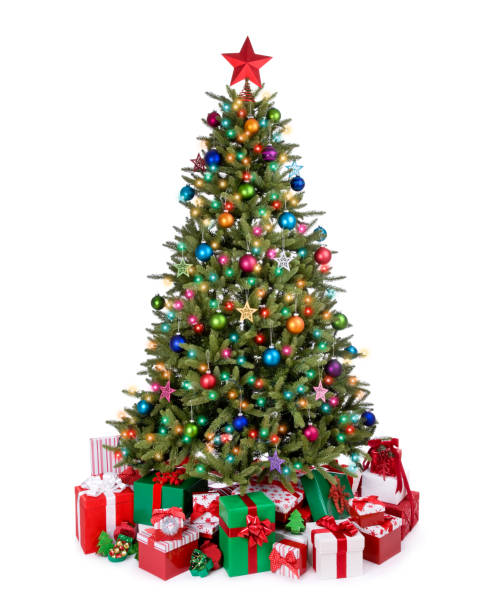
Image © of Liliboas via iStock

I have many happy memories over the decades, especially family ones from when I was younger in the 70’s and ’80s and when my kids were younger.  Sadly my mental health suffered in my adult years, especially in the 2010’s right up to the start of the 2020’s and it was difficult to enjoy them and love them like I used to but thankfully I can start to LOVE CHRISTMAS again.

For me, Christmas is about being with family and friends.  It is enjoying good company and eating, drinking and being merry.  It is reminiscing about the happy Christmases of old and remembering people and animals that shared those precious times with us but are no longer here with us.  It is about wonderful Christmas trees and the giving and recieving of presents.  It is about the beautiful colours that come with it.  It is about traditions.  It is about listening to Christmas music and watching Christmas films and programmes. It is about the spirit of Christmas and the feeling of peace.  It is not just a holiday, it is a state of mind.  

Living in the mostly Christian country of England when I was younger (not so much now) and being a former Christian myself I always celebrated Christmas regarding the birth of Jesus Christ.

The older I got, as an atheist, I came to realise the bible just contradicts itself and is full of fictional stories.  The date of that birth itself, December the 25th, can’t be agreed upon or proved throughout the centuries (and I’m not bothering to cover all that below) but to be honest I don’t care about the date or what did or didn’t happen on it or if anyone involved with it is real but that is not here or there.

I am someone who tries hard to avoid talking about religion, royalty and politics but it would be impossible to talk about Christmas and not refer to religion regarding what is written below, however, it is written respectfully.  As I have always said about religion, as long as it doesn’t involve harm or hatred and is peaceful, I will respect your right to believe whatever you like as long as you respect my right not to believe.  Royalty and politics are briefly mentioned as it is hard to avoid them when it is part of Christmas history but mainly I wanted to keep this page interesting and informative about Christmas.

If you are reading this in December then have a very HAPPY CHRISTMAS!

Image © of Crumpled Fire via Wikipedia

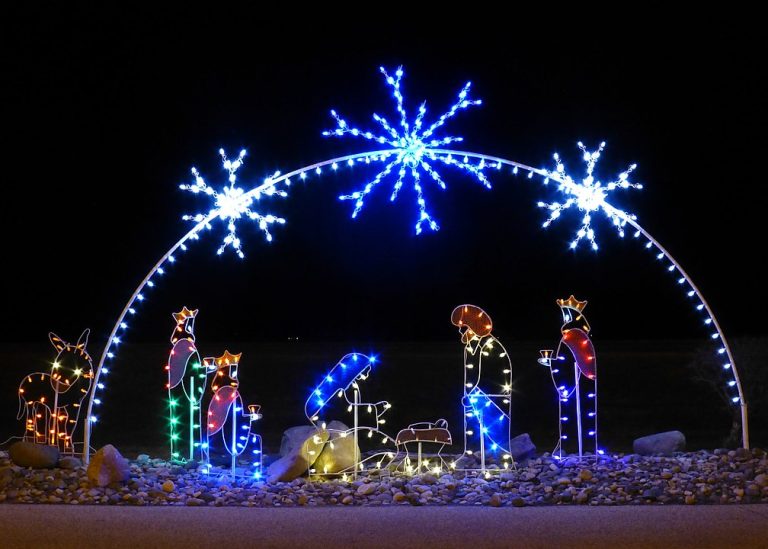
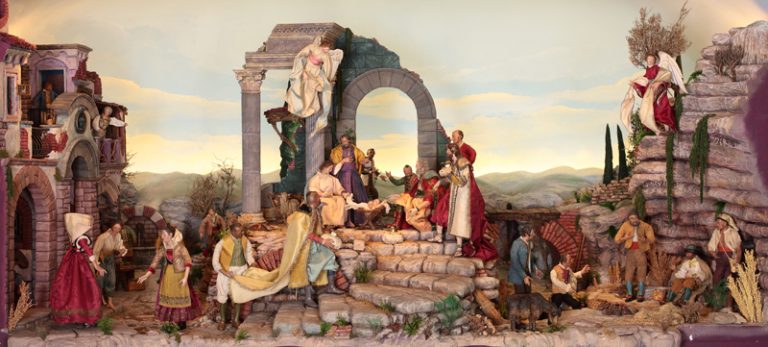
A Nativity Scene made with Christmas lights.

About Christmas

Christmas is an annual festival commemorating the birth of Jesus Christ, primarily observed on December the 25th as a religious and cultural celebration among billions of people around the world.  A feast central to the Christian liturgical year, it follows the season of Advent (which begins four Sundays before) or the Nativity Fast, and initiates the season of Christmastide, which historically in the West lasts twelve days and culminates on Twelfth Night.  Christmas Day is a public holiday in many countries, is celebrated religiously by a majority of Christians, as well as culturally by many non-Christians, and forms an integral part of the holiday season organised around it.

The traditional Christmas narrative recounted in the New Testament, known as the Nativity of Jesus, says that Jesus was born in Bethlehem, under messianic prophecies.  When Joseph and Mary arrived in the city, the inn had no room so they were offered a stable where the Christ Child was soon born, with angels proclaiming this news to shepherds who then spread the word.

There are different hypotheses regarding the date of Jesus’ birth and in the early fourth century, the church fixed the date as December the 25th.  This corresponds to the traditional date of the winter solstice on the Roman calendar.  It is exactly nine months after the Annunciation on March the 25th, also the date of the spring equinox.  Most Christians celebrate on December the 25th in the Gregorian calendar, which has been adopted almost universally in the civil calendars used in countries worldwide.  However, some of the Eastern Christian Churches celebrate Christmas on December the 25th of the older Julian calendar, which currently corresponds to January the 7th in the Gregorian calendar.  For Christians, believing that God came into the world in the form of man to atone for the sins of humanity, rather than knowing Jesus’ exact birth date, is considered to be the primary purpose of celebrating Christmas.

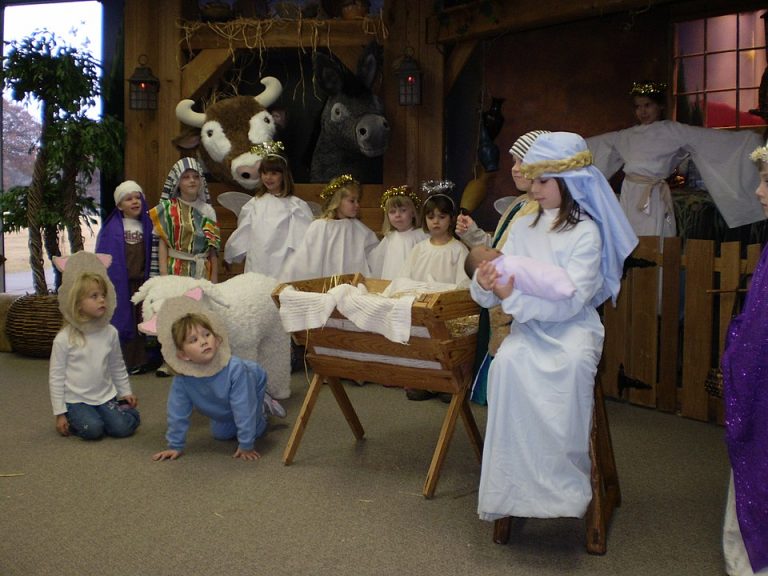
The celebratory customs associated in various countries with Christmas have a mix of pre-Christian, Christian, and secular themes and origins.  Popular modern customs of the holiday include gift giving, completing an Advent calendar or Advent wreath, Christmas music and caroling, watching Christmas movies, viewing a Nativity play, an exchange of Christmas cards, church services, a special meal, and the display of various Christmas decorations, including Christmas trees, Christmas lights, nativity scenes, garlands, wreaths, mistletoe, and holly. In addition, several closely related and often interchangeable figures, known as Father Christmas, Santa Claus,  Saint Nicholas, and the Christkind, are associated with bringing gifts to children during Christmas and have their own body of traditions and lore.  Because gift-giving and many other aspects of the Christmas festival involve heightened economic activity, the holiday has become a significant event and a key sales period for retailers and businesses.   Over the past few centuries, Christmas has had a steadily growing economic effect in many regions of the world. 

Etymology

Other Names 

In addition to Christmas, the holiday has had various other English names throughout its history.  The Anglo-Saxons referred to the feast as midwinter, or, more rarely, as Nātiuiteð, which comes from the Latin nātīvitās.  Nativity, meaning birth, is also from the Latin nātīvitāsIn Old English, Gēola (Yule) referred to the period corresponding to December and January, which was eventually equated with Christian Christmas.  Noel (also Nowel or Nowell, as in The First Nowell) entered English in the late 14th century and is from the Old French noël or naël, itself ultimately from the Latin nātālis (diēs) meaning birth (day).

Koleda is the traditional Slavic name for Christmas and the period from Christmas to Epiphany or, more generally, to Slavic Christmas-related rituals, some dating to pre-Christian times.

The History Of Christmas

In the 2nd century, the earliest church records indicate that Christians were remembering and celebrating the birth of Jesus, an observance that sprang up organically from the authentic devotion of ordinary believers although a set date was not agreed on.  Though Christmas did not appear on the lists of festivals given by the early Christian writers Irenaeus and Tertullian, the early Church Fathers John Chrysostom, Augustine of Hippo, and Jerome attested to December the 25th as the date of Christmas toward the end of the fourth century.  A passage in Commentary on the Prophet Daniel (AD 204) by Hippolytus of Rome identifies December the 25th as Jesus’s birth date, but this passage is considered a later interpolation.

In the East, the birth of Jesus was celebrated in connection with the Epiphany on January the 6th.  This holiday was not primarily about Christ’s birth, but rather his baptism.  Christmas was promoted in the East as part of the revival of Orthodox Christianity that followed the death of the pro-Arian Emperor Valens at the Battle of Adrianople in 378.  The feast was introduced in Constantinople in 379, in Antioch by John Chrysostom towards the end of the fourth century, probably in 388, and in Alexandria in the following century.  The Georgian Iadgari demonstrates that Christmas was celebrated in Jerusalem by the sixth century.

Post-Classical History

Christmas played a role in the Arian controversy of the fourth century.   After this controversy ran its course, the prominence of the holiday declined for a few centuries.

In the Early Middle Ages, Christmas Day was overshadowed by Epiphany, which in Western Christianity focused on the visit of the magi.  However, the medieval calendar was dominated by Christmas-related holidays.  The forty days before Christmas became the forty days of St. Martin (which began on November the 11th, the feast of St. Martin of Tours), now known as Advent.  In Italy, former Saturnalian traditions were attached to Advent.  Around the 12th century, these traditions transferred again to the Twelve Days of Christmas (December the 25th to January the 5th).  This is a time that appears in the liturgical calendars as Christmastide or Twelve Holy Days.

In 567, the Council of Tours put in place the season of Christmastide, proclaiming the twelve days from Christmas to Epiphany as a sacred and festive season, and established the duty of Advent fasting in preparation for the feast.  This was done to solve the administrative problem for the Roman Empire as it tried to coordinate the solar Julian calendar with the lunar calendars of its provinces in the east.

The prominence of Christmas Day increased gradually after Charlemagne was crowned Emperor on Christmas Day in 800.  King Edmund the Martyr was anointed on Christmas in 855 and King William I of England was crowned on Christmas Day 1066.

By the High Middle Ages, the holiday had become so prominent that chroniclers routinely noted where various magnates celebrated Christmas.  King Richard II of England hosted a Christmas feast in 1377 at which 28 oxen and 300 sheep were eaten.  The Yule boar was a common feature of medieval Christmas feasts.  Carolling also became popular and was originally performed by a group of dancers who sang.  The group was composed of a lead singer and a ring of dancers that provided the chorus.  Various writers of the time condemned carolling as lewd, indicating that the unruly traditions of Saturnalia and Yule may have continued in this form.  Misrule (drunkenness, promiscuity, gambling) was also an important aspect of the festival.  In England, gifts were exchanged on New Year’s Day, and there was a special Christmas ale.

Christmas during the Middle Ages was a public festival that incorporated ivy, holly, and other evergreens. Christmas gift-giving during the Middle Ages was usually between people with legal relationships, such as tenants and landlords.  The annual indulgence in eating, dancing, singing, sporting, and card playing escalated in England, and by the 17th century, the Christmas season featured lavish dinners, elaborate masques, and pageants.  In 1607, King James I insisted that a play be acted on Christmas night and that the court indulge in games.  It was during the Reformation in 16th – 17th-century Europe that many Protestants changed the gift bringer to the Christ Child or Christkindl, and the date of giving gifts changed from December the 6th to Christmas Eve.

Image is by unknown via Wikipedia and is in the public domain

The Nativity by unknown.

This beautiful image comes from a 14th-century Missal.  It is made from parchment and originates from East Anglia.   It is considered a very important manuscript as it is one of the earliest examples of a Missal of an English source. 

Sarum Missals were books produced by the Church during the Middle Ages for celebrating Mass throughout the year

Image is by Julius Schnorr von Carolsfeld via Wikipedia and is in the public domain

The Coronation of Charlemagne on Christmas of 800 by Julius Schnorr von Carolsfeld.

Modern History

17th And 18th Centuries

Following the Protestant Reformation, many of the new denominations, including the Anglican Church and Lutheran Church, continued to celebrate Christmas.  In 1629, the Anglican poet John Milton penned On the Morning of Christ’s Nativity, a poem that has since been read by many during Christmastide.  Donald Heinz, a professor at California State University, states that Martin Luther inaugurated a period in which Germany would produce a unique culture of Christmas, much copied in North America.  Among the congregations of the Dutch Reformed Church, Christmas was celebrated as one of the principal evangelical feasts.

However, in 17th century England, some groups such as the Puritans strongly condemned the celebration of Christmas, considering it a Catholic invention and the trappings of popery or the rags of the Beast.  In contrast, the established Anglican Church pressed for a more elaborate observance of feasts, penitential seasons, and saints’ days.  The calendar reform became a major point of tension between the Anglican party and the Puritan party.  The Catholic Church also responded, promoting the festival in a more religiously oriented form.  King Charles I of England directed his noblemen and gentry to return to their landed estates in midwinter to keep up their old-style Christmas generosity.  Following the Parliamentarian victory over Charles I during the English Civil War, England’s Puritan rulers banned Christmas in 1647.

Protests followed as pro-Christmas rioting broke out in several cities and for weeks Canterbury was controlled by the rioters, who decorated doorways with holly and shouted royalist slogans.  Football, among the sports the Puritans banned on a Sunday, was also used as a rebellious force.  When Puritans outlawed Christmas in England in December 1647 the crowd brought out footballs as a symbol of festive misrule.  The book, The Vindication of Christmas (London, 1652), argued against the Puritans and makes note of Old English Christmas traditions, dinner, roast apples on the fire, card playing, dances with plow-boys and maidservants, old Father Christmas and carol singing.  During the ban, semi-clandestine religious services marking Christ’s birth continued to be held, and people sang carols in secret.

It was restored as a legal holiday in England with the Restoration of King Charles II in 1660 when Puritan legislation was declared null and void, with Christmas again freely celebrated in England.  Many Calvinist clergymen disapproved of Christmas celebrations.  As such, in Scotland, the Presbyterian Church of Scotland discouraged the observance of Christmas, and though James VI commanded its celebration in 1618, church attendance was scant.  The Parliament of Scotland officially abolished the observance of Christmas in 1640, claiming that the church had been purged of all superstitious observation of days.  Whereas in England, Wales and Ireland Christmas Day is a common law holiday, having been a customary holiday since time immemorial, it was not until 1871 that it was designated a bank holiday in Scotland.  The diary of James Woodforde, from the latter half of the 18th century, details the observance of Christmas and celebrations associated with the season over several years.

As in England, Puritans in Colonial America staunchly opposed the observation of Christmas.  The Pilgrims of New England pointedly spent their first 25th of December in the New World working normally.  Puritans such as Cotton Mather condemned Christmas both because scripture did not mention its observance and because Christmas celebrations of the day often involved boisterous behaviour.  Many non-Puritans in New England deplored the loss of the holidays enjoyed by the labouring classes in England.  Christmas observance was outlawed in Boston in 1659.  The ban on Christmas observance was revoked in 1681 by English governor Edmund Andros, but it was not until the mid-19th century that celebrating Christmas became fashionable in the Boston region.

At the same time, Christian residents of Virginia and New York observed the holiday freely.  Pennsylvania Dutch settlers, predominantly Moravian settlers of Bethlehem, Nazareth, and Lititz in Pennsylvania and the Wachovia settlements in North Carolina, were enthusiastic celebrators of Christmas.  The Moravians in Bethlehem had the first Christmas trees in America as well as the first Nativity Scenes.  Christmas fell out of favour in the United States after the American Revolution, when it was considered an English custom.  George Washington attacked Hessian (German) mercenaries on the day after Christmas during the Battle of Trenton on December the 26th, 1776.  Christmas was much more popular in Germany than in America at this time.

With the atheistic Cult of Reason in power during the era of Revolutionary France, Christian Christmas religious services were banned and the Three Kings cake was renamed the equality cake under anticlerical government policies.

Image is by Josiah King via Wikipedia and is in the public domain

The Examination and Tryal of Old Father Christmas by Josiah King.

This was published after Christmas and reinstated as a holy day in England.  It shows the frontispiece to King’s pamphlet The Examination and Tryal of Old Father Christmas, published in 1687. He had previously published a pamphlet with a very similar title The Examination and Tryall of Old Father Christmas in 1658 using the same image as the frontispiece.

19th Century

In the early 19th century, Christmas festivities and services became widespread with the rise of the Oxford Movement in the Church of England that emphasised the centrality of Christmas in Christianity and charity to the poor, along with Charles Dickens, Washington Irving, and other authors emphasising family, children, kind-heartedness, gift-giving, and Father Christmas (for Dickens) or Santa Claus (for Irving).

In the early-19th century, writers imagined Tudor-period Christmas as a time of heartfelt celebration. In 1843, Charles Dickens wrote the novel A Christmas Carol, which helped revive the spirit of Christmas and seasonal merriment.  Its instant popularity played a major role in portraying Christmas as a holiday emphasising family, goodwill, and compassion.

Dickens sought to construct Christmas as a family-centred festival of generosity, linking worship and feasting, within a context of social reconciliation.  Superimposing his humanitarian vision of the holiday, in what has been termed Carol Philosophy, Dickens influenced many aspects of Christmas that are celebrated today in Western culture, such as family gatherings, seasonal food and drink, dancing, games, and a festive generosity of spirit.  A prominent phrase from the tale, Merry Christmas, was popularised following the appearance of the story.  This coincided with the appearance of the Oxford Movement and the growth of Anglo-Catholicism, which led to a revival in traditional rituals and religious observances.

In 1822, Clement Clarke Moore wrote the poem A Visit From St. Nicholas (popularly known by its first line Twas the Night Before Christmas).  The poem helped popularise the tradition of exchanging gifts, and seasonal Christmas shopping began to assume economic importance.  This also started the cultural conflict between the holiday’s spiritual significance and its associated commercialism which some see as corrupting the holiday.  In her 1850 book The First Christmas in New England, Harriet Beecher Stowe includes a character who complains that the true meaning of Christmas was lost in a shopping spree.

While the celebration of Christmas was not yet customary in some regions in the U.S., Henry Wadsworth Longfellow detected a transition state about Christmas in New England in 1856.  He stated that the old Puritan feeling prevented it from being a cheerful, hearty holiday, though every year made it more so.  In Reading, Pennsylvania, a newspaper remarked in 1861, that “even our Presbyterian friends who have hitherto steadfastly ignored Christmas threw open their church doors and assembled in force to celebrate the anniversary of the Savior’s birth.”

The First Congregational Church of Rockford, Illinois, (although of genuine Puritan stock) was preparing for a grand Christmas jubilee, a news correspondent reported in 1864.  By 1860, fourteen states including several from New England had adopted Christmas as a legal holiday.  In 1875, Louis Prang introduced the Christmas card to Americans.  He has been called the father of the American Christmas card.  On June the 28th, 1870, Christmas was formally declared a United States federal holiday.

Image by John Leech via Wikipedia and is in the public domain

Scrooge’s Third Visitor by John Leech.

This image is from Charles Dickens’ A Christmas Carol published in 1843.  It is from one of four hand-coloured etchings included in the first edition.  There were also four black and white engravings.

Image by Joseph Lionel Williams via Wikipedia and is in the public domain

The Queen’s Christmas Tree at Windsor Castle by Joseph Lionel Williams.

This wood engraving print was made for The Illustrated London News, Christmas Number 1848.

Image by Adolph Tidemand via Wikipedia and is in the public domain

A Norwegian Christmas by Adolph Tidemand.

This painting is from 1846.

20th Century

During the First World War and particularly (but not exclusively) in 1914, a series of informal truces took place for Christmas between opposing armies.  The truces, which were organised spontaneously by fighting men, ranged from promises not to shoot (shouted at a distance to ease the pressure of war for the day) to friendly socialising, gift-giving and even sport between enemies.  These incidents became a well-known and semi-mythologised part of popular memory.  They have been described as a symbol of common humanity even in the darkest of situations and used to demonstrate to children the ideals of Christmas.

Up to the 1950’s in the United Kingdom, many Christmas customs were restricted to the upper and middle classes.   Most of the population had not yet adopted many Christmas rituals that later became popular, including Christmas trees.  Christmas dinner would normally include beef or goose, not turkey as would later be common.  Children would get fruit and sweets in their stockings rather than elaborate gifts.  The full celebration of a family Christmas with all the trimmings only became widespread with increased prosperity from the 1950’s.  National papers were published on Christmas Day until 1912.  Post was still delivered on Christmas Day until 1961.  League football matches continued in Scotland until the 1970’s while in England they ceased at the end of the 1950’s.

Image by unknown via Wikipedia and is in the public domain

The Christmas Visit by unknown.

This postcard is from circa 1910. 

Nativity

The gospels of Luke and Matthew describe Jesus as being born in Bethlehem to the Virgin Mary.   In the Gospel of Luke, Joseph and Mary travel from Nazareth to Bethlehem to be counted for a census, and Jesus is born there and placed in a manger. Angels proclaim him a saviour for all people, and three shepherds come to adore him.  In the Gospel of Matthew, by contrast, three magi follow a star to Bethlehem to bring gifts to Jesus, born the king of the Jews.  King Herod orders the massacre of all the boys less than two years old in Bethlehem, but the family flees to Egypt and later returns to Nazareth.

Read more about The Nativity here.

Image is by Gerard van Honthorst via Wikipedia and is in the public domain

Adoration of the Shepherds by Gerard van Honthorst.

This painting of Mary, Jesus and the shepherds was created in 1622.

Relation To Concurrent Celebrations

Many popular customs associated with Christmas developed independently of the commemoration of Jesus’ birth, with some claiming that certain elements are Christianised and have origins in pre-Christian festivals that were celebrated by pagan populations who were later converted to Christianity.  Other scholars reject these claims and affirm that Christmas customs largely developed in a Christian context.  The prevailing atmosphere of Christmas has also continually evolved since the holiday’s inception, ranging from a sometimes raucous, drunken, carnival-like state in the Middle Ages, to a tamer family-oriented and children-centered theme introduced in a 19th-century transformation.  The celebration of Christmas was banned on more than one occasion within certain groups, such as the Puritans and Jehovah’s Witnesses (who do not celebrate birthdays in general), due to concerns that it was too unbiblical.

Prior to and through the early Christian centuries, winter festivals were the most popular of the year in many European pagan cultures.  Reasons included the fact that less agricultural work needed to be done during the winter, as well as an expectation of better weather as spring approached.  Celtic winter herbs such as mistletoe and ivy, and the custom of kissing under a mistletoe, are common in modern Christmas celebrations in the English-speaking countries.

The pre-Christian Germanic peoples (including the Anglo-Saxons and the Norse) celebrated a winter festival called Yule, held in the late December to early January period, yielding modern English yule, today used as a synonym for Christmas.  In Germanic language-speaking areas, numerous elements of modern Christmas folk custom and iconography may have originated from Yule, including the Yule log, Yule boar, and the Yule goat.  Often leading a ghostly procession through the sky (the Wild Hunt), the long-bearded god Odin is referred to as the Yule one and Yule father in Old Norse texts, while other gods are referred to as Yule beings.  On the other hand, as there are no reliable existing references to a Christmas log prior to the 16th century, the burning of the Christmas block may have been an early modern invention by Christians unrelated to the pagan practice.

In eastern Europe also, pre-Christian traditions were incorporated into Christmas celebrations there, an example being the Koleda, which shares parallels with the Christmas carol.

Image is by Herrad of Landsberg via Wikipedia and is in the public domain

The Nativity of Christ by Herrad of Landsberg.

This 12th-century, medieval illustration is from the Hortus deliciarum.

Observance And Traditions

Christmas Day is celebrated as a major festival and public holiday in countries around the world, including many whose populations are mostly non-Christian. In some non-Christian areas, periods of former colonial rule introduced the celebration (e.g. Hong Kong); in others, Christian minorities or foreign cultural influences have led populations to observe the holiday. Countries such as Japan, where Christmas is popular despite there being only a small number of Christians, have adopted many of the cultural aspects of Christmas, such as gift-giving, decorations, and Christmas trees. A similar example is in Turkey, being Muslim-majority and with a small number of Christians, where Christmas trees and decorations tend to line public streets during the festival.

Among countries with a strong Christian tradition, a variety of Christmas celebrations have developed that incorporate regional and local cultures.

Read more about Observance And Traditions here and here.

Image © Israel Press and Photo Agency via Wikipedia

Christmas at the Annunciation Church in Nazareth.

This photo by Dan Hadani, from his collection Collection at the National Library of Israel, was taken on Christmas Eve, 1965.

Decorations

Nativity scenes are known from 10th-century Rome. They were popularised by Saint Francis of Assisi from 1223, quickly spreading across Europe.  Different types of decorations developed across the Christian world, dependent on local tradition and available resources, and can vary from simple representations of the crib to far more elaborate sets.  Renowned manger scene traditions include the colourful Krakow szopka in Poland, which imitate Krakow’s historical buildings as settings, the elaborate Italian presepi (Neapolitan, Genoese and Bolognese), or the Provencal creches in southern France, using hand-painted terracotta figurines called santons.  In certain parts of the world, notably Sicily, living nativity scenes following the tradition of Saint Francis are a popular alternative to static creches.  The first commercially produced decorations appeared in Germany in the 1860’s, inspired by paper chains made by children.  In countries where a representation of the Nativity scene is very popular, people are encouraged to compete and create the most original or realistic ones.  Within some families, the pieces used to make the representation are considered a valuable family heirloom.

The traditional colours of Christmas decorations are red, green, and gold.  Red symbolises the blood of Jesus, which was shed in his crucifixion, green symbolises eternal life, and in particular the evergreen tree, which does not lose its leaves in the winter and gold is the first colour associated with Christmas, as one of the three gifts of the Magi, symbolising royalty.

The Christmas tree was first used by German Lutherans in the 16th century, with records indicating that a Christmas tree was placed in the Cathedral of Strassburg in 1539, under the leadership of the Protestant Reformer, Martin Bucer.  In the United States, these German Lutherans brought the decorated Christmas tree with them.  The Moravians put lighted candles on the trees.  When decorating the Christmas tree, many individuals place a star at the top of the tree symbolising the Star of Bethlehem, a fact recorded by The School Journal in 1897.  Professor David Albert Jones of Oxford University wrote that in the 19th century, it became popular for people to also use an angel to top the Christmas tree in order to symbolise the angels mentioned in the accounts of the Nativity of Jesus.   Aditionally, in the context of a Christian celebration of Christmas, the Christmas tree, being evergreen in colour, is symbolic of Christ, who offers eternal life and the candles or lights on the tree represent the Light of the World.  Christian services for family use and public worship have been published for the blessing of a Christmas tree, after it has been erected.  The Christmas tree is considered by some as Christianisation of pagan tradition and ritual surrounding the Winter Solstice, which included the use of evergreen boughs, and an adaptation of pagan tree worship.  According to eighth-century biographer Æddi Stephanus, Saint Boniface (634 – 709), who was a missionary in Germany, took an ax to an oak tree dedicated to Thor and pointed out a fir tree, which he stated was a more fitting object of reverence because it pointed to heaven and it had a triangular shape, which he said was symbolic of the Trinity.  The English language phrase Christmas tree is first recorded in 1835 and represents an importation from the German language.

Since the 16th century, the poinsettia, a native plant from Mexico, has been associated with Christmas carrying the Christian symbolism of the Star of Bethlehem; in that country it is known in Spanish as the Flower of the Holy Night. Other popular holiday plants include holly, mistletoe, red amaryllis, and Christmas cactus.

Other traditional decorations include bells, candles, candy canes, stockings, wreaths, and angels.  Both the displaying of wreaths and candles in each window are a more traditional Christmas display.  The concentric assortment of leaves, usually from an evergreen, make up Christmas wreaths and are designed to prepare Christians for the Advent season.  Candles in each window are meant to demonstrate the fact that Christians believe that Jesus Christ is the ultimate light of the world.

Christmas lights and banners may be hung along streets, music played from speakers, and Christmas trees placed in prominent places.  It is common in many parts of the world for town squares and consumer shopping areas to sponsor and display decorations.  Rolls of brightly coloured paper with secular or religious Christmas motifs are manufactured to wrap gifts.  In some countries, Christmas decorations are traditionally taken down on the Twelfth Night.

Read more about Decorations here and here.

Image by unknown is from the Diocesan Museum of Sacred Art via Wikipedia

A typical Neapolitan Nativity scene by unknown.

This Eighteenth-century nativity scene painting is also known as a presepe or presepio and can be found at the Diocesan Museum of Sacred Art in Bilbao, Spain.  

Local creches are renowned for their ornate decorations and symbolic figurines, often mirroring daily life.

Image © of TaniaLuz via iStock

A Christmas tree and presents.

Image by Robert Knudsen is from the Kennedy Library via Wikipedia and is in the public domain

The official White House Christmas tree for 1962 by Robert Knudsen.

The official White House Christmas tree above is in the entrance hall.  It is usually located in the Blue Room, this was one of a few instances since 1961 where the tree has been displayed here.

It was presented by President John F. Kennedy and First Lady Jacqueline Kennedy at the Christmas Reception on the 12th of December, 1962 at the White House, U.S.A. 

Image © of PFAStudent via Wikipedia

The Christ Candle in the centre of an Advent wreath.

This is traditionally lit in many church services.  This one is in the chancel of Broadway United Methodist Church, located in New Philadelphia, U.S.A.

The Advent wreath consists of four coloured candles of the same size, arranged around a larger white Christ candle.

Nativity Play

For the Christian celebration of Christmas, the viewing of the Nativity play is one of the oldest Christmastime traditions, with the first reenactment of the Nativity of Jesus taking place in 1223 A.D.  In that year, Francis of Assisi assembled a Nativity scene outside of his church in Italy and children sung Christmas carols celebrating the birth of Jesus.  Each year, this grew larger and people travelled from afar to see Francis’ depiction of the Nativity of Jesus that came to feature drama and music.  Nativity plays eventually spread throughout all of Europe, where they remain popular.  Christmas Eve and Christmas Day church services often came to feature Nativity plays, as did schools and theatres.  In France, Germany, Mexico and Spain, Nativity plays are often reenacted outdoors in the streets.

Read more about Nativity Play here.

Image © of Wesley Fryer via Wikipedia

Children in Oklahoma reenact a Nativity play.

These children are performing their nativity play in 2007 at the First Presbyterian Church in Edmond, Oklahoma, U.S.A.

Music And Carols

The earliest extant specifically Christmas hymns appear in fourth-century Rome.  Latin hymns such as Veni redemptor gentium, written by Ambrose, Archbishop of Milan, were austere statements of the theological doctrine of the Incarnation in opposition to Arianism.  Corde natus ex Parentis (Of the Father’s love begotten) by the Spanish poet Prudentius (died 413) is still sung in some churches today.  In the 9th and 10th centuries, the Christmas Sequence or Prose was introduced in North European monasteries, developing under Bernard of Clairvaux into a sequence of rhymed stanzas. In the 12th century the Parisian monk Adam of St. Victor began to derive music from popular songs, introducing something closer to the traditional Christmas carol.  Christmas carols in English appear in a 1426 work of John Awdlay who lists twenty-five “caroles of Cristemas”, probably sung by groups of wassailers, who went from house to house.

Read more about Music And Carols here.

Christmas carolers in Jersey.

Image © of Man vyi via Wikipedia and is in the public domain
Image by unknown is via Wikipedia and is in the public domain

Child singers in Bucharest by unknown.

This picture is from 1842 and depicts the singers carrying a star with an icon of a saint on it.

Christmas Food

A special Christmas family meal is traditionally an important part of the holiday celebration, and the food that is served varies greatly from country to country.  Some regions have special meals for Christmas Eve, such as Sicily, where 12 kinds of fish are served.  In the United Kingdom and countries influenced by its traditions, a standard Christmas meal usually includes turkey, goose or other large bird, gravy, potatoes, vegetables, sometimes bread, cider or some other alcoholic drink for the adults.  Special desserts are also prepared, such as Christmas pudding, mince pies, Christmas cake, Panettone and a Yule log cake.  A traditional Christmas meal in Central Europe features fried carp or other fish.

Read more about Christmas Food here.

Image © of Austin McGee via Wikipedia

A Christmas dinner setting.

Christmas Cards

Christmas cards are illustrated messages of greeting exchanged between friends and family members during the weeks preceding Christmas Day.  The traditional greeting reads wishing you a Merry Christmas and a Happy New Year, much like that of the first commercial Christmas card, produced by Sir Henry Cole in London in 1843.  The custom of sending them has become popular among a wide cross-section of people with the emergence of the modern trend towards exchanging E-cards.

Christmas cards are purchased in considerable quantities and feature artwork, is commercially designed and relevant to the season.  The content of the design might relate directly to the Christmas narrative, with depictions of the Nativity of Jesus, or Christian symbols such as the Star of Bethlehem, or a white dove, which can represent both the Holy Spirit and Peace on Earth.  Other Christmas cards are more secular and can depict Christmas traditions, mythical figures such as Father Christmas, objects directly associated with Christmas such as candles, holly, and baubles, or a variety of images associated with the season, such as Christmastide activities, snow scenes, and the wildlife of the northern winter.

Some prefer cards with a poem, prayer, or Biblical verse, while others distance themselves from religion with an all-inclusive Season’s greetings.

Read more about Christmas Cards here.

Image by unknown is from the Souvenir Post Card Company via Wikipedia and is in the public domain

A Christmas postcard with Father Christmas and some of his reindeer by unknown.

This card was published by the Souvenir Post Card Company in New York, U.S.A. in 1907. 

Christmas Stamps

A number of nations have issued commemorative stamps at Christmastide.  Postal customers will often use these stamps to mail Christmas cards, and they are popular with philatelists.  These stamps are regular postage stamps, unlike Christmas seals, and are valid for postage year-round.  They usually go on sale sometime between early October and early December and are printed in considerable quantities.

Read more about Christmas Stamps here.

Christmas Gifts

The exchanging of gifts is one of the core aspects of the modern Christmas celebration, making it the most profitable time of year for retailers and businesses throughout the world.  On Christmas, people exchange gifts based on the Christian tradition associated with Saint Nicholas, and the gifts of gold, frankincense, and myrrh which were given to the baby Jesus by the Magi.  The practice of gift giving in the Roman celebration of Saturnalia may have influenced Christian customs, but on the other hand the Christian core dogma of the Incarnation, however, solidly established the giving and receiving of gifts as the structural principle of that recurrent yet unique event, because it was the Biblical Magi, together with all their fellow men, who received the gift of God through man’s renewed participation in the divine life. However, Thomas J. Talley holds that the Roman Emperor Aurelian placed the alternate festival on December the 25th in order to compete with the growing rate of the Christian Church, which had already been celebrating Christmas on that date first.

Read more about Christmas Gifts here.

Image © of Kelvin Kay via Wikipedia

Christmas gifts under a Christmas tree.

Gift-Bearing Figures

Several figures are associated with Christmas and the seasonal giving of gifts. Among these, the best known of these figures today is the red-dressed  Father Christmas (more well-known in the United Kingdom although the American term Santa Claus is becoming more popular.  Amongst many names around the world, he is known as  Pere Noel,  Joulupukki, Babbo Natale, Ded Moroz and tomte.  The Scandinavian tomte (also called nisse) is sometimes depicted as a gnome instead of Santa Claus.   

The name Santa Claus can be traced back to the Dutch Sinterklaas (Saint Nicholas). Nicholas was a 4th-century Greek bishop of Myra, a city in the Roman province of Lycia, whose ruins are 3 kilometres (1.9 mi) from modern Demre in southwest Turkey.  Among other saintly attributes, he was noted for the care of children, generosity, and the giving of gifts.  His feast day, December the 6th, came to be celebrated in many countries with the giving of gifts.

Saint Nicholas traditionally appeared in bishop’s attire, accompanied by helpers, inquiring about the behaviour of children during the past year before deciding whether they deserved a gift or not.  By the 13th century, Saint Nicholas was well known in the Netherlands, and the practice of gift-giving in his name spread to other parts of central and southern Europe.  At the Reformation in 16th- and 17th-century Europe, many Protestants changed the gift bringer to the Christ Child or Christkindl, corrupted in English to Kris Kringle, and the date of giving gifts changed from December the 6th to Christmas Eve.

The modern popular image of Father Christmas, however, was created in the United States, and in particular in New York.  The transformation was accomplished with the aid of notable contributors including Washington Irving and the German-American cartoonist Thomas Nast (1840 – 1902).  Following the American Revolutionary War, some of the inhabitants of New York City sought out symbols of the city’s non-English past.  New York had originally been established as the Dutch colonial town of New Amsterdam and the Dutch Sinterklaas tradition was reinvented as Saint Nicholas.

Current tradition in several Latin American countries (such as Venezuela and Colombia) holds that while Father Christmas makes the toys, he then gives them to Baby Jesus, who is the one who delivers them to the children’s homes, a reconciliation between traditional religious beliefs and the iconography of Santa Claus imported from the United States.

In South Tyrol (Italy), Austria, Czech Republic, Southern Germany, Hungary, Liechtenstein, Slovakia, and Switzerland, the Christkind (Jezisek in Czech, Jezuska in Hungarian and Jezisko in Slovak) brings the presents.  Greek children get their presents from Saint Basil on New Year’s Eve, the eve of that saint’s liturgical feast.  The German St. Nikolaus is not identical to the Weihnachtsmann (who is the German version of Father Christmas).  St. Nikolaus wears a bishop’s dress and still brings small gifts (usually candies, nuts, and fruits) on December the 6th and is accompanied by Knecht Ruprecht.  Although many parents around the world routinely teach their children about Father Christmas and other gift bringers, some have come to reject this practice, considering it deceptive.

Multiple gift-giver figures exist in Poland, varying between regions and individual families. St Nicholas (Swiety Mikolaj) dominates Central and North-East areas, the Starman (Gwiazdor) is most common in Greater Poland, Baby Jesus (Dzieciątko) is unique to Upper Silesia, with the Little Star (Gwiazdka) and the Little Angel (Aniołek) being common in the South and the South-East.  Grandfather Frost (Dziadek Mroz) is less commonly accepted in some areas of Eastern Poland.  It is worth noting that across all of Poland, St Nicholas is the gift giver on Saint Nicholas Day on December the 6th.

You can read a well-known poem about St. Nicholas here.

Read more about Gift-Bearing Figures here.

Image © of CrazyPhunk via Wikipedia

Saint Nicholas.

See Also

Christmas in July – Second Christmas celebration.

Christmas Peace – Finnish tradition.

Christmas Sunday – Sunday after Christmas.

List of Christmas films.

List of Christmas novels – Christmas as depicted in literature.

Little Christmas – Alternative title for 6 January.

NochebuenaEvening or entire day before Christmas Day.

Mithraism in comparison with other belief systems.

Christmas by medium – Christmas represented in different media.

You can see notes, references, further reading and external links to the above articles here.  The above was sourced from a page on Wikipedia and is subject to change. 

Blog Posts

Links

Liliboas on iStock.  The image shown at the top of this page of a Christmas tree and presents is the copyright of Liliboas.  You can find more great work from the photographer Lili and lots more free stock photos at iStock.

The image above of a nativity scene made with Christmas lights is the copyright of Wikipedia user Crumpled Fire.  It comes with a Creative Commons licence (CC BY-SA 2.0).

The image above of the Nativity by unknown comes via Wikipedia and is in the public domain.

The image above of the Coronation of Charlemagne on Christmas of 800 by Julius Schnorr von Carolsfeld comes via Wikipedia and is in the public domain.

The image above of the Examination and Tryal of Old Father Christmas by Josiah King comes via Wikipedia and is in the public domain.

The image above of the Queen’s Christmas Tree at Windsor Castle by Joseph Lionel Williams comes via Wikipedia and is in the public domain.

The image above of a Norwegian Christmas by Adolph Tidemand comes via Wikipedia and is in the public domain.

The image above of the Christmas visit by unknown comes via Wikipedia and is in the public domain.

The image above of Adoration of the Shepherds by Gerard van Honthorst comes via Wikipedia and is in the public domain.

The image above of the  Nativity of Christ by Herrad of Landsberg comes via Wikipedia and is in the public domain.

The image above of Christmas at the Annunciation Church in Nazareth is the copyright of Wikipedia user Israel Press and Photo Agency.  It comes with a Creative Commons licence (CC BY-SA 4.0)

The image above of a typical Neapolitan Nativity scene by unknown comes from the Diocesan Museum of Sacred Art.  It comes with a Creative Commons licence (CC BY-SA 4.0)

The image above of the official White House Christmas tree for 1962 by Robert Knudsen comes from the Kennedy Library via Wikipedia and is in the public domain.

The image above of the Christ Candle in the centre of an Advent wreath is the copyright of Wikipedia user PFAStudent.  It comes with a Creative Commons licence (CC BY-SA 3.0).

The image above of children in Oklahoma reenact a Nativity play is the copyright of Wikipedia user Wesley Fryer.  It comes with a Creative Commons licence (CC BY-SA 2.0).

The image above of Christmas carolers in Jersey is copyright of Wikipedia user Man vyi and is in the public domain.

The image above of a Christmas dinner setting is the copyright of Wikipedia user Austin McGee.  It comes with a Creative Commons licence (CC BY-SA 2.0).

The image above of a Christmas postcard with Father Christmas and some of his reindeer by unknown comes via Wikipedia and is in the public domain.

The image above of  Christmas gifts under a Christmas tree is the copyright of Wikipedia user Kelvin Kay.  It comes with a Creative Commons licence (CC BY-SA 2.0).

The image above of Saint Nicholas is the copyright of Wikipedia user CrazyPhunk.  It comes with a Creative Commons licence (CC BY-SA 3.0).

Bonfire Night

Image © Frank Parker

Bonfire Night always brings back happy memories over the decades, especially family ones from when I was younger in the 70’s and ’80s.  

It is a great tradition that brings people together to watch a bonfire and/or watch fireworks and/or (for many) have a party with food and drink.

I don’t like being too near a fire as the flames have always been quite scary and made me nervous since I was younger but it fascinates me too, watching the shapes in the flames, the different colours and listening to the sounds of it are mesmerising.

When it is just me and I have a bonfire at home, it is a chance to sit by it (weather permitting), have some baked potatoes and reminisce about the Bonfire Night’s that has passed in time.  

I think of the times I have made/helped make a Guy over the years.  They have been filled with loads of leaves out of the gardens, newspaper and old clothes. 

Once (in the 70’s) I glued a Guy Fawkes mask on an old cereal packet cut out from my favourite comic, Whoopee! You can see the design below.

I used to like going out with my Sister Julie and Brother Bill to do Penny For The Guy. 

I remember having sparklers and writing my name in the dark night (although I wore gloves as they scared me and still this day I am not a great fan of them and can’t hold one). 

I remember my Dad keeping fireworks in a biscuit tin, chestnuts cooked in the bonfire ashes, and my Mom bringing sweets out in another tin and piping hot baked potatoes wrapped in foil in another tin ready to add loads of butter/margarine, yummy!

I think of when my son Frank Jnr. and Daughter Debbie were younger and taking them to the bonfires at their Nan and Grandad’s and having bonfires with them at home (when it was possible).  I remember when they were older and left home but came to visit and share the tradition with me.  Jnr. as came with my Grandson Tyler and Deb came with my Grandaughter Kasey (when my grandkids were younger) and on those occasions, Mom was there all excited when the fireworks went off. 

Speaking of fireworks I remember one time at a bonfire night at home, Dad picked up a jumping jack and thinking it was dead threw it in the bonfire and it shot out and hit the wall behind and above to the left of me and a friend, by a few feet.  Luck was on our side that day, ha ha.

All these are wonderful memories now Mom and Dad are no longer with us.

Although it will never be as magical as it was back in the day, it is a tradition that I will celebrate at home by having a bonfire whatever the size of it (if there is anything to burn that is), have baked potatoes and finish Bonfire Night watching V For Vendetta as long as I can.  Traditions mean a lot to me.  

About Bonfire Night 

Bonfire Night, also known as Guy Fawkes Night, Guy Fawkes Day, and Fireworks Night, is an annual commemoration observed on the 5th of November, primarily in Great Britain, involving bonfires and fireworks displays.  Its history begins with the events of the 5th of November, 1605, when Guy Fawkes, a member of the Gunpowder Plot, was arrested while guarding explosives the plotters had placed beneath the House of Lords.  The Catholic plotters had intended to assassinate Protestant king James I and his parliament.  Celebrating that the king had survived, people lit bonfires around London.  Months later, the Observance of 5th of November Act mandated an annual public day of thanksgiving for the plot’s failure.

Within a few decades Gunpowder Treason Day, as it was known, became the predominant English state commemoration. As it carried strong Protestant religious overtones it also became a focus for anti-Catholic sentiment.  Puritans delivered sermons regarding the perceived dangers of popery, while during increasingly raucous celebrations common folk burnt effigies of popular hate figures, such as the Pope.  Towards the end of the 18th century reports appeared of children begging for money with the effigies of Guy Fawkes and the 5th of November gradually became known as Guy Fawkes Day.  Towns such as Lewes and Guildford were in the 19th-century scenes of increasingly violent class-based confrontations, fostering traditions those towns celebrate still, albeit peaceably.  In the 1850’s changing attitudes resulted in the toning down of much of the day’s anti-Catholic rhetoric, and the Observance of the 5th November Act was repealed in 1859.  Eventually, the violence was dealt with, and by the 20th century, Guy Fawkes Day had become an enjoyable social commemoration, although lacking much of its original focus.  The present-day Bonfire Night is usually celebrated at large organised events.

Settlers exported Guy Fawkes Night to overseas colonies, including some in North America, where it was known as Pope Day.  Those festivities died out with the onset of the American Revolution.  Claims that Guy Fawkes Night was a Protestant replacement for older customs such as Samhain are disputed. 

Image by Paul Sanby and is in the public domain

Festivities in Windsor Castle during Guy Fawkes night in 1776.

This is by artist Paul Sanby and is one of a group of four prints of Windsor Castle. 

The Origins And History Of Bonfire Night 

Guy Fawkes Night originates from the Gunpowder Plot of 1605, a failed attempt by a group of provincial English Catholics to assassinate the Protestant King James I of England and VI of Scotland and replace him with a Catholic head of state.  In the immediate aftermath of the November 5th arrest of Guy Fawkes, caught guarding a cache of explosives placed beneath the House of Lords, James’s Council allowed the public to celebrate the king’s survival with bonfires, so long as they were without any danger or disorder.  This made 1605 the first year the plot’s failure was celebrated.

The following January, days before the surviving conspirators were executed, Parliament, at the initiation of James I, passed the Observance of 5th November Act, commonly known as the Thanksgiving Act.  It was proposed by a Puritan Member of Parliament, Edward Montagu, who suggested that the king’s apparent deliverance by divine intervention deserved some measure of official recognition, and kept the 5th of November free as a day of thanksgiving while in theory making attendance at Church mandatory.  A new form of service was also added to the Church of England’s Book of Common Prayer, for use on that date.  Little is known about the earliest celebrations.  In settlements such as Carlisle, Norwich, and Nottingham, corporations (town governments) provided music and artillery salutes. Canterbury celebrated the 5th of November, 1607 with 106 pounds (48 kg) of gunpowder and 14 pounds (6.4 kg) of match, and three years later food and drink were provided for local dignitaries, as well as music, explosions, and a parade by the local militia.  Even less is known of how the occasion was first commemorated by the general public, although records indicate that in the Protestant stronghold of Dorchester a sermon was read, the church bells rung, and bonfires and fireworks lit.  

Image © William Warby via Wikipedia

A Guy Fawkes wax model being burned on a bonfire. 

This was at the Billericay Fireworks Spectacular in Lake Meadows Park, Billericay, Essex, England.

Image © Frank Parker

Guy Fawkes on Bonfire Night, 2016.

This is a Guy Fawkes I made for a bonfire I had when I was living in my house in Kitts, Green, Birmingham, England.  It isn’t as spectacular as the one above and it could have been better but it was a last-minute project made in around two hours.  He was held together by duct tape, sellotape and safety pins but he looked cool in his cardboard V for Vendetta mask and his Wii remote lightsaber (he was a modern-day Guy who loves Sci-Fi) ha ha. 

Image © Brian Walker via Whoopee! and great News For All Readers!

A Guy Fawkes mask from Whoopee! dated 28/10/1978.

There have been a few masks printed of Guy Fawkes in the comic Whoopee!, my favourite in the 1970’s and 1980’s,  but this one is the one that I used for a family-made Guy in the 70’s. 

Read about Whoopee! and lots of great old comics from my childhood here.  

Early Significance   

According to historian and author Antonia Fraser, a study of the earliest sermons preached demonstrates an anti-Catholic concentration mystical in its fervour.  Delivering one of five 5th of November sermons printed in A Mappe of Rome in 1612, Thomas Taylor said that Fawkes’s cruelty had been almost without bounds.  Such messages were also spread in printed works such as Francis Herring’s Pietas Pontifica (republished in 1610 as Popish Piety), and John Rhode’s A Brief Summe of the Treason intended against the King & State.  By the 1620’s the Fifth was honoured in market towns and villages across the country, though it was some years before it was commemorated throughout England.  Gunpowder Treason Day, as it was then known, became the predominant English state commemoration.  Some parishes made the day a festive occasion, with public drinking and solemn processions.  Concerned though about James’s pro-Spanish foreign policy, the decline of international Protestantism, and Catholicism in general, Protestant clergymen who recognised the day’s significance called for more dignified and profound thanksgivings each November the 5th.

What unity English Protestants had shared in the plot’s immediate aftermath began to fade when in 1625 James’s son, the future Charles I, married the Catholic Henrietta Maria of France.  Puritans reacted to the marriage by issuing a new prayer to warn against rebellion and Catholicism, and on the 5th of November that year, effigies of the pope and the devil were burnt, the earliest such report of this practice and the beginning of centuries of tradition.  During Charles’s reign, Gunpowder Treason Day became increasingly partisan.  Between 1629 and 1640 he ruled without Parliament, and he seemed to support Arminianism, regarded by Puritans such as Henry Burton as a step toward Catholicism.  By 1636, under the leadership of the Arminian Archbishop of Canterbury William Laud, the English church was trying to use November the 5th to denounce all seditious practices, and not just popery.  Puritans went on the defensive, some pressing for further reformation of the Church.

Bonfire Night assumed a new fervour during the events leading up to the English Interregnum.  Although Royalists disputed their interpretations, Parliamentarians began to uncover or fear new Catholic plots.  Preaching before the House of Commons on the 5th of November 1644, Charles Herle claimed that Papists were tunnelling “from Oxford, Rome, Hell, to Westminster, and there to blow up, if possible, the better foundations of your houses, their liberties and privileges”.  

Following Charles I’s execution in 1649, the country’s new republican regime remained undecided on how to treat November the 5th.  Unlike the old system of religious feasts and State anniversaries, it survived, but as a celebration of parliamentary government and Protestantism, and not of monarchy.  Commonly the day was still marked by bonfires and miniature explosives, but formal celebrations resumed only with the Restoration, when Charles II became king.  Courtiers, High Anglicans and Tories followed the official line.   Generally, the celebrations became more diverse.  By 1670 London apprentices had turned the 5th of November into a fire festival, attacking not only popery but also sobriety and good order, demanding money from coach occupants for alcohol and bonfires.  The burning of effigies, largely unknown to the Jacobeans, continued in 1673 when Charles’s brother, the Duke of York, converted to Catholicism.  In response, accompanied by a procession of about 1,000 people, the apprentices fired an effigy of the Whore of Babylon, bedecked with a range of papal symbols.  Similar scenes occurred over the following few years.  On the 17th of November 1677, anti-Catholic fervour saw the Accession Day marked by the burning of a large effigy of the pope (his belly was filled with live cats) and two effigies of devils whispering in his ear.  Two years later, as the exclusion crisis reached its zenith, an observer noted that the 5th at night, being gunpowder treason, there were as many bonfires and burning of popes as had ever been seen.  Violent scenes in 1682 forced London’s militia into action, and to prevent any repetition the following year a proclamation was issued, banning bonfires and fireworks.

Fireworks were also banned under James II (previously the Duke of York), who became king in 1685.  Attempts by the government to tone down Gunpowder Treason Day celebrations were, however, largely unsuccessful, and some reacted to a ban on bonfires in London (born from a fear of more burnings of the pope’s effigy) by placing candles in their windows as a witness against Catholicism.  When James was deposed in 1688 by William of Orange – who, importantly, landed in England on November the 5th and the day’s events turned also to the celebration of freedom and religion, with elements of anti-Jacobitism.  While the earlier ban on bonfires was politically motivated, a ban on fireworks was maintained for safety reasons. 

Guy Fawkes Day  

William III’s birthday fell on the 4th of November, and for an orthodox Whig, the two days therefore became an important double anniversary.  William ordered that the Thanksgiving service for the 5th of November be amended to include thanks for his “happy arrival” and “the Deliverance of our Church and Nation”.  In the 1690’s he re-established Protestant rule in Ireland, and the Fifth, occasionally marked by the ringing of church bells and civic dinners was consequently eclipsed by his birthday commemorations.  From the 19th century, November the 5th celebrations there became sectarian in nature.  Its celebration in Northern Ireland remains controversial, unlike in Scotland where bonfires continue to be lit in various cities.  In England though, as one of 49 official holidays, for the ruling class, the 5th of November became overshadowed by events such as the birthdays of Admiral Edward Vernon, or John Wilkes, and under George II and George III, with the exception of the Jacobite Rising of 1745, it was largely a polite entertainment rather than an occasion for vitriolic thanksgiving.  For the lower classes, however, the anniversary was a chance to pit disorder against order, a pretext for violence and uncontrolled revelry.  In 1790 newspaper The Times reported instances of children begging for money for Guy Fawkes. 

Lower-class rioting continued, with reports in Lewes of annual rioting, intimidation of respectable householders and the rolling through the streets of lit tar barrels.  In Guildford, gangs of revellers who called themselves guys terrorised the local population.  Proceedings were concerned more with the settling of old arguments and general mayhem, than any historical reminiscences.  Similar problems arose in Exeter, originally the scene of more traditional celebrations.  In 1831 an effigy was burnt of the new Bishop of Exeter Henry Phillpotts, a High Church Anglican and High Tory who opposed Parliamentary reform, and who was also suspected of being involved in creeping popery.  A local ban on fireworks in 1843 was largely ignored, and attempts by the authorities to suppress the celebrations resulted in violent protests and several injured constables.

On several occasions during the 19th century, The Times also reported that the tradition was in decline.  Civil unrest brought about by the union of the Kingdoms of Great Britain and Ireland in 1800 resulted in Parliament passing the Roman Catholic Relief Act 1829, which afforded Catholics greater civil rights, continuing the process of Catholic Emancipation in the two kingdoms.  The traditional denunciations of Catholicism had been in decline since the early 18th century and were thought by many, including Queen Victoria, to be outdated, but the pope’s restoration in 1850 of the English Catholic hierarchy gave renewed significance to November the 5th, as demonstrated by the burnings of effigies of the new Catholic Archbishop of Westminster Nicholas Wiseman, and the pope.  At Farringdon Market 14 effigies were processed from the Strand and over Westminster Bridge to Southwark, while extensive demonstrations were held throughout the suburbs of London.  Effigies of the 12 new English Catholic bishops were paraded through Exeter, already the scene of severe public disorder on each anniversary of the Fifth.  Gradually, however, such scenes became less popular. With little resistance in Parliament, the thanksgiving prayer of November the 5th contained in the Anglican Book of Common Prayer was abolished, and in March 1859 the Anniversary Days Observance Act repealed the Observance of 5th November Act.

As the authorities dealt with the worst excesses, public decorum was gradually restored.  The sale of fireworks was restricted, and the Guildford guys were neutralised in 1865, although this was too late for one constable, who died of his wounds.  Violence continued in Exeter for some years, peaking in 1867 when incensed by rising food prices and banned from firing their customary bonfire, a mob was twice in one night driven from Cathedral Close by armed infantry.  Further riots occurred in 1879, but there were no more bonfires in Cathedral Close after 1894.  Elsewhere, sporadic instances of public disorder persisted late into the 20th century, accompanied by large numbers of firework-related accidents, but a national Firework Code and improved public safety have in most cases brought an end to such things.   

Image © Heather Buckley via Wikipedia

Lewes Bonfire Night in 2010.

Revellers in East Sussex, England. 

Image unknown via Wikipedia and is in the public domain

The Guy Fawkes of 1850.

This commentary on the restoration of the Catholic hierarchy in England, in 1850 is from Punch magazine, November of that year.  The artist is unknown. 

Songs, Guys And Later Developments

One notable aspect of the Victorians’ commemoration of Guy Fawkes Night was its move away from the centres of communities to their margins.  Gathering wood for the bonfire increasingly became the province of working-class children, who solicited combustible materials, money, food and drink from wealthier neighbours, often with the aid of songs.  Most opened with the familiar “Remember, remember, the fifth of November, Gunpowder Treason and Plot”.  The earliest recorded rhyme, from 1742, is reproduced below alongside one bearing similarities to most Guy Fawkes Night ditties, recorded in 1903 at Charlton on Otmoor.

From 1742:

“Don’t you Remember,
The Fifth of November,
‘Twas Gunpowder Treason Day,
I let off my gun,
And made’em all run.
And Stole all their Bonfire away.”

From 1903:

“The fifth of November, since I can remember,
Was Guy Faux, Poke him in the eye,
Shove him up the chimney pot, and there let him die.
A stick and a stake, for King George’s sake,
If you don’t give me one, I’ll take two,
The better for me, and the worse for you,
Ricket-a-racket your hedges shall go.” 

Organised entertainment also became popular in the late 19th century, and 20th-century pyrotechnic manufacturers renamed Guy Fawkes Day as Firework Night.  Sales of fireworks dwindled somewhat during the First World War but resumed in the following peace.  At the start of the Second World War, celebrations were again suspended, resuming in November 1945.  For many families, Bonfire Night became a domestic celebration, and children often congregated on street corners, accompanied by their own effigy of Guy Fawkes.  This was sometimes ornately dressed and sometimes a barely recognisable bundle of rags stuffed with whatever filling was suitable.  A survey found that in 1981 about 23 per cent of Sheffield schoolchildren made Guys, sometimes weeks before the event.  Collecting money was a popular reason for their creation, the children taking their effigy from door to door or displaying it on street corners.  But mainly, they were built to go on the bonfire, itself sometimes comprising wood stolen from other pyres that helped bolster another November tradition, Mischief Night.  Rival gangs competed to see who could build the largest, sometimes even burning the wood collected by their opponents  In 1954 the Yorkshire Post reported on fires late in September, a situation that forced the authorities to remove latent piles of wood for safety reasons.  Lately, however, the custom of a penny for the Guy has almost completely disappeared.  In contrast, some older customs still survive.  In Ottery St. Mary residents run through the streets carrying flaming tar barrels, and since 1679 Lewes has been the setting of some of England’s most extravagant November the 5th celebrations, the Lewes Bonfire.

Generally, modern  November the 5th celebrations are run by local charities and other organisations, with paid admission and controlled access.  In 1998 an editorial in the Catholic Herald called for the end of Bonfire Night, labelling it an offensive act.  Author Martin Kettle, writing in The Guardian in 2003, bemoaned an occasionally nannyish attitude to fireworks that discourages people from holding firework displays in their back gardens, and an unduly sensitive attitude toward the anti-Catholic sentiment once so prominent on Bonfire Night.  David Cressy summarised the modern celebration with these words, “The rockets go higher and burn with more colour, but they have less and less to do with memories of the Fifth of November … it might be observed that Guy Fawkes’ Day is finally declining, having lost its connection with politics and religion.  But we have heard that many times before.”

In 2012 Tom de Castella said,  “It’s probably not a case of Bonfire Night decline, but rather a shift in priorities… there are new trends in the bonfire ritual.  Guy Fawkes masks have proved popular and some of the more quirky bonfire societies have replaced the Guy with effigies of celebrities in the news (including Lance Armstrong and Mario Balotelli) and even politicians.  The emphasis has moved.  The bonfire with a Guy on top (indeed the whole story of the Gunpowder Plot) has been marginalised.  But the spectacle remains. 

Image by Geoff Charles via Wikipedia and is in the public domain

Children from Bontnewydd collecting for the Guy.

This photo by Geoff Charles of children in Caernarfon, Wales was taken in November 1962.   The sign reads Penny for the Guy in Welsh.  

Image © Sam Roberts via Wikipedia

Spectators around a Bonfire at Himley Hall.

This photo was taken by Sam Roberts in Dudley, England. 

In Other Countries 

Gunpowder Treason Day was exported by settlers to colonies around the world, including members of the Commonwealth of Nations such as Australia, New Zealand, Canada, and various Caribbean nations.  In Australia, Sydney (founded as a British penal colony in 1788) saw at least one instance of the parading and burning of a Guy Fawkes effigy in 1805, while in 1833, four years after its founding, Perth listed Gunpowder Treason Day as a public holiday.  By the 1970’s, Bonfire Night had become less common in Australia, with the event simply an occasion to set off fireworks with little connection to Guy Fawkes.  Mostly they were set off annually on a night called cracker night which would include the lighting of bonfires.  Some states had their fireworks night or cracker night at different times of the year, with some being let off on the 5th of November, but most often, they were let off on the Queen’s birthday.  After a range of injuries to children involving fireworks, Fireworks nights and the sale of fireworks were banned in all states except the Australian Capital Territory by the early 1980’s, which saw the end of cracker night.

Some measure of celebration remains in New Zealand, Canada, and South Africa.  On the Cape Flats in Cape Town, South Africa, Guy Fawkes Day has become associated with youth hooliganism.  In Canada in the 21st century, celebrations of Bonfire Night on November the 5th are largely confined to the province of Newfoundland and Labrador.  The day is still marked in Saint Vincent and the Grenadines, and in Saint Kitts and Nevis, but a fireworks ban by Antigua and Barbuda during the 1990’s reduced its popularity in that country.

In North America, the commemoration was at first paid scant attention, but the arrest of two boys caught lighting bonfires on the 5th of November 1662 in Boston suggests, in historian James Sharpe’s view, that an underground tradition of commemorating the Fifth existed.  In parts of North America, it was known as Pope Night, celebrated mainly in colonial New England, but also as far south as Charleston.  In Boston, founded in 1630 by Puritan settlers, an early celebration was held in 1685, the same year that James II assumed the throne.  Fifty years later, again in Boston, a local minister wrote about a great number of people going to Dorchester where at night they made a Great Bonfire and plaid off many fireworks.  The day ended in tragedy when four young men coming home in a Canoe were all Drowned.  Ten years later the raucous celebrations were the cause of considerable annoyance to the upper classes and a special Riot Act was passed, to prevent riotous tumultuous and disorderly assemblies of more than three persons, all or any of them armed with Sticks, Clubs or any kind of weapons, or disguised with vizards, or painted or discoloured faces, or in any manner disguised, having any kind of imagery or pageantry, in any street, lane, or place in Boston.  With inadequate resources, however, Boston’s authorities were powerless to enforce the Act.  In the 1740’s gang violence became common, with groups of Boston residents battling for the honour of burning the pope’s effigy.  But by the mid-1760’s these riots had subsided, and as colonial America moved towards revolution, the class rivalries featured during Pope Day gave way to anti-British sentiment.  Author Alfred Young said Pope Day provided the scaffolding, symbolism, and leadership for resistance to the Stamp Act in 1764–65, forgoing previous gang rivalries in favour of a unified resistance to Britain.

The passage in 1774 of the Quebec Act, which guaranteed French Canadians free practice of Catholicism in the Province of Quebec, provoked complaints from some Americans that the British were introducing Popish principles and French law.  Such fears were bolstered by opposition from the Church in Europe to American independence, threatening a revival of Pope Day.  

The tradition continued in Salem as late as 1817, and was still observed in Portsmouth, New Hampshire, in 1892.  In the late 18th century, effigies of prominent figures such as two Prime Ministers of Great Britain, the Earl of Bute and Lord North, and the American traitor General Benedict Arnold, were also burnt.  In the 1880’s bonfires were still being lit in some New England coastal towns, although no longer to commemorate the failure of the Gunpowder Plot.  In the area around New York City, stacks of barrels were burnt on Election Day eve, which after 1845 was a Tuesday early in November. 

See Also 

You can see references and sources to the above articles here.  The above was sourced from a page on Wikipedia and is subject to change.  

Blog Posts

Links

The image above of Guy Fawkes on Bonfire Night, 2016 is copyright of Frank Parker.

The image above of the festivities in Windsor Castle during Guy Fawkes night in 1776 is copyright of Wikipedia user William WarbyIt comes with a Creative Commons licence (CC BY 2.0).  
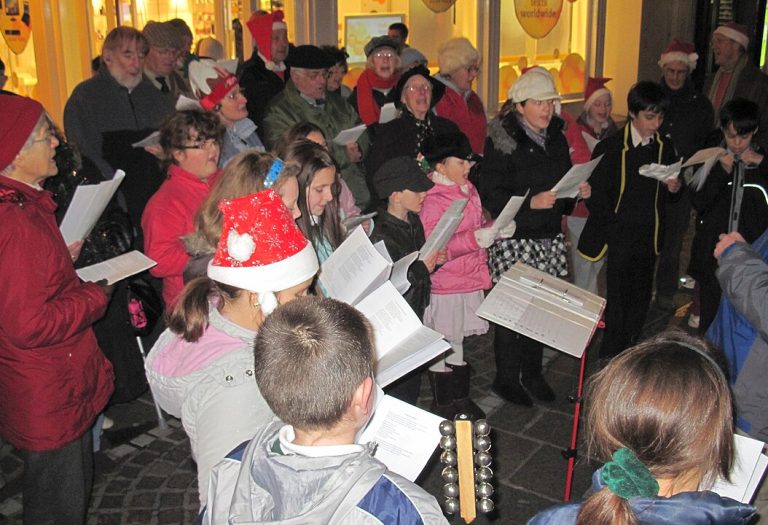
A Guy Fawkes mask from Whoopee! dated 28/10/1978 is by artist Brian Walker.  It comes from the website Great News For All Readers!

The image above of Lewes Bonfire Night in 2010 is copyright of Wikipedia user Heather Buckley.  It comes with a Creative Commons licence (CC BY 2.0).  
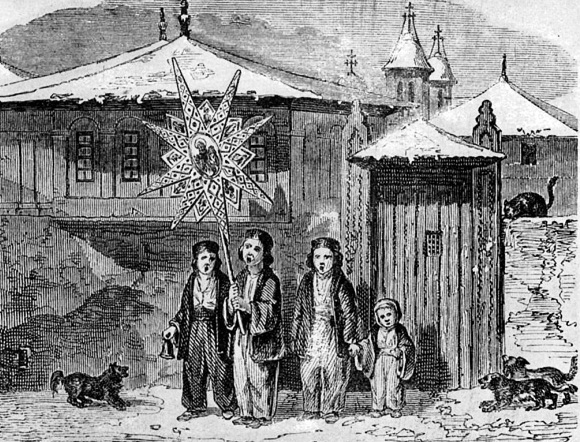
The image above of the Guy Fawkes of 1850 is by artist unknown.  It is in the Public Domain.

The image above of Children from Bontnewydd collecting for the Guy is by Geoff Charles.  It is in the Public Domain.

The image above of spectators around a Bonfire at Himley Hall is by Sam Roberts.  It comes with a Creative Commons licence (CC BY 2.0).  
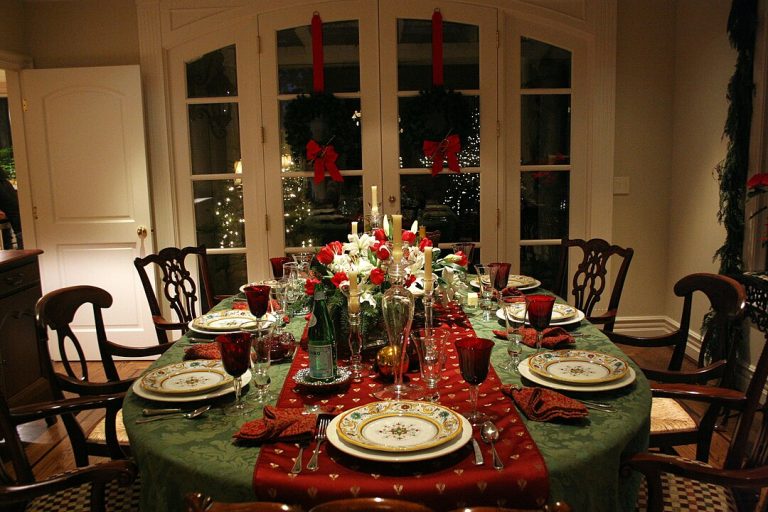
Great News For All Readers! – Official website.  This website is from a collector of comics published in Britain in the 1970’s and 1980’s.  It shows his memories of being a reader of these comics as a child, his observations as a collector today and an attempt to catalogue the comics from a fan’s perspective. 

Great News For All Readers! on Facebook.

Great News For All Readers! on Twitter.

Creative Commons – Official website.  They offer better sharing, advancing universal access to knowledge and culture, and fostering creativity, innovation, and collaboration.   

Birmingham: The Old Crown In Digbeth Photos (Part 2)

On Monday the 11th of September, 2023,  I visited the Old Crown in High Street, Digbeth, Birmingham, for the first time in my life, as part of Birmingham Heritage Week.  

Being a Brummie, born and bred, I have passed this pub a lot of times, especially as I got older and I always wondered what it would be like inside.  Although as an adult I could have popped in at any time I never got around to it until now.   I am pleased I saw, as part of Heritage Week, that this Medieval pub was presenting an exhibition on the 655-year history of Birmingham’s oldest pub.  It included never-before-seen photos and illustrations of the Grade-II* listed venue, as well as giving away a booklet by Carl Chinn.

I couldn’t really look around and appreciate how historic it is as much as I would have liked and take better shots inside of the old features because it was packed (and noisy) but I managed to take some decent enough photos to share.  Sadly, and bloody annoyingly, 19 photos didn’t turn out at all.   It had been a long day for me, coming from Edgbaston after doing a lot of walking around Cannon Hill Park (also another Heritage Week event) and it was a very hot day so my phone was heating up, on charge and playing up by now so that would explain that mystery.  It is just my usual bad luck but that’s a subject for another day!

I would have liked to have taken better ones outside too but there are seemingly never-ending roadworks going on and fences everywhere so the options to take decent photos, including crossing to the other side which is completely blocked off, makes it all very restricting indeed.

As someone who battles mental health problems daily, it wasn’t easy being there on my own and my anxiety was very high but it is a nice pub to go to and I am glad I went.  I hope to take some better photos one day, however, at £5.50 for a pint of lager shandy, I won’t be going there that often!

The Old Crown In Digbeth Photos (Part 2)

Image © Frank Parker

The interior of The Old Crown in Digbeth. Taken on 09/09/23.

Image © Frank Parker

The Old Crown well in The Old Crown in Digbeth.  Taken on 09/09/23.

Image © Frank Parker

The History of The Old Crown sign in The Old Crown in Digbeth.  Taken on 09/09/23.

Image © Frank Parker

History of The Old Crown in Digbeth.  Taken on 09/09/23.

Blog Posts

Notes And Links

Birmingham: The Old Crown In Digbeth Photos (Part 1)

Image © Frank Parker

On Monday the 11th of September, 2023,  I visited the Old Crown in High Street, Digbeth, Birmingham, for the first time in my life, as part of Birmingham Heritage Week.  

Being a Brummie, born and bred, I have passed this pub a lot of times, especially as I got older and I always wondered what it would be like inside.  Although as an adult I could have popped in at any time I never got around to it until now.   I am pleased I saw, as part of Heritage Week, that this Medieval pub was presenting an exhibition on the 655-year history of Birmingham’s oldest pub.  It included never-before-seen photos and illustrations of the Grade-II* listed venue, as well as giving away a booklet by Carl Chinn.

I couldn’t really look around and appreciate how historic it is as much as I would have liked and take better shots inside of the old features because it was packed (and noisy) but I managed to take some decent enough photos to share.  Sadly, and bloody annoyingly, 19 photos didn’t turn out at all.   It had been a long day for me, coming from Edgbaston after doing a lot of walking around Cannon Hill Park (also another Heritage Week event) and it was a very hot day so my phone was heating up, on charge and playing up by now so that would explain that mystery.  It is just my usual bad luck but that’s a subject for another day!

I would have liked to have taken better ones outside too but there are seemingly never-ending roadworks going on and fences everywhere so the options to take decent photos, including crossing to the other side which is completely blocked off, makes it all very restricting indeed.

As someone who battles mental health problems daily, it wasn’t easy being there on my own and my anxiety was very high but it is a nice pub to go to and I am glad I went.  I hope to take some better photos one day, however, at £5.50 for a pint of lager shandy, I won’t be going there that often!

The Old Crown In Digbeth Photos (Part 1)

Image © Frank Parker
Looking towards the side of The Old Crown in Digbeth. Taken on 09/09/23.
Image © Frank Parker

Looking towards The Old Crown in Digbeth. Taken on 09/09/23.

Image © Frank Parker

The Old Crown in Digbeth. Taken on 09/09/23.

Image © Frank Parker

Looking towards the side of The Old Crown in Digbeth. Taken on 09/09/23. 

Image © Frank Parker

The Old Crown sign at The Old Crown in Digbeth. Taken on 09/09/23.

Image © Frank Parker

The interior of The Old Crown in Digbeth. Taken on 09/09/23. 

Blog Posts

Notes And Links


Birmingham: The Old Crown In Digbeth

Image © Frank Parker

On Monday the 11th of September, 2023,  I visited the Old Crown in High Street, Digbeth, Birmingham, for the first time in my life, as part of Birmingham Heritage Week.  The pub was celebrating its 165th birthday over the weekend.

Being a Brummie, born and bred, I have passed this pub a lot of times, especially as I got older and I always wondered what it would be like inside.  Although as an adult I could have popped in at any time I never got around to it until now.   I am pleased I saw, as part of Heritage Week, that this Medieval pub was presenting an exhibition on the 655-year history of Birmingham’s oldest pub.  It included never-before-seen photos and illustrations of the Grade-II* listed venue, as well as giving away a booklet by Carl Chinn. 

I couldn’t really look around and appreciate how historic it is as much as I would have liked and take better shots inside of the old features because it was packed (and noisy) but I managed to take some decent enough photos to share.  Sadly, and bloody annoyingly, 19 photos didn’t turn out at all.   It had been a long day for me, coming from Edgbaston after doing a lot of walking around Cannon Hill Park (also another Heritage Week event) and it was a very hot day so my phone was heating up, on charge and playing up by now so that would explain that mystery.  It is just my usual bad luck but that’s a subject for another day!

I would have liked to have taken better ones outside too but there are seemingly never-ending roadworks going on and fences everywhere so the options to take decent photos, including crossing to the other side which is completely blocked off, makes it all very restricting indeed.

As someone who battles mental health problems daily, it wasn’t easy being there on my own and my anxiety was very high but it is a nice pub to go to and I am glad I went.  I hope to take some better photos one day, however, at £5.50 for a pint of lager shandy, I won’t be going there that often!


Photos Of The Old Crown, Digbeth

Click here to see photographic memories of my time there.

About The Old Crown, Digbeth

The Old Crown pub is in Deritend and is a Grade II* listed building retaining its black and white timber frame.  Almost all of the present building dates from the early 16th century. 

The Old Crown is Birmingham’s oldest secular building and has existed since 1368. 

It is Birmingham’s oldest inn with Queen Elizabeth I staying here in 1575 on her way home from Kenilworth Castle. 

Rooms are individually decorated with a mix of en-suite and shared bathrooms.  Facilities include TV, tea and coffee, towels and free wifi.   

The pub has a restaurant and there are various local eateries a short walk away and award-winning purveyors of street food, Digbeth Dining Club, takes place just two minutes away.  The Old Crown is situated a 10-minute walk from the city centre and has many local attractions within easy reach.

Having stood the test of time during the English Civil War the pub & events garden now stands proud in the heart of Digbeth, Birmingham’s thriving creative quarter.

History Of The Old Crown

It is believed the building was constructed between 1450 and 1500 with some evidence dating to 1492 (the same year the Saracen’s Head in nearby Kings Norton was completed).  John Leland visited the town during his tours of England and Wales upon entering Birmingham, in 1538 noted the building, as a “mansion house of tymber”.   It is thought to have been originally built as the Guildhall and School of St. John, Deritend.  This Guild owned a number of other buildings throughout Warwickshire, including the Guildhall in Henley in Arden.  The building was purchased in 1589, by John Dyckson, alias Bayleys who, in the 1580’s, had been buying a number of properties and lands in Deritend and in Bordesley.

Described as a tenement and garden, running alongside Heath Mill Lane, the building remained in the Dixon alias Baylis (later Dixon) family for the next hundred years.

In the original deed, John Dyckson is described as a Caryer, which in the West Midlands at this time, when roads were nothing more than hollow-ways and bridle paths, implied that he owned several trains of pack-horses.  These would have needed stabling, and Dixon would have needed warehouse space to store goods awaiting dispatch and arrived goods awaiting collection.  Such facilities would be useful to other travellers, and it may well be that the use of the house as an Inn, dates from this time.  Indeed, since England was in the grip of a patriotic pother over the failed Armada the previous year, it would have been opportune to adopt the name The Crown.  However, the earliest documentary evidence of the building’s use as an Inn is from 1626.  In a marriage settlement dated the 21st of December, 1666 it was noted by the sign of the Crowne

Heated skirmishes were fought around the building when Prince Rupert’s forces raided Birmingham during the English Civil War.

The building was converted into two houses in 1684 and then converted into three houses in 1693.  It remained three houses until the 19th century.   In 1851, Joshua Toulmin Smith saved the Old Crown from demolition when the Corporation proposed demolishing the building in order to improve the street.   Again in 1856 and 1862, the Corporation proposed to demolish the building and Smith saved the building each time.

In 1991 a local pub company owned by the Brennan family bought the Old Crown.  In the summer of 1994, Pat Brennan and his youngest son, Peter, were doing repairs and clearing out the old sheds to the rear of the property when they found the old well, which had been closed off for more than 100 years.  Now restored, it is situated at the rear entrance of the pub.   At the end of May 1998, under the guidance of Pat and Ellen Brennan and their sons Patrick, Gary and Peter, after the family’s £2 million investment into Birmingham’s most famous hostelry, The Old Crown was restored to its former glory and reopened.

Image © Frank Parker

The History of The Old Crown sign inside the pub.

Image © Frank Parker

Looking towards The Old Crown, Digbeth, Birmingham.  Taken on 09/09/23.

Image © Oosoom via Wikipedia

The Old Crown in 2006.

Construction Of The Old Crown

The building is 71 feet, 4 inches (21.74 meters) wide and 20 feet, 2 inches (6.15 meters) deep on the ground floor.  On the first floor, which overhangs the front, it is 21 feet, 9 inches (6.63 meters) deep.   When built, the original building had a central hall with a length of 40 feet (12 meters) and a width of 20 feet (6 meters).  Below this were a number of arched cellars. On the upper floor were just four rooms.  The building had a courtyard to its rear which contained a well.  It was 26 feet (8 meters) deep and surrounded by large stones.  The well was excavated and deepened to produce a total depth of 38 feet (12 meters).  The new section of the well was lined with square bricks.  At the top, it was 2 feet 7 inches, (787.4 millimetres) at its narrowest diameter and 2 feet, 9 in (838.2 millimetres) at its widest diameter.  It widened to around 4 feet (1.2 meters) at the bottom.  The well was cleaned in 1863 and Smith added an iron gate to the top of it to preserve it whilst keeping it accessible.

Image © Frank Parker

The Old Crown well.  Taken on 09/09/23.

Read more about The Old Crown here.

The above article is
sourced from The Old Crown website in the About The Old Crown section.  The rest is from  Wikipedia and is subject to change. 

Opening Times

Monday to Thursday: 12:00 p.m. to 23:30 p.m.

Food service until 9:00 p.m.

Friday to Saturday: 12:00 p.m. to 0:30 a.m.

Food service until 9:00 p.m.

Sunday: 12:00 p.m. to 23:00 p.m.

Food service until 5:45 p.m.

Bookings

The Old Crown, winner of the Best Traditional Pub at the 2019 Midland Food and Drink Hospitality Awards, has 10 bedrooms and 1 apartment available to book. 

Bookings are not compulsory but highly recommended, especially for weekends, due to how busy they are.  They always hold some space for walk-ins, so please feel free to come down even if your preferred date is full, and they will do their best to seat you.

Some dates will show as unavailable in their booking calendar due to events that are yet to be released.  

Although they do not have on-site parking, there are a number of local car parks (2 located on the High Street, visible from the hotel), feel free to enquire with them for more details or directions.

To book a room or send them an enquiry via e-mail click here.

Sign up for their newsletter and be the first to find out about these events when they are announced.

Address

High St

Deritend

Birmingham

B12 0LD

Telephone

0121 248 1368.

E-Mail

Blog Posts

Links

Images on this page of The Old Crown are the copyright of Frank Parker unless otherwise stated.

The image above of The Old Crown in 2006 is the copyright of Wikipedia user Oosoom.   It comes with a Creative Commons licence (CC BY-SA 3.0). 
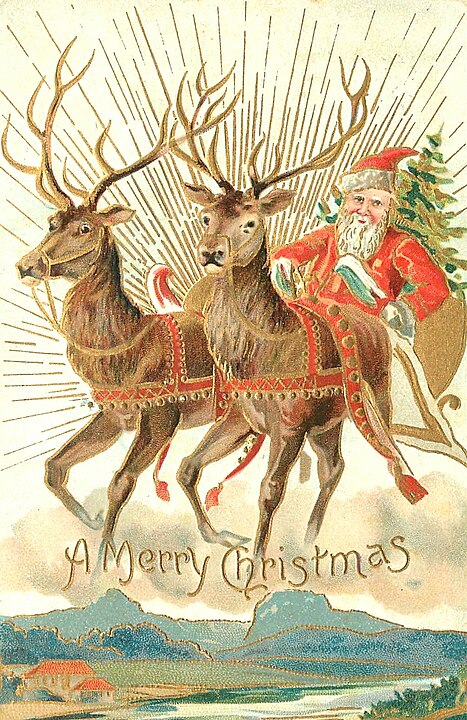
The Old Crown – Official website.
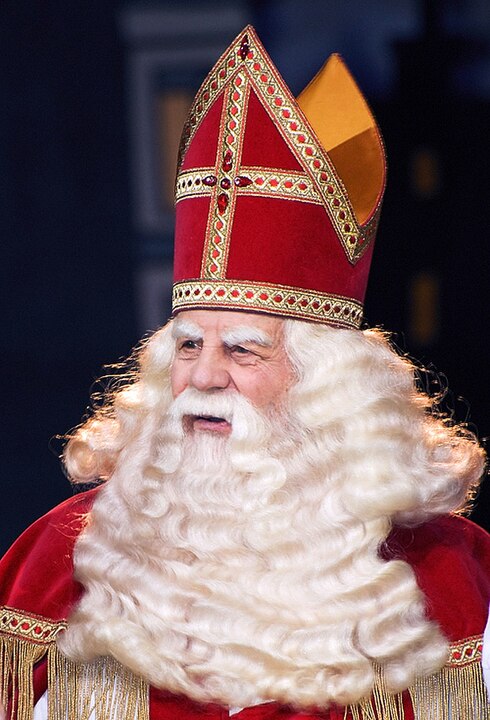
The Old Crown on Facebook.

The Old Crown on Twitter.

The Old Crown on Instagram.

The Old Crown on YouTube.

Creative Commons – Official website.  They offer better sharing, advancing universal access to knowledge and culture, and fostering creativity, innovation, and collaboration. 


Local History: The Birmingham Buddhist Vihara

Image © Frank Parker

On Saturday 17th September 2022,  I visited the Birmingham Buddhist Vihara in Osler Street, Ladywood, Birmingham as part of Birmingham Heritage WeekI never realised there was a Buddhist Temple in Birmingham so it was a pleasant surprise to find out there was and I am glad I went.

It is such a peaceful, tranquil, and friendly place to visit. I HIGHLY RECOMMEND you visit this Peace Pagoda.  

The Birmingham Buddhist Vihara Photos

Click here to see photographic memories of my day out.  

About The Birmingham Buddhist Vihara

In 1975 Dr. Rewata Dhamma, the Founder and Spiritual Director of Birmingham Buddhist Vihara and Dhammatalaka Peace Pagoda, was invited to England where he established a Buddhist monastery in Birmingham as his base.

Since his arrival in England in 1975, the majority of those who have called on Venerable Dr. Rewata Dhamma for teaching have been English.  Impressed by this, and wishing well for the future of Buddhism in England, he realized that the teaching would only become truly established here once the British themselves took responsibility for its development. Buddhism is not a missionary religion in the sense that is usually understood.  Religion cannot be imposed from outside; it must develop in line with the culture in which it finds itself and how best to do this can only be truly understood by people who are native to that culture.  On the other hand, it is also necessary for these people to have some depth of understanding of Buddhism itself and so they must have training and information available to them which is suitable to their cultural background and age group.

Interest in Buddhism from schools, colleges and universities has steadily increased over the years and the Vihara has become one of the major centres in the West Midlands serving this need.  As Buddhism becomes increasingly an accepted part of comparative religious studies so they welcome the many groups and individuals who need information and guidance from them.  This encourages further development of Buddhism and practice for seekers of Buddhist knowledge.

In 1998 he accomplished the building of Dhamma Talaka Peace Pagoda, after years of planning, as a suitable resting place for the royal relics.

The Peace Pagoda is the only purpose-built Myanmar-style pagoda in the UK and can offer a unique educational and cultural experience to visiting students and groups of all ages.  The pagoda is a miniature replica of Shwedagon pagoda in Yangon, Myanmar, which is one of the most important pagodas in that country.  Visitors to the pagoda may learn about Theravada Buddhist beliefs, practices and meditation methods; students can also be given the opportunity to try meditation for themselves.

You can read more information and see what they have to offer on their website here.

In front of the Birmingham Buddhist Vihara. Image © Frank Parker

A Guide To The Dhammatalaka Peace Pagoda

Read an online e-book version of A Guide To The Dhammatalaka Peace Pagoda here.

Download A Guide To The Dhammatalaka Peace Pagoda in PDF format by clicking here.

If you don’t have a PDF reader you can download one from here 

Opening Times

Opening times vary depending on what is going on at the time.

To see what events are happening and when click here.

Address

29-31 Osler Sreet

Ladywood

Birmingham

B16 9EU.

Telephone

0121 454 6591.

General Enquiries

For general enquiries click here.

School Visit Enquiries

For school visit enquiries click here.

Open Day

Visit the Birmingham Heritage Week website (link above) to find out when the next open day will be.

Blog Posts

Notes And Links

The image shown at the top of this page is copyright of Frank Parker.

The videos shown above are via YouTube.

The Birmingham Buddhist Vihara on Facebook.