YouTube

YouTube Logo
Image © YouTube via Wikipedia

YouTube began in 2005, and most of you reading this are aware of it and have used it, or do use it often, unless you live on another planet!

I created my YouTube channel in 2006 and, sadly, I haven’t done much on it due to many personal and health reasons, mainly because of struggling with my Mental Health. I planned to do more, I planned to get better confidence wise and content wise and then my life got in the way and shit happened and often, but now, in 2026, I am trying hard to rectify all that.  I can’t change the past, and I am not looking into the future, but right now, I am doing the best I can to make the present a better place to live in for my state of mind.  I take every day as it comes, and working on My YouTube Channel and website is an important part of that for me.

The original videos I put up were about my favourite Football team Birmingham City, my beloved, and sadly missed, pets, Rocky and Rosie, a Black Country L.P. that was my Dad’s and one about fire! 

I added some short videos more recently and plan to add more related content that tie in with my website a.s.ap.   You can see my channel here.  However, on this page, you can read all about the history of YouTube. 

About YouTube 

YouTube is an American online video sharing platform owned by Google and is headquartered in San Bruno, California, U.S.A.  YouTube was founded on February the 14th, 2005 and is the second-most-visited website in the world, after Google itself.  In January 2024, YouTube had more than 2.7 billion monthly active users, who collectively consumed more than one billion hours of video content every day.  As of May 2019, videos were being uploaded to the platform at a rate of more than 500 hours of content per minute, and as of mid-2024, there were approximately 14.8 billion videos in total.

On November, the 13th, 2006, YouTube was purchased by Google for 1.65 billion dollars (equivalent to 2.44 billion dollars in 2025).  Google expanded YouTube’s business model from generating revenue through advertisements alone to offering paid content such as movies and exclusive content explicitly produced for YouTube.  It also offers YouTube Premium, a paid subscription option for watching content without ads.  YouTube incorporated the Google AdSense program, generating more revenue for both YouTube and approved content creators.  In 2023, YouTube’s advertising revenue totalled $31.7 billion, a 2% increase from the $31.1 billion reported in 2022.  From financial quarter 4 2023 to financial quarter 2024, YouTube’s combined revenue from advertising and subscriptions exceeded $50 billion.

Since its purchase by Google, YouTube has expanded beyond the core website, creating mobile apps, network television, games, and the ability to link with other platforms.  Video categories on YouTube include music videos, video clips, news, short and feature films, songs, documentaries, movie trailers, teasers, TV spots, live streams, vlogs, and more.  Most content is generated by individuals, including collaborations between YouTubers and corporate sponsors.  Established media, news, and entertainment corporations have also created and expanded their visibility on YouTube channels to reach bigger audiences.

YouTube has had unprecedented social impact, influencing popular culture, internet trends, and creating multimillionaire celebrities.  Despite its growth and success, the platform has been criticised for its facilitation of the spread of misinformation and copyrighted content, routinely violating its users’ privacy, excessive censorship, endangering the safety of children and their well-being, and for its inconsistent implementation of platform guidelines.

YouTube Logo Used Since 2025
Image © YouTube via Wikipedia

YouTube’s logo, used since June 2024.

The YouTube logo was introduced in June 2024, using a custom font based on YouTube New typeface.  It is similar to the 2017 logo except that the font is thinner and the play button symbol uses a more pinky shade of red.  As of February 2026, this logo has almost rolled out completely.  The 2017 logo is still used in a few instances.

The History Of YouTube

Founding And Initial Growth (2005 – 2006)

YouTube was founded by Chad Hurley, Steve Chen and Jawed Karim.  They were former employees of PayPal.  They had become wealthy after Google’s acquisition of the company on November the 13th, 2006.   It was purchased for 1.65 billion dollars (equivalent to 2.44 billion dollars in 2025).  Hurley had studied design at the Indiana University of Pennsylvania, and Chen and Karim studied computer science together at the University of Illinois Urbana-Champaign.

According to a story that has often been repeated in the media, Hurley and Chen developed the idea for YouTube during the early months of 2005, after they had experienced difficulty sharing videos that had been shot at a dinner party at Chen’s flat in San Francisco.  Karim did not attend the party and denied that it had occurred, but Chen remarked that the idea that YouTube was founded after a dinner party that was probably very strengthened by marketing ideas around creating a very digestible story.

Karim said the inspiration for YouTube came from the Super Bowl XXXVIII half-time show controversy when Janet Jackson’s breast was briefly exposed by Justin Timberlake during the half-time show.  Karim could not easily find video clips of the incident and the 2004 Indian Ocean tsunami online, which led to the idea of a video-sharing site.  Hurley and Chen said that the original idea for YouTube was a video version of an online dating service and had been influenced by the website Hot or Not.  They created posts on Craigslist asking attractive women to upload videos of themselves to YouTube in exchange for a $100 reward.  Difficulty in finding enough dating videos led to a change of plans, with the site’s founders deciding to accept uploads of any video.

YouTube began as a venture capital–funded technology startup. Between November 2005 and April 2006, the company raised money from various investors, with Sequoia Capital and Artis Capital Management being the largest two.  YouTube’s early headquarters were situated above a pizzeria and a Japanese restaurant in San Mateo, California.  In February 2005, the company registered www.youtube.com. The first video was uploaded on April the 23rd, 2005.  Titled Me at the zoo, it shows co-founder Jawed Karim at the San Diego Zoo and can still be viewed on the site.  The same day, the company launched a public beta and by November, a Nike ad featuring Ronaldinho became the first video to reach one million total views.  The site exited beta in December 2005, by which time the site was receiving 8 million views a day.  Clips at the time were limited to 100 megabytes, as little as 30 seconds of footage.

YouTube was not the first video-sharing site on the Internet, there was also Vimeo.  That was founded in November 2004, though that site remained a side project of its developers from CollegeHumor.  On December, the 17th, 2005, the same week YouTube exited beta, NBCUniversal Saturday Night Live ran a sketch called Lazy Sunday by The Lonely Island.  Besides helping to bolster ratings and long-term viewership for Saturday Night Live, the video‘s status as an early viral video helped establish YouTube as an important website.  Unofficial uploads of the skit to YouTube drew in more than five million collective views by February 2006 before they were removed when NBCUniversal requested it two months later based on copyright concerns.  Despite eventually being taken down, these duplicate uploads of the skit helped popularise YouTube’s reach and led to the upload of more third-party content.  The site grew rapidly.  In July 2006, the company announced that more than 65,000 new videos were being uploaded every day and that the site was receiving 100 million video views per day.

The choice of the name youtube.com led to problems for a similarly named website, utube.com.  That site’s owner, Universal Tube & Rollform Equipment (Universal Tube), filed a lawsuit against YouTube in November 2006, after being regularly overloaded by people looking for YouTube.  Universal Tube subsequently changed its website to www.utubeonline.com. 

Chad Hurley
Image © The Bui Brothers via Wikipedia

Chad Hurley.

Steve Chen
Image © TaiwanPlus via Wikipedia

Steve Chen.

Jawed Karim
Image © Robin Brown via Wikipedia and is in the public domain

Jawed Karim.

Original YouTube Logo Used Until 2007
Image © YouTube via Wikipedia and is in the public domain

The YouTube logo used from its launch until 2007.

It returned in 2008 before being removed again in 2010. Another version without “Broadcast Yourself” was used until 2011.

Broadcast Yourself Era (2006 – 2013)

On October the 9th, 2006, Google announced that they had acquired YouTube for 1.65 billion dollars in Google stock.  The deal was finalised on November the 13th, 2006.  Google’s acquisition launched newfound interest in video-sharing sites IAC, which now owned Vimeo, focused on supporting the content creators to distinguish itself from YouTube.  It was at this time that YouTube adopted the slogan Broadcast Yourself.  The company experienced rapid growth. The Daily Telegraph wrote that in 2007, YouTube consumed as much bandwidth as the entire Internet in 2000.  By 2010, the company had reached a market share of around 43% and more than 14 billion views of videos, according to comScore.  That year, the company simplified its interface to increase the time users would spend on the site.

In 2011, more than three billion videos were being watched each day with 48 hours of new videos uploaded every minute.  Most of these views came from a relatively small number of videos, according to a software engineer at that time, 30% of videos accounted for 99% of views on the site.  That year, the company again changed its interface and at the same time, introduced a new logo with a darker shade of red.  A subsequent interface change, designed to unify the experience across desktop, T.V., and mobile, was rolled out in 2013.  By that point, more than 100 hours were being uploaded every minute, increasing to 300 hours by November 2014.

During that time, the company also went through some organisational changes.  In October 2006, YouTube moved to a new office in San Bruno, California.  Hurley announced that he would be stepping down as chief executive officer of YouTube to take an advisory role and that Salar Kamangar would take over as head of the company in October 2010.  In April 2009, YouTube partnered with Vevo.  In April 2010, Lady Gaga’s Bad Romance became the most-viewed video, becoming the first video to reach 200 million views on May the 9th, 2010.

YouTube faced a major lawsuit by Viacom International in 2011 that nearly resulted in the discontinuation of the website.  The lawsuit was filed due to alleged copyright infringement of Viacom’s material by YouTube.  However, the United States Court of Appeals for the Second Circuit ruled that YouTube was not liable, and thus, YouTube won the case in 2012.

901 Cherry Avenue, San Bruno, California
Image © Coolcaesar via Wikipedia and is in the public domain

YouTube’s headquarters at 901 Cherry Avenue, San Bruno, California in April 2017.

Susan Wojcicki’s Leadership (2014 – 2023)

Susan Wojcicki was appointed C.E.O. of YouTube in February 2014.  In January 2016, YouTube expanded its headquarters in San Bruno by purchasing an office park for $215 million.  The complex has 51,468 square metres (554,000 square feet) of space and can house up to 2,800 employees.  YouTube officially launched the polymer redesign of its user interfaces based on Material Design language as its default, as well as a redesigned logo that is built around the service’s play button emblem in August 2017.

Through this period, YouTube tried several new ways to generate revenue beyond advertisements.  In 2013, YouTube launched a pilot program for content providers to offer premium, subscription-based channels.  This effort was discontinued in January 2018 and relaunched in June, with $4.99 channel subscriptions.  These channel subscriptions complemented the existing Super Chat ability, launched in 2017, which allows viewers to donate between $1 and $500 to have their comment highlighted.  In 2014, YouTube announced a subscription service known as Music Key, which bundled ad-free streaming of music content on YouTube with the existing Google Play Music service.  The service continued to evolve in 2015 when YouTube announced YouTube Red, a new premium service that would offer ad-free access to all content on the platform (succeeding the Music Key service released the previous year), premium original series, and films produced by YouTube personalities, as well as background playback of content on mobile devices.  YouTube also released YouTube Music, a third app oriented towards streaming and discovering the music content hosted on the YouTube platform.

The company also attempted to create products appealing to specific viewers.  YouTube released a mobile app known as YouTube Kids in 2015, which was designed to provide an experience optimised for children.  It features a simplified user interface, curated selections of channels featuring age-appropriate content, and parental control features.  Also in 2015, YouTube launched YouTube Gaming.  This is a video gaming-oriented vertical and app for videos and live-streaming, intended to compete with the Amazon.com owned Twitch.  In April 2018, a shooting occurred at YouTube’s headquarters in San Bruno, California, which wounded four and resulted in the death of the shooter.

By February 2017, one billion hours of YouTube videos were being watched every day, and 400 hours worth of videos were uploaded every minute.  Two years later, the uploads had risen to more than 500 hours per minute.  During COVID, when most of the world was under stay-at-home orders, usage of services like YouTube significantly increased.  Forbes estimated that YouTube accounted for 16% of all internet traffic, as of 2024, up from 11% in 2018, before COVID.  In response to E.U. officials requesting that such services reduce bandwidth to make sure medical entities had sufficient bandwidth to share information, YouTube and Netflix said they would reduce streaming quality for at least thirty days as to cut bandwidth use of their services by 25% to comply with the E.U.’s request.  YouTube later announced that they would continue with this move worldwide saying “We continue to work closely with governments and network operators around the globe to do our part to minimise stress on the system during this unprecedented situation.”

After a 2018 complaint alleging violations of the Children’s Online Privacy Protection Act (C.O.P.P.A.), the company was fined $170 million by the FTC for collecting personal information from minors under the age of 13.  YouTube was also ordered to create systems to increase children’s privacy.  Following criticisms of its implementation of those systems, YouTube started treating all videos designated as made for kids as liable under C.O.P.P.A. on January the 6th, 2020.  Joining the YouTube Kids app, the company created a supervised mode, designed more for tweens, in 2021.  Additionally, to compete with TikTok and Instagram Reels, YouTube released YouTube Shorts, a short-form video platform.  During that period, YouTube entered disputes with other tech companies.  For over a year, in 2018/ 19, no YouTube app was available for Amazon Fire products.  In 2020, Roku removed the YouTube TV app from its streaming store after the two companies were unable to reach an agreement.

After testing earlier in 2021, YouTube removed public display of dislike counts on videos in November 2021, claiming the reason for the removal was, based on its internal research, that users often used the dislike feature as a form of cyberbullying and brigading.  While some users praised the move as a way to discourage trolls, others felt that hiding dislikes would make it harder for viewers to recognise clickbait or unhelpful videos and that other features already existed for creators to limit bullying.  YouTube co-founder Jawed Karim referred to the update as a stupid idea and said that the real reason behind the change was not a good one, and not one that will be publicly disclosed.  He felt that users’ ability on a social platform to identify harmful content was essential, saying that the process works, and there’s a name for it –  the wisdom of the crowds.  He said the process breaks when the platform interferes with it and then, the platform invariably declines.  Shortly after the announcement, software developer Dmitry Selivanov created Return YouTube Dislike, an open-source, third-party browser extension for Chrome and Firefox that allows users to see a video’s number of dislikes.  In a letter published on January the 25th, 2022, by then YouTube C.E.O. Susan Wojcicki, acknowledged that removing public dislike counts was a controversial decision, but reiterated that she stands by this decision, claiming that it reduced dislike attacks.

In 2022, YouTube launched an experiment where the company would show users who watched longer videos on T,V,’s a long chain of short unskippable adverts, intending to consolidate all ads into the beginning of a video.  Following public outrage over the unprecedented amount of unskippable ads, YouTube ended the experiment on September the 19th of the same year.  In October, YouTube announced that they would be rolling out customisable user handles in addition to channel names, which would also become channel U.R.L’s.

YouTube Logo Used Since 2025
Image © YouTube via Wikipedia and is in the public domain

YouTube’s logo from 2015 until 2017.

Neal Mohan’s Leadership (2023 – Present)

On February the 16th, 2023, Wojcicki announced that she would step down as C.E.O., with Neal Mohan named as her successor.  Wojcicki took on an advisory role for Google and parent company Alphabet.  Wojcicki died a year and a half later from non-small-cell lung cancer, on August the 9th, 2024.  In late October 2023, YouTube began cracking down on the use of ad blockers on the platform.  Users of ad blockers may be given a pop-up warning saying “Video player will be blocked after 3 videos.” Users of ad blockers are shown a message asking them to allow ads or inviting them to subscribe to the ad-free YouTube Premium subscription plan.  YouTube says that the use of ad blockers violates its terms of service.  In April 2024, YouTube announced it would be strengthening their enforcement on third-party apps that violate YouTube’s Terms of Service, specifically ad-blocking apps.  Starting in June 2024, Google Chrome announced that it would be replacing Manifest V2 in favour of Manifest V3, effectively killing support for most ad-blockers.  Around the same time, YouTube started using server-side ad injection, which allows the platform to inject the ads directly into the video, instead of having the ad as a separate file which can be blocked.

In September 2023, YouTube announced an in-app gaming platform called Playables.  It was made accessible to all users in May 2024, expanding from an initial offering limited to premium subscribers.  In December 2024, YouTube began testing a new multiplayer feature for that service, supporting multiplayer functionality across desktop and mobile devices.  As of December 2024, the Playables catalogue has over 130 games in various genres, including trivia, action, and sports.  In December 2024, YouTube introduced new guidelines prohibiting videos with clickbait titles to enhance content quality and combat misinformation.  The platform aims to penalise creators using misleading or sensationalised titles, with potential actions including video removal or channel suspension.  According to YouTube, this guideline will gradually roll out in India first, but will expand to more countries in the coming months.

On February, the 14th, 2025, YouTube celebrated 20 years since its founding.  On July 30, 2025, amid the implementation of the Online Safety Act 2023 in the United Kingdom, Google announced that it would begin to enforce age assurance policies for selected users in the United States as a trial.  Machine learning will be used to determine the age of the user (regardless of any account information indicating their age) and restrict access to certain content and features across all Google properties, including YouTube (including, in particular, disabling personalised advertising and enabling certain digital wellbeing limits), if they are assumed to be under 18.  On YouTube, this will be based on factors such as searches and video history, and the age of the account.  The user must go through age verification via payment, scanned ID, or selfie to access all features if they are detected to be a minor.  On April, the 9th, 2025, YouTube expressed support for the NO FAKES Act of 2025, introduced by Senator Chris Coons (D-DE) and Senator Marsha Blackburn (R-TN), and announced an expansion of its pilot program that is designed to identify content generated by A.I.

YouTube's Logo From August 2017 Until February 2025
Image © YouTube via Wikipedia and is in the public domain

YouTube’s logo from August 2017 until February 2025.

YouTube Features

YouTube offers different features based on user verification, such as standard or basic features like uploading videos, creating playlists, and using YouTube Music, with limits based on daily activity (verification via phone number or channel history increases feature availability and daily usage limits), intermediate or additional features like longer videos (over 15 minutes), live-streaming, custom thumbnails, and creating podcasts, advanced features like content I.D. appeals, embedding live streams, applying for monetisation, clickable links, adding chapters, and pinning comments on videos or posts.

Read more here.

YouTube Videos

In January 2012, it was estimated that visitors to YouTube spent an average of 15 minutes a day on the site, in contrast to the four or five hours a day spent by a typical U.S. citizen watching television.  In 2017, viewers on average watched YouTube on mobile devices for more than an hour every day.  In December 2012, two billion views were removed from the view counts of Universal and Sony Music videos on YouTube, prompting a claim by The Daily Dot that the views had been deleted due to a violation of the site’s terms of service, which ban the use of automated processes to inflate view counts.  That was disputed by Billboard, which said that the two billion views had been moved to Vevo, since the videos were no longer active on YouTube.

On August, the 5th, 2015, YouTube patched the formerly notorious behaviour, which caused a video’s view count to freeze at 301 (later 301+) until the actual count was verified to prevent view count fraud.  YouTube view counts again began updating in real time.  Since September 2019, subscriber counts are abbreviated.  Only three leading digits of channels’ subscriber counts are indicated publicly, compromising the function of third-party real-time indicators such as Social Blade.  Exact counts remain available to channel operators inside YouTube Studio.

On November, the 11th, 2021, after testing out this change in March of the same year, YouTube announced it would start hiding dislike counts on videos, making them invisible to viewers.  The company stated the decision was in response to experiments which confirmed that smaller YouTube creators were more likely to be targeted in dislike brigading and harassment.  Creators will still be able to see the number of likes and dislikes in the YouTube Studio dashboard tool, according to YouTube.  YouTube has an estimated 14.8 billion videos with about 4% of those never having a view.  Just over 85% have fewer than 1,000 views.

Read more here.

Copyright Issues

YouTube has faced numerous challenges and criticisms in its attempts to deal with copyright, including the site’s first viral video, Lazy Sunday, which had to be taken down due to copyright concerns.  At the time of uploading a video, YouTube users are shown a message asking them not to violate copyright laws.  Despite this advice, many unauthorised clips of copyrighted material remain on YouTube.  YouTube does not view videos before they are posted online, and it is left to copyright holders to issue a D.M.C.A. takedown notice pursuant to the terms of the Online Copyright Infringement Liability Limitation Act.  Any successful complaint about copyright infringement results in a YouTube copyright strike.  Three successful complaints for copyright infringement against a user account will result in the account and all of its uploaded videos being deleted.   From 2007 to 2009 organisations including Viacom, Mediaset, and the English Premier League have filed lawsuits against YouTube, claiming that it has done too little to prevent the uploading of copyrighted material.

In August 2008, a U.S. court ruled in Lenz v. Universal Music Corp. that copyright holders cannot order the removal of an online file without first determining whether the posting reflected fair use of the material.  YouTube’s owner Google announced in November 2015 that they would help cover the legal cost in select cases where they believe fair use defences apply.  In the 2011 case of Smith v. Summit Entertainment LLC, professional singer Matt Smith sued Summit Entertainment for the wrongful use of copyright takedown notices on YouTube.  He asserted seven causes of action, and four were ruled in Smith’s favour.  In April 2012, a court in Hamburg ruled that YouTube could be held responsible for copyrighted material posted by its users.  On November, the 1st, 2016, the dispute with G.E.M.A. was resolved, with Google content I.D. being used to allow advertisements to be added to videos with content protected by G.E.M.A.

In April 2013, it was reported that Universal Music Group and YouTube have a contractual agreement that prevents content blocked on YouTube by a request from U.M.G. from being restored, even if the uploader of the video files a D.M.C.A. counter-notice.  As part of YouTube Music, Universal and YouTube signed an agreement in 2017, which was followed by separate agreements other major labels, which gave the company the right to advertising revenue when its music was played on YouTube.  By 2019, creators were having videos taken down or demonetised when Content I.D. identified even short segments of copyrighted music within a much longer video, with different levels of enforcement depending on the record label.  Experts noted that some of these clips said qualified for fair use.

Read more here and here.

Content I.D.

In June 2007, YouTube began trials of a system for automatic detection of uploaded videos that infringe copyright.  Google C.E.O. Eric Schmidt regarded this system as necessary for resolving lawsuits such as the one from Viacom, which alleged that YouTube profited from content that it did not have the right to distribute.  The system, which was initially called Video Identification and later became known as Content I.D., creates an I.D. File for copyrighted audio and video material, and stores it in a database.  When a video is uploaded, it is checked against the database, and flags the video as a copyright violation if a match is found.  When this occurs, the content owner has the choice of blocking the video to make it unviewable, tracking the viewing statistics of the video, or adding advertisements to the video.

An independent test in 2009 uploaded multiple versions of the same song to YouTube and concluded that while the system was surprisingly resilient in finding copyright violations in the audio tracks of videos, it was not infallible.  The use of Content I.D. to remove material automatically has led to controversy in some cases, as the videos have not been checked by a human for fair use.  If a YouTube user disagrees with a decision by Content I.D., it is possible to fill in a form disputing the decision.  Before 2016, videos were not monetised until the dispute was resolved.  Since April 2016, videos continue to be monetised while the dispute is in progress, and the money goes to whoever won the dispute.  Should the uploader want to monetise the video again, they may remove the disputed audio in the Video Manager.  YouTube has cited the effectiveness of Content I.D. as one of the reasons why the site’s rules were modified in December 2010 to allow some users to upload videos of unlimited length.

Read more here.

Russia

In 2021, two accounts linked to RT DE, the German channel of the Russian state-owned RT network, were removed for breaching YouTube’s policies relating to COVID.  Russia threatened to ban YouTube after the platform deleted two German RT channels in September 2021.  Shortly after the Russian invasion of Ukraine in 2022, YouTube removed all channels funded by the Russian state.  YouTube expanded the removal of Russian content from its site to include channels described as pro-Russian.  In June 2022, the War Gonzo channel run by Russian military blogger and journalist Semyon Pegov was deleted.

In July 2023, YouTube removed the channel of British journalist Graham Phillips, active in covering the war in Donbas from 2014.  In August 2023, a Moscow court fined Google 3 million rubles, around $35,000, for not deleting what it said was fake news about the war in Ukraine.  In October 2024, a Russian court fined Google 2 undecillion rubles (equivalent to $20 decillion) for restricting Russian state media channels on YouTube.  State news agency TASS reported that Google is allowed to return to the Russian market only if it complies with the court’s decision.  Kremlin spokesperson Dmitry Peskov labelled the court decision as symbolic and warned Google that it should not be restricting the actions of their broadcasters on its platform.

April Fools Gags

YouTube featured an April Fools’ prank on the site on April the 1st of every year from 2008 to 2016.  In 2008, all links to videos on the main page were redirected to Rick Astley’s music video Never Gonna Give You Up, a prank known as rick rolling.  The next year, when clicking on a video on the main page, the whole page turned upside down, which YouTube claimed was a new layout.  In 2010, YouTube temporarily released a TEXTp mode which rendered video imagery into A.S.C.I.I. art letters in order to reduce bandwidth costs by $1 per second.

The next year, the site celebrated its 100th anniversary with a range of sepia-toned silent, early 1900’s style films, including a parody of Keyboard Cat.  In 2012, clicking on the image of a D.V.D. next to the site logo led to a video about a purported option to order every YouTube video for home delivery on D.V.D.   In 2013, YouTube teamed up with satirical newspaper company The Onion to claim in an uploaded video that the video-sharing website was launched as a contest which had finally come to an end, and would shut down for ten years before being re-launched in 2023, featuring only the winning video.  The video starred several YouTube celebrities, including Antoine Dodson.  A video of two presenters announcing the nominated videos streamed live for 12 hours.

In 2014, YouTube announced that it was responsible for the creation of all viral video trends, and revealed previews of upcoming trends, such as Clocking, Kissing Dad, and Glub Glub Water Dance.  The next year, YouTube added a music button to the video bar that played samples from Sandstorm by Darude.  In 2016, YouTube introduced an option to watch every video on the platform in 360-degree mode with Snoop Dogg.

Read more here

YouTube Services

YouTube Premium

YouTube Premium (formerly Music Key and YouTube Red) is YouTube’s premium subscription service.  It offers advertising-free streaming, access to original programming, and background and offline video playback on mobile devices.  YouTube Premium was originally announced on November the 12th, 2014, as Music Key, a subscription music streaming service, and was intended to integrate with and replace the existing Google Play Music All Access service.  On October, the 28th, 2015, the service was relaunched as YouTube Red, offering ad-free streaming of all videos and access to exclusive original content.  As of November 2016, the service has 1.5 million subscribers, with a further million on a free-trial basis.  As of June 2017, the first season of YouTube Originals had received 250 million views in total.

Read more here.

YouTube's Premium Logo In 2024
Image © YouTube via Wikipedia and is in the public domain

YouTube’s Premium logo in 2024.

YouTube Kids

YouTube Kids is an American children’s video app developed by YouTube, a subsidiary of Google.  The app was developed in response to parental and government scrutiny on the content available to children.  The app provides a version of the service oriented towards children, with curated selections of content, parental control features, and filtering of videos deemed inappropriate viewing for children aged under 13, 8 or 5, depending on the age grouping chosen.  First released on February the 15th, 2015, as an Android and iOS mobile app, the app has since been released for LG, Samsung, and Sony smart T.V.’s, as well as for Android TV.  On May, the 27th, 2020, it became available on Apple TV.  As of September 2019, the app is available in 69 countries, including Hong Kong and Macau, and one province.  YouTube launched a web-based version of YouTube Kids on August the 30th, 2019.

Read more here.

YouTube's Kids Logo In 2019
Image © YouTube via Wikipedia and is in the public domain

YouTube’s Kids logo in 2024.

YouTube Music

On September, the 28th, 2016, YouTube named Lyor Cohen, the co-founder of 300 Entertainment and former Warner Music Group executive, the Global Head of Music.  In early 2018, Cohen began hinting at the possible launch of YouTube’s new subscription music streaming service, a platform that would compete with other services such as Spotify and Apple Music.  On May, the 22nd, 2018, the music streaming platform named YouTube Music was launched for people who mostly listen to music on YouTube.

Read more here.

YouTube's Music Logo In 2024
Image © YouTube via Wikipedia and is in the public domain

YouTube’s Music logo in 2024.

YouTube Movies & TV

YouTube Movies & TV is a video on demand (V.O.D.) service that offers movies and television shows for purchase or rental, depending on availability, along with a selection of movies (encompassing between 100 and 500 titles overall) that are free to stream, with interspersed ad breaks.  YouTube began offering free-to-view movie titles to its users in November 2018.  Selections of new movies are added and others removed, unannounced each month.  In March 2021, Google announced plans to gradually deprecate the Google Play Movies & TV app, and eventually migrate all users to the YouTube app’s Movies & TV store to view, rent and purchase movies and T.V. shows (first affecting Roku, Samsung, LG, and Vizio smart TV users on July the 15th).  Google Play Movies & TV formally shut down on January the 17th, 2024, with the web version of that platform migrated to YouTube as an expansion of the Movies & T.V. store to desktop users.  Other functions of Google Play Movies & TV were integrated into the Google TV service.

Read more here.

YouTube Primetime Channels

On November the 1st, 2022, YouTube launched Primetime Channels, a channel store platform offering third-party subscription streaming add-ons sold a la carte through the YouTube website and app, competing with similar subscription add-on stores operated by Apple, Prime Video and Roku.  The add-ons can be purchased through the YouTube Movies & TV hub or through the official YouTube channels of the available services.  Subscribers of YouTube TV add-ons that are sold through Primetime Channels can also access their content via the YouTube app and website.  A total of 34 streaming services (including Paramount+, Showtime, Starz, MGM+, AMC+ and ViX+) were initially available for purchase.

NFL Sunday Ticket, as part of a broader residential distribution deal with Google signed in December 2022 that also made it available to YouTube TV subscribers, was added to Prime-time Channels as a standalone add-on on August the 16th, 2023.  The ad-free tier of Max was added to Prime-time Channels on December the 12th, 2023, coinciding with YouTube TV converting its separate HBO (for base plan subscribers) and HBO Max (for all subscribers) linear/V.O.D. add-ons into a single combined Max offering.

Read more here.

YouTube TV

On February, the 28th, 2017, in a press announcement held at YouTube Space Los Angeles, YouTube announced YouTube TV, an over-the-top M.V.P.D.-style subscription service that would be available for United States customers for $65 per month.  Initially launching in five major markets (New York City, Los Angeles, Chicago, Philadelphia and San Francisco) on April the 5th, 2017, the service offers live streams of programming from the five major broadcast networks (ABC, CBS, The CW, Fox and NBC, along with selected MyNetworkTV affiliates and independent stations in certain markets), as well as approximately 60 cable channels owned by companies such as The Walt Disney Company, Paramount Global, Fox Corporation, NBCUniversal, Allen Media Group and Warner Bros. Discovery (including among others Bravo, USA Network, Syfy, Disney Channel, CNN, Cartoon Network, E!, Fox Sports 1, Freeform, FX and ESPN).

Subscribers can receive premium cable channels (including HBO (via a combined Max add-on that includes in-app and log-in access to the service), Cinemax, Showtime, Starz and MGM+) and other subscription services (such as NFL Sunday Ticket, MLB.tv, NBA League Pass, Curiosity Stream and Fox Nation) as optional add-ons for an extra fee, and can access YouTube Premium original content.  In September 2022, YouTube TV began allowing customers to purchase most of its premium add-ons (excluding certain services such as NBA League Pass and AMC+) without an existing subscription to its base package.

Read more here.

YouTube's TV Logo In 2018
Image © YouTube via Wikipedia and is in the public domain

YouTube’s TV logo in 2018.

YouTube Go

In September 2016, YouTube Go was announced, as an Android app created for making YouTube easier to access on mobile devices in emerging markets.  It was distinct from the company’s main Android app and allowed videos to be downloaded and shared with other users.  It also allowed users to preview videos, share downloaded videos through Bluetooth, and offered more options for mobile data control and video resolution.

In February 2017, YouTube Go was launched in India, and expanded in November 2017 to 14 other countries, including Nigeria, Indonesia, Thailand, Malaysia, Vietnam, the Philippines, Kenya, and South Africa.  On February, the 1st, 2018, it was rolled out in 130 countries worldwide, including Brazil, Mexico, Turkey, and Iraq.  Before it shut down, the app was available to around 60% of the world’s population.  In May 2022, Google announced that they would be shutting down YouTube Go in August 2022.

YouTube's Go Logo In 2025
Image © YouTube via Wikipedia and is in the public domain

YouTube’s Go logo in 2025.

YouTube Shorts

In September 2020, YouTube announced that it would be launching a beta version of a new platform of 15-second videos, similar to TikTok, called YouTube Shorts.  The platform was tested in India and later expanded to other countries, including the United States in March 2021, with videos allowed up to 1 minute long.  The platform is not a standalone app, but is integrated into the main YouTube app. Like TikTok, it gives users access to built-in creative tools, including the possibility of adding licensed music to their videos.  The platform had its global beta launch on July the 13th, 2021.  On October, the 15th, 2024, the platform officially extended the length of shorts to 3 minutes.

Read more here.

YouTube Stories

In 2018, YouTube started testing a new feature initially called YouTube Reels.  The feature was nearly identical to Instagram Stories and Snapchat Stories.  YouTube later renamed the feature YouTube Stories.  It was only available to creators who had more than 10,000 subscribers and could only be posted/seen in the YouTube mobile app.  On May the 25th, 2023, YouTube announced that they would be shutting down this feature on June the 26th, 2023.

YouTube VR

In November 2016, YouTube released YouTube VR, a dedicated version with an interface for V.R. devices, for Google’s Daydream mobile V.R. platform on Android.  In November 2018, YouTube VR was released on the Oculus Store for the Oculus Go headset.  YouTube VR was updated since for compatibility with successive Quest devices, and was ported to Pico 4.

YouTube VR allows for access to all YouTube-hosted videos, but particularly supports headset access for 360° and 180°-degree video (both in 2D and stereoscopic 3D).  Starting with the Oculus Quest, the app was updated for compatibility with mixed-reality pass-through modes on V.R. headsets.  In April 2024, YouTube VR was updated to support 8K SDR video on Meta Quest 3.

Read more here.

Playables

In 2010, YouTube added Snake as a hidden game inside their video player.  In May 2024, YouTube introduced Playables, a set of around 75 free-to-play games that can be played on the platform.

Automatic Language Dubbing

In December 2024, YouTube added the functionality of automatic language dubbing, which uses A.I. to produce translations of videos into different languages.  However, the feature has initially been criticised for providing robotic-sounding dubs, mistranslations, and lack of an option for the user to disable auto-dubbed voices.

Criticism And Controversies

YouTube has faced various criticisms over the years, particularly regarding content moderation, offensive content, and monetisation.  YouTube has faced criticism over aspects of its operations, its recommendation algorithms perpetuating videos that promote falsehoods and hosting videos ostensibly targeting children but containing violent or sexually suggestive content involving popular characters, videos of minors attracting paedophilic activities in their comment sections, and fluctuating policies on the types of content that is eligible to be monetised with advertising.

YouTube has also been blocked by several countries.  As of 2018, public access to YouTube was blocked by countries including China, North Korea, Iran, Turkmenistan, Uzbekistan, Tajikistan, Eritrea, Sudan and South Sudan.

Read more here.

Privacy Concerns

Since its founding in 2005, YouTube has been faced with a growing number of privacy issues, including allegations that it allows users to upload unauthorised copyrighted material and allows personal information from young children to be collected without their parents’ consent.

In September 2024, the Federal Trade Commission released a report summarising 9 company responses (including from YouTube) to orders made by the agency pursuant to Section 6(b) of the Federal Trade Commission Act of 1914 to provide information about user and non-user data collection (including of children and teenagers) and data use by the companies that found that the companies’ user and non-user data practices put individuals vulnerable to identity theft, stalking, unlawful discrimination, emotional distress and mental health issues, social stigma, and reputational harm.

Read more here.

Censorship And Bans

Read more here.

State Censorship Of YouTube Content

YouTube has been censored, filtered, or banned for a variety of reasons, including:

Limiting public access and exposure to content that may ignite social or political unrest.

Preventing criticism of a ruler (e.g. in North Korea), government (e.g. in China) or its actions (e.g. in Morocco), government officials (e.g. in Turkey and Libya), or religion (e.g. in Pakistan).

Morality-based laws, e.g. in Iran.

Access to specific videos is sometimes prevented due to copyright and intellectual property protection laws (e.g. in Germany), violations of hate speech, and preventing access to videos judged inappropriate for youth, which is also done by YouTube with the YouTube Kids app and with restricted mode.  Businesses, schools, government agencies, and other private institutions often block social media sites, including YouTube, due to its bandwidth limitations and the site’s potential for distraction.

As of 2018, public access to YouTube is blocked by China, North Korea, Iran, Turkmenistan, Uzbekistan, Tajikistan, Eritrea, Sudan and South Sudan mostly due to freedom of speech laws.  In some countries, YouTube is blocked for more limited periods of time, such as during periods of unrest, the run-up to an election, or in response to upcoming political anniversaries.  In cases where the entire site is banned due to one particular video, YouTube will often agree to remove or limit access to that video to restore service.

Reports emerged that since October 2019, comments posted with Chinese characters insulting the Chinese Communist Party (共匪 communist bandit or 五毛 50 Cent Party, referring to state-sponsored commentators) were being automatically deleted within 15 seconds.  Specific incidents where YouTube has been blocked include:

Thailand blocked access in April 2007 over a video said to be insulting the Thai king.

Morocco blocked access in May 2007, possibly as a result of videos critical of Morocco’s occupation of Western Sahara.  YouTube became accessible again on May the 30th, 2007, after Maroc Telecom unofficially announced that the denied access to the website was a mere technical glitch.

Turkey blocked access between 2008 and 2010 after controversy over videos deemed insulting to Mustafa Kemal Atatürk.  In November 2010, a video of the Turkish politician Deniz Baykal caused the site to be blocked again briefly, and the site was threatened with a new shutdown if it did not remove the video.  During the two and a half-year block of YouTube, the video-sharing website remained the eighth-most-accessed site in Turkey.  In 2014, Turkey blocked the access for the second time, after a high-level intelligence leak.

Libya blocked access on January the 24th, 2010, because of videos that featured demonstrations in the city of Benghazi by families of detainees who were killed in Abu Salim prison in 1996, and videos of family members of Libyan leader Muammar Gaddafi at parties.  The blocking was criticised by Human Rights Watch.  In November 2011, after the Libyan Civil War, YouTube was once again allowed in Libya.

Social Impact

Read more here.

Private individuals, as well as large production corporations, have used YouTube to grow their audiences.  Indie creators have built grassroots followings numbering in the thousands at very little cost or effort, while mass retail and radio promotion proved problematic.  Concurrently, old media celebrities moved into the website at the invitation of a YouTube management that witnessed early content creators accruing substantial followings and perceived audience sizes potentially larger than that attainable by television.  While YouTube’s revenue-sharing Partner Program made it possible to earn a substantial living as a video producer, its top five hundred partners each earning more than $100,000 annually and its ten highest-earning channels grossing from $2.5 million to $12 million (in 2012 C.M.U. business editor), characterised YouTube as a free-to-use promotional platform for the music labels.  In 2013, Katheryn Thayer of Forbes asserted that digital-era artists’ work must not only be of high quality, but must elicit reactions on the YouTube platform and social media.  Videos of the 2.5% of artists categorized as mega, mainstream and mid-sized received 90.3% of the relevant views on YouTube and Vevo in that year.  By early 2013, Billboard had announced that it was factoring YouTube streaming data into calculation of the Billboard Hot 100 and related genre charts.

Observing that face-to-face communication of the type that online videos convey has been fine-tuned by millions of years of evolution, TED curator Chris Anderson referred to several YouTube contributors and asserted that what Gutenberg did for writing, online video can now do for face-to-face communication.  Anderson asserted that it is not far-fetched to say that online video will dramatically accelerate scientific advance, and that video contributors may be about to launch the biggest learning cycle in human history.  In education, for example, the Khan Academy grew from YouTube video tutoring sessions for founder Salman Khan’s cousin into what Forbes Michael Noer called the largest school in the world, with technology poised to disrupt how people learn.  YouTube was awarded a 2008 George Foster Peabody Award, the website being described as a Speakers’ Corner that both embodies and promotes democracy.  The Washington Post reported that a disproportionate share of YouTube’s most-subscribed channels feature minorities, contrasting with mainstream television in which the stars are largely white.  A Pew Research Center study reported the development of visual journalism, in which citizen eyewitnesses and established news organisations share in content creation.  The study also concluded that YouTube was becoming an important platform by which people acquire news.

Some YouTube videos have themselves had a direct effect on world events, such as TED curator Chris Anderson who described a phenomenon by which geographically distributed individuals in a certain field share their independently developed skills in YouTube videos, thus challenging others to strengthen their own skills, and spurring invention and evolution in that field.  Journalist Virginia Heffernan stated in The New York Times that such videos have surprising implications for the dissemination of culture and even the future of classical music. 

In response to fifteen-year-old Amanda Todd’s video My story: Struggling, bullying, suicide, self-harm, legislative action was undertaken almost immediately after her suicide to study the prevalence of bullying and form a national anti-bullying strategy.  In May 2018, after London Metropolitan Police claimed that drill music videos glamorising violence gave rise to gang violence, YouTube deleted 30 videos.

Read more here.

Jordan Hoffner
Image © Anders Krusberg via Wikipedia

YouTube’s Finances

Before 2020, Google did not provide detailed figures for YouTube’s running costs, and YouTube’s revenues in 2007 were noted as not material in a regulatory filing.  In June 2008, a Forbes magazine article projected the 2008 revenue at 200 million dollars, noting progress in advertising sales.  In 2012, YouTube’s revenue from its ads program was estimated at 3.7 billion dollars.  In 2013, it nearly doubled and estimated to hit 5.6 billion dollars according to e-Marketer, while others estimated 4.7 billion dollars.  The vast majority of videos on YouTube are free to view and supported by advertising.  In May 2013, YouTube introduced a trial scheme of 53 subscription channels with prices ranging from 99 cents to $6.99 a month.  The move was seen as an attempt to compete with other providers of online subscription services such as Netflix, Amazon Prime, and Hulu.

Google first published exact revenue numbers for YouTube in February 2020 as part of Alphabet’s 2019 financial report.  According to Google, YouTube had made 15.1 billion dollars in ad revenue in 2019, in contrast to 8.1 billion dollars in 2017 and 11.1 billion dolars in 2018.  YouTube’s revenues made up nearly 10% of the total Alphabet revenue in 2019.  These revenues accounted for approximately 20 million subscribers combined between YouTube Premium and YouTube Music subscriptions, and 2 million subscribers to YouTube TV.  YouTube had 29.2 billion dollars ads revenue in 2022, up by 398 million dollars from the prior year.  In the financial quarter 2, 2024, ad revenue rose to 8.66 billion dollars, up 13% in the financial quarter 1.

Partnership With Corporations

YouTube entered into a marketing and advertising partnership with NBC in June 2006.  In March 2007, it struck a deal with the B.B.C. for three channels with B.B.C. content, one for news and two for entertainment.  In November 2008, YouTube reached an agreement with MGM, Lions Gate Entertainment, and CBS, allowing the companies to post full-length films and television episodes on the site, accompanied by advertisements in a section for U.S. viewers called Shows.  The move was intended to create competition with websites such as Hulu, which features material from NBC, Fox, and Disney.  In November 2009, YouTube launched a version of Shows available to U.K. viewers, offering around 4,000 full-length shows from more than 60 partners.  In January 2010, YouTube introduced a film rentals service, available in many countries, and T.V. shows can be bought in several countries.  The service offers over 6,000 films.  

YouTuber Earnings

In May 2007, YouTube launched its Partner Program (Y.P.P.), a system based on AdSense which allows the uploader of the video to share the revenue produced by advertising on the site.  YouTube typically takes 45 percent of the advertising revenue from videos in the Partner Program, with 55 percent going to the uploader.  There are over two million members of the YouTube Partner Program.  According to TubeMogul, in 2013 a pre-roll advertisement on YouTube (one that is shown before the video starts) cost advertisers on average $7.60 per 1000 views.  Usually, no more than half of the eligible videos have a pre-roll advertisement, due to a lack of interested advertisers.

YouTube’s policies restrict certain forms of content from being included in videos being monetised with advertising, including videos containing violence, strong language, sexual content, controversial or sensitive subjects and events, including subjects related to war, political conflicts, natural disasters and tragedies, even if graphic imagery is not shown (unless the content is usually newsworthy or comedic and the creator intends to inform or entertain), and videos whose user comments contain inappropriate content.

In 2013, YouTube introduced an option for channels with at least a thousand subscribers to require a paid subscription for viewers to watch videos.  In April 2017, YouTube set an eligibility requirement of 10,000 lifetime views for a paid subscription.  On January, the 16th, 2018, the eligibility requirement for monetisation was changed to 4,000 hours of watch-time within the past 12 months and 1,000 subscribers.  The move was seen as an attempt to ensure that videos being monetised did not lead to controversy, but was criticised for penalising smaller YouTube channels.  YouTube Play Buttons, a part of the YouTube Creator Rewards, are a recognition by YouTube of its most popular channels.  The trophies are made of nickel-plated copper-nickel alloy, golden-plated brass, silver-plated metal, ruby, and red-tinted crystal glass.  They are given to channels with at least one hundred thousand, a million, ten million, fifty million, and one hundred million subscribers, respectively.

YouTube’s policies on advertiser-friendly content restrict what may be incorporated into videos being monetised.  This includes strong violence, language, sexual content, and controversial or sensitive subjects and events, including subjects related to war, political conflicts, natural disasters and tragedies, even if graphic imagery is not shown, unless the content is usually newsworthy or comedic and the creator’s intent is to inform or entertain.  In September 2016, after introducing an enhanced notification system to inform users of these violations, YouTube’s policies were criticised by prominent users, including Philip DeFranco and Vlogbrothers.  DeFranco argued that not being able to earn advertising revenue on such videos was censorship by a different name. A YouTube spokesperson stated that while the policy itself was not new, the service had improved the notification and their appeal process to ensure better communication to creators.   In the United States as of November 2020, and June 2021 worldwide, YouTube reserves the right to monetise any video on the platform, even if their uploader is not a member of the YouTube Partner Program.  This will occur on channels whose content is deemed advertiser-friendly, and all revenue will go directly to Google without any share given to the uploader.

Revenue To Copyright Holders

The majority of YouTube’s advertising revenue goes to the publishers and video producers who hold the rights to their videos; the company retains 45% of the ad revenue.  In 2010, it was reported that nearly a third of the videos with advertisements were uploaded without permission from the copyright holders.  YouTube gives an option for copyright holders to locate and remove their videos or to have them continue running for revenue.  In May 2013, Nintendo began enforcing its copyright ownership and claiming the advertising revenue from video creators who posted screenshots of its games.  In February 2015, Nintendo agreed to share the revenue with the video creators through the Nintendo Creators Program.  On March, the 20th, 2019, Nintendo announced on Twitter (now known as X) that the company will end the Creators program.  Operations for the program ceased on March the 20th, 2019.

See Also

Lawsuits:

Ouellette v. Viacom International Inc.

Viacom International, Inc. v. YouTube, Inc.

Lists:

Comparison of video hosting services.

List of Google Easter eggs.

List of Internet phenomena.

List of most-disliked YouTube videos.

List of most-liked YouTube videos.

List of most-subscribed YouTube channels.

List of most-viewed YouTube videos.

List of online video platforms.

List of YouTubers.

Alternative mediaMedia sources that differ from established or dominant types of media.

blip.tvAmerican media platform for web series.

BookTube YouTube book community.

BreadTube Group of left-wing YouTubers.

Criticism of Google.

Google Video – Discontinued free video hosting service.

iFilm – Defunct video sharing website.

Invidious – A free and open-source alternative frontend to YouTube.

Metacafe – Defunct Israeli video-sharing website.

Multi-channel network – Type of online media organisation.

Reply girl – Female YouTube user uploading video responses.

Revver – Former video hosting website.

VideoSift – Video aggregation website.

vMix – Multimedia mixing software for Windows.

YouTube Awards – Promotion that rewarded YouTubers with the best video on the platform.

YouTube copyright issues.

YouTube Creator Awards – Media awards.

YouTube Instant – Real-time search engine.

YouTube Music Awards.

YouTube Poop – Video genre.

YouTube Rewind – Discontinued annual event on YouTube (2010–2019).

YouTube Theater – Music and theatre venue in Inglewood, California.

The above articles were taken from Wikipedia and are subject to change.

Blog Posts

Links

The YouTube image shown at the top of this page and the ones below of YouTube’s logo used since June 2024, the YouTube logo used from its launch until 2007, YouTube’s logo from 2015 until 2017, YouTube’s logo from August 2017 until February 2025, YouTube’s Premium logo in 2024, YouTube’s Kids logo in 2019, YouTube’s Music logo in 2024 and YouTube’s TV logo in 2018 are copyright of YouTube via Wikipedia and are in the public domain.

The image above of Chad Hurley is the copyright of Wikipedia users The Bui Brothers.   It comes with a Creative Commons licence (CC BY-SA 2.0).  You can see more of their photos on Flikr here.

The image above of Steve Chen is the copyright of Wikipedia user TaiwanPlus.  It comes with a Creative Commons licence (CC BY-SA 3.0).  

The image above of Jawed Karim is the copyright of Robin Brown and is in the public domain.

The image above of YouTube’s headquarters at 901 Cherry Avenue, San Bruno, California in April 2017 is the copyright of Wikipedia user Coolcaesar and is in the public domain.  It comes with a Creative Commons licence (CC BY-SA 4.0).

The image above of Jordan Hoffner is the copyright of Robin Brown.  It comes with a Creative Commons licence (CC BY-SA 2.0). 

YouTube on Facebook.

YouTube on X.

YouTube on Instagram


My YouTube Channel: Playlists

YouTube Logo
Image © YouTube via Wikipedia

YouTube began in 2005, and most of you reading this are aware of it and have used it, or do use it often, unless you live on another planet!

I created My YouTube Channel in 2006 and, sadly, I haven’t done much on it due to many personal and health reasons, mainly because of struggling with my Mental Health.  I planned to do more, I planned to get better confidence wise and content wise and then my life got in the way and shit happened and often, but now, in 2026, I am trying hard to rectify all that.  I can’t change the past, and I am not looking into the future, but right now, I am doing the best I can to make the present a better place to live in for my state of mind.  I take every day as it comes and working on my YouTube channel and website are an important part of that for me.

The original videos I put up were about my favourite Football team Birmingham City, my beloved, and sadly missed, pets, Rocky and Rosie, a Black Country L.P. that was my Dad’s and one about fire! 

Since then, I added short videos to update the channel with more short and long website related content to come.

Below are all links to my YouTube channel playlists, blog posts, etc. 

To all my original subscribers, if you are still around THANK YOU so much for sticking with me, and if you are new, then THANK YOU equally as much for joining.

I hope you enjoy looking at my videos and if you do please like them, share them and subscribe. This means a lot to me and helps me grow my channel, which will only boost my confidence further.

Playlists

Anything Goes

Anything Goes YouTube Logo

Click here for Anything Goes related videos.

These videos are Anything Goes which basically means they are miscellaneous videos that don’t have a category/playlist of their own so get gathered on there.  They don’t appear in any other playlists.

Animals 

Animals YouTube Logo

Click here for Animals related videos.

I love animals.  These videos cover anything to do with Animals.

Birmingham 

Birmingham YouTube Logo

Click here for Birmingham related videos.

These videos cover anything to do with my hometown, Birmingham.

Birmingham City 

Birmingham City YouTube Logo

Click here for Birmingham City related videos.

These videos cover anything to do with my favourite football team, the mighty Blues.

Football 

Football YouTube Logo

Click here for Football related videos.

These videos cover anything to do with Football. I refuse to call it Soccer! 

Horror 

Horror YouTube Logo

Click here for Horror related videos.

Ever since I was younger, I have loved Horror. These videos  cover anything to do with Horror.

Humour 

Humour YouTube Logo

Click here for Humour related videos. 

The world needs humour more than anything right now and that is what these videos are about to hopefully put a smile on your face and/or make you chuckle.  These videos cover anything to do with Humour.

Mental Health 

Mental Health YouTube Logo

Click here for Mental Health related videos. 

These videos cover anything to do with Mental Health. Mental Health plays a huge part in my life and that is what these videos are about.  Hopefully, they will inspire and or motivate you or just help in any way possible.  

DON’T GIVE UP.  YOU ARE NOT ALONE

Music 

Music YouTube Logo

Click here for Music related videos.

I love music. I have since I was little. It is my drug, my therapy, my life, my everything. It keeps me alive every day. These videos cover anything to do with Music.

History  

History YouTube Logo

Click here for History related videos.

I love History.  These videos cover anything to do with History.

Inspiration 

Inspiration YouTube Logo

Click here for Inspiration related videos.

These videos cover anything to do with Inspiration. Hopefully, they will inspire you or just help in any way possible. 

Motivation

Motivation YouTube Logo

Click here for Motivation related videos.

These videos cover anything to do with Motivation. Hopefully, they will motivate you or just help in any way possible. 

Pets

Pets YouTube Logo

Click here for Pets related videos.

These videos are dedicated to the family pets that I have had the fortune of having in my life, or other family members pets they have owned and have crossed the rainbow bridge and are no longer with us now.   They cover anything to do with mine and my families pets.

Sports

Sports YouTube Logo

Click here for Sports related videos.

The videos are about sports that I like to watch and/or have participated in.  They cover anything to do with sports.

The West Midlands 

The West Midlands YouTube Logo

Click here for The West Midlands related videos. 

These videos are of anything that links to the county that I live in, The West Midlands.  They cover anything to do with The West Midlands.

Blog Posts

Links

The image shown at the top of this page and the ones below it are the copyright of YouTube and are edited by Frank Parker.

YouTube on Facebook.

YouTube on X.

YouTube on Instagram.

My YouTube Channel

Facebook And Instagram Profile Picture
Image © Frank Parker

YouTube began in 2005, and most of you reading this are aware of it and have used it, or do use it often, unless you live on another planet!

I created my YouTube channel in 2006 and, sadly, I haven’t done much on it due to many personal and health reasons, mainly because of struggling with my Mental Health.  I planned to do more, I planned to get better confidence wise and content wise and then my life got in the way and shit happened and often, but now, in 2026, I am trying hard to rectify all that.  I can’t change the past, and I am not looking into the future, but right now, I am doing the best I can to make the present a better place to live in for my state of mind.  I take every day as it comes and working on my YouTube channel and website are an important part of that for me.

The original videos I put up were about my favourite Football team Birmingham City, my beloved, and sadly missed, pets, Rocky and Rosie, a Black Country L.P. that was my Dad’s and one about fire! 

Since then, I added short videos to update the channel with more short and long website related content to come.

Below are links to all my YouTube channel playlists, blog posts, etc. 

To all my original subscribers, if you are still around THANK YOU so much for sticking with me, and if you are new, then THANK YOU equally as much for joining.

I hope you enjoy looking at my videos and if you do please like them, share them and subscribe. This means a lot to me and helps me grow my channel, which will only boost my confidence further.

Playlists

Click here to view a list of all my current playlists.

Blog Posts

Links

The image shown at the top is the copyright of Frank Parker.

YouTube on Facebook.

YouTube on X.

YouTube on Instagram.


My YouTube Channel Playlists: Music

Music YouTube Logo
Image © YouTube and edited by Frank Parker

YouTube began in 2005, and most of you reading this are aware of it and have used it, or do use it often, unless you live on another planet!

I created my YouTube channel in 2006 and, sadly, I haven’t done much on it due to many personal and health reasons, mainly because of struggling with my Mental Health I planned to do more, I planned to get better confidence wise and content wise and then my life got in the way and shit happened and often, but now, in 2026, I am trying hard to rectify all that.  I can’t change the past, and I am not looking into the future, but right now, I am doing the best I can to make the present a better place to live in for my state of mind.  I take every day as it comes and working on My YouTube Channel and website are an important part of that for me.

The original videos I put up were about my favourite Football team Birmingham City, my beloved, and sadly missed, pets, Rocky and Rosie, a Black Country L.P. that was my Dad’s and one about fire! 

Since then, I added short videos to update the channel with more short and long website related content to come.

Below are all links to my History playlist and other playlists, blog posts, etc. 

To all my original subscribers, if you are still around THANK YOU so much for sticking with me, and if you are new, then THANK YOU equally as much for joining.

I hope you enjoy looking at my videos and if you do please like them, share them and subscribe. This means a lot to me and helps me grow my channel, which will only boost my confidence further.

Music

I love music.  I have since I was little.  It is my drug, my therapy, my life, my everything. It keeps me alive every day. On this page is anything related to Music. The videos that are in its playlist below appear in other playlists and cover anything to do with Music.

Music Playlist

Click here to directly see the list of videos in my Music playlist via my YouTube channel.

The latest video from it is showing below. 

You can also view the full list of videos on this playlist by clicking on the three lines symbol showing in the top right of the video.  You can also see other options to click on at the bottom as well.

When you are there PLEASE SUBSCRIBE, PRESS THE BELL to be notified when a new video comes out and LIKE and SHARE this video.  It would mean a lot to me and THANK YOU in advance if you do any/all of the above.

The Latest Video In This Playlist

To find out more information about the video above, and to comment if you’d like to, then click on where it says YOUTUBE in the bottom right and that will take you directly to my YouTube channel.

PLEASE SUBSCRIBE, PRESS THE BELL to be notified when a new video comes out and LIKE and SHARE this video.  It would mean a lot to me and THANK YOU in advance if you do any/all of the above. 

Blog Posts

Links

The image shown at the top is the copyright of YouTube and edited by Frank Parker.

YouTube on Facebook.

YouTube on X.

YouTube on Instagram.

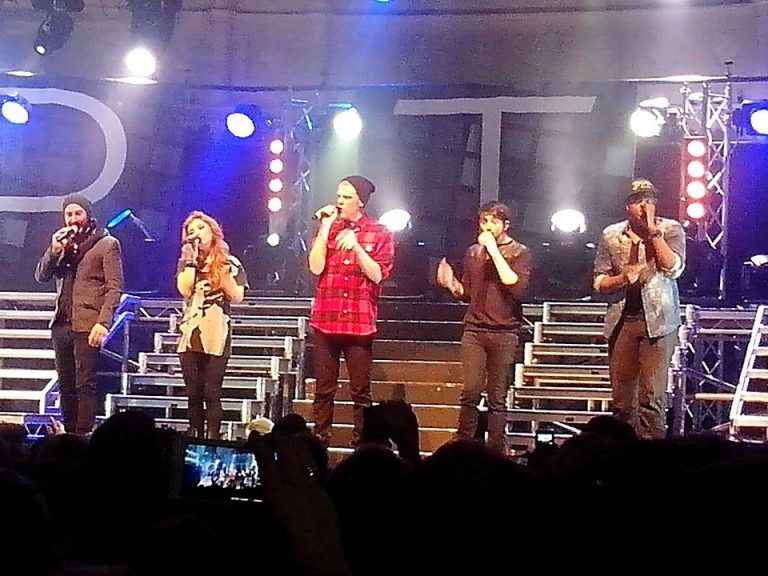
Music: Pentatonix

Image © of Pentatonix via PTX Official on Instagram

I first heard about Pentatonix in 2017, I think? It was just before Avi Kaplan left anyway.  I was browsing YouTube, as I do, and that is how I found them, looking for a capella music.  I am glad I did.  PTX relax me so much and their music is even better with headphones on and is great for travelling on long journeys.

There is a playlist from my YouTube channel at the bottom of this page that contains some of my favourite songs by them.  There are so many to choose from! 

Beneath the playlist, you will find an index of all the songs featured in it.

About Pentatonix

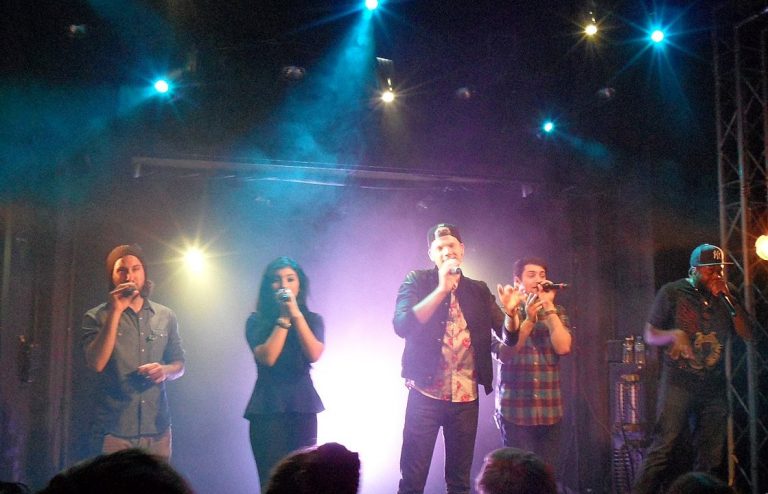
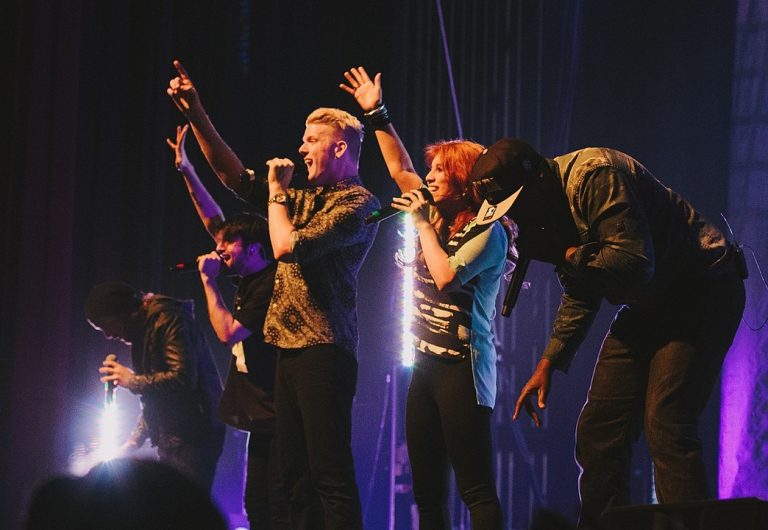
Pentatonix (abbreviated PTX) is an American a cappella group from Arlington, Texas, consisting of vocalists Scott Hoying (baritone), Mitch Grassi (tenor), Kirstin Maldonado (alto), Kevin Olusola (vocal percussion and baritone), and Matt Sallee (bass).  Characterized by their pop-style arrangements with vocal harmonies, basslines, riffing, percussion, and beatboxing, they produce cover versions of modern pop works or Christmas songs, sometimes in the form of medleys, along with original material.  Pentatonix formed in 2011 and subsequently won the third season of NBC’s The Sing-Off, receiving $200,000 and a recording contract with Sony Music.  When Sony’s Epic Records dropped the group after The Sing-Off, the group formed its YouTube channel, distributing its music through Madison Gate Records, a label owned by Sony Pictures.  Their YouTube channel currently has over 19 million subscribers and 5 billion views.  The group’s video tribute to Daft Punk had received more than 355 million views as of November 20th, 2021.

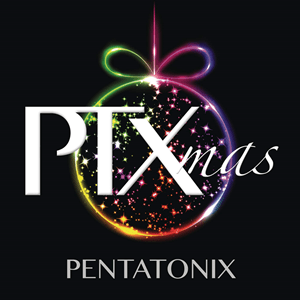
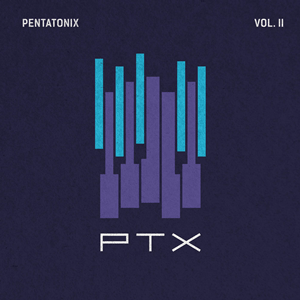
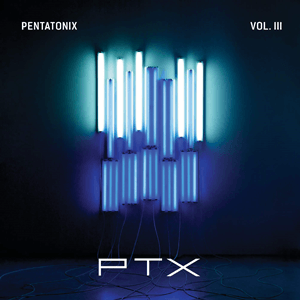
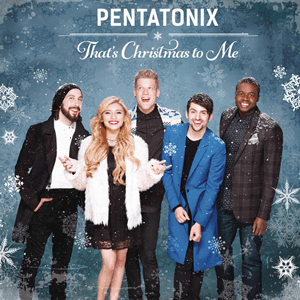
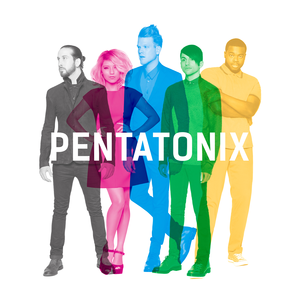
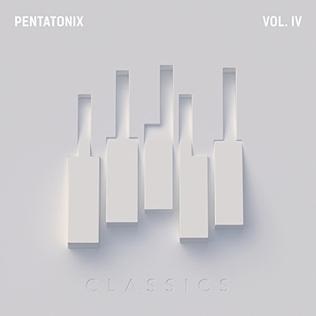
Their debut EP PTX, Volume 1 was released in 2012, followed by their holiday release PTXmas the same year, with Pentatonix’s third release, PTX, Vol. II, debuting at number 1 on Billboards Independent Albums chart and number 10 on the Billboard 200 in 2013.  In May 2014, Pentatonix signed with RCA Records, a flagship label of Sony Music Entertainment, while in the same year, the group released their fourth EP, PTX, Vol. III, and two full-length studio albums; PTX, Vols. 1 & 2, a compilation album released in Japan, Korea and Australia, and their second-holiday release, That’s Christmas to Me, with the album certified gold by the Recording Industry Association of America (RIAA), platinum on December 24th, 2014, and double platinum on February 11th, 2016, becoming the highest-charting holiday album by a group since 1962, and the fourth-best-selling album in the United States in 2014.  The following year, Pentatonix released their eponymous album, their first consisting mostly of original material, which debuted atop the US Billboard 200 chart for the first time in their career, followed by a third Christmas album, A Pentatonix Christmas, in 2016, and a new EP, PTX, Vol. IV – Classics, the year after.

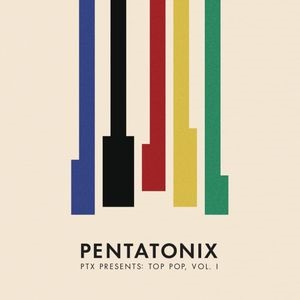
In September 2017, Avi Kaplan, the group’s original bass, left the group amicably and was replaced by Matt Sallee, who was featured on their next album PTX Presents: Top Pop, Vol. I.

Pentatonix has won three Grammy Awards: they were the first a cappella act to win Best Arrangement, Instrumental or A Cappella, doing so in 2015 and 2016, and Best Country Duo/Group Performance in 2017.

Image © of Ralph Arvesen via Wikipedia

Pentatonix’s Career

Background

Pentatonix began with Kirstin Maldonado (born May 16th, 1992), Mitch Grassi (born July 24th, 1992), and Scott Hoying (born September 17th, 1991) who grew up together and were schoolmates at Martin High School in Arlington, Texas.  For a local radio show competition to meet the cast of Glee, they arranged and submitted a trio version of Telephone, the hit song by Lady Gaga and featuring Beyoncé.  Despite losing the competition, their singing sparked attention at their school, and they began performing. Their version of Telephone subsequently gained attention on YouTube.

Hoying and Maldonado both graduated from Martin High School in 2010, Grassi in 2011.  Hoying went off to the University of Southern California (USC) to pursue a degree in popular music performance, while Maldonado pursued a degree in musical theatre at the University of Oklahoma.  While at USC, Scott Hoying joined an a cappella group called SoCal VoCals.  He found out about The Sing-Off from another member of the group, Ben Bram (also their arranger, producer, and sound engineer), and was encouraged to audition for the show.   He persuaded Maldonado and Grassi to join him, but Bram suggested having a bass and beatboxer as well to support the group.  Through a mutual friend, Hoying met Avi Kaplan (born April 17th, 1989), a highly recognized vocal bass in the a cappella community.  Then, the trio found Kevin Olusola (born October 5th, 1988) on YouTube, where one of his videos in which he was simultaneously beatboxing and playing the cello (called celloboxing) had gone viral.  Olusola was born in Owensboro, Kentucky, and graduated pre-med from Yale University.

The group met the day before the auditions for the third season of The Sing-Off began.  The group successfully auditioned for the show and eventually went on to win the title for 2011 (season three).

Pentatonix, as suggested by Scott Hoying, is named after the pentatonic scale, a musical scale or mode with five notes per octave, representing the five members of the group.  They replaced the last letter with an x to make it more appealing.  The quintet derives its influences from pop, dubstep, electro, reggae, hip hop, and classical music.

Read more about Pentatonix here.

Image © of Aszpiga via Wikipedia

The Sing-Off (2011)

Pentatonix performed the following songs on season three of The Sing-Off.  The group did not perform in Episode 1 or 3.  Click on the links below to see them perform the relevant songs.

Episode 2: E.T.

Episode 4: Your Love Is My Drug and Piece Of My Heart.

Episode 5: Video Killed The Radiostar.

Episode 6: Love Lockdown.

Episode 7: Medley of Oops!… I Did It Again, Toxic and Hold It Against Me.

Episode 8: Born To Be Wild and Stuck Like Glue.

Episode 9: OMG and Let’s Get It On.

Episode 10: Forget You / Since U Been Gone (Medley) and Dog Days Are Over.

Episode 11 (Finale): Without You, Give Me Just One Night (Una Noche) and Eye Of The Tiger.

Read more about The Sing-Off season three here.

PTX Vol. 1 And PTXMas (2011 – 2013)

Scott Hoying and Kirstie Maldonado dropped out of college in hopes of winning The Sing-Off, while Mitch Grassi skipped his high school graduation to audition for the show.  After they won, all of the members relocated to Los Angeles in order to pursue a career as recording artists.  The main goal of the group was to become the first mainstream a cappella group in recent times.

In January 2012, having signed with Sony Pictures-owned label Madison Gate Records, the group began working on their first album with producer Ben Bram.  During that six-month period of picking covers and writing originals, Pentatonix released covers of both popular and classic songs on YouTube.  In interviews, the members mention that it was a way to stay relevant to their audience that enjoyed their work on The Sing-Off, in addition to gaining new fans.  Almost all of their covers, including Somebody That I Used to Know by Gotye featuring Kimbra, Gangnam Style by PSY and We Are Young by Fun, went viral on YouTube.

Their first EP, PTX, Volume 1, was released on June 26, 2012, charting at number 14 on the US Billboard 200 chart and number 5 on the digital chart.  It sold 20,000 copies in its first week of release.   The group promoted the album through press appearances on Access Hollywood, VH1 The Buzz, Marie, and local television shows. Pentatonix was also featured on the Chinese version of The Sing-Off as guests where Kevin showcased his fluency in Mandarin.  Pentatonix also embarked on its first national headlining tour in the fall of 2012.  The tour was sold-out and spanned 30 cities.  Opening acts consisted of Alexander Cardinale and SJ Acoustic Music.

The group released their Christmas EP, PTXmas, on November 13, 2012.  The group released their video of an original arrangement of Carol of the Bells the following day.  The group performed on Coca-Cola Red Carpet LIVE! @ The 2012 American Music Awards Pre-Show on November 18, the Hollywood Christmas Parade, and the 94.7 THE WAVE Christmas Concert Starring Dave Koz and Kenny Loggins on December 16.  The group was also featured guests on Katie Couric (ABC), Home and Family (Hallmark), The Tonight Show with Jay Leno, and Big D NYE.   Ryan Seacrest’s website named Pentatonix the 2012 Featured Artist of the Year for their expansive growth online in just one year.  The Christmas album was re-released on November 19, 2013, as a deluxe edition containing two additional tracks.  One of these, Little Drummer Boy charted in several Billboard categories including peaking at number two on the Streaming Songs chart and number one on the Holiday 100 chart, receiving a number of Billboard awards. PTXmas reappeared on the Billboard charts again in November 2014, placing No. 24 on the Billboard 200 and No. 4 on the Holiday charts, giving Pentatonix three albums on the Billboard 200 at the same time.  On Billboards 2014 Year-End charts, PTXmas was No. 8 on the Catalogue Albums chart and No. 119 on the Top Billboard 200 Albums chart, with Pentatonix ranked as No. 46 on the Top Billboard 200 Artists chart.  As of December 24, 2014, PTXmas has sold 356,000 copies.

Image © of Pentatonix via Wikipedia
Image © of Flow910 via Wikipedia

PTX Vol. II (2013 – 2014)

The band went on their second national headlining tour from January 24, 2013, to May 11, 2013, and simultaneously wrote additional original material for their second EP, PTX, Vol. II.  The group released the first single, a cover of Macklemore and Ryan Lewis’ Can’t Hold Us on August 20, 2013, which to date has over 90 million views.  The group also promoted PTX, Vol. II on The Ellen DeGeneres Show in November 2013, after the success of  The Evolution of Beyoncé mashup on YouTube.  That week, the band was featured on Around the World with Diane Sawyer and were named Persons of the Week.

In March 2013, Pentatonix and violinist Lindsey Stirling released their cover of the Imagine Dragons song Radioactive and won for Response of the Year at the YouTube Music Awards.  In July of the same year, along with American Idol contestant and fellow Arlington Texan Todrick Hall, they released The Wizard of Ahhhs, which mashes up several songs to create one song.  The music video follows the story of the 1939 film The Wizard of Oz with the artists dressed as its numerous lead roles.

PTX Vol. II was released on November 5, 2013, in conjunction with their second album single on YouTube: a medley of Daft Punk songs.  The video went viral, garnering more than ten million views in the first week, and as of December 2018, had over 290 million views.  The medley was later nominated for and won Best Arrangement, Instrumental or a Cappella of the 57th Grammy Awards.  PTX, Vol. II debuted at number ten on the Billboard 200 and number one on the Independent charts, selling 31,000 copies in the first week.  Pentatonix subsequently re-released a deluxe version of PTXmas on November 18, 2013, with two new tracks, Little Drummer Boy and Go Tell It On The Mountain.  Their YouTube video of Little Drummer Boy, released near the end of November, garnered more than ten million views in the first week and reached number ten on the iTunes top songs charts worldwide.  The song both debuted and peaked at number 13 on the Billboard Hot 100 chart for the week ending December 21, 2013.  The video has over 200 million views as of December 2018.

In May 2014, Pentatonix signed with RCA Records, a flagship label of Sony Music Entertainment.  On July 30, through the new label, the group released their first official album PTX, Vols. 1 & 2 in Japan, containing all of the songs from their two namesake EPs and four additional tracks, previously released as singles.  It was released in Australia on August 15 and in the Philippines on September 26.

Image © of Pentatonix via Wikipedia
Image © of Abby Gillardi via Wikipedia

PTX Vol. III And That’s Christmas To Me (2014)

On August 7, 2014, Pentatonix announced that their third EP PTX, Vol. III would be released on September 23, 2014.  The EP went up for pre-order on iTunes on August 11, 2014, and included a download of two tracks from the EP, Problem and La La Latch.  PTX Vol. III debuted at number 5 on the Billboard 200.

The group also revealed on August a second full-length Christmas album, That’s Christmas to Me, titled after the title track of the album, an original song that was penned by Pentatonix themselves.  The album was released on October 21, 2014 and peaked at number 2 on the Billboard 200, and number 4 on the Billboard Canadian Albums chart.  A single from the album, the group’s cover of Mary, Did You Know, both debuted and peaked on the Billboard Hot 100 chart at number 26, at number 7 on Billboards Adult Contemporary chart, and at number 44 on the Billboard Canadian Hot 100 chart.  Another single That’s Christmas To Me, the title track from the album, also peaked at number 8 on the Billboard Adult Contemporary chart.

Pentatonix is also the first act to top both the Holiday Albums and Holiday Songs charts simultaneously since the Holiday 100 launched as a multi-metric tabulation in December 2011.  The album is also the highest-charting holiday album by a group since 1962.

During the holiday season, 7 songs from That’s Christmas to Me are charted on Billboards Holiday Digital Songs chart.  On December 10, 2014, That’s Christmas to Me was certified gold by the Recording Industry Association of America.  On December 24, 2014, the album was certified Platinum.  By year’s end (December 31, 2014), Billboard reported the album had reached a total of 1.14 million copies sold—becoming the 4th best selling album of 2014 by any artist of any genre (being surpassed only by Taylor Swift’s 1989, the Frozen Soundtrack, and Sam Smith’s In the Lonely Hour) and was the Top-Selling Holiday Album for 2014.  On February 11, 2016, the album was certified Double Platinum.

Image © of Pentatonix via Wikipedia

Self-Titled Album, A Pentatonix Christmas, And PTX, Vol. IV (2015 – 2017)

Image © of Pentatonix via Wikipedia
Image © of Groucho NL via Wikipedia

In late December, Scott Hoying stated that for 2015, “Pentatonix is transitioning towards original music”.  A release of a full-length album consisting of only original material is planned.  Hoying also stated, “We’re at the point in our careers now [where] we must go to original music, and we want to go to original music; we have so much to say, and I think it’s gonna be quite a journey.”

On August 28, 2015, Pentatonix announced on social media that a self-titled album, the group’s third full-length album and the first album made of mostly original music, would be released on October 16, 2015.

On September 4, 2015, Pentatonix released Can’t Sleep Love the first single from Pentatonix upcoming album.  Two weeks later on September 18, 2015, a second version featuring Tink was released online.  On October 9, 2015, Pentatonix released their second single, a cover of Jack Ü and Justin Bieber’s Where Are Ü Now.  The album ended up being released one day early as a surprise gift to their fans.  On that same day, Pentatonix released their third single, Sing.

The album debuted at number 1 on the US Billboard 200.  In the US, the album started with 98,000 units (88,000 in pure album sales).  On February 8, 2016, the album was certified Gold.

On April 14, 2016, the music video was released for Pentatonix’s cover with Jason Derulo of Shai’s If I Ever Fall In Love.  In August 2016, the music video of Pentatonix’s Perfume Medley, a medley of songs by the Japanese girl group Perfume, was also released.  The medley consisted of the songs Spending All My Time, Pick Me Up, Chocolate Disco, and Polyrhythm.

Their second full-length Christmas album, titled A Pentatonix Christmas, was released on October 21, 2016.  It features 11 songs, including the two originals The Christmas Sing-Along and Good to Be Bad.  It debuted on the Billboard 200 at number three with 52,000 albums sold in its first week and later peaked at number one.  The album also debuted atop the Billboard Holiday Albums chart, their second number one on that chart after That’s Christmas to Me.

Their fifth EP, PTX, Vol. IV – Classics, was released on April 7, 2017.  It marked a departure from the group’s typical sound, focusing on covers of standards of rock, blues, country, and older pop music.

New Bass, Top Pop, Vol. I, Christmas Is Here!, And The Best Of Pentatonix Christmas (2017- 2019)

In May 2017, the band announced in a video that Avi Kaplan would leave the group following their upcoming tour.  The split was amicable and centred on his inability to keep up with the touring demands of the group and deal with the distance from his family.

On July 31, the group released the single Dancing on My Own, a cover of the song by Robyn, their first release without Kaplan (although he was still a member at the time, as the tour was ongoing). Olusola performed cello on the song in lieu of a bass vocalist.

Kaplan performed his last concert with Pentatonix on September 3, 2017, in Essex Junction, Vermont.  On October 13, Hoying introduced Matt Sallee as the group’s new bass.  The band’s first official releases with Sallee were the songs from the deluxe edition of A Pentatonix Christmas, which was released on November 27, 2017.  Sallee is also featured on their cover of the Camila Cabello song Havana, which was released as a single from their Top Pop Vol. 1 album on February 23, 2018.

On February 27, 2018, the group announced via their social media the upcoming release of a new album titled PTX Presents: Top Pop, Vol. I on April 13, 2018, to be followed by a tour in the summer.  It marked their first album with Sallee and without Kaplan.  It was preceded by three singles: their cover of Havana, a medley of Dua Lipa’s New Rules and Aaliyah’s Are You That Somebody? titled New Rules x Are You That Somebody?, which they released along with a music video on March 9, and a cover of Charlie Puth’s Attention, which they released along with a music video on March 23.

On September 20, 2018, the group announced their third full-length holiday album titled Christmas Is Here! to be released on October 26 of the same year and The Christmas Is Here! Tour to accompany the album.  They also announced the first single from the album, a cover of Making Christmas from The Nightmare Before Christmas which was released on September 28.  The album was released on October 26, 2018.

On October 25, 2019, Pentatonix released their newest Christmas album, a greatest hits compilation album called The Best of Pentatonix Christmas.  It includes mostly older songs, plus some new ones, such as a cover of You’re a Mean One, Mr. Grinch, featuring Sallee on lead.

Image © of Pentatonix via Wikipedia

At Home, We Need a Little Christmas, And The Lucky Ones (2020 – 2021)

On June 26, 2020, the group released another EP, At Home, containing five new covers, plus a 13-song medley, a total of 6 tracks.  The EP contains Pentatonix covering Billie Eilish’s When the Party’s Over, Dua Lipa’s Break My Heart, the Cranberries’ Dreams, The Weeknd’s Blinding Lights, and Clean Bandit’s Cologne.  Each member recorded their arrangement separately in their homes due to them having to quarantine because of COVID-19.  

On November 13, 2020, the group released their fourth Christmas-themed studio album, We Need a Little Christmas.  The album includes hits such as their covers of Amazing Grace (My Chains Are Gone), which was released as a single on November 25, 2020, and 12 Days of Christmas.  It also includes an original song, Thank You.

On August 14, 2020, Pentatonix released Happy Now, their first original single in five years, and the first of an upcoming album of original content.  On October 14, Pentatonix released Be My Eyes, and announced the date of The Lucky Ones, the first full-length album of originals since 2015, for February 12, 2021.  Like At Home and We Need a Little Christmas, it was recorded in isolation because of the pandemic.  A music video for Coffee in Bed was released on the same day as the album.  The album received general critical acclaim.  The deluxe version was released on 10th September 2021 with new songs like Anchor, Petals, Midnight in Tokyo (ft. Glee Monster), and more.

Image © of Pentatonix via Spotify
Image © of Pentatonix via Wikipedia

Evergreen (2021 – Present)

On September 27, 2021, Pentatonix announced their fifth upcoming Christmas-themed album Evergreen and released the single It’s Been a Long, Long Time on the same day.  They also released their rendition of I Just Called to Say I Love You as a single.  The album was released on October 29, 2021, and has 14 tracks.  The tour for the album, Pentatonix: The Evergreen Christmas Tour 2021, began on November 27, 2021.

Other Media

Tours

Pentatonix embarked on their first national headlining tour in the autumn of 2012.  The tour was sold out and spanned 30 cities.  Opening acts consisted of Alexander Cardinale and SJ Acoustic Music.  The band went on their second national headlining tour from January 24th, 2013, to May 11th, 2013, and simultaneously wrote additional original material for their second EP, PTX, Vol. II.

In 2014, Pentatonix undertook an extensive tour that included the United States, Canada, Europe and South East Asia.

In 2015, Pentatonix began the North American leg of their On My Way Home Tour, which began on February 25th, 2015, in California and ended at Grand Prairie’s Verizon Theatre on March 29th.  The group started a European tour in Portugal on April 9th.  This European leg ended in Glasgow on May 6th.  The Southeast Asian leg of the tour began in Seoul, South Korea on May 28th.  The last show of this leg was on Jun 16th in Osaka, Japan.

Pentatonix opened for Kelly Clarkson on her Piece by Piece Tour.  During Clarkson’s set, the group performed Heartbeat Song with her.  Due to Clarkson’s doctor’s requests for vocal rest, the tour was cancelled 15 shows early.

In 2016, Pentatonix embarked on the first leg of their Pentatonix World Tour with Us The Duo.  The tour began on April 2nd, 2016, in Chiba, Japan.  The second leg ran from May 23rd through June 26th in Europe before returning to Japan for two shows in August 2016.  The third and fourth legs of the tour (in Oceania and Asia respectively) occurred in September 2016, followed by the fifth leg in North America from October 17th to November 22nd, 2016.  The tour’s 2017 shows kicked off in May with another five shows in Japan. The final leg of the tour began July 2nd, 2017 in Los Angeles and continued across the United States before concluding in Vermont on September 3rd, 2017.  The last show marked Kaplan’s final performance with the group.

Performances

In September 2012, Pentatonix was invited to perform several of their songs (Somebody That I Used to Know by Gotye and We Are Young by fun.) on the Chinese edition of the Sing-Off.  In addition, they covered the late Taiwanese pop star Teresa Teng’s song, Tian Mi Mi.

Pentatonix appeared and performed on The Today Show, The Tonight Show With Jay Leno, The Talk and Conan.  The group also returned to The Sing-Off, performing their cover version of Ellie Goulding’s I Need Your Love during the Season 4 finale episode, which aired on December 23rd, 2013.

In November 2014, Pentatonix was invited by Baz Luhrmann (director, producer and writer) to be involved with the Holiday Window display at Barneys in New York City.  Each window had a theme such as love, beauty, truth and freedom with its own soundtrack, recorded by Pentatonix.  Pentatonix also performed at the opening night, as well as the after-party for invited guests.

On November 27th, 2014, Pentatonix participated in the annual Macy’s Thanksgiving Parade in New York City, performing Santa Claus is Coming to Town on the Homewood Suites float.

Pentatonix also performed during NBC’s annual Christmas in Rockefeller Center special on December 3rd, 2014, performing Sleigh Ride and Santa Claus is Coming to Town.

Pentatonix returned to The Sing-Off, performing a medley of songs from That’s Christmas to Me during the Season 5-holiday special, which aired on December 17th, 2014.

On December 7th, 2014, Pentatonix appeared in The Kennedy Center Honors award presentation, as part of a presentation to actor Tom Hanks, singing the song That Thing You Do, from Hanks’ film of the same name. President and Mrs. Barack Obama were in the audience.  The show was broadcast on CBS on December 30, 2014.

On December 31st, 2014, Pentatonix appeared as part of ABC Television Network’s Dick Clark’s New Year’s Rockin’ Eve with Ryan Seacrest 2015, performing at the Billboard Hollywood party hosted by Fergie.

In December 2014, Pentatonix was invited to perform on the final episode of Wetten, dass..?, a longstanding entertainment show in Germany, performing a medley of songs from artists that have been on the program over the years.

On August 1st, 2019, Pentatonix played to their largest ever live crowd (as of August 2019) at the closing ceremony of the 24th World Scout Jamboree at Summit Bechtel Reserve in Glen Jean, West Virginia.

On September 1st, 2019, Pentatonix performed a rainy, nighttime show at the 173rd Canfield Fair in Mahoning County, Ohio, for more than 8,000 people.  This set a number of advanced sales record for JAC Management Group, LLC since taking over Canfield Fair entertainment operations.

Appearances And Presentations

Pentatonix appeared on Sesame Street on February 7th, 2014.

Pentatonix were presenters at the 2014 American Music Awards, introducing a performance by Jessie J, Ariana Grande, and Nicki Minaj.  The group was also featured in the YouTube Rewind 2014 video as one of the most subscribed YouTube music channels.

Pentatonix was on the Disney Channel show, K.C. Undercover on June 14th, 2015.

Maldonado, Hoying, and Grassi appeared as members of a cappella groups in the Fox television show Bones, in the episode The Strike In the Chord that originally aired on May 19th, 2016.

They made a guest appearance on The Voice on November 24th, 2016 where they sang their rendition of Jolene alongside Miley Cyrus and the song’s writer and original performer, Dolly Parton.

On December 14th, 2016, the group hosted their first Christmas special, titled around their current album, A Pentatonix Christmas Special.  The hour-long special aired on NBC and featured guest appearances by Reba McEntire, Dolly Parton and Kelly Clarkson.  NBC broadcast Pentatonix Christmas specials in 2017 and 2018, as well.

In December 2018, the group made a guest appearance on Darci Lynne: My Hometown Christmas.

On December 11th, 2018, they performed Rockin’ Around the Christmas Tree on The Talk.

On October 14th, 2020, Pentatonix performed Higher Love at the 2020 Billboard Music Awards with Kelly Clarkson and Sheila E.

Film

Pentatonix had a cameo role in Pitch Perfect 2, released in May 2015, as the Canadian team competing against the Barden Bellas.  Pentatonix also released a documentary about the group’s journey titled On My Way Home (based on the original song of the same name from PTX, Vol. III and the group’s 2015 tour) on June 18th, 2015, which was promoted on social media through the hashtag #OnMyWayHomeProject.

Read more Pentatonix here.

The above articles were sourced from Wikipedia and are subject to change.

Favourite Pentatonix Songs Playlist

This playlist does not contain Christmas songs.  There are some that are from PTX’s Christmas albums but are not Christmas songs in my opinion and as such feature here.  

Favourite Pentatonix Songs Index

This list is all the songs from the playlist above.  It does not contain Christmas songs.  As mentioned, there are some that are from PTX’s Christmas albums but are not Christmas songs.  

The links below will take you to YouTube.

Notes And Links

Pentatonix – Official website.  The image shown at the top of this page is the copyright of Pentatonix and is from their PTX Official Instagram page.

The image above of Pentatonix performing at the Austin360 Amphitheater in Austin, Texas on 29/08/2015 is the copyright of photographer Ralph Arvesen and you can find more great work from him by clicking here.

The image above of Avi Kaplan in Barcelona in 2015 is the copyright of photographer Aszpiga.

The image above of PTX Vol. I EP is the copyright of Pentatonix and Madison Gate Records.

The image above of PTXmas EP is the copyright of Pentatonix and Madison Gate Records.

The image above of Pentatonix in Paris in 2013 is the copyright of photographer Flow910.

The image above of PTX Vol II. EP is the copyright of Pentatonix and Madison Gate.

The image above of Pentatonix performing in St. Louis, Missouri in 2013 is the copyright of photographer Abby Gillardi and you can find more great work from her by clicking here.

The image above of PTX Vol III.  EP is the copyright of Pentatonix and RCA.

The image above of Pentatonix – That’s Christmas To Me is the copyright of Pentatonix and RCA.

The image above of Pentatonix (Album) is the copyright of Pentatonix and RCA.

The image above of A Pentatonix Christmas is the copyright of Pentatonix and RCA.

The image above of PTX Vol IV.  – Classics EP is the copyright of Pentatonix and RCA.

The image above of Pentatonix performing in Paradiso in 2014 is the copyright of photographer Groucho NL.

The image above of PTX Presents Top Pop Vol I.  is the copyright of Pentatonix and RCA.

The image above of Pentatonix – Christmas Is Here! is the copyright of Pentatonix and RCA.

The image above of The Best Of Pentatonix Christmas is the copyright of Pentatonix and RCA.

The image above of Pentatonix At Home EP is the copyright of Pentatonix and RCA.

The image above of Pentatonix – We Need A Little Christmas is the copyright of Pentatonix and RCA.

The image above of Pentatonix – The Lucky Ones is the copyright of Pentatonix and RCA.

Music: Dean Martin

Image is in the Public Domain via Wikipedia

I have grown up listening to the Rat Pack and especially Dean Martin. He was so cool and I love his music. 

There is an index at the bottom of the page containing some of my favourite songs by him.  

About Dean Martin

Dean Martin was an American singer, actor and comedian.  One of the most popular and enduring American entertainers of the mid-20th century, Martin was nicknamed “The King of Cool.”  Martin gained his career breakthrough together with comedian Jerry Lewis, billed as Martin & Lewis, in 1946.  They performed in nightclubs and later had numerous appearances on radio, television and in films.

Following an acrimonious ending of the partnership in 1956, Martin pursued a solo career as a performer and actor.  Martin established himself as a singer, recording numerous contemporary songs as well as standards from the Great American Songbook.  He became one of the most popular acts in Las Vegas and was known for his friendship with fellow artists Frank Sinatra and Sammy Davis Jr., who together with several others formed the Rat Pack.

Starting in 1965, Martin was the host of the television variety program The Dean Martin Show, which centred on Martin’s singing and comedic talents and was characterized by his relaxed, easy-going demeanour.  From 1974 to 1984, he was roastmaster on the popular Dean Martin Celebrity Roast, which drew celebrities, comedians and politicians.  Throughout his career, Martin performed in concert stages, nightclubs, audio recordings and appeared in 85 film and television productions.

His best known songs include Ain’t That a Kick in the Head?, Memories Are Made of This, That’s Amore, Everybody Loves Somebody, You’re Nobody till Somebody Loves You, Sway, and Volare.

Dean Martin’s Early Life 

Martin was born Dino Paul Crocetti on June 7, 1917, in Steubenville, Ohio, to Italian father Gaetano Alfonso Crocetti (1894 – 1967) and Italian-American mother Angela Crocetti (née Barra; 1899 – 1966).  His father, who was a barber, was originally from Montesilvano, Abruzzo, and his mother’s origins are also believed to be from Abruzzo, although they are not clearly known.  Martin had an older brother named William Alfonso Crocetti (1916 – 1968).  His first language was Italian and he did not speak English until he started school at the age of five.  He attended Grant Elementary School in Steubenville, where he was bullied for his broken English.  As a teenager, he played the drums as a hobby.  He dropped out of Steubenville High School in the tenth grade because, according to Martin, he thought he was smarter than his teachers.  He bootlegged liquor, worked in a steel mill, served as a croupier at a speakeasy and a blackjack dealer, and was a welterweight boxer.

At 15 he billed himself as “Kid Crochet”.  His prizefighting earned him a broken nose (later straightened), a scarred lip, many broken knuckles (a result of not being able to afford tape used to wrap boxers’ hands), and a bruised body.  Of his 12 bouts, he said that he “won all but 11”.  For a time, he shared a New York City apartment with Sonny King, who was also starting in show business and had little money.  The two reportedly charged people to watch them bare-knuckle box each other in their apartment, fighting until one was knocked out.  Martin knocked out King in the first round of an amateur boxing match.  Martin gave up boxing to work as a roulette stickman and croupier in an illegal casino behind a tobacco shop, where he had started as a stock boy.  At the same time, he sang with local bands, calling himself “Dino Martini” (after the Metropolitan Opera tenor Nino Martini).  He got his break working for the Ernie McKay Orchestra.  He sang in a crooning style influenced by Harry Mills of the Mills Brothers and Perry Como.  By late 1940 he had begun singing for Cleveland bandleader Sammy Watkins, who suggested he change his name to Dean Martin.  He stayed with Watkins until at least May 1943.  By fall 1943 he had begun performing in New York.  Martin was drafted into the military in World War II but after 14 months he was discharged due to a hernia.

In October 1941, Martin married Elizabeth “Betty” Anne McDonald in Cleveland, and the couple had an apartment in Cleveland Heights for a while.  They eventually had four children before the marriage ended in 1949.

Dean Martin’s Career

Teaming With Jerry Lewis

Martin attracted the attention of Metro-Goldwyn-Mayer and Columbia Pictures, but a Hollywood contract was not forthcoming.  He met comic Jerry Lewis at the Glass Hat Club in New York, where both were performing.  Martin and Lewis formed a fast friendship which led to their participation in each other’s acts and the formation of a music-comedy team.  Martin and Lewis’s debut together occurred at Atlantic City’s 500 Club on July 24, 1946, and they were not well received.  The owner, Skinny D’Amato, warned them that if they did not come up with a better act for their second show that night, they would be fired.  Huddling in the alley behind the club, Lewis and Martin agreed to “go for broke”, they divided their act between songs, skits, and ad-libbed material.  Martin sang and Lewis dressed as a busboy, dropping plates and making a shambles of Martin’s performance and the club’s decorum until Lewis was chased from the room as Martin pelted him with bread rolls.

They performed slapstick, reeled off old vaudeville jokes and did whatever else popped into their heads.  The audience laughed.  This success led to a series of well-paying engagements on the Eastern seaboard, culminating in a run at New York’s Copacabana.  The act consisted of Lewis interrupting and heckling Martin while he was trying to sing, with the two ultimately chasing each other around the stage.  The secret, both said, is that they ignored the audience and played to each other.  The team made its TV debut on the first broadcast of CBS-TV network’s The Ed Sullivan Show (then called The Toast Of The Town) on June 20, 1948, with composers Rodgers and Hammerstein also appearing.  Hoping to improve their act, the two hired young comedy writers Norman Lear and Ed Simmons to write their bits.  With the assistance of both Lear and Simmons, the two would take their act beyond nightclubs.

A radio series began in 1949, the year Martin and Lewis signed with Paramount producer Hal B. Wallis as comedy relief for the movie My Friend Irma.  Their agent, Abby Greshler, negotiated one of Hollywood’s best deals: although they received only $75,000 between them for their films with Wallis, Martin and Lewis were free to do one outside film a year, which they would co-produce through their own York Productions.

They also controlled their club, record, radio, and television appearances, and through these, they earned millions of dollars. In Dean & Me, Lewis calls Martin one of the great comic geniuses of all time.  They were friends, as well, with Lewis acting as best man when Martin remarried in 1949.  But harsh comments from critics, as well as frustration with the similarity of Martin and Lewis movies, which producer Hal Wallis refused to change, led to Martin’s dissatisfaction.  He put less enthusiasm into the work, leading to escalating arguments with Lewis.  Martin told his partner he was “nothing to me but a dollar sign”.  The act broke up in 1956, ten years to the day from the first teaming.

Solo Career

Martin’s first solo film, Ten Thousand Bedrooms (1957), was a box-office failure.  Although Volare reached number fifteen in the U.S. and number 2 in the UK, the era of the pop crooner was waning with the advent of rock and roll.  Martin wanted to become a dramatic actor, known for more than slapstick comedy films.  Though offered a fraction of his former salary to co-star in a war drama, The Young Lions (1958), his part would be with Marlon Brando and Montgomery Clift.  Tony Randall already had the part, but talent agency MCA realized that with this film, Martin would become a triple threat: they could make money from his work in nightclubs, films, and records.  Randall was paid off to relinquish the role, Martin replaced him and the film turned out to be the beginning of Martin’s comeback.  Martin starred alongside Frank Sinatra for the first time in the Vincente Minnelli drama, Some Came Running (1958).  By the mid-1960s, Martin was a movie, recording, television, and nightclub star.  Martin was acclaimed as Dude in Rio Bravo (1959), directed by Howard Hawks and also starring John Wayne and singer Ricky Nelson.  He teamed again with Wayne in The Sons of Katie Elder (1965), cast as brothers.  In 1960, Martin was cast in the film version of the Judy Holliday stage musical comedy Bells Are Ringing.  He won a Golden Globe nomination for his performance in the 1960 film comedy Who Was That Lady? but continued to seek dramatic roles, portraying a Southern politician in 1961’s Ada, and starring in 1963’s screen adaptation of an intense stage drama, Toys in the Attic, opposite Geraldine Page, as well as in 1970’s drama Airport, a huge box-office success.

Sinatra and he teamed up for several more movies, the crime caper Ocean’s 11, the musical Robin and the 7 Hoods, and the Western comedies Sergeants 3 and 4 for Texas, often with their Rat Pack pals such as Sammy Davis, Jr., Peter Lawford, and Joey Bishop, as well as a romantic comedy, Marriage on the Rocks.  Martin also co-starred with Shirley MacLaine in a number of films, including Some Came Running, Artists and Models, Career, All in a Night’s Work, and What a Way to Go! He played a satiric variation of his own womanizing persona as Las Vegas singer “Dino” in Billy Wilder’s comedy Kiss Me, Stupid (1964) with Kim Novak, and he poked fun at his image in films such as the Matt Helm spy spoofs of the 1960’s, in which he was a co-producer.  In the third Matt Helm film The Ambushers (1967), Helm, about to be executed, receives a last cigarette and tells the provider, “I’ll remember you from the great beyond,” continuing sotto voce, “somewhere around Steubenville, I hope.”

Read more about Solo Career here.

The Rat Pack

As Martin’s solo career grew, he and Frank Sinatra became friends.  In the late 1950s and early 1960s, Martin and Sinatra, along with friends Joey Bishop, Peter Lawford, and Sammy Davis Jr. formed the Rat Pack, so-called after an earlier group of social friends, the Holmby Hills Rat Pack centred on Humphrey Bogart and Lauren Bacall, of which Sinatra had been a member.  The Martin-Sinatra-Davis-Lawford-Bishop group referred to themselves as “The Summit” or “The Clan” and never as “The Rat Pack”, although this has remained their identity in popular imagination.  The men made films together, formed part of the Hollywood social scene, and were politically influential (through Lawford’s marriage to Patricia Kennedy, sister of President John F. Kennedy).

The Rat Pack was legendary for its Las Vegas Strip performances.  For example, the marquee at the Sands Hotel might read “DEAN MARTIN—MAYBE FRANK—MAYBE SAMMY.”  Their appearances were valuable because the city would flood with wealthy gamblers.  Their act (always in tuxedo) consisted of each singing individual numbers, duets and trios, along with seemingly improvised slapstick and chatter.  In the socially charged 1960s, their jokes revolved around adult themes, such as Sinatra’s womanizing and Martin’s drinking, as well as Davis’s race and religion.  Sinatra and Martin supported the civil rights movement and refused to perform in clubs that would not allow African-American or Jewish performers.  Posthumously, the Rat Pack has experienced a popular revival, inspiring the George Clooney / Brad Pitt Ocean’s Trilogy.

The Dean Martin Show

In 1965, Martin launched his weekly NBC comedy-variety series, The Dean Martin Show, which ran for 264 episodes until 1974.  He won a Golden Globe Award for Best Actor – Television Series Musical or Comedy in 1966 and was nominated again the following three years.  The show exploited his image as a carefree boozer.  Martin capitalized on his laid-back persona of the half-drunk crooner, hitting on women with remarks that would get anyone else slapped, and making snappy if slurred remarks about fellow celebrities during his roasts.  During an interview on the British TV documentary Wine, Women and Song, aired in 1983, he stated, perhaps tongue-in-cheek, that he had someone record them on cassette tape so he could listen to them.  His TV show was a success.  The show’s loose format featured quick-witted improvisation from Martin and his weekly guests.  This prompted a battle between Martin and NBC censors, who insisted on more scrutiny of the content.  He later had trouble with NBC for his off-the-cuff use of obscene Italian phrases, which brought complaints from viewers who spoke the language.  The show was often in the Top Ten.  Martin, appreciative of the show’s producer, his friend Greg Garrison, made a handshake deal giving Garrison, a pioneer TV producer in the 1950s, 50% of the show.  However, the validity of that ownership is the subject of a lawsuit brought by NBCUniversal.

Despite Martin’s reputation as a drinker—perpetuated via his vanity license plate “DRUNKY”—his alcohol use was quite disciplined.  He was often the first to call it a night, and when not on tour or on a film location, liked to go home to see his wife and children.  He borrowed the lovable-drunk shtick from Joe E. Lewis, but his convincing portrayals of heavy boozers in Some Came Running and Howard Hawks’ Rio Bravo led to unsubstantiated claims of alcoholism.  Martin starred in and co-produced four Matt Helm superspy comedy adventures during this time, as well as a number of Westerns.  By the early 1970s, The Dean Martin Show was still earning solid ratings, and although he was no longer a Top 40 hitmaker, his record albums continued to sell.  He found a way to make his passion for golf profitable by offering a signature line of golf balls and the Dean Martin Tucson Open was an event on golf’s PGA Tour from 1972 to 1975.  At his death, Martin was reportedly the single largest minority shareholder of RCA stock.

Now comfortable financially, Martin began reducing his schedule.  The final (1973 – 1974) season of his variety show was retooled into one of celebrity roasts, requiring less involvement.  In the roasts, Martin and his panel of pals made fun of a variety of popular entertainment, athletic, and political figures.  After the show’s cancellation, NBC continued to air The Dean Martin Celebrity Roast as a series of TV specials through 1984.

Later Career

For nearly a decade, Martin had recorded as many as four albums a year for Reprise Records.  Martin recorded his final Reprise album, Once in a While in 1974, which was not issued until 1978.  His final recordings were made for Warner Bros. Records. The Nashville Sessions was released in 1983, from which he had a hit with “(I Think That I Just Wrote) My First Country Song”, which was recorded with Conway Twitty and made a respectable showing on the country charts.  A follow-up single, “L.A. Is My Home” / “Drinking Champagne”, came in 1985. The 1974 film drama Mr. Ricco marked Martin’s final starring role, in which he played a criminal defence lawyer.  He played a featured role in the 1981 comedy The Cannonball Run and its sequel, both starring Burt Reynolds.

In 1972, he filed for divorce from his second wife, Jeanne.  A week later, his business partnership with the Riviera hotel in Las Vegas dissolved amid reports of the casino’s refusal to agree to Martin’s request to perform only once a night.  He joined the MGM Grand Hotel and Casino, where he was the featured performer on the hotel’s opening night of December 23, 1973, and his contract required him to star in a film (Mr. Ricco) for Metro-Goldwyn-Mayer studios.  Less than a month after his second marriage had dissolved, Martin was 55 when he married 26-year-old Catherine Hawn, on April 25, 1973.  Hawn had been the receptionist at the chic Gene Shacove hair salon in Beverly Hills.  They divorced on November 10, 1976.  He was also briefly engaged to Gail Renshaw, Miss World–U.S.A. 1969.  Eventually, Martin reconciled with Jeanne, though they never remarried.

Martin also made a public reconciliation with Lewis on his partner’s Labor Day telethon, benefiting the Muscular Dystrophy Association, in September 1976.  Sinatra shocked Lewis by bringing Martin out on stage and as the two men embraced, the audience gave them a standing ovation and the phones lit up, resulting in one of the telethon’s most profitable years up to that time.  Lewis later reported the event was one of the three most memorable of his life.  Lewis quipped, “So, you working?” Martin, playing drunk, replied that he was appearing “at the ‘Meggum'” (meaning the MGM Grand Hotel).  This, with the death of Martin’s son Dean Paul Martin more than a decade later, helped bring the two men together.  They maintained a quiet friendship, but only performed again once, in 1989, on Martin’s 72nd birthday.

Martin returned to films briefly with appearances in the star-laden, critically panned but commercially successful The Cannonball Run and its sequel Cannonball Run II.  He also had a minor hit single with Since I Met You Baby and made his first music video, which appeared on MTV and was created by Martin’s youngest son, Ricci.  On March 21, 1987, Martin’s son, actor Dean Paul Martin (formerly Dino of the 1960s “teeny-bopper” rock group Dino, Desi & Billy), died when his F-4 Phantom II jet fighter crashed while flying with the California Air National Guard.  Martin’s grief over his son’s death left him depressed and demoralized. Later, a tour with Davis and Sinatra in 1988, undertaken in part to help Martin recover, sputtered.

Martin, who responded best to a club audience, felt lost in the huge stadiums they were performing in at Sinatra’s insistence, and he was not interested in drinking until dawn after performances.  His final Vegas shows were at Bally’s Hotel in 1991.  At Bally’s, he had his final reunion with Lewis on his 72nd birthday.  Martin’s last two TV appearances involved tributes to his former Rat Pack members. On December 8, 1989, he joined stars in Sammy Davis Jr’s 60th anniversary celebration, which aired a few weeks before Davis died from throat cancer.  In December 1990, Martin congratulated Sinatra on his 75th birthday special.

Read more about Dean Martin here.

The above articles were sourced from Wikipedia and are subject to change.

Favourite Dean Martin Songs Index

This list does not contain Christmas songs.   You can find Christmas music from Dean Martin here.

The links below will take you to YouTube

Blog Posts

Notes And Links

The image shown at the top of this page is in the Public Domain via Wikipedia.

Music: Frank Sinatra

Image © of Capital Records via Wikipedia

I have grown up listening to the Rat Pack and especially Frank Sinatra. He was so cool and I love his music. 

There is an index at the bottom of the page containing some of my favourite songs by him.  

About Frank Sinatra

Francis Albert Sinatra was an American singer and actor who is generally viewed as one of the greatest musical artists of the 20th century.  He is one of the best-selling music artists of all time, having sold an estimated 150 million records worldwide.

Born to Italian immigrants in Hoboken, New Jersey, Sinatra was greatly influenced by the intimate, easy-listening vocal style of Bing Crosby and began his musical career in the swing era with bandleaders Harry James and Tommy Dorsey.  Sinatra found success as a solo artist after he signed with Columbia Records in 1943, becoming the idol of the “bobby soxers”.  Sinatra released his debut album, The Voice of Frank Sinatra, in 1946.  However, by the early 1950s, his professional career had stalled and he turned to Las Vegas, where he became one of its best-known residency performers as part of the Rat Pack.  His career was reborn in 1953 with the success of the film From Here to Eternity, his performance subsequently earning him an Academy Award, and a Golden Globe Award for Best Supporting Actor.  Sinatra then released several critically lauded albums, some of which are retrospectively noted as being among the first “concept albums”, including In the Wee Small Hours (1955), Songs for Swingin’ Lovers! (1956), Come Fly with Me (1958), Only the Lonely (1958), No One Cares (1959), and Nice ‘n’ Easy (1960).

Sinatra left Capitol in 1960 to start his own record label, Reprise Records and released a string of successful albums.  In 1965, he recorded the retrospective album September of My Years and starred in the Emmy-winning television special Frank Sinatra: A Man and His Music.  After releasing Sinatra at the Sands, recorded at the Sands Hotel and Casino in Vegas with frequent collaborator Count Basie in early 1966, the following year he recorded one of his most famous collaborations with Tom Jobim, the album Francis Albert Sinatra & Antonio Carlos Jobim.  It was followed by 1968’s Francis A. & Edward K. with Duke Ellington. Sinatra retired for the first time in 1971 but came out of retirement two years later.  He recorded several albums and resumed performing at Caesars Palace, and released “New York, New York” in 1980.  Using his Las Vegas shows as a home base, he toured both within the United States and internationally until shortly before his death in 1998.

Sinatra forged a highly successful career as a film actor.  After winning an Academy Award for From Here to Eternity, he starred in The Man with the Golden Arm (1955), and in The Manchurian Candidate (1962).  He appeared in various musicals such as On the Town (1949), Guys and Dolls (1955), High Society (1956), and Pal Joey (1957), winning another Golden Globe for the latter.  Toward the end of his career, he frequently played detectives, including the title character in Tony Rome (1967).  Sinatra would later receive the Golden Globe Cecil B. DeMille Award in 1971.  On television, The Frank Sinatra Show began on ABC in 1950, and he continued to make appearances on television throughout the 1950s and 1960s.  Sinatra was also heavily involved with politics from the mid-1940s and actively campaigned for presidents such as Franklin D. Roosevelt, Harry S. Truman, John F. Kennedy and Ronald Reagan.  He was investigated by the FBI for his alleged relationship with the Mafia.
While Sinatra never learned how to read music, he worked very hard from a young age to improve his abilities in all aspects of music.  A perfectionist, renowned for his dress sense and performing presence, he always insisted on recording live with his band.  His bright blue eyes earned him the popular nickname “Ol’ Blue Eyes”.  He led a colourful personal life and was often involved in turbulent affairs with women, such as with his second wife Ava Gardner.  He later married Mia Farrow in 1966 and Barbara Marx in 1976.  Sinatra had several violent confrontations, usually with journalists he felt had crossed him, or work bosses with whom he had disagreements.  He was honoured at the Kennedy Center Honors in 1983, was awarded the Presidential Medal of Freedom by Ronald Reagan in 1985, and the Congressional Gold Medal in 1997.  Sinatra was also the recipient of eleven Grammy Awards, including the Grammy Trustees Award, Grammy Legend Award and the Grammy Lifetime Achievement Award.  He was included in Time magazine’s compilation of the 20th century’s 100 most influential people.  After Sinatra’s death, American music critic Robert Christgau called him “the greatest singer of the 20th century”, and he continues to be seen as an iconic figure.

Frank Sinatra’s Early Life 

Francis Albert Sinatra was born on December 12, 1915, in an upstairs tenement at 415 Monroe Street in Hoboken, New Jersey, the only child of Italian immigrants Natalina “Dolly” Garaventa and Antonino Martino “Marty” Sinatra.  Sinatra weighed 13.5 pounds (6.1 kg) at birth and had to be delivered with the aid of forceps, which caused severe scarring to his left cheek, neck, and ear, and perforated his eardrum—damage that remained for life.  Due to his injuries at birth, his baptism at St. Francis Church in Hoboken was delayed until April 2, 1916.  A childhood operation on his mastoid bone left major scarring on his neck, and during adolescence, he suffered from cystic acne that further scarred his face and neck.  Sinatra was raised in the Roman Catholic church.

Sinatra’s mother was energetic and driven, and biographers believe that she was the dominant factor in the development of her son’s personality traits and self-confidence.  Sinatra’s fourth wife Barbara would later claim that Dolly was abusive to him when he was a child, and “knocked him around a lot”.  Dolly became influential in Hoboken and in local Democratic Party circles.  She worked as a midwife, earning $50 for each delivery, and according to Sinatra biographer Kitty Kelley, also ran an illegal abortion service that catered to Italian Catholic girls, for which she was nicknamed “Hatpin Dolly”.  She also had a gift for languages and served as a local interpreter.

Sinatra’s illiterate father was a bantamweight boxer who fought under the name Marty O’Brien.  He later worked for 24 years at the Hoboken Fire Department, working his way up to captain.  Sinatra spent much time at his parents’ tavern in Hoboken, working on his homework and occasionally singing a song on top of the player piano for spare change.  During the Great Depression, Dolly provided money to her son for outings with friends and to buy expensive clothes, resulting in neighbours describing him as the “best-dressed kid in the neighbourhood”.  Excessively thin and small as a child and young man, Sinatra’s skinny frame later became a staple of jokes during stage shows.

Sinatra developed an interest in music, particularly big band jazz, at a young age.  He listened to Gene Austin, Rudy Vallée, Russ Colombo, and Bob Eberly, and idolized Bing Crosby.  Sinatra’s maternal uncle, Domenico, gave him a ukulele for his 15th birthday, and he began performing at family gatherings.  Sinatra attended David E. Rue Jr. High School from 1928, and A. J. Demarest High School (since renamed Hoboken High School) in 1931, where he arranged bands for school dances.  He left without graduating, having attended only 47 days before being expelled for “general rowdiness”.  To please his mother, he enrolled at Drake Business School but departed after 11 months.  Dolly found Sinatra work as a delivery boy at the Jersey Observer newspaper, where his godfather Frank Garrick worked, and after that, Sinatra was a riveter at the Tietjen and Lang shipyard.  He performed in local Hoboken social clubs such as The Cat’s Meow and The Comedy Club and sang for free on radio stations such as WAAT in Jersey City.  In New York, Sinatra found jobs singing for his supper or for cigarettes.  To improve his speech, he began taking elocution lessons for a dollar each from vocal coach John Quinlan, who was one of the first people to notice his impressive vocal range.

Frank Sinatra’s Music Career

Hoboken Four, Harry James, And Tommy Dorsey (1935 – 1939)

Sinatra began singing professionally as a teenager, but he learned music by ear and never learned to read music.  He got his first break in 1935 when his mother persuaded a local singing group, the 3 Flashes, to let him join.  Fred Tamburro, the group’s baritone, stated that “Frank hung around us like we were gods or something”, admitting that they only took him on board because he owned a car and could chauffeur the group around.  Sinatra soon learned they were auditioning for the Major Bowes Amateur Hour show, and “begged” the group to let him in on the act.  With Sinatra, the group became known as the Hoboken Four, and passed an audition from Edward Bowes to appear on the Major Bowes Amateur Hour show.  They each earned $12.50 for the appearance, and ended up attracting 40,000 votes and won first prize—a six-month contract to perform on stage and radio across the United States.  Sinatra quickly became the group’s lead singer, and, much to the jealousy of his fellow group members, garnered most of the attention from girls.  Due to the success of the group, Bowes kept asking for them to return, disguised under different names, varying from “The Secaucus Cockamamies” to “The Bayonne Bacalas”.

In 1938, Sinatra found employment as a singing waiter at a roadhouse called “The Rustic Cabin” in Englewood Cliffs, New Jersey, for which he was paid $15 a week.  The roadhouse was connected to the WNEW radio station in New York City, and he began performing with a group live during the Dance Parade show.  Despite the low salary, Sinatra felt that this was the break he was looking for, and boasted to friends that he was going to “become so big that no one could ever touch him”.  In March 1939, saxophone player Frank Mane, who knew Sinatra from Jersey City radio station WAAT where both performed on live broadcasts, arranged for him to audition and record “Our Love”, his first solo studio recording.  In June, bandleader Harry James, who had heard Sinatra sing on “Dance Parade”, signed a two-year contract of $75 a week one evening after a show at the Paramount Theatre in New York.  It was with the James band that Sinatra released his first commercial record “From the Bottom of My Heart” in July.  No more than 8,000 copies of the record were sold, and further records released with James through 1939, such as “All or Nothing at All”, also had weak sales on their initial release.  Thanks to his vocal training, Sinatra could now sing two tones higher, and developed a repertoire that included songs such as “My Buddy”, “Willow Weep for Me”, “It’s Funny to Everyone but Me”, “Here Comes the Night”, “On a Little Street in Singapore”, “Ciribiribin”, and “Every Day of My Life”.

Sinatra became increasingly frustrated with the status of the Harry James band, feeling that he was not achieving the major success and acclaim he was looking for. His pianist and close friend Hank Sanicola persuaded him to stay with the group, but in November 1939 he left James to replace Jack Leonard as the lead singer of the Tommy Dorsey band.  Sinatra earned $125 a week, appearing at the Palmer House in Chicago, and James released Sinatra from his contract.  On January 26, 1940, he made his first public appearance with the band at the Coronado Theatre in Rockford, Illinois, opening the show with “Stardust”.  Dorsey recalled: “You could almost feel the excitement coming up out of the crowds when the kid stood up to sing.  Remember, he was no matinée idol.  He was just a skinny kid with big ears.  I used to stand there so amazed I’d almost forget to take my own solos”.  Dorsey was a major influence on Sinatra and became a father figure.  Sinatra copied Dorsey’s mannerisms and traits, becoming a demanding perfectionist like him, even adopting his hobby of toy trains.  He asked Dorsey to be godfather to his daughter Nancy in June 1940. Sinatra later said that “The only two people I’ve ever been afraid of are my mother and Tommy Dorsey”.  Though Kelley says that Sinatra and drummer Buddy Rich were bitter rivals, other authors state that they were friends and even roommates when the band was on the road, but professional jealousy surfaced as both men wanted to be considered the star of Dorsey’s band.  Later, Sinatra helped Rich form his own band with a $25,000 loan and provided financial help to Rich during times of the drummer’s serious illness.

Read more about Hoboken Four, Harry James, And Tommy Dorsey (1935 – 1939) here.

Onset Of Sinatramania And Role In World War II (1942 – 1945)

“Perfectly simple: It was the war years and there was a great loneliness, and I was the boy in every corner drugstore, the boy who’d gone off drafted to the war. That’s all.” – Frank Sinatra on his popularity with young women.

By May 1941, Sinatra topped the male singer polls in Billboard and DownBeat magazines.  His appeal to bobby soxers, as teenage girls of that time were called, revealed a whole new audience for popular music, which had been recorded mainly for adults up to that time.  The phenomenon became officially known as “Sinatramania” after his “legendary opening” at the Paramount Theatre in New York on December 30, 1942.  According to Nancy Sinatra, Jack Benny later said, “I thought the goddamned building was going to cave in. I never heard such a commotion… All this for a fellow I never heard of.”  Sinatra performed for four weeks at the theatre, his act following the Benny Goodman orchestra, after which his contract was renewed for another four weeks by Bob Weitman due to his popularity.  He became known as “Swoonatra” or “The Voice”, and his fans “Sinatratics”.  They organized meetings and sent masses of letters of adoration, and within a few weeks of the show, some 1000 Sinatra fan clubs had been reported across the US.  Sinatra’s publicist, George Evans, encouraged interviews and photographs with fans and was the man responsible for depicting Sinatra as a vulnerable, shy, Italian–American with a rough childhood who made good.  When Sinatra returned to the Paramount in October 1944 only 250 persons left the first show, and 35,000 fans left outside caused a near riot, known as the Columbus Day Riot, outside the venue because they were not allowed in.  Such was the bobby soxer devotion to Sinatra that they were known to write Sinatra’s song titles on their clothing, bribe hotel maids for an opportunity to touch his bed, and accost his person in the form of stealing clothing he was wearing, most commonly his bow-tie.

Sinatra signed with Columbia Records as a solo artist on June 1, 1943, during the 1942–44 musicians’ strike. Columbia Records re-released Harry James and Sinatra’s August 1939 version of “All or Nothing at All”, which reached number 2 on June 2 and was on the best-selling list for 18 weeks.  He initially had great success and performed on the radio on Your Hit Parade from February 1943 until December 1944, and on stage.  Columbia wanted new recordings of their growing star as quickly as possible, so Alec Wilder was hired as an arranger and conductor for several sessions with a vocal group called the Bobby Tucker Singers.  These first sessions were on June 7, June 22, August 5, and November 10, 1943.  Of the nine songs recorded during these sessions, seven charted on the best-selling list.  That year he also made his first solo nightclub appearance at New York’s Riobamba, and a successful concert in the Wedgewood Room of the prestigious Waldorf-Astoria New York that year secured his popularity in New York high society.  Sinatra released “You’ll Never Know”, “Close to You”, “Sunday, Monday, or Always” and “People Will Say We’re In Love” as singles.  By the end of 1943, he was more popular in a DownBeat poll than Bing Crosby, Perry Como, Bob Eberly, and Dick Haymes.

Sinatra did not serve in the military during World War II.  On December 11, 1943, he was officially classified 4-F (“Registrant not acceptable for military service”) by his draft board because of a perforated eardrum.  However, U.S. Army files reported that Sinatra was “not acceptable material from a psychiatric viewpoint”, but his emotional instability was hidden to avoid “undue unpleasantness for both the selectee and the induction service”.  Briefly, there were rumours reported by columnist Walter Winchell that Sinatra paid $40,000 to avoid the service, but the FBI found this to be without merit.

Toward the end of the war, Sinatra entertained the troops during several successful overseas USO tours with comedian Phil Silvers.  During one trip to Rome, he met the Pope, who asked him if he was an operatic tenor.  Sinatra worked frequently with the popular Andrews Sisters in radio in the 1940s, and many USO shows were broadcast to troops via the Armed Forces Radio Service (AFRS).  In 1944 Sinatra released “I Couldn’t Sleep a Wink Last Night” as a single and recorded his own version of Crosby’s “White Christmas”, and the following year he released “I Dream of You (More Than You Dream I Do)”, “Saturday Night (Is the Loneliest Night of the Week)”, “Dream”, and “Nancy (With the Laughing Face)” as singles.

Columbia Years And Career Slump (1946 – 1952)

Despite being heavily involved in political activity in 1945 and 1946, in those two years, Sinatra sang on 160 radio shows, recorded 36 times, and shot four films.  By 1946 he was performing on stage up to 45 times a week, singing up to 100 songs daily, and earning up to $93,000 a week.

In 1946 Sinatra released “Oh! What it Seemed to Be”, “Day by Day”, “They Say It’s Wonderful”, “Five Minutes More”, and “The Coffee Song” as singles, and launched his first album, The Voice of Frank Sinatra, which reached No. 1 on the Billboard chart.  William Ruhlmann of AllMusic wrote that Sinatra “took the material very seriously, singing the love lyrics with utter seriousness”, and that his “singing and the classically influenced settings gave the songs unusual depth of meaning”.  He was soon selling 10 million records a year.  Such was Sinatra’s command at Columbia that his love of conducting was indulged with the release of the set Frank Sinatra Conducts the Music of Alec Wilder, an offering unlikely to appeal to Sinatra’s core fanbase at the time, which consisted of teenage girls.  The following year he released his second album, Songs by Sinatra, featuring songs of a similar mood and tempo such as Irving Berlin’s “How Deep is the Ocean?” and Harold Arlen’s and Jerome Kern’s “All The Things You Are”.  “Mam’selle”, composed by Edmund Goulding with lyrics by Mack Gordon for the film The Razor’s Edge (1946), was released as a single.  Sinatra had competition; versions by Art Lund, Dick Haymes, Dennis Day, and The Pied Pipers also reached the top ten of the Billboard charts.  In December he recorded “Sweet Lorraine” with the Metronome All-Stars, featuring talented jazz musicians such as Coleman Hawkins, Harry Carney and Charlie Shavers, with Nat King Cole on piano, in what Charles L. Granata describes as “one of the highlights of Sinatra’s Columbia epoch”.

Sinatra’s third album, Christmas Songs by Sinatra, was originally released in 1948 as a 78 rpm album set, and a 10″ LP record was released two years later.  When Sinatra was featured as a priest in The Miracle of the Bells, due to press negativity surrounding his alleged Mafia connections at the time, it was announced to the public that Sinatra would donate his $100,000 in wages from the film to the Catholic Church.  By the end of 1948, Sinatra had slipped to fourth on DownBeats annual poll of most popular singers (behind Billy Eckstine, Frankie Laine, and Bing Crosby).  In the following year he was pushed out of the top spots in polls for the first time since 1943.  Frankly Sentimental (1949) was panned by DownBeat, who commented that “for all his talent, it seldom comes to life”.

Though “The Hucklebuck” reached the top ten, it was his last single release under the Columbia label.  Sinatra’s last two albums with Columbia, Dedicated to You and Sing and Dance with Frank Sinatra, were released in 1950.  Sinatra would later feature a number of the Sing and Dance with Frank Sinatra album’s songs, including “Lover”, “It’s Only a Paper Moon”, “It All Depends on You”, on his 1961 Capitol release, Sinatra’s Swingin’ Session!!!

Read more about Columbia Years And Career Slump (1946 – 1952) here.

Career Revival And The Capitol Years (1953 – 1962)

The release of the film From Here to Eternity in August 1953 marked the beginning of a remarkable career revival.   Tom Santopietro notes that Sinatra began to bury himself in his work, with an “unparalleled frenetic schedule of recordings, movies and concerts”, in what authors Anthony Summers and Robbyn Swan describe as “a new and brilliant phase”.  On March 13, 1953, Sinatra met with Capitol Records vice president Alan Livingston and signed a seven-year recording contract.  His first session for Capitol took place at KHJ studios at Studio C, 5515 Melrose Avenue in Los Angeles, with Axel Stordahl conducting.  The session produced four recordings, including “I’m Walking Behind You”, Sinatra’s first Capitol single.  After spending two weeks on location in Hawaii filming From Here to Eternity, Sinatra returned to KHJ on April 30 for his first recording session with Nelson Riddle, an established arranger and conductor at Capitol who was Nat King Cole’s musical director.  After recording the first song, “I’ve Got the World on a String”, Sinatra offered Riddle a rare expression of praise, “Beautiful!”, and after listening to the playbacks, he could not hide his enthusiasm, exclaiming, “I’m back, baby, I’m back!”

In subsequent sessions in May and November 1953, Sinatra and Riddle developed and refined their musical collaboration, with Sinatra providing specific guidance on the arrangements.  Sinatra’s first album for Capitol, Songs for Young Lovers, was released on January 4, 1954, and included “A Foggy Day”, “I Get a Kick Out of You”, “My Funny Valentine”, “Violets for Your Furs” and “They Can’t Take That Away from Me”, songs which became staples of his later concerts.  That same month, Sinatra released the single “Young at Heart”, which reached No. 2 and was awarded Song of the Year.  In March, he recorded and released the single “Three Coins in the Fountain”, a “powerful ballad” that reached No. 4.  Sinatra’s second album with Riddle, Swing Easy!, which reflected his “love for the jazz idiom” according to Granata, was released on August 2 of that year and included “Just One of Those Things”, “Taking a Chance on Love”, “Get Happy”, and “All of Me”.  Swing Easy! was named Album of the Year by Billboard, and he was also named “Favorite Male Vocalist” by Billboard, DownBeat, and Metronome that year.  Sinatra came to consider Riddle “the greatest arranger in the world”, and Riddle, who considered Sinatra “a perfectionist”, offered equal praise of the singer, observing, “It’s not only that his intuitions as to tempi, phrasing, and even configuration are amazingly right, but his taste is so impeccable… there is still no one who can approach him.”

In 1955 Sinatra released In the Wee Small Hours, his first 12″ LP, featuring songs such as “In the Wee Small Hours of the Morning”, “Mood Indigo”, “Glad to Be Unhappy” and “When Your Lover Has Gone”. According to Granata it was the first concept album of his to make a “single persuasive statement”, with an extended program and “melancholy mood”.  Sinatra embarked on his first tour of Australia the same year.  Another collaboration with Riddle resulted in the development of Songs for Swingin’ Lovers!, sometimes seen as one of his best albums, which was released in March 1956.  It features a recording of “I’ve Got You Under My Skin” by Cole Porter, something which Sinatra paid meticulous care to, taking a reported 22 takes to perfect.

His February 1956 recording sessions inaugurated the studios at the Capitol Records Building, complete with a 56-piece symphonic orchestra.  According to Granata his recordings of “Night and Day”, “Oh! Look at Me Now” and “From This Moment On” revealed “powerful sexual overtones, stunningly achieved through the mounting tension and release of Sinatra’s best-teasing vocal lines”, while his recording of “River, Stay ‘Way from My Door” in April demonstrated his “brilliance as a syncopational improviser”. Riddle said that Sinatra took “particular delight” in singing “The Lady is a Tramp”, commenting that he “always sang that song with a certain amount of salaciousness”, making “cue tricks” with the lyrics.  His penchant for conducting was displayed again in 1956’s Frank Sinatra Conducts Tone Poems of Color, an instrumental album that has been interpreted to be a catharsis to his failed relationship with Gardner.  Also that year, Sinatra sang at the Democratic National Convention and performed with The Dorsey Brothers for a week soon afterwards at the Paramount Theatre.

Read more about Career Revival And The Capitol Years (1953 – 1962) here.

Reprise Years (1961 – 1981)

Sinatra grew discontented at Capitol and fell into a feud with Alan Livingston, which lasted over six months.  His first attempt at owning his own label was with his pursuit of buying declining jazz label, Verve Records, which ended once an initial agreement with Verve founder, Norman Granz, “failed to materialize.”  He decided to form his own label, Reprise Records and, in an effort to assert his new direction, temporarily parted with Riddle, May and Jenkins, working with other arrangers such as Neil Hefti, Don Costa, and Quincy Jones.  Sinatra built the appeal of Reprise Records as one in which artists were promised creative control over their music, as well as a guarantee that they would eventually gain “complete ownership of their work, including publishing rights.”  Under Sinatra, the company developed into a music industry “powerhouse”, and he later sold it for an estimated $80 million.  His first album on the label, Ring-a-Ding-Ding! (1961), was a major success, peaking at No.4 on Billboard.  The album was released in February 1961, the same month that Reprise Records released Ben Webster’s The Warm Moods, Sammy Davis Jr.’s The Wham of Sam, Mavis River’s Mavis and Joe E. Lewis’s It is Now Post Time.  During the initial years of Reprise, Sinatra was still under contract to record for Capitol, completing his contractual commitment with the release of Point of No Return, recorded over a two-day period on September 11 and 12, 1961.

In 1962, Sinatra released Sinatra and Strings, a set of standard ballads arranged by Don Costa, which became one of the most critically acclaimed works of Sinatra’s entire Reprise period.  Frank Jr., who was present during the recording, noted the “huge orchestra”, which Nancy Sinatra stated “opened a whole new era” in pop music, with orchestras getting bigger, embracing a “lush string sound”.  Sinatra and Count Basie collaborated for the album Sinatra-Basie the same year, a popular and successful release that prompted them to rejoin two years later for the follow-up It Might as Well Be Swing, arranged by Quincy Jones.  The two became frequent performers together, and appeared at the Newport Jazz Festival in 1965.  Also in 1962, as the owner of his own record label, Sinatra was able to step on the podium as conductor again, releasing his third instrumental album Frank Sinatra Conducts Music from Pictures and Plays.

In 1963, Sinatra reunited with Nelson Riddle for The Concert Sinatra, an ambitious album featuring a 73-piece symphony orchestra arranged and conducted by Riddle.  The concert was recorded on a motion picture scoring soundstage with the use of multiple synchronized recording machines that employed an optical signal onto 35 mm film designed for movie soundtracks.  Granata considers the album to have been “impeachable”, “one of the very best of the Sinatra-Riddle ballad albums”, in which Sinatra displayed an impressive vocal range, particularly in “Ol’ Man River”, in which he darkened the hue.

In 1964 the song “My Kind of Town” was nominated for the Academy Award for Best Original Song.  Sinatra released Softly, as I Leave You, and collaborated with Bing Crosby and Fred Waring on America, I Hear You Singing, a collection of patriotic songs recorded as a tribute to the assassinated President John F. Kennedy.  Sinatra increasingly became involved in charitable pursuits in this period.  In 1961 and 1962 he went to Mexico, with the sole purpose of putting on performances for Mexican charities, and in July 1964 he was present for the dedication of the Frank Sinatra International Youth Center for Arab and Jewish children in Nazareth.

Sinatra’s phenomenal success in 1965, coinciding with his 50th birthday, prompted Billboard to proclaim that he may have reached the “peak of his eminence”.   In June 1965, Sinatra, Sammy Davis Jr., and Dean Martin played live in St. Louis to benefit Dismas House, a prisoner rehabilitation and training centre with nationwide programs that in particular helped serve African Americans.  The Rat Pack concert, called The Frank Sinatra Spectacular, was broadcast live via satellite to numerous movie theatres across America.  The album September of My Years was released in September 1965 and went on to win the Grammy Award for best album of the year.  Granata considers the album to have been one of the finest of his Reprise years, “a reflective throwback to the concept records of the 1950s, and more than any of those collections distils everything that Frank Sinatra had ever learned or experienced as a vocalist”.  One of the album’s singles, “It Was a Very Good Year”, won the Grammy Award for Best Vocal Performance, Male. A career anthology, A Man and His Music followed in November, winning Album of the Year at the Grammys the following year.

In 1966 Sinatra released That’s Life, with both the single of “That’s Life” and the album becoming Top Ten hits in the US on Billboards pop charts.  Strangers in the Night went on to top the Billboard and UK pop singles charts, winning the award for Record of the Year at the Grammys.  Sinatra’s first live album, Sinatra at the Sands, was recorded during January and February 1966 at the Sands Hotel and Casino in Las Vegas.  Sinatra was backed by the Count Basie Orchestra, with Quincy Jones conducting.  Sinatra pulled out from the Sands the following year when he was driven out by its new owner Howard Hughes, after a fight.

Sinatra started 1967 with a series of recording sessions with Antônio Carlos Jobim.  He recorded one of his collaborations with Jobim, the Grammy-nominated album Francis Albert Sinatra & Antônio Carlos Jobim, which was one of the best-selling albums of the year, behind the Beatles’ Sgt. Pepper’s Lonely Hearts Club Band.  According to Santopietro the album “consists of an extraordinarily effective blend of bossa nova and slightly swinging jazz vocals, and succeeds in creating an unbroken mood of romance and regret”.  Writer Stan Cornyn wrote that Sinatra sang so softly on the album that it was comparable to the time that he suffered from a vocal haemorrhage in 1950.

Sinatra also released the album The World We Knew, which features a chart-topping duet of “Somethin’ Stupid” with daughter Nancy.  In December, Sinatra collaborated with Duke Ellington on the album Francis A. & Edward K..  According to Granata, the recording of Indian Summer” on the album was a favourite of Riddle’s, noting the “contemplative mood [which] is heightened by a Johnny Hodges alto sax solo that will bring a tear to your eye”.  With Sinatra in mind, singer-songwriter Paul Anka wrote the song “My Way”, using the melody of the French “Comme d’habitude” (“As Usual”), composed by Claude François and Jacques Revaux.  Sinatra recorded it in one take, just after Christmas 1968.  “My Way”, Sinatra’s best-known song on the Reprise label, was not an instant success, charting at No. 27 in the US and No. 5 in the UK, but it remained in the UK charts for 122 weeks, including 75 non-consecutive weeks in the Top 40, between April 1969 and September 1971, which was still a record in 2015.  Sinatra told songwriter Ervin Drake in the 1970s that he “detested” singing the song, because he believed audiences would think it was a “self-aggrandizing tribute”, professing that he “hated boastfulness in others”.

In an effort to maintain his commercial viability in the late 1960s, Sinatra would record works by Paul Simon (“Mrs. Robinson”), the Beatles (“Yesterday”), and Joni Mitchell (“Both Sides, Now”) in 1969.

Retirement And Return (1970 – 1981)

In 1970, Sinatra released Watertown, a critically acclaimed concept album, with music by Bob Gaudio (of the Four Seasons) and lyrics by Jake Holmes.  However, it sold a mere 30,000 copies that year and reached a peak chart position of 101.  He left Caesars Palace in September that year after an incident where executive Sanford Waterman pulled a gun on him.  He performed several charity concerts with Count Basie at the Royal Festival Hall in London.  On November 2, 1970, Sinatra recorded the last songs for Reprise Records before his self-imposed retirement, announced the following June at a concert in Hollywood to raise money for the Motion Picture and TV Relief Fund.  He gave a “rousing” performance of “That’s Life”, and finished the concert with a Matt Dennis and Earl Brent song, “Angel Eyes” which he had recorded on the Only The Lonely album in 1958.   He sang the last line.”‘Scuse me while I disappear.” The spotlight went dark and he left the stage.  He told LIFE journalist Thomas Thompson that “I’ve got things to do like the first thing is not to do anything at all for eight months… maybe a year”, while Barbara Sinatra later said that Sinatra had grown “tired of entertaining people, especially when all they really wanted were the same old tunes he had long ago become bored by”.  While he was in retirement, President Richard Nixon asked him to perform at a Young Voters Rally in anticipation of the upcoming campaign. Sinatra obliged and chose to sing “My Kind of Town” for the rally held in Chicago on October 20, 1972.

In 1973, Sinatra came out of his short-lived retirement with a television special and album.  The album, entitled Ol’ Blue Eyes Is Back, arranged by Gordon Jenkins and Don Costa, was a success, reaching number 13 on Billboard and number 12 in the UK.  The television special, Magnavox Presents Frank Sinatra, reunited Sinatra with Gene Kelly.  He initially developed problems with his vocal cords during the comeback due to a prolonged period without singing.  That Christmas he performed at the Sahara Hotel in Las Vegas, and returned to Caesars Palace the following month in January 1974, despite previously vowing to perform there again.  He began what Barbara Sinatra describes as a “massive comeback tour of the United States, Europe, the Far East and Australia”.  In July, while on the second tour of Australia, he caused an uproar by describing journalists there – who were aggressively pursuing his every move and pushing for a press conference – as “bums, parasites, fags, and buck-and-a-half hookers”.  After he was pressured to apologize, Sinatra instead insisted that the journalists apologize for “fifteen years of abuse I have taken from the world press”.  Union actions cancelled concerts and grounded Sinatra’s plane, essentially trapping him in Australia.  In the end, Sinatra’s lawyer, Mickey Rudin, arranged for Sinatra to issue a written conciliatory note and a final concert that was televised to the nation.  In October 1974 he appeared at New York City’s Madison Square Garden in a televised concert that was later released as an album under the title The Main Event – Live.  Backing him was bandleader Woody Herman and the Young Thundering Herd, who accompanied Sinatra on a European tour later that month.

In 1975, Sinatra performed in concerts in New York with Count Basie and Ella Fitzgerald, and at the London Palladium with Basie and Sarah Vaughan, and in Tehran at Aryamehr Stadium, giving 140 performances in 105 days.  In August he held several consecutive concerts at Lake Tahoe together with the newly-risen singer John Denver, who became a frequent collaborator.  Sinatra had recorded Denver’s “Leaving on a Jet Plane” and “My Sweet Lady” for Sinatra & Company (1971), and according to Denver, his song “A Baby Just Like You” was written at Sinatra’s request for his new grandchild, Angela.  During the Labor Day weekend held in 1976, Sinatra was responsible for reuniting old friends and comedy partners Dean Martin and Jerry Lewis for the first time in nearly twenty years, when they performed at the “Jerry Lewis MDA Telethon”.  That year, the Friars Club selected him as the “Top Box Office Name of the Century”, and he was given the Scopus Award by the American Friends of the Hebrew University of Jerusalem in Israel and an honorary Doctor of Humane Letters from the University of Nevada.

Sinatra continued to perform at Caesars Palace in the late 1970’s and was performing there in January 1977 when his mother Dolly died in a plane crash on the way to see him.  He cancelled two weeks of shows and spent time recovering from the shock in Barbados.  In March, he performed in front of Princess Margaret at the Royal Albert Hall in London, raising money for the National Society for the Prevention of Cruelty to Children.  On March 14, he recorded with Nelson Riddle for the last time, recording the songs “Linda”, “Sweet Loraine”, and “Barbara”.  The two men had a major falling out, and later patched up their differences in January 1985 at a dinner organized for Ronald Reagan, when Sinatra asked Riddle to make another album with him.  Riddle was ill at the time and died that October before they had a chance to record.

In 1978, Sinatra filed a $1 million lawsuit against a land developer for using his name in the “Frank Sinatra Drive Center” in West Los Angeles.  During a party at Caesars in 1979, he was awarded the Grammy Trustees Award, while celebrating 40 years in show business and his 64th birthday.  That year, former President Gerald Ford awarded Sinatra the International Man of the Year Award, and he performed in front of the Egyptian pyramids for Anwar Sadat, which raised more than $500,000 for Sadat’s wife’s charities.

In 1980, Sinatra’s first album in six years was released, Trilogy: Past Present Future, a highly ambitious triple album that features an array of songs from both the pre-rock era and rock era.  It was the first studio album of Sinatra’s to feature his touring pianist at the time, Vinnie Falcone and was based on an idea by Sonny Burke.  The album garnered six Grammy nominations – winning for best liner notes – and peaked at number 17 on Billboard’s album chart, and spawned yet another song that would become a signature tune, “Theme from New York, New York”.  That year, as part of the Concert of the Americas, he performed in the Maracanã Stadium in Rio de Janeiro, Brazil, which broke records for the “largest live paid audience ever recorded for a solo performer”.   The following year, Sinatra built on the success of Trilogy with She Shot Me Down, an album that was praised for embodying the dark tone of his Capitol years.  Also in 1981, Sinatra was embroiled in controversy when he worked a ten-day engagement for $2 million in Sun City, in the internationally unrecognized Bophuthatswana, breaking a cultural boycott against apartheid-era South Africa.  President Lucas Mangope awarded Sinatra with the highest honour, the Order of the Leopard, and made him an honorary tribal chief.

Read more about Frank Sinatra here.

The above articles were sourced from Wikipedia and are subject to change.

Favourite Frank Sinatra Songs Index

This list does not contain Christmas songs.   You can find Christmas music from Frank Sinatra here.

The links below will take you to YouTube

Blog Posts

Notes And Links

The image shown at the top of this page is the copyright of Capital Records via Wikipedia.

Music: The Rat Pack

Image © unknown via Wikipedia

I have grown up listening to the Rat Pack.  Although there were five members, they were more well-known for Frank Sinatra, Dean Martin and Sammy Davis Jr.  They were cool, funny and I love their music, especially those by Sinatra and Martin. 

In Blog Posts at the bottom of the page, you will find links to Frank Sinatra and Dean Martin and an index containing some of my favourite songs by the Rat Pack.  

About The Rat Pack

The Rat Pack was an informal group of entertainers, the second iteration of which ultimately made films and appeared together in Las Vegas casino venues.  They originated as a group of A-list show business friends who met casually at the Los Angeles home of Humphrey Bogart and Lauren Bacall.  In the 1960s, the group featured Frank Sinatra, Dean Martin, Sammy Davis Jr., Joey Bishop, and (before falling out with Sinatra in 1962) Peter Lawford, among others.  They appeared together on stage and in films in the early 1960s, including the films Ocean’s 11, and Sergeants 3; after Lawford’s expulsion, they filmed Robin and the 7 Hoods with Bing Crosby in what was to be Lawford’s role.  Sinatra, Martin, and Davis were regarded as the group’s lead members after Bogart’s death.

The 1950’s

The name “Rat Pack” was first used to refer to a group of friends in New York, and several explanations have been offered for the name.  According to one version, Lauren Bacall saw her husband Humphrey Bogart and his friends returning from a night in Las Vegas and said, “You look like a goddamn rat pack.”  “Rat Pack” may also be a shortened version of “Holmby Hills Rat Pack”, a reference to the home of Bogart and Bacall which served as a regular hangout.

Visiting members included Errol Flynn, Ava Gardner, Nat King Cole, Robert Mitchum, Elizabeth Taylor, Janet Leigh, Tony Curtis, Mickey Rooney, Lena Horne, Jerry Lewis, and Cesar Romero.  According to Stephen Bogart, the original members of the Holmby Hills Rat Pack were Frank Sinatra (pack master), Judy Garland (first vice-president), Sid Luft (cage master), Bogart (rat in charge of public relations), Swifty Lazar (recording secretary and treasurer), Nathaniel Benchley (historian), David Niven, Katharine Hepburn, Spencer Tracy, George Cukor, Cary Grant, Rex Harrison, and Jimmy Van Heusen.

The 1960’s

The early 1960s version of the group included Frank Sinatra, Dean Martin, Sammy Davis Jr., Peter Lawford, and Joey Bishop.  This group was originally known as the “Clan”, but that name fell out of favour because it was reminiscent of the Ku Klux Klan.

Marilyn Monroe, Angie Dickinson, Juliet Prowse, Buddy Greco, and Shirley MacLaine were often referred to as the “Rat Pack Mascots”.

Comedian Don Rickles wrote that “I never received an official membership card but Frank made me feel part of the fun.”

Peter Lawford was a brother-in-law of President John F. Kennedy (dubbed “Brother-in-Lawford” by Sinatra), and Kennedy spent time with Sinatra and the others when he visited Las Vegas, during which members sometimes referred to the group as “the Jack Pack”.  Rat Pack members played a role in campaigning for Kennedy and the Democrats, appearing at the July 1960 Democratic National Convention in Los Angeles. Lawford asked Sinatra if he would have Kennedy as a guest at his Palm Springs house in March 1962 and Sinatra went to great lengths to accommodate the President, including the construction of a helipad.  Attorney General Robert F. Kennedy advised his brother to sever ties to Sinatra because of his association with Mafia figures such as Sam Giancana and he cancelled the visit.  Kennedy instead stayed at Bing Crosby’s estate, which further infuriated Sinatra.  Lawford was blamed for this and Sinatra “never again had a good word” for him.  Lawford’s role was written out of the upcoming 4 for Texas, and his part in Robin and the 7 Hoods was given to Bing Crosby.

The Rat Pack Revival

Sinatra, Davis, and Martin announced a 29-date tour called Together Again in December 1987.  At the press conference to announce the tour, Martin joked about calling it off, and Sinatra rebuked a reporter for using the term “Rat Pack”, referring to it as “that stupid phrase”.

Dean Martin’s son Dean Paul Martin died in a plane crash in March 1987 on the San Gorgonio Mountain in California, the same mountain where Sinatra’s mother was killed in a plane crash ten years earlier.  Martin had since become increasingly dependent on alcohol and prescription drugs.  Davis had hip replacement surgery two years previously and was estranged from Sinatra because of Davis’ use of cocaine.  Davis was also experiencing severe financial difficulties and was promised by Sinatra’s people that he could earn between six and eight million dollars from the tour.

Martin had not made a film or recorded since 1984 and Sinatra felt that the tour would be good for Martin, telling Davis, “I think it would be great for Dean.  Get him out.  For that alone it would be worth doing”.   Sinatra and Davis still performed regularly, yet they had not recorded for several years.  Both Sinatra and Martin had made their last film appearances together in 1984’s Cannonball Run II, which also starred Davis.  This marked the trio’s first feature film appearance since 1964’s Robin and the 7 Hoods.  Martin expressed reservations about the tour, wondering whether they could draw as many people as they had in the past.  Sinatra and Davis complained during private rehearsals about the lack of black musicians in the orchestra.  The tour began at the Oakland-Alameda County Coliseum Arena on March 13, 1988, to a sold-out crowd of 14,500.

Davis opened the show, followed by Martin and then Sinatra; after an interval, the three performed a medley of songs.  During the show, Martin threw a lit cigarette at the audience.  He withdrew from the tour after just five shows, citing a flare-up of a kidney problem.  Sinatra and Davis continued the tour under the title “The Ultimate Event” with Liza Minnelli replacing Martin as the third member of the trio.

Davis’s associate stated that Sinatra’s people were skimming the top of the revenues from the concerts, as well as stuffing envelopes full of cash into suitcases after the performances.  In August 1989, Davis was diagnosed with throat cancer which caused his death in May 1990.  He was buried with a gold watch that Sinatra had given him at the conclusion of The Ultimate Event Tour.

A 1988 performance of The Ultimate Event in Detroit was recorded and shown on Showtime the following year as a tribute to the recently deceased Davis.  A review in The New York Times praised Davis’s performance, describing it as “pure, ebullient, unapologetic show business.

The Rat Pack Reputation

Concerning the group’s reputation for womanizing and heavy drinking, Joey Bishop stated in a 1998 interview: “I never saw Frank, Dean Martin, Sammy or Peter drunk during performances.  That was only a gag! And do you believe these guys had to chase broads? They had to chase ’em away!”

The Rat Pack Films

The links below will take you to IMDb.

It Happened in Brooklyn (1947) starring Frank Sinatra and Peter Lawford.

Meet Me in Las Vegas (1956) starring cameos by Frank Sinatra and Sammy Davis Jr.

Some Came Running (1958) starring Frank Sinatra and Dean Martin, co-starring Shirley MacLaine.

Never So Few (1959) Starring Frank Sinatra, Peter Lawford, and initially Sammy Davis Jr., who was replaced by Steve McQueen.

Ocean’s 11 (1960) starring Frank Sinatra, Dean Martin, Sammy Davis Jr., Peter Lawford, Angie Dickinson, Joey Bishop and a cameo by Shirley MacLaine.

Pepe (1960) starring cameos by Frank Sinatra, Dean Martin, Sammy Davis Jr., Peter Lawford, and Joey Bishop.

Sergeants 3 (1962) starring Frank Sinatra, Dean Martin, Sammy Davis Jr., Peter Lawford, and Joey Bishop.

The Road to Hong Kong (1962) starring cameos by Frank Sinatra and Dean Martin.

Come Blow Your Horn (1963) starring Frank Sinatra with a cameo by Dean Martin.

Johnny Cool (1963) starring Sammy Davis Jr. and Joey Bishop.  Peter Lawford was the executive producer; Henry Silva of Ocean’s 11 starred, with Mort Sahl and Jim Backus in supporting roles.

4 for Texas (1963) starring Frank Sinatra and Dean Martin.

Robin and the 7 Hoods (1964) starring Frank Sinatra, Dean Martin, Sammy Davis Jr., and initially Peter Lawford, who was replaced by Bing Crosby.

Marriage on the Rocks (1965) starring Frank Sinatra and Dean Martin.

The Oscar (1966) starring Frank Sinatra uncredited, and Peter Lawford.

A Man Called Adam (1966) starring Sammy Davis Jr. and Peter Lawford.

Texas Across the River (1966) starring Dean Martin and Joey Bishop.

Salt and Pepper (1968) starring Sammy Davis Jr. and Peter Lawford.

One More Time (1970) starring Sammy Davis Jr. and Peter Lawford.

The Cannonball Run (1981) starring Dean Martin and Sammy Davis Jr.

Cannonball Run II (1984) starring Frank Sinatra, Dean Martin and Sammy Davis Jr., plus Shirley MacLaine and Henrey Silva.

Archival footage of Lawford and Sinatra was used in the 1974 compilation film That’s Entertainment! 

Shirley MacLaine appeared in the 1958 film Some Came Running, along with Sinatra and Martin.  She had a major role (and Sinatra a cameo) in the 1956 Oscar-winning film Around the World in 80 Days.  MacLaine played a Hindu princess who is rescued by and falls in love with, original Rat Pack associate David Niven, and Sinatra had a non-speaking, non-singing role as a piano player in a saloon, whose identity is concealed from the viewer until he turns his face toward the camera during a scene featuring Marlene Dietrich and George Raft.  MacLaine appeared alongside Sinatra in Can-Can.  She also had an appearance in the 1960 film Ocean’s 11 as a drunken woman.  The 1984 film Cannonball Run II, with MacLaine, marked the final time members of the Rat Pack shared theatrical screen-time together.

A biopic titled The Rat Pack, made by HBO in 1998, starred Ray Liotta as Sinatra, Joe Mantegna as Martin, and Don Cheadle as Davis, dramatizing their private lives and, in particular, their roles in the 1960 presidential campaign of John F. Kennedy.

Read more about The Rat Pack here.

The above articles were sourced from Wikipedia and are subject to change.

Favourite Rat Pack Songs Index

This list does not contain Christmas songs.   You can find Christmas music from Frank Sinatra, Dean Martin and Sammy Davis Jr. here.

The links below will take you to YouTube.

Ain’t That A Kick In The Head – Dean Martin.

All Of Me – Frank Sinatra.

All The Way – Frank Sinatra.

Come Fly With Me – Frank Sinatra.

Everybody Loves Somebody – Dean Martin.

Fly Me To The Moon – Frank Sinatra.

I Get a Kick Out Of You – Frank Sinatra.

It Was A Very Good Year – Frank Sinatra.

I’ve Gotta Be Me – Sammy Davis Jr.

I’ve Got You Under My SkinFrank Sinatra.

Love And Marriage – Frank Sinatra.

Mack The Knife – Frank Sinatra.

Mambo ItalianoDean Martin.

Me And My Shadow – Frank Sinatra With Sammy Davis Jr.

Memories Are Made Of This – Dean Martin.

Mr. Bojangles (Live) – Sammy Davis Jr.

My Kind Of Town – Frank Sinatra.

My Way – Frank Sinatra.

One for My Baby (And One More For The Road)Frank Sinatra.

Send In The Clowns – Frank Sinatra.

Somethin’ Stupid – Frank Sinatra With Nancy Sinatra.

Standing On The Corner Dean Martin.

Strangers In The Night – Frank Sinatra.

Sway – Dean Martin.

Sweet Gingerbread Man – Sammy Davis Jr.

That’s Amore – Dean Martin.

That’s Life – Frank Sinatra.

The Candy Man (Live) – Sammy Davis Jr.

The Lady Is A TrampFrank Sinatra.

Theme From New York, New York – Frank Sinatra.

Three Coins In The Fountain – Frank Sinatra.

Volare – Dean Martin.

Walkin’ My Baby Back HomeDean Martin.

When You’re Smiling
Dean Martin.

Witchcraft – Frank Sinatra.

You’re Nobody Till Somebody Loves You – Dean Martin.

Blog Posts

Notes And Links

The image shown at the top of this page is copyright unknown via Wikipedia.

Music: Christmas Music

Image © of Mick Haupt via Pexels

Who doesn’t love a good Christmas tune? I certainly do and it is part of my Christmas tradition to play the same ones every year.  They may be by someone who is not particularly one of my favourite music artists and bands but I still like them nevertheless. 

I have grown up listening to many festive tunes with my Mom and on my own, especially Mom’s LP’s by Nat King Cole, Elvis Presley, Jim Reeves, Mario Lanza,  Andy Williams, Perry Como and the Hawaiian Christmas and Christmas Party Sing-A-Long ones too.  We also listened to singles as well. I am pleased to say I still have them in my vinyl collection. 

There is an index at the bottom of the page containing many, but not all of the Christmas music I like to listen to.  There are obviously many artists who cover the same tunes but I will show my favourite versions.  Some songs are not necessarily Christmas songs per se but are from Christmas albums. 

It is hard to pick just a small selection when there are so many to choose from!

Image © of neelam279 via Pixabay

Christmas decorations on sheet music.

Christmas Music 

Christmas music comprises a variety of genres of music regularly performed or heard around the Christmas season.  Music associated with Christmas may be purely instrumental, or in the case of carols or songs may employ lyrics whose subject matter ranges from the nativity of Jesus Christ to gift-giving and merrymaking, to cultural figures such as Santa Claus, among other topics. Many songs simply have a winter or seasonal theme or have been adopted into the canon for other reasons.

While most Christmas songs prior to 1930 were of a traditional religious character, the Great Depression-era of the 1930s brought a stream of songs of American origin, most of which did not explicitly reference the Christian nature of the holiday, but rather the more secular traditional Western themes and customs associated with Christmas. These included songs aimed at children such as “Santa Claus Is Comin’ to Town” and “Rudolph the Red-Nosed Reindeer”, as well as sentimental ballad-type songs performed by famous crooners of the era, such as “Have Yourself a Merry Little Christmas” and “White Christmas”, the latter of which remains the best-selling single of all time as of 2018.

Elvis’ Christmas Album (1957) by Elvis Presley is the best-selling Christmas album of all time, selling more than 20 million copies worldwide.

Performances of Christmas music at public concerts, in churches, at shopping malls, on city streets, and in private gatherings is an integral staple of the Christmas holiday in many cultures across the world.  Radio stations often convert to a 24-7 Christmas music format leading up to the holiday, starting sometimes as early as the day after Halloween – as part of a phenomenon known as “Christmas creep”.

Christmas Music History

Early Music

Music associated with Christmas is thought to have its origins in 4th-century Rome, in Latin-language hymns such as Veni redemptor gentium.  By the 13th century, under the influence of Francis of Assisi, the tradition of popular Christmas songs in regional native languages developed.  In the 16th century, various Christmas carols still sung to this day include “The 12 Days of Christmas”, “God Rest You Merry, Gentlemen”, and “O Christmas Tree”, which first emerged.

Music was an early feature of the Christmas season and its celebrations. The earliest examples are hymnographic works (chants and litanies) intended for liturgical use in observance of both the Feast of the Nativity and Theophany, many of which are still in use by the Eastern Orthodox Church.  The 13th century saw the rise of the carol written in the vernacular, under the influence of Francis of Assisi.

In the Middle Ages, the English combined circle dances with singing and called them carols.  Later, the word carol came to mean a song in which a religious topic is treated in a style that is familiar or festive.  From Italy, it passed to France and Germany, and later to England.  Christmas carols in English first appear in a 1426 work of John Audelay, a Shropshire priest and poet, who lists 25 “caroles of Cristemas”, probably sung by groups of wassailers, who went from house to house.  Music in itself soon became one of the greatest tributes to Christmas, and Christmas music includes some of the noblest compositions of great musicians.

Puritan Prohibition

During the Commonwealth of England government under Cromwell, the Rump Parliament prohibited the practice of singing Christmas carols as Pagan and sinful.  Like other customs associated with popular Catholic Christianity, it earned the disapproval of Protestant Puritans. Famously, Cromwell’s interregnum prohibited all celebrations of the Christmas holiday.  This attempt to ban the public celebration of Christmas can also be seen in the early history of Father Christmas.

The Westminster Assembly of Divines established Sunday as the only holy day in the calendar in 1644.  The new liturgy produced for the English church recognized this in 1645, and so legally abolished Christmas. Its celebration was declared an offence by Parliament in 1647.  There is some debate as to the effectiveness of this ban, and whether or not it was enforced in the country.

Puritans generally disapproved of the celebration of Christmas—a trend that continually resurfaced in Europe and the USA through the eighteenth, nineteenth and twentieth centuries.

Read more about Christmas Music History here.

Classical Music

Many large-scale religious compositions are performed in a concert setting at Christmas.  Performances of George Frideric Handel’s oratorio Messiah are a fixture of Christmas celebrations in some countries, and although it was originally written for performance at Easter, it covers aspects of the Biblical Christmas narrative.  Informal Scratch Messiah performances involving public participation are very popular in the Christmas season.  Johann Sebastian Bach’s Christmas Oratorio (Weihnachts-Oratorium, BWV 248), written for Christmas 1734, describes the birth of Jesus, the annunciation to the shepherds, the adoration of the shepherds, the circumcision and naming of Jesus, the journey of the Magi, and the adoration of the Magi.  Antonio Vivaldi composed the Violin Concerto RV270 Il Riposo per il Santissimo Natale (For the Most Holy Christmas). Arcangelo Corelli composed the Christmas Concerto in 1690.  Peter Cornelius composed a cycle of six songs related to Christmas themes he called Weihnachtsliede.  Setting his own poems for solo voice and piano, he alluded to older Christmas carols in the accompaniment of two of the songs.

Other classical works associated with Christmas include:

Pastorale sur la naissance de N.S. Jésus-Christ (c. 1670) by Marc-Antoine Charpentier.

Christus (1847) an unfinished oratorio by Felix Mendelssohn.

L’enfance du Christ (1853–54) by Hector Berlioz.

Oratorio de Noël (1858) by Camille Saint-Saëns.

The Nutcracker (1892) by Pyotr Ilyich Tchaikovsky.

Fantasia on Christmas Carols (1912) and Hodie (1954), both by Ralph Vaughan Williams.

A Ceremony of Carols (1942) by Benjamin Britten.

Christmas Carols

Songs that are traditional, even some without a specific religious context, are often called Christmas carols.  Each of these has a rich history, some dating back many centuries.

Read more about Christmas Carols here.

Popular Christmas Songs

United States

According to the American Society of Composers, Authors and Publishers (ASCAP) in 2016, “Santa Claus Is Coming to Town”, written by Fred Coots and Haven Gillespie in 1934, is the most played holiday song of the last 50 years.  It was first performed live by Eddie Cantor on his radio show in November 1934.  Tommy Dorsey and his orchestra recorded their version in 1935, followed later by a range of artists including Frank Sinatra in 1948, the Supremes, the Jackson 5, the Beach Boys, and Glenn Campbell. Bruce Springsteen recorded a rock rendition in December 1975.

Long-time Christmas classics from prior to the “rock era” still dominate the holiday charts – such as “Let It Snow! Let It Snow! Let It Snow!”, “Winter Wonderland”, “Sleigh Ride” and “Have Yourself a Merry Little Christmas”.  Songs from the rock era to enter the top tier of the season’s canon include Wonderful Christmastime by Paul McCartney, All I Want for Christmas Is You by Mariah Carey and Last Christmas by Wham!

The most popular set of these titles—heard over airwaves, on the Internet, in shopping malls, in elevators and lobbies, even on the street during the Christmas season—have been composed and performed from the 1930s onward. (Songs published before 1925 are all out of copyright, are no longer subject to ASCAP royalties and thus do not appear on their list.)  In addition to Bing Crosby, major acts that have popularized and successfully covered a number of the titles in the top 30 most performed Christmas songs in 2015 include Frank Sinatra, Elvis Presley, Andy Williams, and the Jackson 5.

Since the mid-1950s, much of the Christmas music produced for popular audiences have explicitly romantic overtones, only using Christmas as a setting.  The 1950s also featured the introduction of novelty songs that used the holiday as a target for satire and a source for comedy.  Exceptions such as The Christmas Shoes (2000) have re-introduced Christian themes as complementary to the secular Western themes, and myriad traditional carol cover versions by various artists have explored virtually all music genres.

Read more about United States here.

United Kingdom And Ireland

Most Played Songs

A collection of chart hits recorded in a bid to be crowned the UK Christmas number one single during the 1970s and 1980s have become some of the most popular holiday tunes in the United Kingdom.  Band Aid’s 1984 song Do They Know It’s Christmas? is the second-best-selling single in UK chart history.  Fairytale of New York, released by The Pogues in 1987, is regularly voted the British public’s favourite-ever Christmas song.  It is also the most-played Christmas song of the 21st century in the UK.  British glam rock bands had major hit singles with Christmas songs in the 1970s.  Merry Xmas Everybody by Slade, I Wish It Could Be Christmas Everyday by Wizzard, and Lonely This Christmas by Mud all remain hugely popular.

The top ten most played Christmas songs in the UK based on a 2012 survey conducted by PRS for Music are as follows:

Ranked No. 1:
Fairytale of New York by The Pogues with Kirsty MacColl.

Ranked No. 2:
All I Want for Christmas Is You by Mariah Carey.

Ranked No, 3:
Do They Know It’s Christmas? by Band Aid.

Ranked No. 4:
Last Christmas by Wham!

Ranked No. 5:
Santa Claus Is Comin’ to Town by Harry Reser and his orchestra (sung by Tom Stacks).

Ranked No. 6:
Do You Hear What I Hear? by Bing Crosby.

Ranked No. 7:
Happy Xmas (War Is Over) John Lennon with Yoko/Plastic Ono Band and the Harlem Community Choir. 

Ranked No. 8:
Wonderful Christmastime by Paul McCartney.

Ranked No. 9:
I Wish It Could Be Christmas Everyday by Wizzard.

Ranked No. 10:
Merry Xmas Everybody by Slade.

Included in the 2009 and 2008 lists are such other titles as Jona Lewie’s Stop the Cavalry, Bruce Springsteen’s Santa Claus is Coming to Town, Elton John’s Step into Christmas, Mud’s Lonely This Christmas, Walking in the Air by Aled Jones, Shakin’ Stevens’ Merry Christmas Everyone, Chris Rea’s Driving Home for Christmas and Mistletoe and Wine and Saviour’s Day by Cliff Richard.

Christmas Number Ones

The “Christmas Number One” – songs reaching the top spot on either the UK Singles Chart, the Irish Singles Chart, or occasionally both, on the edition preceding Christmas – is considered a major achievement in the United Kingdom and Ireland.  The Christmas number one, and to a lesser extent, the runner-up at number two, benefit from broad publicity. Social media campaigns have been used to try to encourage sales of specific songs so that they could reach number one.

These songs develop an association with Christmas or the holiday season from their chart performance, but the association tends to be shorter-lived than for the more traditionally-themed Christmas songs.  Notable longer-lasting examples include Band Aid’s “Do They Know It’s Christmas?” (No. 1, 1984, the second-biggest selling single in UK Chart history; two re-recordings also hit No. 1 in 1989 and 2004), Slade’s “Merry Xmas Everybody” (No. 1, 1973), and Wham!’s “Last Christmas” (No. 2, 1984).  Last Christmas would go on to hold the UK record for highest-selling single not to reach No. 1, until it finally topped the chart on 1 January 2021, helped by extensive streaming in the final week of December 2020.

The Beatles, Spice Girls, and LadBaby are the only artists to have achieved consecutive Christmas number-one hits on the UK Singles Chart.  The Beatles annually between 1963 and 1965 (with a fourth in 1967), the Spice Girls between 1996 and 1998, and LadBaby in 2018, 2019 and 2020 (with the novelty songs We Built This City, I Love Sausage Rolls and Don’t Stop Me Eatin’).  Bohemian Rhapsody is the only recording to have ever been Christmas number one twice, in both 1975 and 1991.  Three of the four different Band Aid recordings of “Do They Know It’s Christmas?” have been number one in Christmas week.

At the turn of the 21st century, songs associated with reality shows became a frequent source of Christmas number ones in the UK.  In 2002, Popstars: The Rivals produced the top three singles on the British Christmas charts.  The “rival” groups produced by the series—the girl group Girls Aloud and the boy band One True Voice—finished first and second respectively on the charts.  Failed contestants The Cheeky Girls charted with a novelty hit, Cheeky Song (Touch My Bum), at third. Briton Will Young, the winner of the first Pop Idol, charted at the top of the Irish charts in 2003.

The X Factor also typically concluded in December during its run; the winner’s debut single earned the Christmas number one in at least one of the two countries every year from 2005 to 2014, and in both countries in five of those ten years.  Each year since 2008 has seen protest campaigns to outsell the X Factor single (which benefits from precisely-timed release and corresponding media buzz) and prevent it from reaching number one.  In 2009, as the result of a campaign intended to counter the phenomenon, Rage Against the Machine’s 1992 single “Killing in the Name” reached number one in the UK instead of that year’s X Factor winner, Joe McElderry.  In 2011, Wherever You Are, the single from a choir of military wives assembled by the TV series The Choir, earned the Christmas number-one single in Britain—upsetting X Factor winners Little Mix.  With the Military Wives Choir single not being released in Ireland, Little Mix won Christmas number one in Ireland that year.

Read lots more about Christmas Music here.

Favourite Christmas Music Index

A Cradle In Bethlehem – Nat King Cole.

All I Want For Christmas (Is My Two Front Teeth) – Spike Jones And His City Slickers.

A Marshmallow World – Dean Martin.

An Old Christmas Card – Jim Reeves.

Away In A Manger – Andy Williams.

Baby, It’s Cold Outside – Dean Martin.

Blue Christmas – Elvis Presley.

Carol Of The Bells – Pentatonix. 

C-H-R-I-S-T-M-A-S – Jim Reeves.

Christmas Time (Don’t Let The Bells End) – The Darkness.

Deck The Halls – Nat King Cole.

Do You Hear What I Hear? – Bing Crosby.

Frosty The Snowman – Gean Autry.

Gaudette – Erasure.

Guardian Angels – Mario Lanza.

Good King Wenceslas – Bing Crosby.

God Rest Ye Merry, Gentlemen – Mario Lanza.

Happy Holiday / The Holiday Season – Andy Williams.

Happy New Year – Abba.

Happy Xmas (War Is Over) – John Lennon With Yoko / Plastic Ono Band And The Harlem Community Choir.

Hark! The Herald Angles Sing – Mario Lanza.

Have Yourself A Merry Little Christmas – Frank Sinatra.

Here Comes Santa Claus (Right Down Santa Claus Lane) – Elvis Presley.

Here We Come A-Caroling / We Wish You A Merry Christmas – Perry Como.

Holly Jolly Christmas – Burl Ives.

If Every Day Was Like Christmas – Elvis Presley.

I’ll Be Home For Christmas – Elvis Presley.

I Saw Three Ships – Mario Lanza.

It’s Beginning To Look A Lot Like Christmas – Perry Como And The Fontane Sisters. 

It’s Christmas Time All Over The World – Sammy Davis Jr.

I Wish It Could Be Christmas Everyday – Wizzard.

Jingle Bells – Jim Reeves.

Joy To The World – Nat King Cole.

Last Christmas – Wham!

Let It Snow! Let It Snow! Let It Snow! – Dean Martin.

Lonely This Christmas – Mud.

Mama Liked The Roses – Elvis Presley.

Mary’s Boy Child / Oh My Lord – Boney M.

Mary, Did You Know? – Pentatonix.

Merry Christmas Everyone – Shakin’ Stevens.

Merry Xmas Everybody – Slade.

Mistletoe And HollyFrank Sinatra.

O Come All Ye Faithfull – Nat King Cole.

O Holy Night – Nat King Cole.

O Little Town Of Bethlehem – Nat King Cole.

O Tannenbaum – Nat King Cole.

Peace On Earth / Little Drummer Boy – David Bowie And Bing Crosby.

Rockin’ Around The Christmas Tree – Brenda Lee.

Rudolph The Red-Nosed Reindeer – The Temptations.

Santa, Bring My Baby Back (To Me) – Elvis Presley.

Santa Claus Is Back In Town – Elvis Presley.

Santa Claus Is Coming To Town – Frank Sinatra.

Silent Night – Elvis Presley.

Silver And Gold – Burl Ives.

Silver Bells – Jim Reeves.

Someday At ChristmasThe Temptations.

Sweet Little Jesus Boy – Andy Williams.

Thank You – Pentatonix.

Thank God It’s Christmas – Queen.

The Christmas Song (Merry Christmas To You) – Nat King Cole.

The First Noel – Mario Lanza.

The Little Boy That Santa Claus Forgot – Nat King Cole.

The Merry Christmas Polka – Jim Reeves.

Up On The Housetop – Pentatonix.

Walking In The Air – Aled Jones.

We Three Kings Of Orient Are – Mario Lanza.

What Christmas Means To Me – Pentatonix.

When A Child Is Born – Johnny Mathis.

White Christmas – Bing Crosby.

Winter Wonderland / Don’t Worry Be Happy – Pentatonix And Tori Kelly.

You’re A Mean One, Mr. Grinch – Pentatonix.

‘Zat You Santa Claus – Louis Armstrong And The Commanders. 

Blog Posts

Notes And Links

Mick Haupt on Pexels – The image shown at the top of this page is the copyright of Mick Haupt.  You can find more great work from the photographer Mick and lots more free stock photos at Pexels.

The image above of Christmas decorations on sheet music is the copyright of neelam279 at Pixabay.

Music: Elvis Presley

Image is in the Public Domain via Wikipedia

I have loved Elvis and his music since the 1980’s, which is when I really got into listening to him a lot.  He will ALWAYS be THE KING OF ROCK AND ROLL.

There is an index at the bottom of the page containing some of my favourite songs by him.  There are so many to choose from!

About Elvis Presley

Elvis Aaron Presley (January 8, 1935 – August 16, 1977) was an American singer and actor. Dubbed the “King of Rock and Roll”, he is regarded as one of the most significant cultural icons of the 20th century.  His energized interpretations of songs and sexually provocative performance style, combined with a singularly potent mix of influences across colour lines during a transformative era in race relations, led him to both great success and initial controversy.

Presley was born in Tupelo, Mississippi, and relocated to Memphis, Tennessee, with his family when he was 13 years old.  His music career began there in 1954, recording at Sun Records with producer Sam Phillips, who wanted to bring the sound of African-American music to a wider audience.  Presley, on rhythm acoustic guitar, and accompanied by lead guitarist Scotty Moore and bassist Bill Black, was a pioneer of rockabilly, an uptempo, backbeat-driven fusion of country music and rhythm and blues.  In 1955, drummer D. J. Fontana joined to complete the lineup of Presley’s classic quartet and RCA Victor acquired his contract in a deal arranged by Colonel Tom Parker, who would manage him for more than two decades.  Presley’s first RCA Victor single, “Heartbreak Hotel”, was released in January 1956 and became a number-one hit in the United States.  Within a year, RCA would sell ten million Presley singles.  With a series of successful network television appearances and chart-topping records, Presley became the leading figure of the newly popular sound of rock and roll.

In November 1956, Presley made his film debut in Love Me Tender.  Drafted into military service in 1958, Presley relaunched his recording career two years later with some of his most commercially successful work.  He held few concerts, however, and guided by Parker, proceeded to devote much of the 1960s to making Hollywood films and soundtrack albums, most of them critically derided.  In 1968, following a seven-year break from live performances, he returned to the stage in the acclaimed television comeback special Elvis, which led to an extended Las Vegas concert residency and a string of highly profitable tours.  In 1973, Presley gave the first concert by a solo artist to be broadcast around the world, Aloha from Hawaii.  Years of prescription drug abuse severely compromised his health, and he died suddenly in 1977 at his Graceland estate at the age of 42.

Recognized as the best-selling solo music artist of all time by Guinness World Records, Presley was commercially successful in many genres, including pop, country, R&B, adult contemporary, and gospel.  He won three Grammy Awards, received the Grammy Lifetime Achievement Award at age 36, and has been inducted into multiple music halls of fame.  Presley holds several records, including the most RIAA certified gold and platinum albums, the most albums charted on the Billboard 200, the most number-one albums by a solo artist on the UK Albums Chart, and the most number-one singles by any act on the UK Singles Chart.  In 2018, Presley was posthumously awarded the Presidential Medal of Freedom by Donald Trump.

Elvis Presley’s Life And Career

1935 – 1953: Early Years

Childhood In Tupelo

Elvis Aaron Presley was born on January 8, 1935, in Tupelo, Mississippi, to Vernon Elvis (April 10, 1916 – June 26, 1979) and Gladys Love (née Smith; April 25, 1912 – August 14, 1958) Presley in a two-room shotgun house that his father built for the occasion.  Elvis’s identical twin brother, Jesse Garon Presley, was delivered 35 minutes before him, stillborn.  Presley became close to both parents and formed an especially close bond with his mother.  The family attended an Assembly of God church, where he found his initial musical inspiration.

Presley’s father, Vernon, was of German, Scottish and English origins.  Presley’s mother, Gladys, was of Scots-Irish with some French Norman ancestry.  His mother, Gladys, and the rest of the family, apparently believed that her great-great-grandmother, Morning Dove White, was Cherokee; this was confirmed by Elvis’s granddaughter Riley Keough in 2017.  Elaine Dundy, in her biography, supports the belief.  Gladys was regarded by relatives and friends as the dominant member of the small family.

Vernon moved from one odd job to the next, showing little ambition.  The family often relied on help from neighbours and government food assistance.  In 1938, they lost their home after Vernon was found guilty of altering a check written by his landowner and sometime-employer.  He was jailed for eight months, while Gladys and Elvis moved in with relatives.

In September 1941, Presley entered first grade at East Tupelo Consolidated, where his teachers regarded him as “average”.  He was encouraged to enter a singing contest after impressing his schoolteacher with a rendition of Red Foley’s country song “Old Shep” during morning prayers.  The contest, held at the Mississippi–Alabama Fair and Dairy Show on October 3, 1945, was his first public performance.  The ten-year-old Presley was dressed as a cowboy; he stood on a chair to reach the microphone and sang “Old Shep”.  He recalled placing fifth.  A few months later, Presley received his first guitar for his birthday; he had hoped for something else—by different accounts, either a bicycle or a rifle.  Over the following year, he received basic guitar lessons from two of his uncles and the new pastor at the family’s church.  Presley recalled, “I took the guitar, and I watched people, and I learned to play a little bit. But I would never sing in public. I was very shy about it.”

In September 1946, Presley entered a new school, Milam, for sixth grade; he was regarded as a loner.  The following year, he began bringing his guitar to school on a daily basis.  He played and sang during lunchtime, and was often teased as a “trashy” kid who played hillbilly music.  By then, the family was living in a largely black neighbourhood.  Presley was a devotee of Mississippi Slim’s show on the Tupelo radio station WELO.  He was described as “crazy about music” by Slim’s younger brother, who was one of Presley’s classmates and often took him into the station.  Slim supplemented Presley’s guitar instruction by demonstrating chord techniques.  When his protégé was twelve years old, Slim scheduled him for two on-air performances.  Presley was overcome by stage fright the first time but succeeded in performing the following week.

Read more about 1935 – 1955: Early Years here.

1953 – 1956: First Recordings

Sam Phillips And Sun Records

In August 1953, Presley checked into the offices of Sun Records.  He aimed to pay for a few minutes of studio time to record a two-sided acetate disc: “My Happiness” and “That’s When Your Heartaches Begin”.  He later claimed that he intended the record as a birthday gift for his mother, or that he was merely interested in what he “sounded like”, although there was a much cheaper, amateur record-making service at a nearby general store.  Biographer Peter Guralnick argued that he chose Sun in the hope of being discovered.  Asked by receptionist Marion Keisker what kind of singer he was, Presley responded, “I sing all kinds.”  When she pressed him on who he sounded like, he repeatedly answered, “I don’t sound like nobody.”  After he recorded, Sun boss Sam Phillips asked Keisker to note down the young man’s name, which she did along with her own commentary: “Good ballad singer. Hold.”

In January 1954, Presley cut a second acetate at Sun Records—”I’ll Never Stand in Your Way” and “It Wouldn’t Be the Same Without You”—but again nothing came of it.  Not long after, he failed an audition for a local vocal quartet, the Songfellows.  He explained to his father, “They told me I couldn’t sing.”  Songfellow Jim Hamill later claimed that he was turned down because he did not demonstrate an ear for harmony at the time.  In April, Presley began working for the Crown Electric company as a truck driver.  His friend Ronnie Smith, after playing a few local gigs with him, suggested he contact Eddie Bond, leader of Smith’s professional band, which had an opening for a vocalist.  Bond rejected him after a tryout, advising Presley to stick to truck driving “because you’re never going to make it as a singer”.

Phillips, meanwhile, was always on the lookout for someone who could bring to a broader audience the sound of the black musicians on whom Sun focused.  As Keisker reported, “Over and over I remember Sam saying, ‘If I could find a white man who had the Negro sound and the Negro feel, I could make a billion dollars.'”  In June, he acquired a demo recording by Jimmy Sweeney of a ballad, “Without You”, that he thought might suit the teenage singer.  Presley came by the studio but was unable to do it justice.  Despite this, Phillips asked Presley to sing as many numbers as he knew.  He was sufficiently affected by what he heard to invite two local musicians, guitarist Winfield “Scotty” Moore and upright bass player Bill Black, to work something up with Presley for a recording session.

The session held the evening of July 5, proved entirely unfruitful until late in the night. As they were about to abort and go home, Presley took his guitar and launched into a 1946 blues number, Arthur Crudup’s “That’s All Right“. Moore recalled, “All of a sudden, Elvis just started singing this song, jumping around and acting the fool, and then Bill picked up his bass, and he started acting the fool, too, and I started playing with them. Sam, I think, had the door to the control booth open … he stuck his head out and said, ‘What are you doing?’ And we said, ‘We don’t know.’ ‘Well, back up,’ he said, ‘try to find a place to start, and do it again.'” Phillips quickly began taping; this was the sound he had been looking for.  Three days later, popular Memphis DJ Dewey Phillips played “That’s All Right” on his Red, Hot, and Blue show.  Listeners began phoning in, eager to find out who the singer was. The interest was such that Phillips played the record repeatedly during the remaining two hours of his show. Interviewing Presley on-air, Phillips asked him what high school he attended to clarify his colour for the many callers who had assumed that he was black.  During the next few days, the trio recorded a bluegrass song, Bill Monroe’s “Blue Moon of Kentucky”, again in a distinctive style and employing a jury-rigged echo effect that Sam Phillips dubbed “slapback”.  A single was pressed with “That’s All Right” on the A-side and “Blue Moon of Kentucky” on the reverse.

Read more about 1953 – 1956: First Recordings here.

1956 – 1958: Commercial Breakout And Controversy

First National TV Appearances And Debut Album

On January 10, 1956, Presley made his first recordings for RCA Victor in Nashville.  Extending Presley’s by-now customary backup of Moore, Black, Fontana, and Hayride pianist Floyd Cramer—who had been performing at live club dates with Presley—RCA Victor enlisted guitarist Chet Atkins and three background singers, including Gordon Stoker of the popular Jordanaires quartet, to fill in the sound.  The session produced the moody, unusual “Heartbreak Hotel”, released as a single on January 27.  Parker finally brought Presley to national television, booking him on CBS’s Stage Show for six appearances over two months.  The program, produced in New York, was hosted on alternate weeks by big band leaders and brothers Tommy and Jimmy Dorsey.  After his first appearance, on January 28, Presley stayed in town to record at the RCA Victor New York studio.  The sessions yielded eight songs, including a cover of Carl Perkins’ rockabilly anthem “Blue Suede Shoes”.  In February, Presley’s “I Forgot to Remember to Forget”, a Sun recording initially released the previous August, reached the top of the Billboard country chart.  Neal’s contract was terminated, and, on March 2, Parker became Presley’s manager.

RCA Victor released Presley’s self-titled debut album on March 23.  Joined by five previously unreleased Sun recordings, its seven recently recorded tracks were of a broad variety.  There were two country songs and a bouncy pop tune.  The others would centrally define the evolving sound of rock and roll: “Blue Suede Shoes”—”an improvement over Perkins’ in almost every way”, according to critic Robert Hilburn—and three R&B numbers that had been part of Presley’s stage repertoire for some time, covers of Little Richard, Ray Charles, and The Drifters.  As described by Hilburn, these “were the most revealing of all.  Unlike many white artists … who watered down the gritty edges of the original R&B versions of songs in the ’50s, Presley reshaped them.  He not only injected the tunes with his own vocal character but also made guitar, not piano, the lead instrument in all three cases.”  It became the first rock and roll album to top the Billboard chart, a position it held for 10 weeks.  While Presley was not an innovative guitarist like Moore or contemporary African-American rockers Bo Diddley and Chuck Berry, cultural historian Gilbert B. Rodman argued that the album’s cover image, “of Elvis having the time of his life on stage with a guitar in his hands played a crucial role in positioning the guitar… as the instrument that best captured the style and spirit of this new music.”

Read more about 1956 – 1958: Commercial Breakout And Controversy here.

1958 – 1960: Military Service And Mother’s Death

On March 24, 1958, Presley was drafted into the U.S. Army as a private at Fort Chaffee, near Fort Smith, Arkansas.  His arrival was a major media event.  Hundreds of people descended on Presley as he stepped from the bus; photographers then accompanied him into the fort.  Presley announced that he was looking forward to his military stint, saying that he did not want to be treated any differently from anyone else: “The Army can do anything it wants with me.”

Presley commenced basic training at Fort Hood, Texas.  During a two-week leave in early June, he recorded five songs in Nashville.  In early August, his mother was diagnosed with hepatitis, and her condition rapidly worsened.  Presley was granted emergency leave to visit her and arrived in Memphis on August 12.  Two days later, she died of heart failure at the age of 46.  Presley was devastated and never the same; their relationship had remained extremely close—even into his adulthood, they would use baby talk with each other and Presley would address her with pet names.

After training, Presley joined the 3rd Armored Division in Friedberg, Germany, on October  While on manoeuvres, Presley was introduced to amphetamines by a sergeant.  He became “practically evangelical about their benefits”, not only for energy but for “strength” and weight loss as well, and many of his friends in the outfit joined him in indulging.  The Army also introduced Presley to karate, which he studied seriously, training with Jürgen Seydel.  It became a lifelong interest, which he later included in his live performances.  Fellow soldiers have attested to Presley’s wish to be seen as an able, ordinary soldier, despite his fame, and to his generosity.  He donated his Army pay to charity, purchased TV sets for the base, and bought an extra set of fatigues for everyone in his outfit.

While in Friedberg, Presley met 14-year-old Priscilla Beaulieu.  They would eventually marry after a seven-and-a-half-year courtship.  In her autobiography, Priscilla said that Presley was concerned that his 24-month spell as a GI would ruin his career.  In Special Services, he would have been able to give musical performances and remain in touch with the public, but Parker had convinced him that to gain popular respect, he should serve his country as a regular soldier.  Media reports echoed Presley’s concerns about his career, but RCA Victor producer Steve Sholes and Freddy Bienstock of Hill and Range had carefully prepared for his two-year hiatus.  Armed with a substantial amount of unreleased material, they kept up a regular stream of successful releases.  Between his induction and discharge, Presley had ten top 40 hits, including “Wear My Ring Around Your Neck”, the bestselling “Hard Headed Woman”, and “One Night” in 1958, and “(Now and Then There’s) A Fool Such as I” and the number-one “A Big Hunk o’ Love” in 1959.  RCA Victor also generated four albums compiling previously issued material during this period, most successfully Elvis Golden Records (1958), which hit number three on the LP chart.

1960 – 1968: Focus On Films

Elvis Is Back

Presley returned to the United States on March 2, 1960, and was honourably discharged three days later with the rank of sergeant.  The train that carried him from New Jersey to Tennessee was mobbed all the way, and Presley was called upon to appear at scheduled stops to please his fans.  On the night of March 20, he entered RCA Victor’s Nashville studio to cut tracks for a new album along with a single, “Stuck on You”, which was rushed into release and swiftly became a number-one hit.  Another Nashville session two weeks later yielded a pair of his bestselling singles, the ballads “It’s Now or Never” and “Are You Lonesome Tonight?”, along with the rest of Elvis Is Back! The album features several songs described by Greil Marcus as full of Chicago blues “menace, driven by Presley’s own super-miked acoustic guitar, brilliant playing by Scotty Moore, and demonic sax work from Boots Randolph. Elvis’ singing wasn’t sexy, it was pornographic.”  As a whole, the record “conjured up the vision of a performer who could be all things”, according to music historian John Robertson: “a flirtatious teenage idol with a heart of gold; a tempestuous, dangerous lover; a gutbucket blues singer; a sophisticated nightclub entertainer; [a] raucous rocker”.  Released only days after the recording was complete, it reached number two on the album chart.

Presley returned to television on May 12 as a guest on The Frank Sinatra Timex Special—ironic for both stars, given Sinatra’s earlier excoriation of rock and roll.  Also known as Welcome Home Elvis, the show had been taped in late March, the only time all year Presley performed in front of an audience.  Parker secured an unheard-of $125,000 fee for eight minutes of singing.  The broadcast drew an enormous viewership.

G.I. Blues, the soundtrack to Presley’s first film since his return, was a number-one album in October.  His first LP of sacred material, His Hand in Mine, followed two months later.  It reached number 13 on the U.S. pop chart and number 3 in the UK, remarkable figures for a gospel album.  In February 1961, Presley performed two shows for a benefit event in Memphis, on behalf of 24 local charities.  During a luncheon preceding the event, RCA Victor presented him with a plaque certifying worldwide sales of over 75 million records.  A 12-hour Nashville session in mid-March yielded nearly all of Presley’s next studio album, Something for Everybody.  As described by John Robertson, it exemplifies the Nashville sound, the restrained, cosmopolitan style that would define country music in the 1960s. Presaging much of what was to come from Presley himself over the next half-decade, the album is largely “a pleasant, unthreatening pastiche of the music that had once been Elvis’ birthright”.  It would be his sixth number-one LP.  Another benefit concert, raising money for a Pearl Harbor memorial, was staged on March 25, in Hawaii.  It was to be Presley’s last public performance for seven years.

Read more about 1960 – 1968: Focus On Films here.

1968 – 1973: Comeback

Elvis: The ’68 Comeback Special

Presley’s only child, Lisa Marie, was born on February 1, 1968, during a period when he had grown deeply unhappy with his career.  Of the eight Presley singles released between January 1967 and May 1968, only two charted in the top 40, and none higher than number 28.  His forthcoming soundtrack album, Speedway, would rank at number 82 on the Billboard chart.  Parker had already shifted his plans to television, where Presley had not appeared since the Sinatra Timex show in 1960.  He manoeuvred a deal with NBC that committed the network to both finance a theatrical feature and broadcast a Christmas special.

Recorded in late June in Burbank, California, the special simply called Elvis, aired on December 3, 1968.  Later known as the ’68 Comeback Special, the show featured lavishly staged studio productions as well as songs performed with a band in front of a small audience—Presley’s first live performances since 1961.  The live segments saw Presley dressed in tight black leather, singing and playing the guitar in an uninhibited style reminiscent of his early rock and roll days.  Director and co-producer Steve Binder had worked hard to produce a show that was far from the hour of Christmas songs Parker had originally planned.  The show, NBC’s highest-rated that season, captured 42 percent of the total viewing audience.  Jon Landau of Eye magazine remarked, “There is something magical about watching a man who has lost himself find his way back home.  He sang with the kind of power people no longer expect of rock ‘n’ roll singers.  He moved his body with a lack of pretension and effort that must have made Jim Morrison green with envy.”  Dave Marsh calls the performance one of “emotional grandeur and historical resonance”.

By January 1969, the single “If I Can Dream”, written for the special, reached number 12.  The soundtrack album rose into the top ten.  According to friend Jerry Schilling, the special reminded Presley of what “he had not been able to do for years, being able to choose the people; being able to choose what songs and not being told what had to be on the soundtrack… He was out of prison, man.”  Binder said of Presley’s reaction, “I played Elvis the 60-minute show, and he told me in the screening room, ‘Steve, it’s the greatest thing I’ve ever done in my life.  I give you my word I will never sing a song I don’t believe in.'”

Read more about 1968 – 1973: Comeback here.

1973 – 1977: Health Deterioration And Death

Medical Crises And Last Studio Sessions

Presley’s divorce was finalized on October 9, 1973.  By then, his health was in major and serious decline.  Twice during the year, he overdosed on barbiturates, spending three days in a coma in his hotel suite after the first incident.  Towards the end of 1973, he was hospitalized, semi-comatose from the effects of a pethidine addiction.  According to his primary care physician, Dr. George C. Nichopoulos, Presley “felt that by getting drugs from a doctor, he wasn’t the common everyday junkie getting something off the street”.  Since his comeback, he had staged more live shows with each passing year, and 1973 saw 168 concerts, his busiest schedule ever.  Despite his failing health, in 1974, he undertook another intensive touring schedule.

Presley’s condition declined precipitously in September. Keyboardist Tony Brown remembered Presley’s arrival at a University of Maryland concert: “He fell out of the limousine, to his knees.  People jumped to help, and he pushed them away like, ‘Don’t help me.’  He walked on stage and held onto the mic for the first thirty minutes like it was a post.  Everybody’s looking at each other like, ‘Is the tour gonna happen?” Guitarist John Wilkinson recalled, “He was all gut.  He was slurring.  He was so fucked up… It was obvious he was drugged.  It was obvious there was something terribly wrong with his body.  It was so bad the words to the songs were barely intelligible… I remember crying.  He could barely get through the introductions.”  Wilkinson recounted that a few nights later in Detroit, “I watched him in his dressing room, just draped over a chair, unable to move.  So often I thought, ‘Boss, why don’t you just cancel this tour and take a year off …?’ I mentioned something once in a guarded moment.  He patted me on the back and said, ‘It’ll be all right.  Don’t you worry about it.'” Presley continued to play to sell-out crowds.  Cultural critic Marjorie Garber wrote that he was now widely seen as a garish pop crooner: “In effect, he had become Liberace.  Even his fans were now middle-aged matrons and blue-haired grandmothers.”

On July 13, 1976, Vernon Presley—who had become deeply involved in his son’s financial affairs—fired “Memphis Mafia” bodyguards Red West (Presley’s friend since the 1950s), Sonny West, and David Hebler, citing the need to “cut back on expenses”.  Presley was in Palm Springs at the time, and some suggested that he was too cowardly to face the three himself.  Another associate of Presley’s, John O’Grady, argued that the bodyguards were dropped because their rough treatment of fans had prompted too many lawsuits.  However, Presley’s stepbrother, David Stanley, claimed that the bodyguards were fired because they were becoming more outspoken about Presley’s drug dependency.

RCA, which had always enjoyed a steady stream of product from Presley, began to grow anxious as his interest in the recording studio waned.  After a session in December 1973 that produced 18 songs, enough for almost two albums, Presley made no official studio recordings in 1974.  Parker delivered RCA yet another concert record, Elvis Recorded Live on Stage in Memphis.  Recorded on March 20, it included a version of “How Great Thou Art” that would win Presley his third and final competitive Grammy Award.  (All three of his competitive Grammy wins—out of 14 total nominations—were for gospel recordings.)  Presley returned to the recording studio in Hollywood in March 1975, but Parker’s attempts to arrange another session toward the end of the year were unsuccessful.  In 1976, RCA sent a mobile recording unit to Graceland that made possible two full-scale recording sessions at Presley’s home.  Even in that comfortable context, the recording process had become a struggle for him.

Despite concerns from RCA and Parker, between July 1973 and October 1976, Presley recorded virtually the entire contents of six albums.  Though he was no longer a major presence on the pop charts, five of those albums entered the top five of the country chart, and three went to number one: Promised Land (1975), From Elvis Presley Boulevard, Memphis, Tennessee (1976), and Moody Blue (1977).  Similarly, his singles in this era did not prove to be major pop hits, but Presley remained a significant force in the country and adult contemporary markets.  Eight studio singles from this period released during his lifetime were top ten hits on one or both charts, four in 1974 alone.  “My Boy” was a number-one adult contemporary hit in 1975, and “Moody Blue” topped the country chart and reached the second spot on the adult contemporary chart in 1976.  Perhaps his most critically acclaimed recording of the era came that year, with what Greil Marcus described as his “apocalyptic attack” on the soul classic “Hurt”.  “If he felt the way he sounded”, Dave Marsh wrote of Presley’s performance, “the wonder isn’t that he had only a year left to live but that he managed to survive that long.”

Read more about 1973 – 1977: Health Deterioration And Death and more about Elvis Presley here.

The above articles were sourced from Wikipedia and are subject to change.

Favourite Elvis Presley Songs Index

This list does not contain Christmas songs.   You can find Christmas music from Elvis Presley here.

The links below will take you to YouTube

Notes And Links

Graceland: The Home Of Elvis Presley  – You’ve heard the music, now see the place Elvis called home. Explore the beautiful mansion, walk the gardens where he found peace, tour the aircraft that he traveled on from show to show, and encounter Elvis Presley’s Memphis entertainment complex for an unforgettable experience featuring legendary costumes, artefacts, and personal mementoes from Elvis and his family.

The image shown at the top of this page is in the public domain and is found on Wikipedia.