Adult Jokes

Image © of VHV.RS

Adult jokes are just that, aimed at adults and I take no credit for any on this page.  Their original source or words belong to whoever and started wherever.  I tell them my way.  If they make you smile or chuckle like they originally did to me then that is great.  If not then I hope you find your sense of humour one day.  

As defined by Collins Online Dictionary: “An adult is a mature, fully developed person.  An adult has reached the age when they are legally responsible for their actions”.  Generally, that means 18 and over but if you are under 18 or easily offended then you are on the wrong page!

As well as the short adult jokes on here there are longer jokes via the Blog Posts below. 

Short Adult Jokes

What happened to the short-sighted circumciser?

He got the sack!

Why do elephants have four feet?

They would look daft with just 6 inches!

Two overweight regulars are sitting in the pub.  “Your round,” said the one, to which the other replied, “You can talk you fat fucker!”

Did you hear about the gay magician? 

He vanished with a poof!

Did you hear about the dyslexic pimp?

He bought a warehouse!

What’s the difference between erotic and kinky?

Erotic, you use a feather.  Kinky, you use the whole chicken!

What is the difference between a pregnant woman and a light bulb?

You can unscrew a light bulb!

What gets longer when pulled, fits between a woman’s tits, inserts neatly into a hole and works when best jerked hard?

A seat belt!

What has a monkey got in common with a chainsaw?

They both fuck up trees!

What do you call a man with no arms or legs, playing the piano?

A clever dick!

What is the difference between burnt toast and a pregnant woman?

Nothing.  In both cases, it was taken out too late!

What is the difference between a terrorist and a woman with PMT?

You can negotiate with a terrorist!

What’s the difference between a woman and a fridge?

A fridge doesn’t fart when you take the meat out!

There were two prostitutes sitting by the river on a sunny afternoon.  “It’s going to be a great night tonight.” said the one, “I smell cock in the air” to which the other replied, “Oh sorry, that was me I burped!”

What is nasal sex?

Fuck nose!

When is a pixie not a pixie?

When she as her head down an elf’s pants.  Then she’s a goblin!

Longer Adult Jokes

See below.

Blog Posts

Links

VHV.RS – The image shown at the top of this page is the copyright of VHV.RS.  You can find lots of great PNG images there for free.

Jokes

Image © of TheDigitalArtist via Pixabay

Albeit knock-knock jokes that kids love saying, corny dad jokes or dirty jokes etc people have been making people smile and laugh for thousands of years.

Here you can find jokes that will make you smile, chuckle or groan via blog posts.

About Jokes

A joke is a display of humour in which words are used within a specific and well-defined narrative structure to make people laugh and is usually not meant to be taken seriously.   It takes the form of a story, usually with dialogue, and ends in a punch line.   It is in the punch line that the audience becomes aware that the story contains a second, conflicting meaning.   This can be done using a pun or other wordplay such as irony or sarcasm, a logical incompatibility, nonsense, or other means.  Linguist Robert Hetzron offers the definition:

“A joke is a short humorous piece of oral literature in which the funniness culminates in the final sentence, called the punchline…  In fact, the main condition is that the tension should reach its highest level at the very end.  No continuation relieving the tension should be added.  As for its being “oral,” it is true that jokes may appear printed, but when further transferred, there is no obligation to reproduce the text verbatim, as in the case of poetry.

Read more about Jokes here.

The History Of Jokes In Print

Any joke documented from the past has been saved through happenstance rather than design. Jokes do not belong to a refined culture, but rather to the entertainment and leisure of all classes.  As such, any printed versions were considered ephemera, i.e., temporary documents created for a specific purpose and intended to be thrown away.  Many of these early jokes deal with scatological and sexual topics, entertaining to all social classes but not to be valued and saved.

Various kinds of jokes have been identified in ancient pre-classical texts.  The oldest identified joke is an ancient Sumerian proverb from 1900 BC containing toilet humour: “Something which has never occurred since time immemorial; a young woman did not fart in her husband’s lap.”  Its records were dated to the Old Babylonian period and the joke may go as far back as 2300 BC.  The second oldest joke found, discovered on the Westcar Papyrus and believed to be about Sneferu, was from Ancient Egypt circa 1600 BC: “How do you entertain a bored pharaoh? You sail a boatload of young women dressed only in fishing nets down the Nile and urge the pharaoh to go catch a fish.”  The tale of the three ox drivers from Adab completes the three known oldest jokes in the world. This is a comic triple dating back to 1200 BC Adab.  It concerns three men seeking justice from a king on the matter of ownership over a newborn calf, for whose birth they all consider themselves to be partially responsible.  The king seeks advice from a priestess on how to rule the case, and she suggests a series of events involving the men’s households and wives.  Unfortunately, the final portion of the story (which included the punch line), has not survived intact, though legible fragments suggest it was bawdy in nature.

The earliest extant joke book is the Philogelos (Greek for The Laughter-Lover), a collection of 265 jokes written in crude ancient Greek dating to the fourth or fifth century AD.  The author of the collection is obscure and a number of different authors are attributed to it, including “Hierokles and Philagros the grammatikos”, just “Hierokles”, or, in the Suda, “Philistion”.  British classicist Mary Beard states that the Philogelos may have been intended as a jokester’s handbook of quips to say on the fly, rather than a book meant to be read straight through.  Many of the jokes in this collection are surprisingly familiar, even though the typical protagonists are less recognisable to contemporary readers: the absent-minded professor, the eunuch, and people with hernias or bad breath.   The Philogelos even contains a joke similar to Monty Python’s “Dead Parrot Sketch”.

Read more about The History Of Jokes In Print here.


Telling Jokes

Telling a joke is a cooperative effort; it requires that the teller and the audience mutually agree in one form or another to understand the narrative which follows as a joke.  In a study of conversation analysis, the sociologist Harvey Sacks describes in detail the sequential organisation in telling a single joke.  “This telling is composed, as for stories, of three serially ordered and adjacently placed types of sequences… the preface [framing], the telling, and the response sequences.”  Folklorists expand this to include the context of the joking.  Who is telling what jokes to whom? And why is he telling them when? The context of the joke-telling in turn leads into a study of joking relationships, a term coined by anthropologists to refer to social groups within a culture who engage in institutionalised banter and joking.

The Framing Of Jokes

Framing is done with a (frequently formulaic) expression that keys the audience in to expect a joke. “Have you heard the one…”, “Reminds me of a joke I heard…”, “So, a lawyer and a doctor…”; these conversational markers are just a few examples of linguistic frames used to start a joke.  Regardless of the frame used, it creates a social space and clear boundaries around the narrative which follows.  The audience response to this initial frame can be acknowledgement and anticipation of the joke to follow.  It can also be a dismissal, as in “this is no joking matter” or “this is no time for jokes”.

The performance frame serves to label joke-telling as a culturally marked form of communication.  Both the performer and audience understand it to be set apart from the “real” world.  “An elephant walks into a bar…”; a person sufficiently familiar with both the English language and the way jokes are told automatically understands that such a compressed and formulaic story, being told with no substantiating details, and placing an unlikely combination of characters into an unlikely setting and involving them in an unrealistic plot, is the start of a joke, and the story that follows is not meant to be taken at face value (i.e. it is non-bona-fide communication).  The framing itself invokes a play mode; if the audience is unable or unwilling to move into play, then nothing will seem funny.

Read more About Jokes here.

The above articles were taken from Wikipedia and are subject to change.

Blog Posts

Notes And Links

TheDigitalArtist on Pixabay – The image shown at the top of this page is the copyright of TheDigitalArtist.  You can find more great work from the creator Pete and lots more free stock photo’s at Pixabay.

Games

Image © of Garrett Johnson via Pexels

Here you will read about modern games systems and the games that go with them.  This section also covers board games.

For classic games machines and classic games etc. go to my Retro Gaming section. 

To write about every different form of games would take forever and fill up page after page thus becoming boring indeed so I will keep it brief.   You can find related topics in one form or another through blog posts or in my decades or collectables sections as well.

About Games

A game is a structured form of play, usually undertaken for entertainment or fun, and sometimes used as an educational tool.  Games are different from work, which is usually carried out for remuneration, and from art, which is more often an expression of aesthetic or ideological elements.  However, the distinction is not clear-cut, and many games are also considered to be work (such as professional players of spectator sports or games) or art (such as jigsaw puzzles or games involving an artistic layout such as Mahjong, solitaire, or some video games).

Games are sometimes played purely for enjoyment, sometimes for achievement or reward as well.  They can be played alone, in teams, or online; by amateurs or by professionals.  The players may have an audience of non-players, such as when people are entertained by watching a chess championship.  On the other hand, players in a game may constitute their own audience as they take their turn to play.  Often, part of the entertainment for children playing a game is deciding who is part of their audience and who is a player.  A toy and a game are not the same.  Toys generally allow for unrestricted play whereas games come with present rules.

Key components of games are goals, rules, challenges, and interaction.  Games generally involve mental or physical stimulation, and often both.  Many games help develop practical skills, serve as a form of exercise, or otherwise perform an educational, simulational, or psychological role.

Attested as early as 2600 BC, games are a universal part of the human experience and are present in all cultures.  The Royal Game of Ur, Senet, and Mancala are some of the oldest known games.

Definition Of Games

Ludwig Wittgenstein

Ludwig Wittgenstein was probably the first academic philosopher to address the definition of the word game.  In his Philosophical Investigations, Wittgenstein argued that the elements of games, such as play, rules, and competition, all fail to adequately define what games are.  From this, Wittgenstein concluded that people apply the term game to a range of disparate human activities that bear to one another only what one might call family resemblances.  As the following game definitions show, this conclusion was not a final one and today many philosophers, like Thomas Hurka, think that Wittgenstein was wrong and that Bernard Suits’ definition is a good answer to the problem.

Roger Caillois

French sociologist Roger Caillois, in his book Les jeux et les hommes (Games and Men) (1961), defined a game as an activity that must have the following characteristics:

Fun: the activity is chosen for its light-hearted character.

Separate: it is circumscribed in time and place.

Uncertain: the outcome of the activity is unforeseeable.

Non-productive: participation does not accomplish anything useful.

Governed by rules: the activity has rules that are different from everyday life.

Fictitious: it is accompanied by the awareness of a different reality.

Chris Crawford

Game designer Chris Crawford defined the term in the context of computers. using a series of dichotomies:

Creative expression is art if made for its own beauty, and entertainment if made for money.

A piece of entertainment is a plaything if it is interactive.  Movies and books are cited as examples of non-interactive entertainment.

If no goals are associated with a plaything, it is a toy. (Crawford notes that by his definition, (a) a toy can become a game element if the player makes up rules, and (b) The Sims and SimCity are toys, not games.)  If it has goals, a plaything is a challenge.

If a challenge has no “active agent against whom you compete”, it is a puzzle; if there is one, it is a conflict.  (Crawford admits that this is a subjective test.  Video games with noticeably algorithmic artificial intelligence can be played as puzzles; these include the patterns used to evade ghosts in Pac-Man.)

Finally, if the player can only outperform the opponent, but not attack them to interfere with their performance, the conflict is a competition.  (Competitions include racing and figure skating.)  However, if attacks are allowed, then the conflict qualifies as a game.

Crawford’s definition may thus be rendered as an interactive, goal-oriented activity made for money, with active agents to play against, in which players (including active agents) can interfere with each other.

Other definitions, however, as well as history, show that entertainment and games are not necessarily undertaken for monetary gain.

Read other definitions here.

The Gameplay Elements And Classification Of Games

Games can be characterized by “what the player does”.  This is often referred to as gameplay.  The major key elements identified in this context are tools and rules that define the overall context of the game.

Tools

Games are often classified by the components required to play them (e.g. miniatures, a ball, cards, a board and pieces, or a computer).  In places where the use of leather is well-established, the ball has been a popular game piece throughout recorded history, resulting in a worldwide popularity of ball games such as rugby, basketball, soccer (football), cricket, tennis, and volleyball.  Other tools are more idiosyncratic to a certain region.  Many countries in Europe, for instance, have unique standard decks of playing cards.  Other games such as chess may be traced primarily through the development and evolution of its game pieces.

Many game tools are tokens, meant to represent other things.  A token may be a pawn on a board, play money, or an intangible item such as a point scored.

Games such as hide-and-seek or tag do not use any obvious tool; rather, their interactivity is defined by the environment.  Games with the same or similar rules may have different gameplay if the environment is altered.  For example, hide-and-seek in a school building differs from the same game in a park; an auto race can be radically different depending on the track or street course, even with the same cars.

Rules And Aims 

Games are often characterized by their tools and rules.  While rules are subject to variations and changes, enough change in the rules usually results in a “new” game.  For instance, baseball can be played with “real” baseballs or with wiffleballs.  However, if the players decide to play with only three bases, they are arguably playing a different game.  There are exceptions to this in that some games deliberately involve the changing of their own rules, but even then there are often immutable meta-rules.

Rules generally determine the time-keeping system, the rights and responsibilities of the players, scoring techniques, preset boundaries, and each player’s goals.

The rules of a game may be distinguished from their aims.  For most competitive games, the ultimate aim is winning: in this sense, checkmate is the aim of chess.  Common win conditions are being first to amass a certain quota of points or tokens (as in Settlers of Catan), having the greatest number of tokens at the end of the game (as in Monopoly), or some relationship of one’s game tokens to those of one’s opponent (as in chess’s checkmate).  There may also be intermediate aims, which are tasks that move a player toward winning.  For instance, an intermediate aim in football is to score goals, because scoring goals will increase one’s likelihood of winning the game, but isn’t alone sufficient to win the game.

An aim identifies a Sufficient Condition for successful action, whereas the rule identifies a necessary condition for permissible action.  For example, the aim of chess is to checkmate, but although it is expected that players will try to checkmate each other, it is not a rule of chess that a player must checkmate the other player whenever possible.  Similarly, it is not a rule of football that a player must score a goal on a penalty; while it is expected the player will try, it is not required.  While meeting the aims often requires a certain degree of skill and (in some cases) luck, following the rules of a game merely requires knowledge of the rules and some careful attempt to follow them; it rarely (if ever) requires luck or demanding skills.

Read more about the Gameplay Elements And Classification Of Games here.

Types Of Games

For an extensive list of different types of games go here.

The above articles were taken from Wikipedia and are subject to change.

Blog Posts

Links

Garrett Johnson on Pexels – The image shown at the top of this page is the copyright of Garrett Johnson.  You can find more great work from the photographer Garrett and lots more free stock photo’s at Pexels.

Retro Gaming

Image © of Clker-Free-Vector-Images via Pixabay

Although I never played loads of console games back in the day, I did enjoy playing them.  It all started for me in the 1970’s with a pong style console that came with a lightgun.  I think I was about 10 or 11 years old and I may have had it for my birthday? I wish I could remember that far back.  You would hit a square between two lines as bats in “tennis” or hit it against the wall “squash” style and shoot the square that moved around the screen.  I can clearly remember my Mom’s old cat Bobby trying to get the square, ha ha.  it sounds and looks so basic and non-exciting now but at the time it was state of the art stuff. 

Of course, back in the 1970’s , 1980’s and 1990’s when I was playing the console above and the ones I owned after like the Commodore Vic 20, Amiga 500, 500 +, 600, 1200 and CD32, Sinclair Spectrum +2 and +2A and my Sega Game Gear (complete with the TV tuner), they were not retro at the time!  I also used to play on Jnr’s Sega Master System, Megadrive and Playstation 1 with him too.  As the years past they all become a nostalgia I fondly looked back on and I started my retro gaming collection with the above mentioned Amiga 500, 600 and 1200, the Sega Saturn and Dreamcast and the above mentioned Megadrive.  As well as them I have the Nintendo NES, SNES, N64, Gameboy and Gamecube (I also have the Wii and DSi and DSi XL but they are not retro… just yet) and the above mentioned Sony PlayStation 1 and the 2 and 3 and the Microsoft Xbox.  I have a lot of games for said consoles and a fair few peripherals as well and other bits and bobs.  My collection spans 30 years or so and it is worth more than just money to me, it is a passion I need to play more with because being boxed up doesn’t do it justice.  It needs to be on show to look at in wonder if nothing else.   As well as them I have played emulation games on PC’s I have had and through my Amazon Firestick and 4K Firestick. and on as well.

So, although I do have a gaming section as part of my fun and games section, you can see why I could not justify sticking my LOVE of retro gaming as a subcategory of it.  It deserves pride of place clearly on its own in my website menu.

Read about classic games machines and classic games etc. from my past and any memories regarding them in associated blog posts and in my decades section as well as in the above-mentioned fun and games section.

About Retrogaming

Retrogaming, also known as classic gaming and old school gaming, is the playing and/or collecting of older (or older versions of) personal computers, consoles, and/or video games (generally arcade), in contemporary times.  Usually, retrogaming is based upon systems that are obsolete or discontinued.  It is typically put into practice for the purpose of nostalgia, preservation or the need to achieve authenticity.

Retrogaming has three main activities; vintage retrogaming, retrogaming emulation, and ported retrogaming.  Vintage retrogaming includes games that are played on the original hardware.  Emulation involves newer systems simulating old gaming systems, while ported retrogaming allows games to be played on modern hardware via ports or compilations.  Additionally, the term could apply to a newer game, but with features similar to those of older games, such as a “retro RPG” which features turn-based combat and an isometric camera perspective.

Participants in the hobby are sometimes known as retrogamers in the United Kingdom, while the terms “classic gamers” or “old school gamers” are more prevalent in the United States.  Similarly, the games are known as retro games, classic games, or old school games.

Retrogaming has existed since the early years of the video game industry but was popularized with the popularity of the Internet and emulation technology.  It is argued that the main reasons players are drawn to retro games are nostalgia for different eras, the idea that older games are more innovative and original, and the simplicity of the games that require fewer hours of gameplay.

Retrogaming and retrocomputing have been described as preservation activities and as aspects of the remix culture.

Origin Of The Word Retro In Gaming

The first known instance of the term “retro” in terms of gaming came from the online video game store RetroGames, which was launched in 1997 as a joint effort of Turbo Zone Direct and Robert Frasure.  It specialized primarily in Turbografx-16, Sega Master System, and NES systems sales and repairs.  This was quickly followed by the emulation website retrogames.com in 1998.  The original word was coined by Robert Frasure when he found that “Flashback Games” was taken.

Retro Games

The distinction between what is considered retro and modern is heavily debated, but it usually coincides with either the shift from 2D to 3D games (making the fourth gen the last retro generation, and the fifth being the first modern), the turn of the millennium and the increase in online gaming (making the fifth gen the last retro generation, and the sixth being the first modern), or the switch from RCA to HDMI cables for video and sound transfer and the shift from 4:3 to 16:9 as the main aspect ratio for the games (making the sixth gen the last retro generation, and the seventh being the first modern).  Some games are played on the original hardware; others are played through emulation.

Retro games can include video games as well as personal computer games for retro computing platforms.  Arcade games are also popular and were frequently attributed to individual programmers.  Some retro games can still be played online using just the internet browser via DOS emulation.  In some cases, entirely new versions of the games are designed or remade.  As well as playing games, a subculture of retrogaming has grown up around the music in retro games.

Retrogaming Methods

In the wake of increasing nostalgia and the success of retro-compilations in the fifth, sixth, and seventh generations of consoles, retrogaming has become a motif in modern games, as well. Modern retro games impose limitations on colour palette, resolution, and memory well below the actual limits of the hardware in order to mimic the look of older hardware.  These may be based on a general concept of retro, as with Cave Story, or an attempt to imitate a specific piece of hardware, as with La Mulana and its MSX colour palette.

This concept, known as Deliberate Retro and NosCon, began to gain traction thanks in part to the independent gaming scene, where the short development time was attractive and commercial viability was not a concern.  Major publishers have embraced modern retro gaming with releases such as Mega Man 9, an attempt to mimic NES hardware; Retro Game Challenge, a compilation of new games on faux-NES hardware; and Sega’s Fantasy Zone II remake, which uses emulated System 16 hardware running on PlayStation 2 to create a 16-bit reimagining of the 8-bit original.

Read more about Retro Gaming here.

The above articles were sourced from Wikipedia and are subject to change.

Blog Posts

Links

Clker-Free-Vector-Images on Pixabay – The image shown at the top of this page is the copyright of Clker-Free-Vector-Images.  You can find more great work from the creator and lots more free stock photo’s at Pixabay.

Fun

Image © of Alexas_Fotos via Pixabay

A lot of fun for me is gained through interaction with people via a good conversation, telling jokes, playing games like pool, snooker, board games, video games etc. rather than playing alone.  All are enjoyed a lot more in the company of others.  On here I will post jokes that hopefully make you smile or chuckle and things you can have fun doing.

You can also find related topics in one form or another through blog posts or in my decades section.

About Fun

Fun is defined by the Oxford English Dictionary as “Light-hearted pleasure, enjoyment, or amusement; boisterous joviality or merrymaking; entertainment”.

The Etymology And Usage Of Fun

The word fun is associated with sports, entertaining media, high merriment, and amusement.  Although its etymology is uncertain, it has been speculated that it may be derived from fonne (fool) and fonnen (the one fooling the other).  An 18th-century meaning (still used in Orkney and Shetland) was “cheat, trick, hoax”, a meaning still retained in the phrase “to make fun of”.

“The landlady was going to reply, but was prevented by the peace-making sergeant, sorely to the displeasure of Partridge, who was a great lover of what is called fun, and a great promoter of those harmless quarrels which tend rather to the production of comical than tragical incidents.” – Henry Fielding, The History of Tom Jones, a Foundling (1749).

The way the word fun is used demonstrates its distinctive elusiveness and happiness.  Expressions such as “Have fun!” and “That was fun!” indicate that fun is pleasant, personal, and to some extent unpredictable.  Expressions such as “I was making fun of myself” convey the sense that fun is something that can be amusing and not be taken seriously.  The adjective “funny” has two meanings that often need to be clarified between a speaker and listener.  One meaning is “amusing, jocular, droll” and the other meaning is “odd, quirky, peculiar”.  These differences indicate the evanescent and experiential nature of fun and the difficulty of distinguishing “fun” from “enjoyment”.

Fun’s evanescence can be seen when an activity regarded as fun becomes goal-oriented.  Many physical activities and individual sports are regarded as fun until the participant seeks to win a competition, at which point, much of the fun may disappear as the individual’s focus tightens. Surfing is an example.  If you are a “mellow soul” (not in a competition or engaging in extreme sport) “once you’re riding waves, you’re guaranteed to be having fun”.

The pleasure of fun can be seen by the numerous efforts to harness its positive associations.  For example, there are many books on serious subjects, about skills such as music, mathematics and languages, normally quite difficult to master, which have “fun” added to the title.

Read more about Fun here.

The above articles were taken from Wikipedia and are subject to change.

Blog Posts

Links

Alexas_Fotos on Pixabay – The image shown at the top of this page is the copyright of Alexas_Fotos.  You can find more great work from the creator and lots more free stock photo’s at Pixabay.

The West Midlands

Image © of DenitsaVal via Pixabay

I have lived in Birmingham all my life, which is the main part of the West Midlands as far as I am concerned.  

The areas I cover on my website regarding the West Midlands are areas I have visited the most, which are, obviously, Birmingham and The Black Country, which in turn covers Dudley, Sandwell, Walsall and Wolverhampton. Wolverhampton holds a special place in my heart as it is part of my roots.

You can also read any relevant West Midlands topics, such as places I have visited in it, in associated pages, blog posts and in my decades section.

There is no sub menu for Birmingham in The West Midlands category in the main menu because it as its own dedicated place. I could not justify sticking my home town as a sub category of it.  I am proud to be a Brummie and Birmingham deserves to stand out towards the top of the main menu.

About The West Midlands

The West Midlands is one of nine official regions of England at the first level of NUTS for statistical purposes.  It covers the western half of the area traditionally known as the Midlands.  The region consists of the counties of Herefordshire, Shropshire, Staffordshire, Warwickshire, West Midlands and Worcestershire.  The largest city in the region is Birmingham.

The West Midlands region is geographically diverse, from the urban central areas of the conurbation to the rural western counties of Shropshire and Herefordshire which border Wales.  The longest river in the UK, the River Severn, traverses the region southeastwards, flowing through the county towns of Shrewsbury and Worcester, and the Ironbridge Gorge, a UNESCO World Heritage Site. Staffordshire is home to the industrialised Potteries conurbation, including the city of Stoke-on-Trent, and the Staffordshire Moorlands area, which borders the southeastern Peak District National Park near Leek. The region also encompasses five Areas of Outstanding Natural Beauty, the Wye Valley, Shropshire Hills, Cannock Chase, Malvern Hills, and parts of the Cotswolds. Warwickshire is home to the towns of Stratford upon Avon, the birthplace of writer William Shakespeare, Rugby, the birthplace of Rugby football and Nuneaton, birthplace to author George Eliot.

History Of The West Midlands

World War II

The RAF Fauld explosion on 27 November 1944 in east Staffordshire produced a 100-foot deep crater, and is the UK’s largest explosion, being caused by around 4,000 tonnes of high explosive, and may be the world’s largest non-nuclear explosion.

Birmingham was the third most bombed city in the UK after London and Liverpool; Spitfires were built in Castle Bromwich, Lancasters at Austin’s works in Longbridge at Cofton Hackett, and the Birmingham Small Arms Company at Small Heath produced the M1919 Browning machine gun. Boulton Paul Aircraft had their main aircraft factory in the north of Wolverhampton.  RAF Defford, in the south of Worcestershire between Pershore and Croome Park, was where many important airborne radars were developed, such as H2S (radar) and anti-submarine radars.

Scientific Heritage

Thomas Wedgwood, son of Josiah Wedgwood, discovered the first photo-sensitive (light-sensitive) chemicals – silver nitrate and silver chloride in the 1790s.

Sir Norman Lockyer of Rugby discovered helium in 1868, for which he used electromagnetic spectroscopy.

Edward Weston of Oswestry, who emigrated to the US, built the first accurate voltmeter in the late 1880s, and the Weston cell in 1893.

Francis W. Aston of Harborne, educated at the University of Birmingham, developed mass spectrometry in 1919, which helped him to identify the first isotopes, receiving the Nobel Prize for Chemistry in 1922.

Dennis Gabor invented holography at British Thomson-Houston in Rugby in 1947, receiving the Nobel Prize for Physics in 1971.

James Glaisher in 1862 took a record balloon flight with Henry Tracey Coxwell for the BAAS near Wolverhampton.  They reached 29,000 feet (8,800 m) the composition of the Earth’s atmosphere until then was not understood; the altitude records for the UK have not been exceeded since; Project Excelsior in the US in 1960 would later reach 20 miles (110,000 ft).

Philip Lawley of Burton upon Trent was the first person to realise that chemical damage to DNA caused cancer (at the Chester Beatty Research Institute in London) in the early 1960s.

Francis Galton (d. 1911) of the Darwin–Wedgwood family’s Birmingham branch was an early eugenicist rooted in improving animal breeding stock and examining heredity. He invented the terms eugenics and nature versus nurture.  His limited calls for human eugenics were widened by the German Society for Racial Hygiene in 1905 founded by Alfred Ploetz, which coupled with the racial superiority fallacies of Aryanism reached its nadir in genocidal antisemitism.  Moral teachings and inherent repulsions towards human eugenics were overcome by a minority of those in power espousing racial equality; European media and leaders lamented the loss of the Empire, advocated ultranationalism and prized military physical advantage; Galton saw human eugenics as part of all means to do better.

Industrial Heritage

Much of the Industrial Revolution in the United Kingdom began in Birmingham and the Black Country area of West Midlands.  The Industrial Revolution is thought to have begun when Abraham Darby substituted coke in the place of charcoal to smelt iron, at his Old Furnace.  The Black Country may be regarded as the world’s first industrial landscape, while nearby Ironbridge Gorge claims to be the Birthplace of Industry.  The world’s first cast iron bridge in 1779 spans the Gorge.  The first self-propelled locomotive to run on rails in 1803 at Coalbrookdale, was built by Richard Trevithick.  The first iron rails for horse-drawn transport were made at Coalbrookdale in 1768 by Richard Reynolds at Ketley Ironworks.  Iron rails only became widely successful in 1820 when made out of wrought iron at Bedlington Ironworks in northeast England.

Birmingham’s industrial development was triggered by discussions at the Lunar Society of Birmingham at Soho House, Boulton’s house, and products were carried along the BCN Main Line canal.  Soho Manufactory was the first man-made-powered factory in the world.  Chance Brothers of Smethwick built the glass for The Crystal Palace in 1851.  Smethwick Engine, now at Thinktank, Birmingham Science Museum, is the oldest working steam engine, made in 1779, and is the oldest working engine in the world. Smethwick was a main centre for making lighthouse lanterns.

Valor Fires in Erdington developed the first radiant gas fire in 1967, a balanced flue fire in 1973, and a natural flame gas fire in 1978.  The Erdington site, owned by Iceland’s BDR Thermea, closed in May 2012.  The company also built gas cookers; since 2011 the company has been part of Glen Dimplex, which has a site at Cooper’s Bank, south of Gornalwood.

Read more here

Culture

J. R. R. Tolkien grew up in Birmingham, Kings Heath, then part of Worcestershire, and was inspired by Moseley Bog and Sarehole, and perhaps by the Perrott’s Folly.  Philip Larkin came from Coventry.  Rowland Hill (stamps) was from Kidderminster.  The writer George Eliot came from Nuneaton.  Anthony E. Pratt from Birmingham invented Cluedo.

Frederick Gibberd of Coventry designed Liverpool Metropolitan Cathedral.  Edward Cave from Rugby made Britain’s first magazine in 1731 – The Gentleman’s Magazine.  Philip Astley from Newcastle under Lyme invented the modern-day circus in 1768 – Astley’s Amphitheatre.

The Castlemorton Common Festival in May 1992 near Malvern, led to the Criminal Justice and Public Order Act 1994.

The Nowka Bais is a Bengali boat racing festival that takes place annually in Birmingham.  It is a cultural event in the West Midlands, United Kingdom attracting not only the Bangladeshi diaspora but a variety of cultures.  It is also the largest kind of boat race in the United Kingdom.

Read more about the West Midlands here

The above articles were taken from Wikipedia and are subject to change.

Blog Posts

Links

Denitsa Sharankova on Pixabay – The image shown at the top of this page is the copyright of DenitsaVal.  You can find more great work from the photographer Denitsa and lots more free stock photo’s at Pixabay.

Local History

Image © of The Lewis Building Birmingham

I have lived in Birmingham all my life, which is part of the West Midlands, and the different areas I have lived in or visited define my own personal local history. 

These subjects will be covered in my decades and West Midlands sections and. as such deserve any relevant blog posts. will appear there and here.  As this section, you are on now is relevant to my life it deserves a place in the menu all to itself for everyone to clearly see.  

About Local History

Local history is the study of history in a geographically local context and it often concentrates on the local community. It incorporates cultural and social aspects of history.  Local history is not merely national history writ small but a study of past events in a given geographical but one that is based on a wide variety of documentary evidence and placed in a comparative context that is both regional and national.  Historic plaques are one form of documentation of significant occurrences in the past and oral histories are another.

Local history is often documented by local historical societies or groups that form to preserve a local historic building or other historic sites.  Many works of local history are compiled by amateur historians working independently or archivists employed by various organizations.  An important aspect of local history is the publication and cataloguing of documents preserved in local or national records which relate to particular areas.

In a number of countries, a broader concept of local lore is known, which is a comprehensive study of everything pertaining to a certain locality: history, ethnography, geography, natural history, etc.

Read more here.

The above articles were taken from Wikipedia and are subject to change.

Blog Posts

Links

The Lewis Building Birmingham – The image shown at the top of this page is the copyright of The Lewis Building Birmingham.  On their website, you can read about the history of the building and much more.

Peace

Image © Frank Parker

I am a peaceful person and will always try to keep the peace if I can, however, due to my mental health it took me a long time to find my inner peace and to learn to love myself.  That has changed now and when I look in the mirror I am proud of who looks back at me.

Sharing inspirational and motivational words and pictures is always a good way to help anyone’s inner peace and boost their confidence.  You will find such things on this page.

When we can find our inner peace then, like a pebble that has been thrown into the sea, the outer peace ripples will spread far and wide.  Love is so much better for you than hate.  

Blog Posts

Links

Brainy Quotes – If you are looking for inspirational and famous quotes by authors you know and love then check out Brainy Quote for their vast collection. 

E-Books

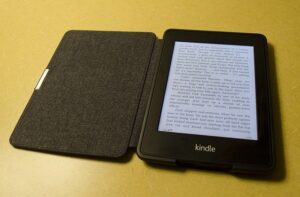
Image © of BruceEmmerling via Pixabay

Although I love the feel and smell of real books in my hands I am not against e-books.  They are a convenience for many and you have the advantage of being able to store lots of them on the media of your choice.  

I have sold them in the past and I plan to sell them again.  I have also given away plenty of free ones in my time and you will find free ones on my website too.  They will be shown via Blog Posts below.

You can get lots more free e-books via Free-eBooks.net by becoming a member by clicking the link below.

Another fantastic source for free e-books is Project Gutenberg (link below).

About E-Books

An ebook (short for electronic book), also known as an e-book or eBook, is a book publication made available in digital form, consisting of text, images, or both, readable on the flat-panel display of computers or other electronic devices.  Although sometimes defined as “an electronic version of a printed book”, some e-books exist without a printed equivalent.  E-books can be read on dedicated e-reader devices, but also on any computer device that features a controllable viewing screen, including desktop computers, laptops, tablets and smartphones.

In the 2000s, there was a trend of print and e-book sales moving to the Internet, where readers buy traditional paper books and e-books on websites using e-commerce systems.  With print books, readers are increasingly browsing through images of the covers of books on publisher or bookstore websites and selecting and ordering titles online; the paper books are then delivered to the reader by mail or another delivery service.  With e-books, users can browse through titles online, and then when they select and order titles, the e-book can be sent to them online or the user can download the e-book.   By the early 2010s, e-books had begun to overtake hardcover by overall publication figures in the U.S.

The main reasons for people buying e-books are possibly lower prices, increased comfort (as they can buy from home or on the go with mobile devices) and a larger selection of titles.  PC Magazine Encyclopedia says “electronic bookmarks make referencing easier, and e-book readers may allow the user to annotate pages.”  Although fiction and non-fiction books come in e-book formats, technical material is especially suited for e-book delivery because it can be digitally searched for keywords.  In addition, for programming books, code examples can be copied.  The amount of e-book reading is increasing in the U.S.; by 2014, 28% of adults had read an e-book, compared to 23% in 2013; and by 2014, 50% of American adults had an e-reader or a tablet, compared to 30% owning such devices in 2013.

E-Books Terminology

E-books are also referred to as “ebooks”, “eBooks”, “Ebooks”, “e-Books”, “e-journals”, “e-editions”, or “digital books”.  A device that is designed specifically for reading e-books is called an “e-reader”, “ebook device”, or “eReader”.

The History Of E-Books

The Readies (1930)

Some trace the concept of an e-reader, a device that would enable the user to view books on a screen, to a 1930 manifesto by Bob Brown, written after watching his first “talkie” (a movie with sound).  He titled it The Readies, playing off the idea of the “talkie”.  In his book, Brown says movies have outmanoeuvred the book by creating the “talkies” and, as a result, reading should find a new medium:

“A simple reading machine which I can carry or move around, attach to any old electric light plug and read hundred-thousand-word novels in 10 minutes if I want to, and I want to.”

Brown’s notion, however, was much more focused on reforming orthography and vocabulary, than on medium (“It is time to pull out the stopper” and begin “a bloody revolution of the word.”): introducing huge numbers of portmanteau symbols to replace normal words, and punctuation to simulate action or movement; so it is not clear whether this fits into the history of “e-books” or not.  Later e-readers never followed a model at all like Brown’s; however, he correctly predicted the miniaturization and portability of e-readers.  In an article, Jennifer Schuessler writes, “The machine, Brown argued, would allow readers to adjust the type size, avoid paper cuts and save trees, all while hastening the day when words could be ‘recorded directly on the palpitating ether.” Brown believed that the e-reader (and his notions for changing the text itself) would bring a completely new life to reading.  Schuessler correlates it with a DJ spinning bits of old songs to create a beat or an entirely new song, as opposed to just a remix of a familiar song.

Inventors

The inventor of the first e-book is not widely agreed upon. Some notable candidates include the following:

Roberto Busa (1946–1970)

The first e-book may be the Index Thomisticus, a heavily annotated electronic index to the works of Thomas Aquinas, prepared by Roberto Busa, S.J. beginning in 1946 and completed in the 1970s.  Although originally stored on a single computer, a distributable CD-ROM version appeared in 1989.  However, this work is sometimes omitted; perhaps because the digitized text was a means for studying written texts and developing linguistic concordances, rather than as a published edition in its own right.  In 2005, the Index was published online.

Ángela Ruiz Robles (1949)

In 1949, Ángela Ruiz Robles, a teacher from Ferrol, Spain, patented the Enciclopedia Mecánica, or the Mechanical Encyclopedia, a mechanical device that operated on compressed air where text and graphics were contained on spools that users would load onto rotating spindles.  Her idea was to create a device that would decrease the number of books that her pupils carried to school.  The final device was planned to include audio recordings, a magnifying glass, a calculator and an electric light for night reading.  Her device was never put into production but a prototype is kept in the National Museum of Science and Technology in A Coruña.

Douglas Engelbart And Andries Van Dam (1960s)

Alternatively, some historians consider electronic books to have started in the early 1960s, with the NLS project headed by Douglas Engelbart at Stanford Research Institute (SRI), and the Hypertext Editing System and FRESS projects headed by Andries van Dam at Brown University.  FRESS documents ran on IBM mainframes and were structure-oriented rather than line-oriented; they were formatted dynamically for different users, display hardware, window sizes, and so on, as well as having automated tables of contents, indexes, and so on.  All these systems also provided extensive hyperlinking, graphics, and other capabilities.  Van Dam is generally thought to have coined the term “electronic book”,  and it was established enough to use in an article title by 1985.

FRESS was used for reading extensive primary texts online, as well as for annotation and online discussions in several courses, including English Poetry and Biochemistry. Brown’s faculty made extensive use of FRESS; for example the philosopher Roderick Chisholm used it to produce several of his books.  Thus in the Preface to Person and Object (1979) he writes “The book would not have been completed without the epoch-making File Retrieval and Editing System…”  Brown University’s work in electronic book systems continued for many years, including US Navy funded projects for electronic repair-manuals; a large-scale distributed hypermedia system known as InterMedia; a spinoff company Electronic Book Technologies that built DynaText, the first SGML-based e-reader system; and the Scholarly Technology Group’s extensive work on the Open eBook standard.

Michael S. Hart (1971)

Despite the extensive earlier history, several publications report Michael S. Hart as the inventor of the e-book.  In 1971, the operators of the Xerox Sigma V mainframe at the University of Illinois gave Hart extensive computer time.  Seeking a worthy use of this resource, he created his first electronic document by typing the United States Declaration of Independence into a computer in plain text.  Hart planned to create documents using plain text to make them as easy as possible to download and view on devices.

Read more about The History Of E-Books here.

E-Books Formats

Read about E-Books Formats here.

The Production Of E-Books

Some e-books are produced simultaneously with the production of a printed format, as described in electronic publishing, though in many instances they may not be put on sale until later.  Often, e-books are produced from pre-existing hard-copy books, generally by document scanning, sometimes with the use of robotic book scanners, having the technology to quickly scan books without damaging the original print edition.  Scanning a book produces a set of image files, which may additionally be converted into text format by an OCR program.  Occasionally, as in some projects, an e-book may be produced by re-entering the text from a keyboard.  Sometimes only the electronic version of a book is produced by the publisher.  It is possible to release an e-book chapter by chapter as each chapter is written.  This is useful in fields such as information technology where topics can change quickly in the months that it takes to write a typical book.  It is also possible to convert an electronic book to a printed book by print on demand.  However, these are exceptions as tradition dictates that a book be launched in the print format and later if the author wishes an electronic version is produced.  The New York Times keeps a list of best-selling e-books, for both fiction and non-fiction.

Read more about E-Books here.

Blog Posts

Links

BruceEmmerling on Pixabay – The image shown at the top of this page is the copyright of BruceEmmerling.  You can find more great work from the photographer Bruce and lots more free stock photo’s at Pixabay.

Free-eBooks.net – Official website.  Free-eBooks.net is the internet’s number one source for free e-book downloads, e-book resources & e-book authors.  Read and download e-books for FREE – anytime. 

Use the link above to sign up and enjoy five free e-books each and every month with a Standard Account or upgrade to V.I.P. status for unlimited e-book and audiobook downloads.  

Project Gutenberg – Project Gutenberg is an online library of free e-books and was the first provider of free electronic books.  Michael Hart, the founder of Project Gutenberg, invented e-books in 1971 and his memory continues to inspire the creation of them and related content today.