
On Monday the 22nd of September, 2025, I joined Advance UK. I did this because I TRULY believe Ben Habib and his newly formed political party are our only hope of saving this country from the evil, fascist and oppressive control it is currently under. If you value any kind of freedom of speech, are, as in my case, PROUD TO BE ENGLISH and you want to put the GREAT back in Great Britain and be able to show your pride in flying whatever flag you like without being called a racist, or this phobic or that phobic, then click here via my recruiter page (at the bottom) to join TODAY!
I myself am not religious, but there is no doubt this country is a Christian country built on Christian/Family values, and it should, under no circumstances, be allowed to be changed from that way, FOR ANYONE!
Read all about Ben and the party below.
Introducing Advance UK.
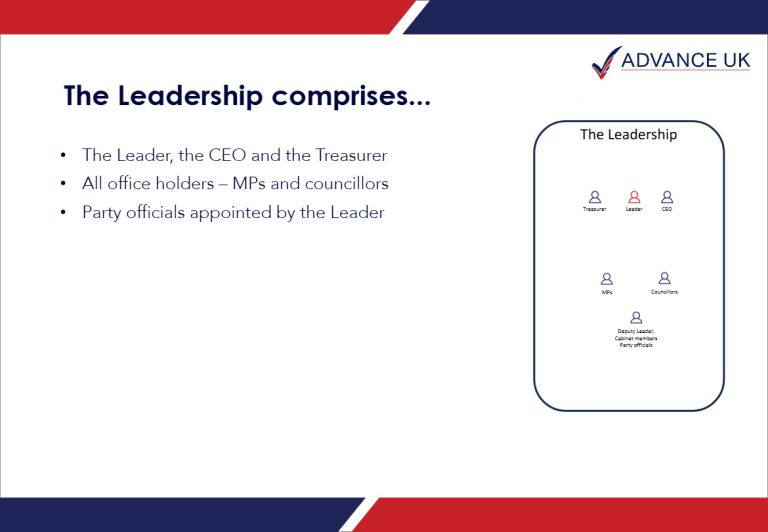
The Leadership Comrises.
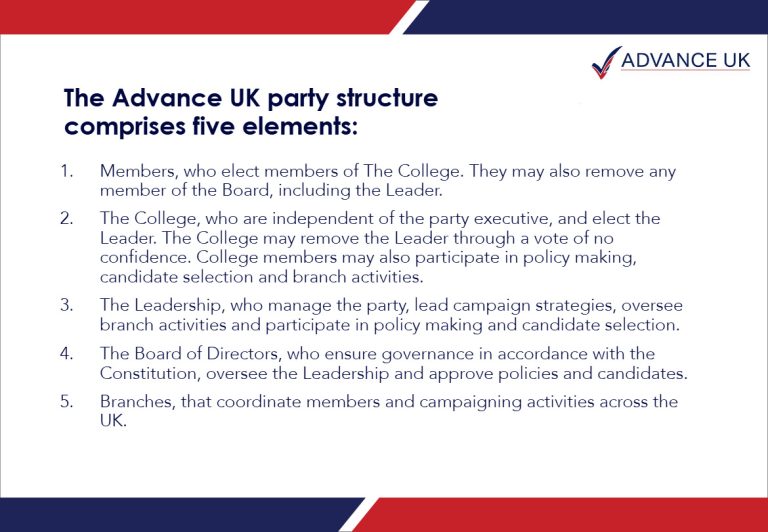
The Leadership manage the party, lead campaign strategies, oversee branch activities and participate in policy making and candidate selection.
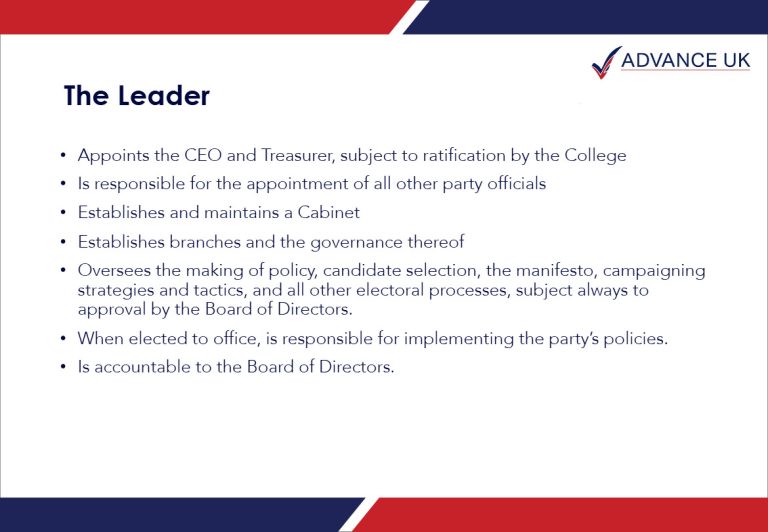
The Leader.
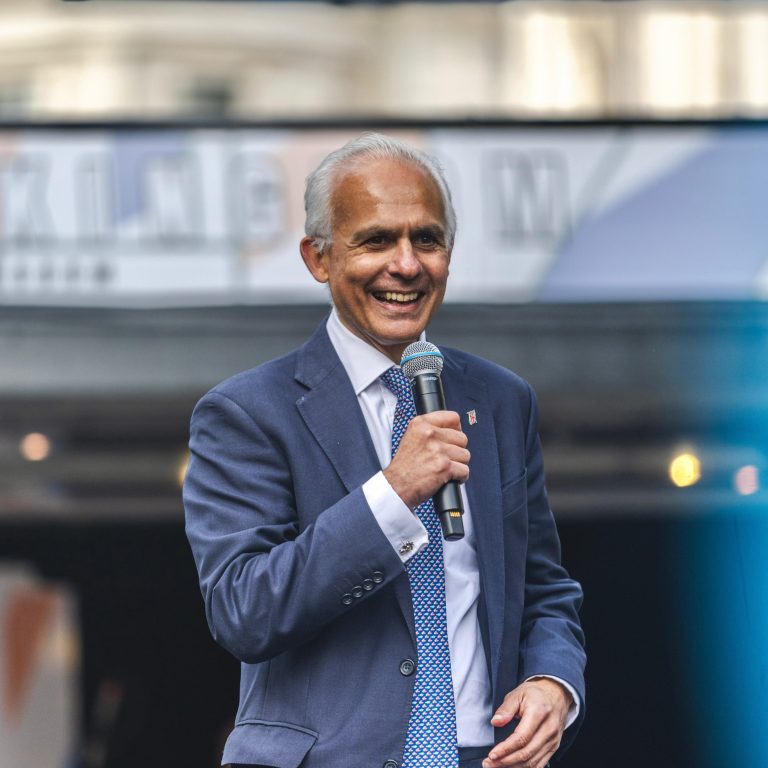
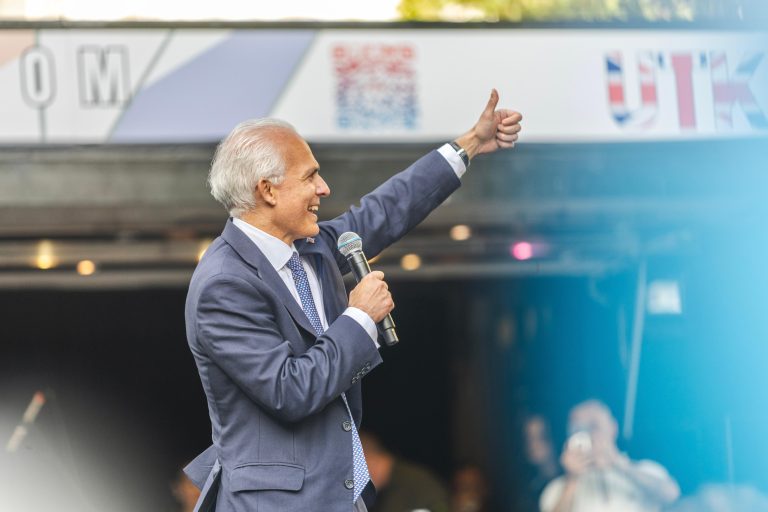
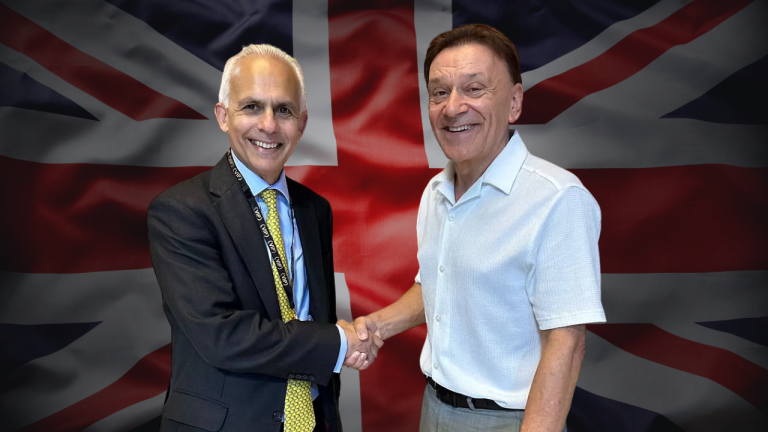
Ben Habib, Leader Of Advance UK.
Ben Habib is the Leader of Advance UK. A formidable businessman, seasoned politician, and steadfast advocate for Britain’s independence, prosperity, and national pride. He stands at the forefront of a movement to reclaim sovereignty and restore confidence in our democracy.
Born in Karachi to a Pakistani father and British mother, Ben moved to the UK at 13. He went on to become Head of Rugby School, before studying Natural Sciences at Cambridge University, where he also earned a Boxing Blue.
His early career was in finance in the City, before moving into private property development and investment in 1994. He went on to found First Property Group plc, an FCA-regulated and London Stock Exchange-listed fund manager, where he continues to serve as Chief Executive.
Ben entered politics in 2019, joining the Brexit Party in response to Theresa May’s failure to deliver Brexit. He was elected a Member of the European Parliament and later became Deputy Leader of Reform UK. Known for his principled opposition to the Northern Ireland Protocol, he has consistently fought to defend Britain’s sovereignty and independence.
He joined Reform UK in March 2023, becoming Deputy Leader later that year and helping take the party from 6% to 16% in the polls. He later resigned over disagreements on governance and political principles.
In June 2025, he founded Advance UK, which has grown at a remarkable pace, gaining over 30,000 members in just two months and becoming the seventh-largest party in the UK. Its growth continues.
As leader, Ben is determined to recruit the finest minds and most capable people in the country to deliver a proud, sovereign, and prosperous United Kingdom once again.
“I love my country, I love you, and I will not falter. I will deliver for you.”
Help Us Mend Broken Britain.
We will build a proud, independent and prosperous United Kingdom.
We stand for nation, freedom, democracy and equality under the law.
Our Nation is the United Kingdom of Great Britain and Northern Ireland, in all its parts and with all its people.
The Party asserts every part of the Acts of Union which created the Nation. The Party stands against any arrangement which is not compliant with those Acts.
The Party promotes and celebrates the Nation’s Christian constitution, roots, traditions, culture, and values.
The sovereignty of the Nation stands as a bulwark against the undemocratic influence of supra-national institutions and international law.
A cornerstone of democracy is the freedom of speech.
All people should be free to think, speak and act according to their conscience and beliefs if they do not incite violence.
Children should be protected from ideological and political indoctrination.
There should be minimal Government intervention in people’s lives.
The Government should serve the British people and be accountable to them.
There can be no dilution of the Government’s ability to discharge this obligation, and the people’s ability to hold them to account, by membership of international bodies, the entering into of international treaties, international law and domestic quangos.
There should be minimal Government intervention in people’s lives.
All people living in the UK should be equal before and subject only to UK law.
All people should be able to live free from the threat of terror or violent crime and without prejudice.
There should be no discrimination based on ethnicity, sex or sexual orientation.
The British legal system must be the only legal system in the Nation and its application must be impartial and free of political influence or control.
Security of life and property are fundamental in creating a peaceful and prosperous society.
Our Mission Statement.
How We Will Work Together.
Information.
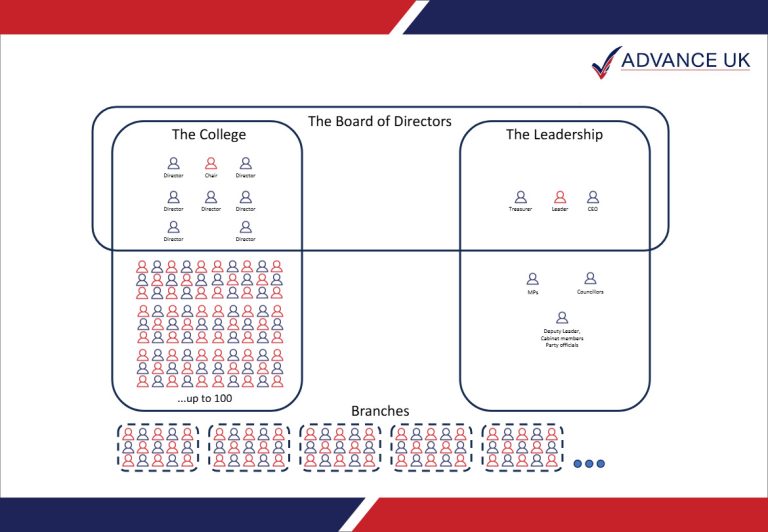
The Advance UK party structure comprises five elements.
Members And Branches.
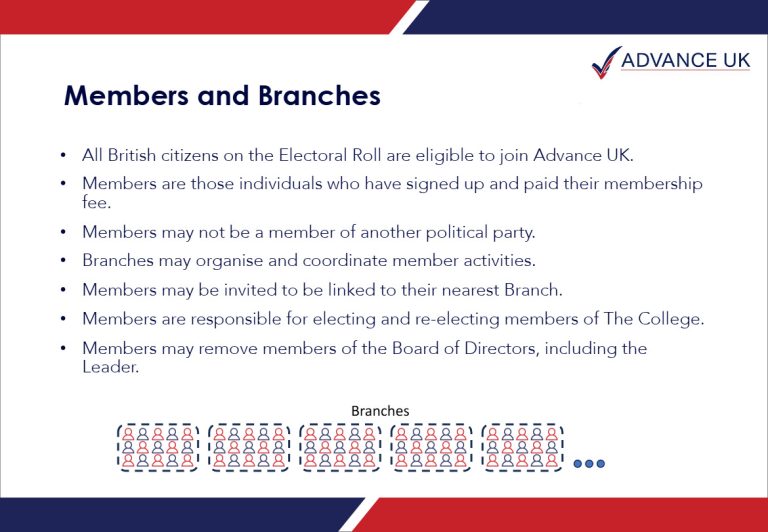
Members elect members of The College. They may also remove any member of the Board, including the Leader.
Members of the Party will, subject to due process, be eligible to:
Receive notices and communications.
Attend members’ meetings.
Stand for election to the College.
Join the Party executive.
Stand as candidates in local and national elections.
Join local associations.
Campaign for the Party.
By a simple majority, vote in the election of College members.
By a simple majority, vote to remove directors of the Party (including the leader).
You can join via my recruiter page (at the bottom) by clicking here.
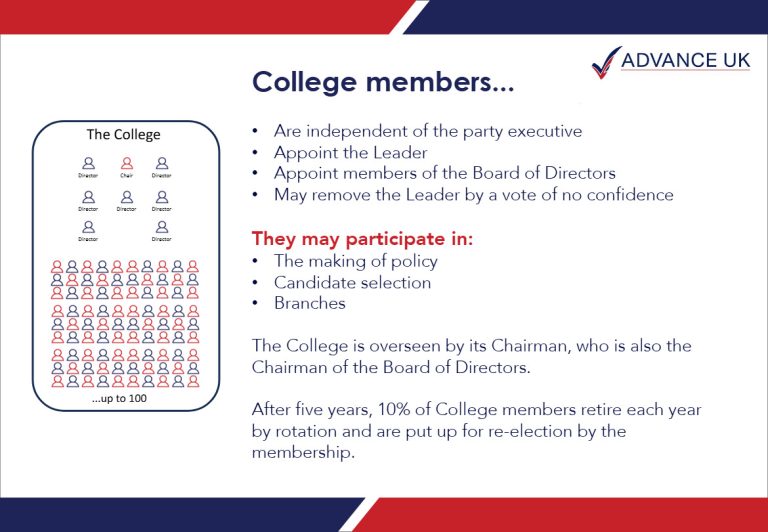
The College are independent of the party executive, and elect the Leader. The College may remove the Leader through a vote of no confidence. College members may also participate in policy making, candidate selection and branch activities.
The College is overseen by its Chairman, who is also the Chairman of the Board of Directors. After five years, 10% of College members retire each year by rotation and are put up for re-election by the membership.
College Members.
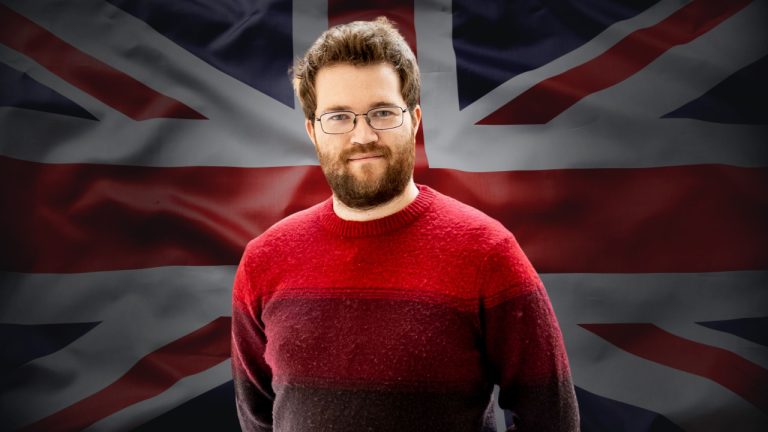
Craig Walton.
Read more about Craig here.
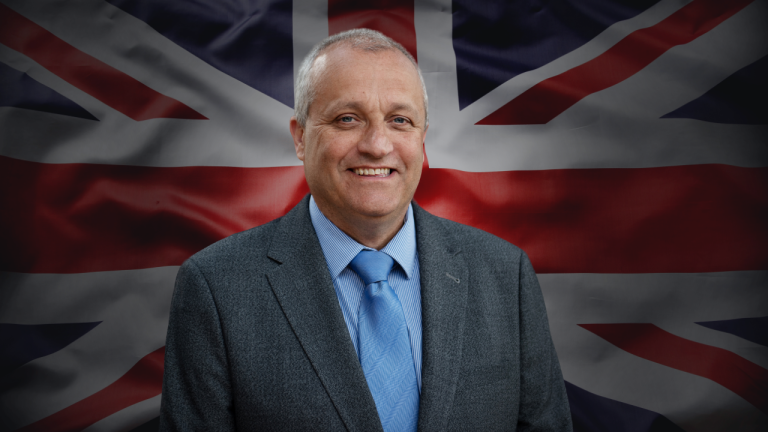
Gavin Maxwell.
Read more about Gavin here.
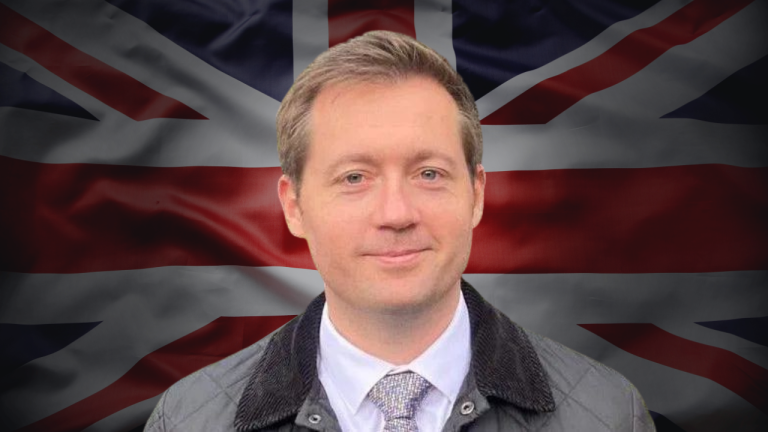
Nick Buckley.
Read more about Nick here.
Richard Thompson.
Read more about Richard here.
Bepi Pezzulii.
Read more about Bepi here.
Justin Downes.
Read more about Justin here.
Andrew Cadman.
Read more about Andrew here.
Paul Thorpe.
Read more about Paul here.
Aileen Quinton.
Read more about Aileen here.
Norman Fenton.
Read more about Norman here.
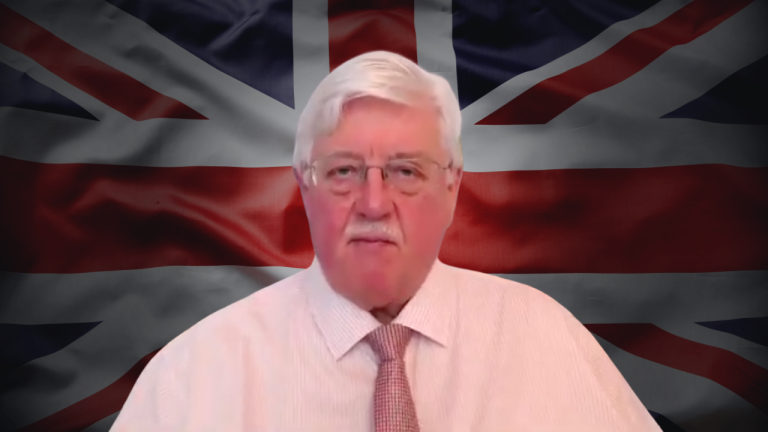
Howard Cox.
Read more about Howard here.
Read more about Paul here.
Paul Burgess.
Richie Taylor.
Read more about Richie here.
Katie Waissel.
Read more about Katie here.
Jim Ferguson.
Read more about Jim here.
Read more about Kathy here.
Kathy Gyngell.
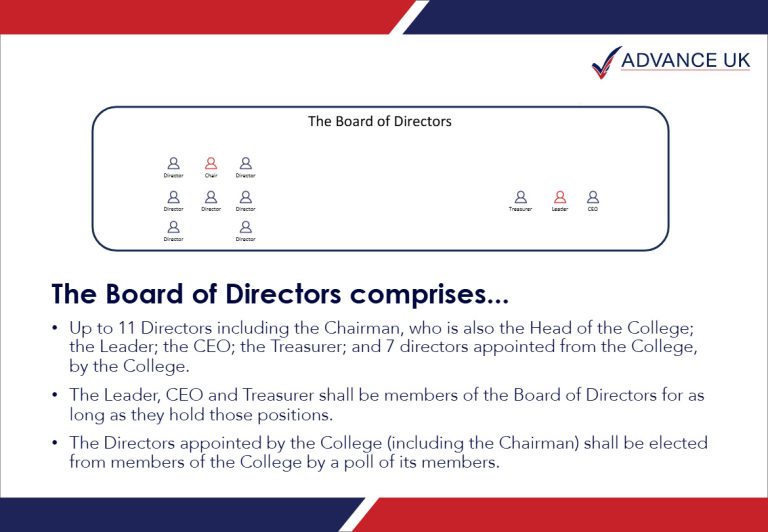
The Board Of Directors Comprises.
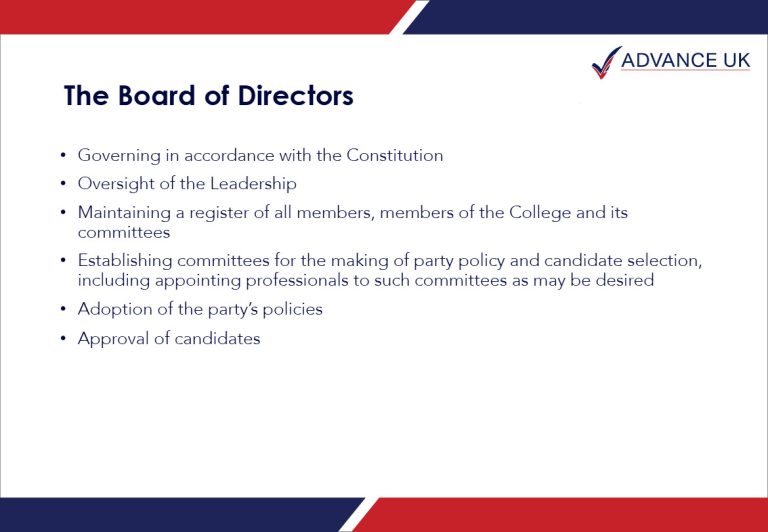
The Board Of Directors.
The Board of Directors ensure governance in accordance with the Constitution, oversee the Leadership and approve policies and candidates.
Branches coordinate members and campaigning activities across the U.K.
Information.
If you are an Advance UK member or supporter, or you have questions or feedback about our work, please get in touch using the form here. You may also find the answer to your question in the Frequently Asked Question’s below.
If you are a member of the press, and you have questions about Advance UK, please email our press office by clicking here.
Click here to see any F.A.Q.’s for Advance UK.
To see all of Advance UK’s events, click here.
If you are tired of being lied to and treated like a stranger in your own country, and you want a government that will TRULY care about its citizens, then you can join Advance UK via my recruiter page (at the bottom) by clicking here and help grow our party that will become second to none.
The image shown at the top of this page, and subsequent photos, are the copyright of Advance UK.
Advance UK – Official website.
Advance UK on Facebook – This is their official Facebook page.
Advance UK on X – This is their official X page.
Advance UK on Instagram – This is their official Instagram page.
Advance UK on YouTube – This is their official YouTube page.
Ben Habib on Facebook – This is his official Facebook page.
Ben Habib on X – This is his official X page.
Ben Habib on Instagram – This is his official Instagram page.
Ben Habib on YouTube – This is his official YouTube page.

I am English, NOT British, Not European, ENGLISH, AND PROUD. I class myself as an English patriot and it is on here where you will see that English Pride.
You can read more blog articles about England and the English, like the one on here, via my English Pride Index below.
The English people are an ethnic group and nation native to England, who speak the English language and share a common history and culture. The English identity is of early medieval origin when they were known in Old English as the Angelcynn (‘race or tribe of the Angles’). Their ethnonym is derived from the Angles, one of the Germanic peoples who migrated to Great Britain around the 5th century AD.
The English largely descend from two main historical population groups – the tribes who settled in southern Britain following the withdrawal of the Romans (including Angles, Saxons, Jutes and Frisians), and the partially Romanised Britons already living there. Collectively known as the Anglo-Saxons, they founded what was to become the Kingdom of England by the early 10th century, in response to the invasion and minor settlement of Danes that began in the late 9th century. This was followed by the Norman Conquest and limited settlement of Anglo-Normans in England in the later 11th century. Some definitions of English people include, while others exclude, people, descended from later migration into England.
England is the largest and most populous country of the United Kingdom of Great Britain and Northern Ireland. In the Acts of Union 1707, the Kingdom of England and the Kingdom of Scotland merged to become the Kingdom of Great Britain. Over the years, English customs and identity have become fairly closely aligned with British customs and identity in general.
England itself has no devolved government. The 1990s witnessed a rise in English self-awareness. This is linked to the expressions of national self-awareness of the other British nations of Wales, Scotland and Northern Ireland which take their most solid form in the new devolved political arrangements within the United Kingdom – and the waning of a shared British national identity with the growing distance between the end of the British Empire and the present.
Many recent immigrants to England have assumed a solely British identity, while others have developed dual or mixed identities. The use of the word “English” to describe Britons from ethnic minorities in England is complicated by most non-white people in England identifying as British rather than English. In their 2004 Annual Population Survey, the Office for National Statistics compared the ethnic identities of British people with their perceived national identity. They found that while 58% of white people in England described their nationality as “English”, the vast majority of non-white people called themselves “British”.
Read more about The English Nationality here.
Recent genetic studies have suggested that Britain’s Neolithic population was largely replaced by a population from North Continental Europe characterised by the Bell Beaker culture around 2400 BC, associated with the Yamnaya people from the Pontic-Caspian Steppe. This population lacked genetic affinity to some other Bell Beaker populations, such as the Iberian Bell Beakers, but appeared to be an offshoot of the Corded Ware single grave people, as developed in western Europe. It is currently unknown whether these Beaker peoples went on to develop Celtic languages in the British Isles, or whether later Celtic migrations introduced Celtic languages to Britain.
The close genetic affinity of these Beaker people to Continental North Europeans means that British and Irish populations cluster genetically very closely with other Northwest European populations, regardless of how much Anglo-Saxon and Viking ancestry was introduced during the 1st millennium.
The influence of later invasions and migrations on the English population has been debated, as studies that sampled only modern DNA have produced uncertain results and have thus been subject to a large variety of interpretations. More recently, however, ancient DNA has been used to provide a clearer picture of the genetic effects of these movements of people.
One 2016 study, using Iron Age and Anglo-Saxon era DNA found at grave-sites in Cambridgeshire, calculated that ten modern-day eastern English samples had 38% Anglo-Saxon ancestry on average, while ten Welsh and Scottish samples each had 30% Anglo-Saxon ancestry, with a large statistical spread in all cases. However, the authors noted that the similarity observed between the various sample groups was likely to be due to more recent internal migration.
Another 2016 study conducted using evidence from burials found in northern England, found that a significant genetic difference was present in bodies from the Iron Age and the Roman period on the one hand, and the Anglo-Saxon period on the other. Samples from modern-day Wales were found to be similar to those from the Iron Age and Roman burials, while samples from much of modern England, East Anglia in particular, were closer to the Anglo-Saxon-era burial. This was found to demonstrate a “profound impact” from the Anglo-Saxon migrations on the modern English gene pool, though no specific percentages were given in the study.
A third study combined the ancient data from both of the preceding studies and compared it to a large number of modern samples from across Britain and Ireland. This study found that modern southern, central and eastern English populations were of “a predominantly Anglo-Saxon-like ancestry” while those from northern and southwestern England had a greater degree of indigenous origin.
A major 2020 study, which used DNA from Viking-era burials in various regions across Europe, found that modern English samples showed nearly equal contributions from a native British “North Atlantic” population and a Danish-like population. While much of the latter signature was attributed to the earlier settlement of the Anglo-Saxons, it was calculated that up to 6% of it could have come from Danish Vikings, with a further 4% contribution from a Norwegian-like source representing the Norwegian Vikings. The study also found an average 18% admixture from a source further south in Europe, which was interpreted as reflecting the legacy of French migration under the Normans.
The first people to be called “English” were the Anglo-Saxons, a group of closely related Germanic tribes that began migrating to eastern and southern Great Britain, from southern Denmark and northern Germany, in the 5th century AD, after the Romans had withdrawn from Britain. The Anglo-Saxons gave their name to England (“Engla land”, meaning “Land of the Angles”) and to the English.
The Anglo-Saxons arrived in a land that was already populated by people commonly referred to as the “Romano-British”—the descendants of the native Brittonic-speaking population that lived in the area of Britain under Roman rule during the 1st–5th centuries AD. The multi-ethnic nature of the Roman Empire meant that small numbers of other peoples may have also been present in England before the Anglo-Saxons arrived. There is archaeological evidence, for example, of an early North African presence in a Roman garrison at Aballava, now Burgh-by-Sands, in Cumbria: a 4th-century inscription says that the Roman military unit “Numerus Maurorum Aurelianorum” (“unit of Aurelian Moors”) from Mauretania (Morocco) was stationed there. Although the Roman Empire incorporated peoples from far and wide, genetic studies suggest the Romans did not significantly mix into the British population.
The exact nature of the arrival of the Anglo-Saxons and their relationship with the Romano-British is a matter of debate. The traditional view is that a mass invasion by various Anglo-Saxon tribes largely displaced the indigenous British population in southern and eastern Great Britain (modern-day England with the exception of Cornwall). This is supported by the writings of Gildas, who gives the only contemporary historical account of the period and describes the slaughter and starvation of native Britons by invading tribes (aduentus Saxonum). Furthermore, the English language contains no more than a handful of words borrowed from Brittonic sources.
This view was later re-evaluated by some archaeologists and historians, with a more small-scale migration being posited, possibly based around an elite of male warriors that took over the rule of the country and gradually acculturated the people living there. Within this theory, two processes leading to Anglo-Saxonisation have been proposed. One is similar to culture changes observed in Russia, North Africa and parts of the Islamic world, where a politically and socially powerful minority culture becomes, over a rather short period, adopted by a settled majority. This process is usually termed “elite dominance”. The second process is explained through incentives, such as the Wergild outlined in the law code of Ine of Wessex which produced an incentive to become Anglo-Saxon or at least English speaking. Historian Malcolm Todd writes, “It is much more likely that a large proportion of the British population remained in place and was progressively dominated by a Germanic aristocracy, in some cases marrying into it and leaving Celtic names in the, admittedly very dubious, early lists of Anglo-Saxon dynasties. But how we identify the surviving Britons in areas of predominantly Anglo-Saxon settlement, either archaeologically or linguistically, is still one of the deepest problems of early English history.”
An emerging view is that the degree of population replacement by the Anglo-Saxons, and thus the degree of survival of the Romano-Britons, varied across England and that as such the overall settlement of Britain by the Anglo-Saxons cannot be described by any one process in particular. Large-scale migration and population shift seem to be most applicable in the cases of eastern regions such as East Anglia and Lincolnshire, while in parts of Northumbria, much of the native population likely remained in place as the incomers took over as elites. In a study of place names in northeastern England and southern Scotland, Bethany Fox found that the migrants settled in large numbers in river valleys, such as those of the Tyne and the Tweed, with the Britons moving to the less fertile hill country and becoming acculturated over a longer period. Fox describes the process by which English came to dominate this region as “a synthesis of mass-migration and elite-takeover models.”
From about 800 AD waves of Danish Viking assaults on the coastlines of the British Isles were gradually followed by a succession of Danish settlers in England. At first, the Vikings were very much considered a separate people from the English. This separation was enshrined when Alfred the Great signed the Treaty of Alfred and Guthrum to establish the Danelaw, a division of England between English and Danish rule, with the Danes occupying northern and eastern England.
However, Alfred’s successors subsequently won military victories against the Danes, incorporating much of the Danelaw into the nascent kingdom of England. Danish invasions continued into the 11th century, and there were both English and Danish kings in the period following the unification of England (for example, Æthelred II (978–1013 and 1014–1016) was English but Cnut (1016–1035) was Danish).
Gradually, the Danes in England came to be seen as ‘English’. They had a noticeable impact on the English language: many English words, such as anger, ball, egg, got, knife, take, and they, are of Old Norse origin, and place names that end in –thwaite and –by are Scandinavian in origin.
The English population was not politically unified until the 10th century. Before then, there were a number of petty kingdoms which gradually coalesced into a heptarchy of seven states, the most powerful of which were Mercia and Wessex. The English nation state began to form when the Anglo-Saxon kingdoms united against Danish Viking invasions, which began around 800 AD. Over the following century and a half, England was, for the most part, a politically unified entity, and remained permanently so after 959.
The nation of England was formed in 937 by Æthelstan of Wessex after the Battle of Brunanburh, as Wessex grew from a relatively small kingdom in the South West to become the founder of the Kingdom of the English, incorporating all Anglo-Saxon kingdoms and the Danelaw.
The Norman conquest of England during 1066 brought Anglo-Saxon and Danish rule of England to an end, as the new French speaking Norman elite almost universally replaced the Anglo-Saxon aristocracy and church leaders. After the conquest, “English” normally included all natives of England, whether they were of Anglo-Saxon, Scandinavian or Celtic ancestry, to distinguish them from the Norman invaders, who were regarded as “Norman” even if born in England, for a generation or two after the Conquest. The Norman dynasty ruled England for 87 years until the death of King Stephen in 1154, when the succession passed to Henry II, House of Plantagenet (based in France), and England became part of the Angevin Empire until 1214.
Various contemporary sources suggest that within 50 years of the invasion most of the Normans outside the royal court had switched to English, with Anglo-Norman remaining the prestige language of government and law largely out of social inertia. For example, Orderic Vitalis, a historian born in 1075 and the son of a Norman knight, said that he learned French only as a second language. Anglo-Norman continued to be used by the Plantagenet kings until Edward I came to the throne. Over time the English language became more important even in the court, and the Normans were gradually assimilated, until, by the 14th century, both rulers and subjects regarded themselves as English and spoke the English language.
Despite the assimilation of the Normans, the distinction between ‘English’ and ‘French’ survived in official documents long after it had fallen out of common use, in particular in the legal phrase Presentment of Englishry (a rule by which a hundred had to prove an unidentified murdered body found on their soil to be that of an Englishman, rather than a Norman if they wanted to avoid a fine). This law was abolished in 1340.
Read more about The History Of The English People and about The English People here.
The above articles were sourced from Wikipedia and are subject to change.
The English Democrats – The ONLY political party in this country that TRULY represent the needs and rights of ENGLAND and the ENGLISH.