



Ever since I was little I have loved Universal classic monsters, for it is they that started my love of Horror off, even if they scared the hell out of me at first and I hid under my Mom’s arm or behind the settee at first watching them, ha ha. That changed the older I got.
When Halloween comes around you can be sure someone is wearing an Halloween costume that relates to one of the classic monsters mentioned below.
There will be more references to Universal Classic Monsters in the appropriate Decades sections and articles via the Horror index below.
Universal Classic Monsters (also known as Universal Monsters and Universal Studios Monsters) is a media franchise based on a series of horror films primarily produced by Universal Pictures from the 1930s to the 1950s. Although not initially conceived as a franchise, the enduring popularity and legacy of the films and the characters featured in them have led the studio to market them under the collective brand name of Universal Studios Monsters. Steve Jones of USA Today described Universal’s most famous monsters as pop culture icons, specifically Dracula, Frankenstein, The Mummy and The Wolf Man.
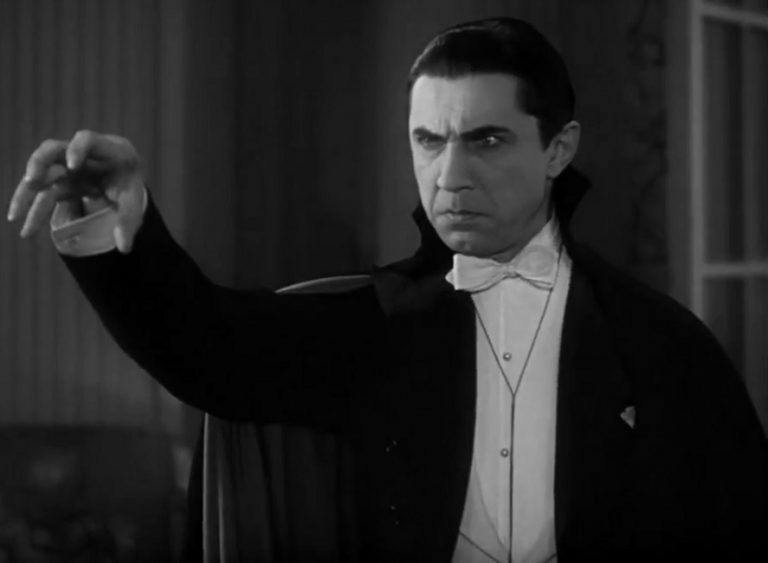
Bela Lugosi as Dracula.
This is a screenshot from the Internet Archive of the classic 1931 film Dracula. You can see the trailer it came from here.
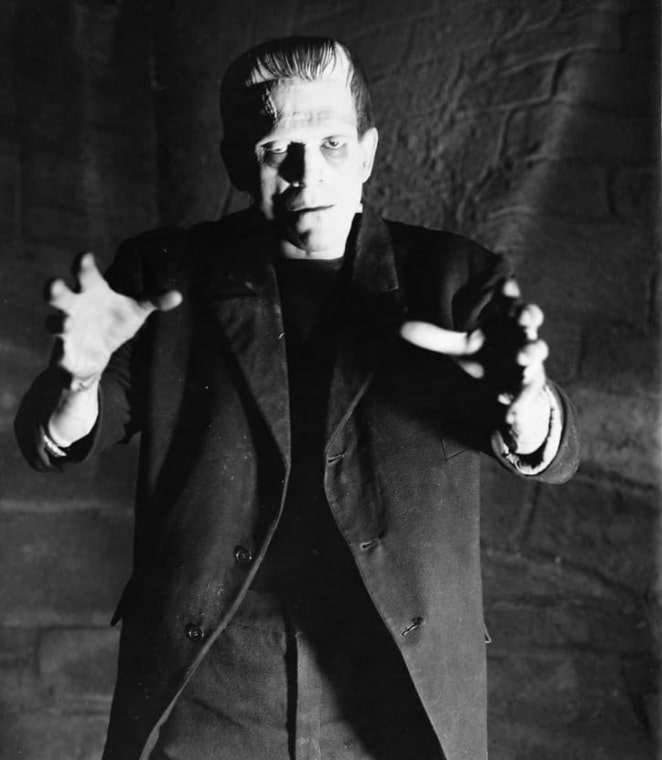
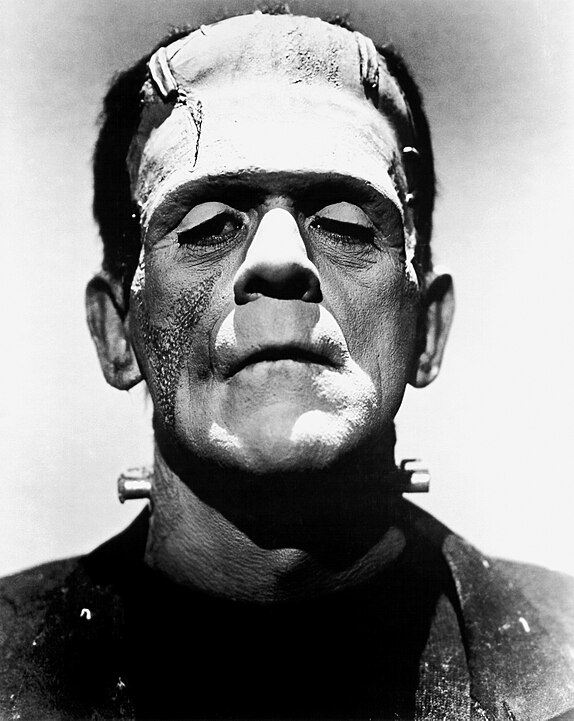
Boris Karloff as Frankenstein’s Monster.
Directed by James Whale.
You can see the trailer for the classic Frankenstein film from 1931 via The Internet Archive here.
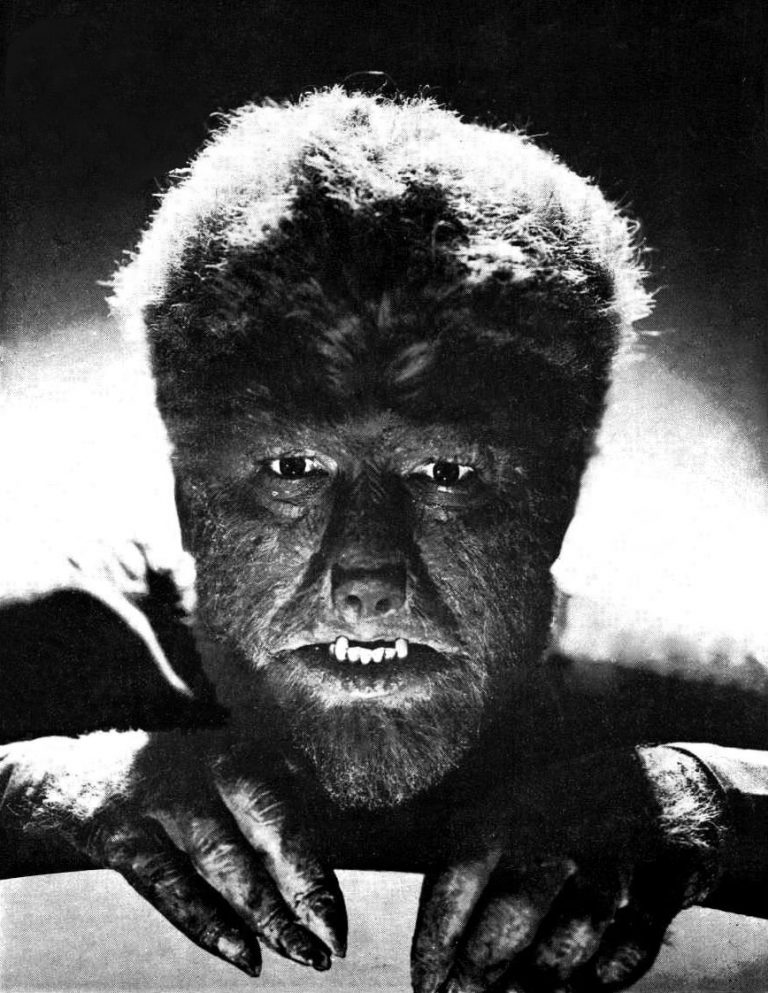
Lon Chaney Jnr. as The Wolf Man.
This promotional photo is from the classic1941 film The Wolf Man.
You can see the trailer for The Wolf Man via The Internet Archive here.
See more photos and relevant information further down below.
For an extensive list of Universal Monsters Films click here.
Below are just some of the great Universal Monsters films for you to enjoy.
They are not all classic films to me but if I have watched one and I think it is I will say so.
Watch the classic 1925 silent film The Phantom Of The Opera starring Lon Chaney via The Internet Archive here.
See information about this classic film further down at the top of the page.
Watch the classic 1931 film Dracula starring Bela Lugosi via The Internet Archive here.
See information about this classic film at the top of the page.
Watch the classic 1931 film Frankenstein starring Boris Karloff via The Internet Archive here.
See information about this classic film at the top of the page.
Watch the classic 1932 film The Mummy starring Boris Karloff via The Internet Archive here.
See information about this classic film at the top of the page.
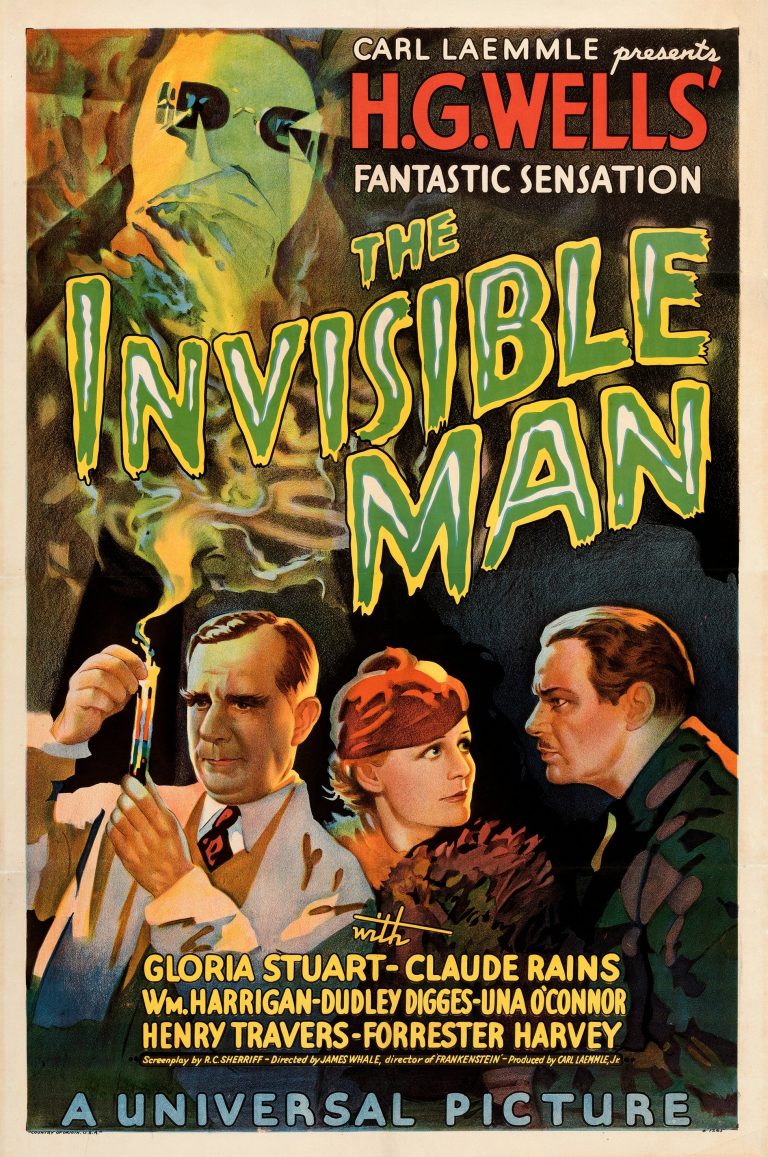
Watch the classic 1933 film The Invisible Man starring Claude Rains via The Internet Archive here.
See information about this classic film further down at the bottom of the page.
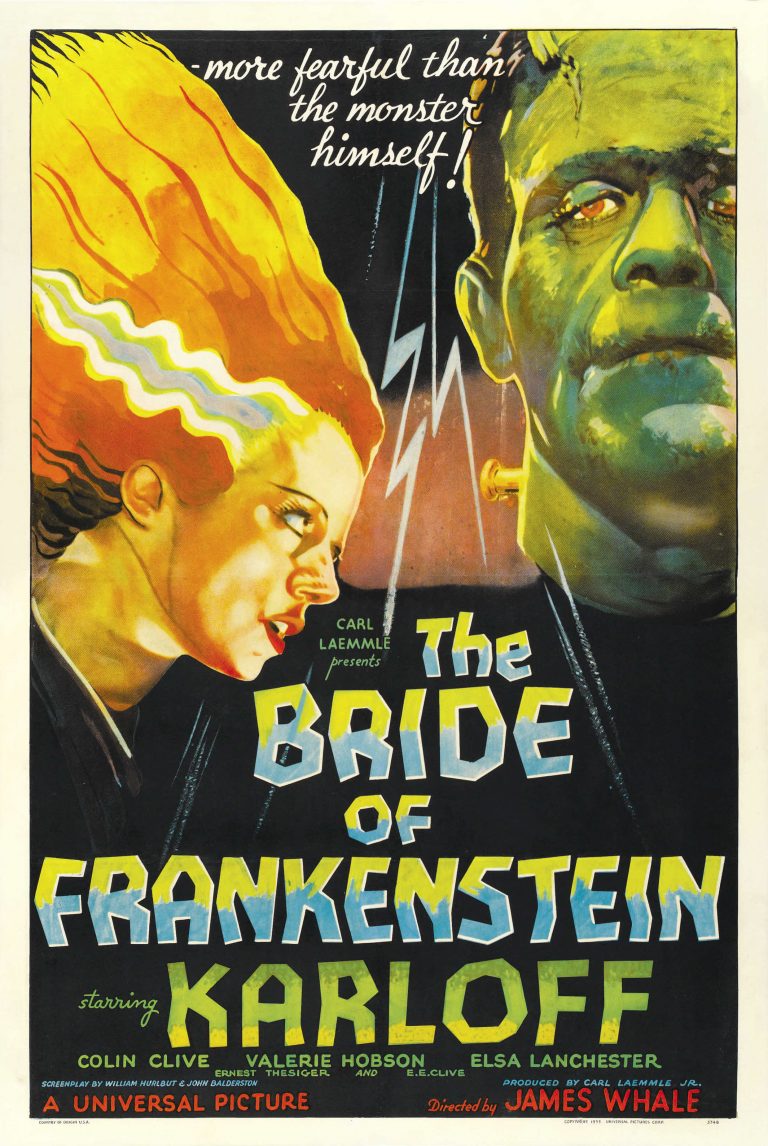
Watch the 1935 film The Bride Of Frankenstein starring Boris Karloff via The Internet Archive here.
See information about this film further down at the bottom of the page.
Watch the 1942 film Frankenstein Meets The Wolf Man starring Boris Karloff and Lon Chaney Jnr via The Internet Archive here.
See information about this film further down at the bottom of the page.
Universal Classic Monsters logo.
This is the official franchise logo as displayed on home video releases
Louis Feola was the head of Worldwide Home Video for Universal Studios and said in 1999 that “a couple of years ago” he decided to “reinvigorate and re-market” Universal’s Classic Monsters catalogue which included the series Dracula, Frankenstein, The Invisible Man, The Phantom of the Opera, The Wolf Man, and The Mummy. In 1992, in an interview with Billboard, Feola stated that to market and sell home video, the most important thing was the packaging of their sales which was “probably our single biggest priority and has been for a number of years”, and that it was key to make the series of films “look like a line”.
In 1995, MCA/Universal released a collection of the film on home video under the title The Universal Studios Monsters Classic Collection. This series included Frankenstein, Dracula, The Mummy, The Invisible Man, and The Creature From the Black Lagoon series. A collection of stamps featuring Universal Classic Monsters was also released in September 1997 titled the Universal Classic Movie Monsters series. Other characters included in the series included the Mummy and Frankenstein’s monster, both played by Boris Karloff), the Phantom of the Opera played by Lon Chaney and the Wolf Man played by Lon Chaney Jnr.
After the Universal horror films were syndicated to television, this led to a rise in the popularity of merchandise based on Frankenstein’s monster and Dracula. Throughout the 1960s and into the 1970s, the Universal monsters were promoted via merchandising which included: Halloween costumes, Aurora model kits, paperback novelizations, makeup how-to manuals, T-shirt iron-ons, posters, trading cards, and more. Since 1991, Halloween Horror Nights at Universal Parks & Resorts have featured characters from the Universal Classic Monsters franchise. From 2006 to 2014, the characters also appeared in the year-round walk-through attraction, Universal’s House of Horrors, at Universal Studios Hollywood. The franchise is also the central theme of Universal’s Horror Make-Up Show. The live show opened in 1990 at Universal Studios Florida and is still in operation. Merchandising of the characters in formats such as clothing and board games has continued into the 21st century.
Below are just some of the great Universal Monsters films photos for you to enjoy. They are not all classic films to me but if I have watched one and I think it is I will say so.
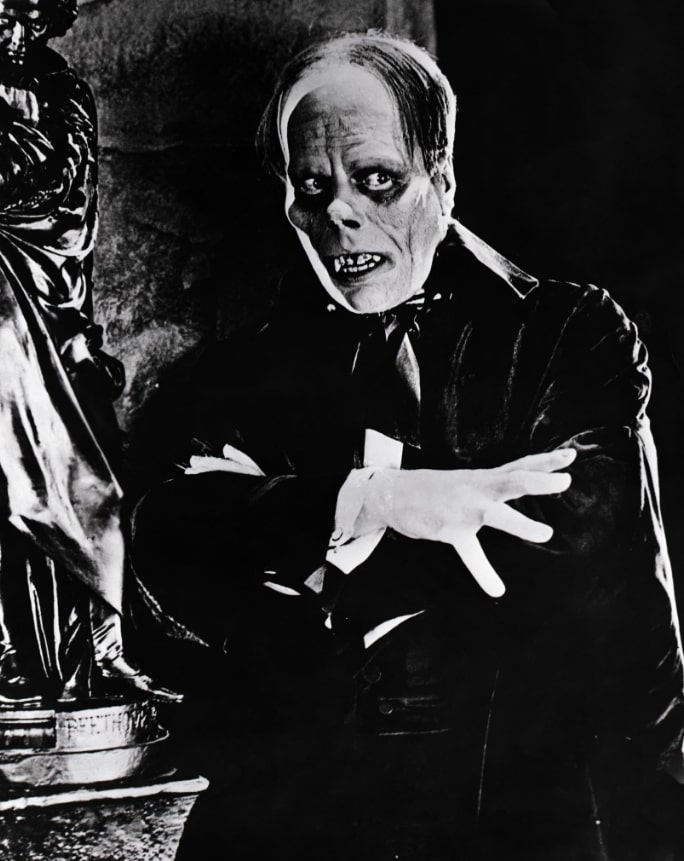
Lon Chaney as The Phantom Of The Opera.
This photo is from the classic 1925 silent film The Phantom Of The Opera.
You can see the trailer for The Phantom Of The Opera via the Internet Archive here.
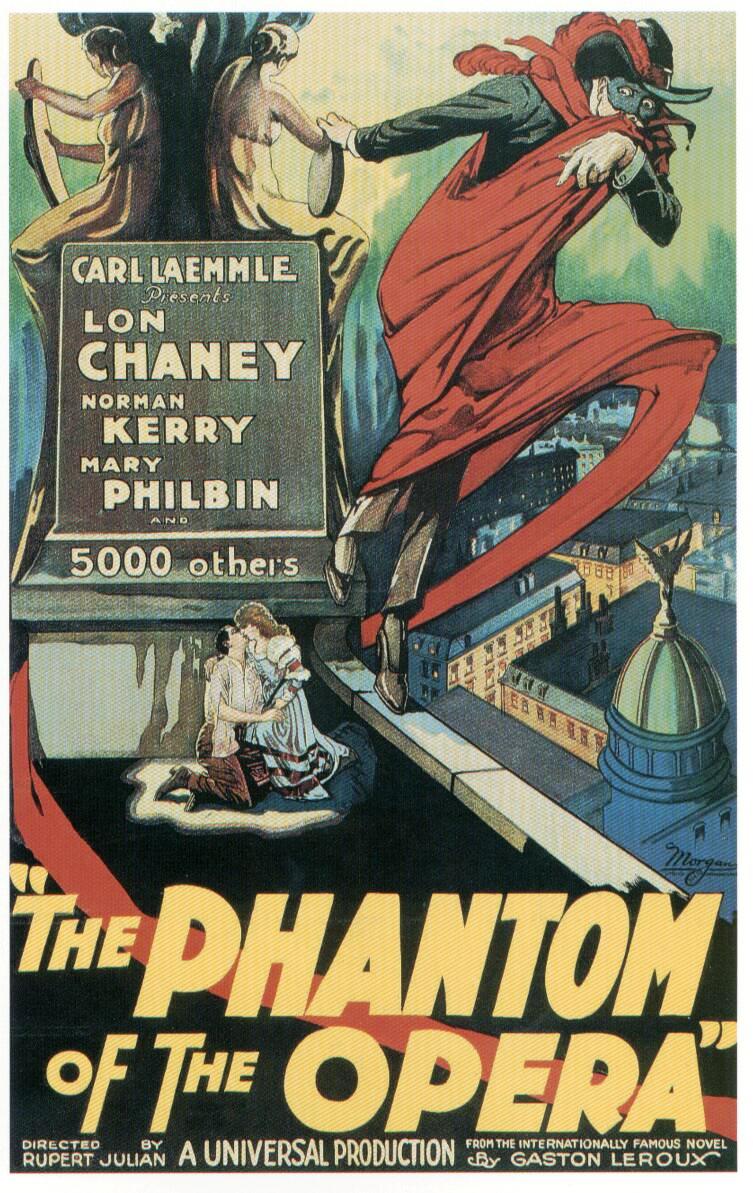
The Phantom Of The Opera 1925 film poster.
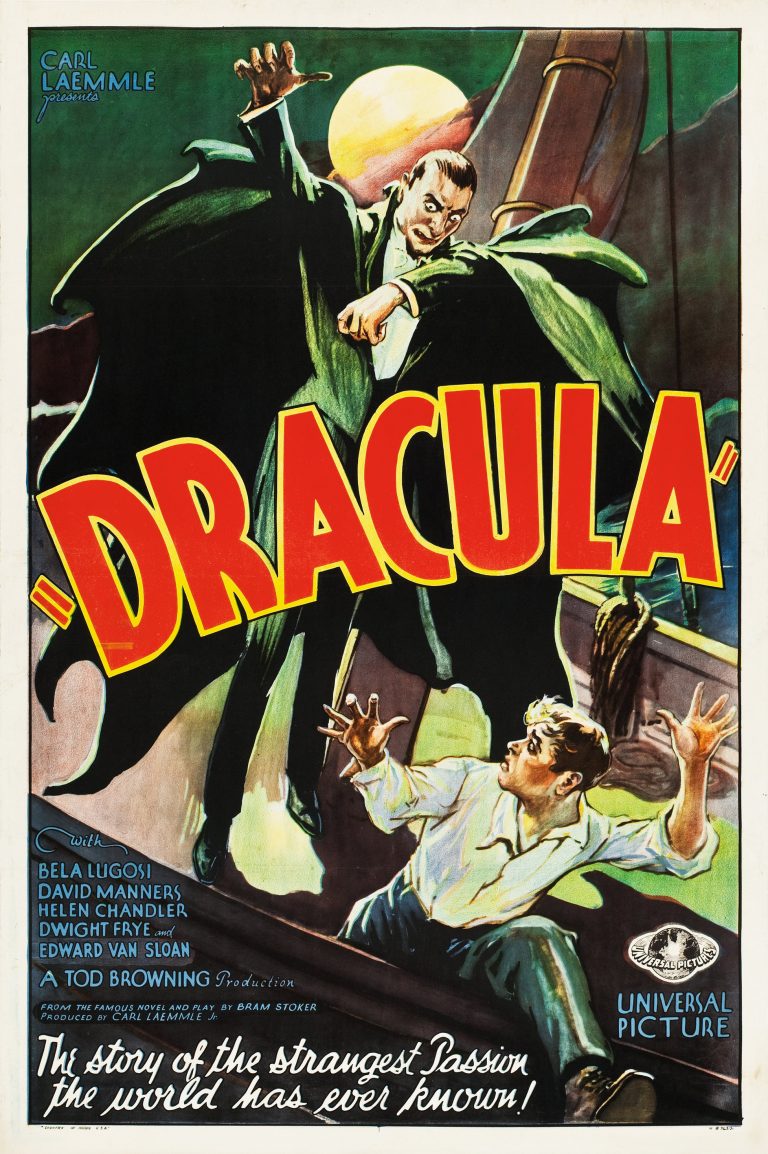
Dracula 1931 film poster.
See information about this classic film at the top of the page.
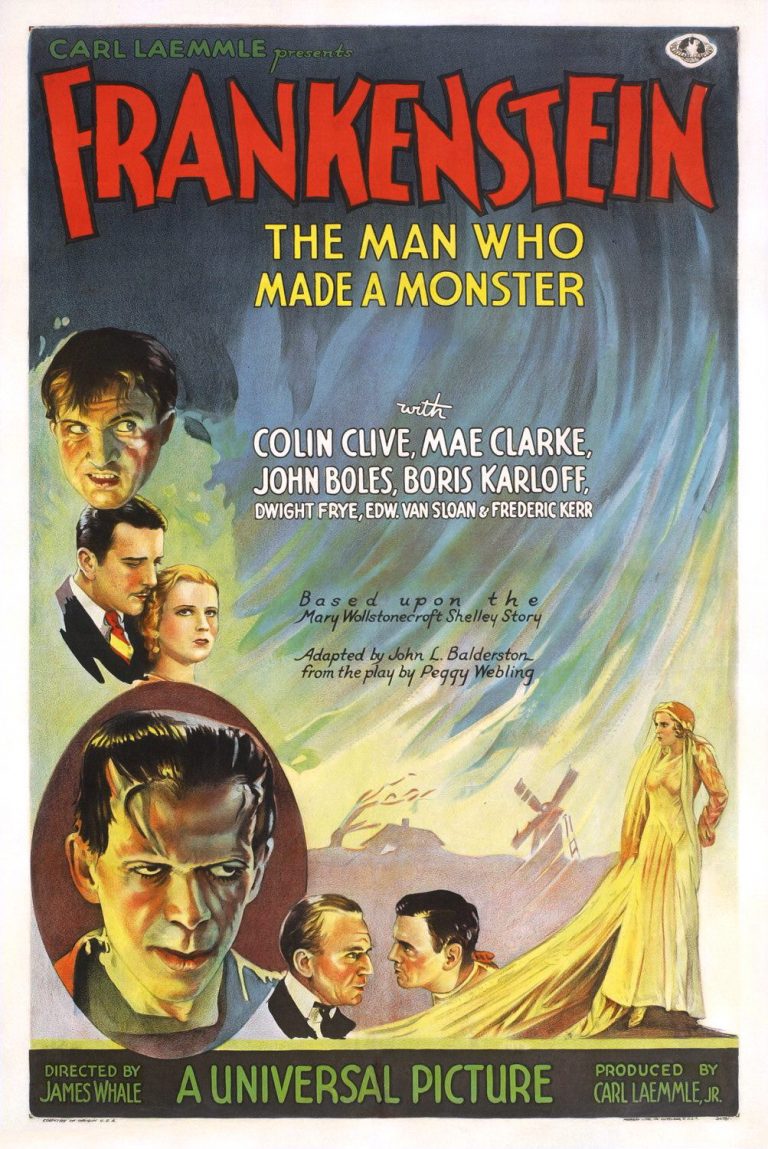
Frankenstein 1931 film poster.
See information about this classic film at the top of the page.
The EXCELLENT Frankenstein mask from Trick Or Treat Studios.
This is a very cool Universal Classic Monsters mask I purchased for Halloween 2023. It is officially licenced by Universal Studios and made for Trick Or Treat Studios. It is, to date, the favourite mask I have in my mask collection and what I have worn for Halloween parties. To see me in this and many more masks click here.
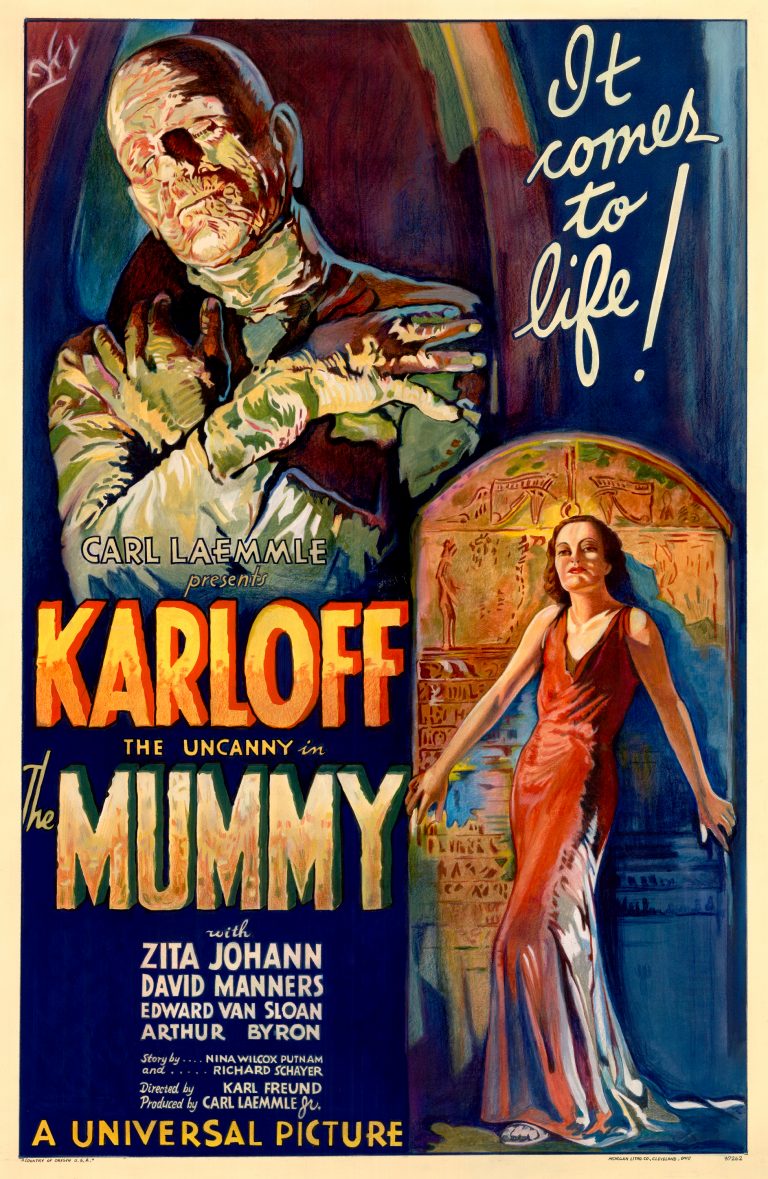
The Mummy 1932 film poster.
See information about this classic film at the top of the page.
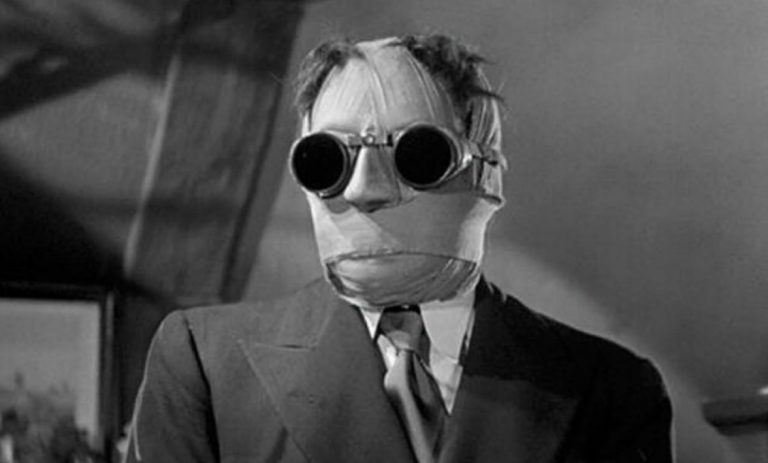
Claude Rains as The Invisible Man.
This photo is from the classic 1933 film The Invisible Man.
Directed by James Whale.
You can see the trailer for The Invisible Man via YouTube here.
The Invisible Man 1933 film poster.
Boris Karloff as Frankenstein’s Monster.
This promotional photo is from the 1935 film The Bride of Frankenstein.
Directed by James Whale.
You can see the trailer for The Bride Of Frankenstein via the Internet Archive here.
The Wolf Man 1942 film poster.
See information about this classic film at the top of the page.
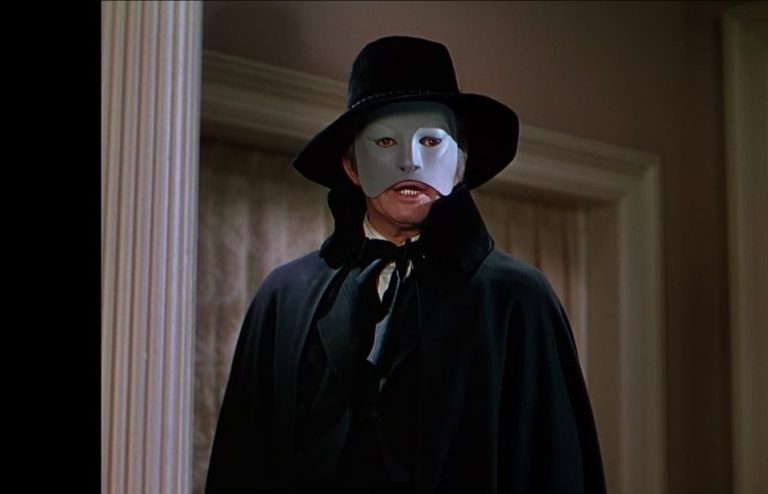
Nelson Eddy as The Phantom Of The Opera.
This photo is from the 1943 film Phantom Of The Opera.
You can see the trailer for Phantom Of The Opera via YouTube here.
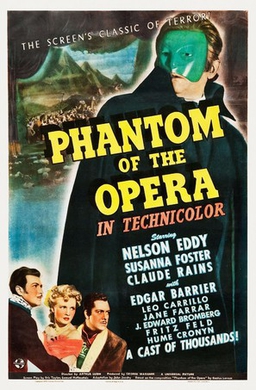
Phantom Of The Opera 1943 film poster.
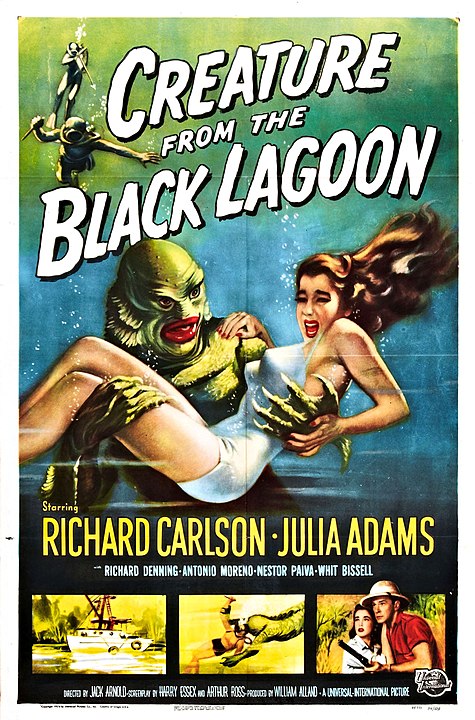
Creature From The Black Lagoon 1945 film poster.
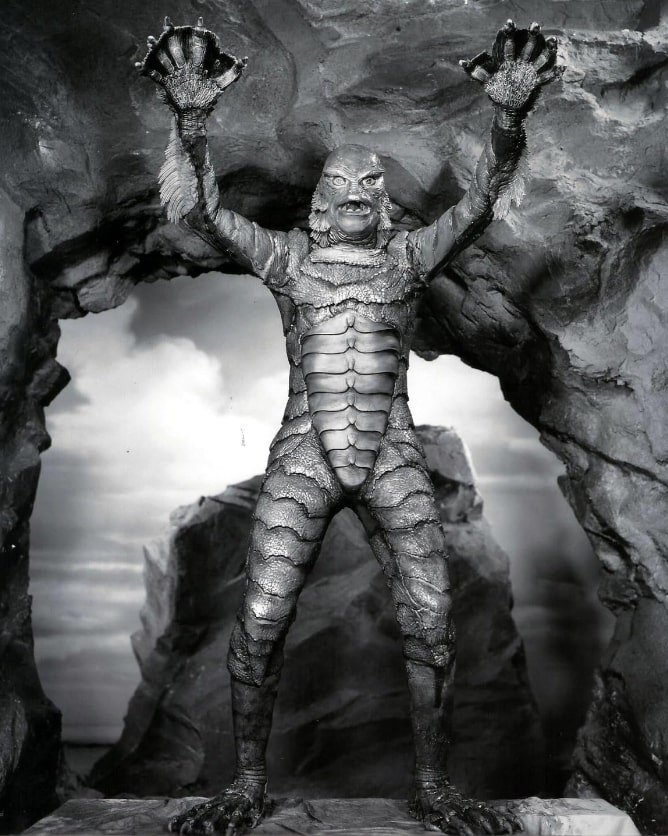
Ben Chapman as The Creature From The Black Lagoon.
There were two men playing the creature in the film, Ricou Browning in the water and Ben Chapman out of the water (shown here). None of them were credited which was unfair in my opinion considering they were both playing the actual monster in the film title and for that reason, I have rightly acknowledged them both here.
This photo is from the 1954 film Creature From The Black Lagoon.
You can see the trailer for Creature From The Black Lagoon via the Internet Archive here.
Universal Pictures – Official website. The image shown at the top of this page, and elsewhere, of the Universal Classic Monsters logo is the copyright of Universal Pictures and was taken from Wikipedia.
The image above of Bela Lugosi as Dracula is from the Internet Archive via Wikipedia and is in the public domain.
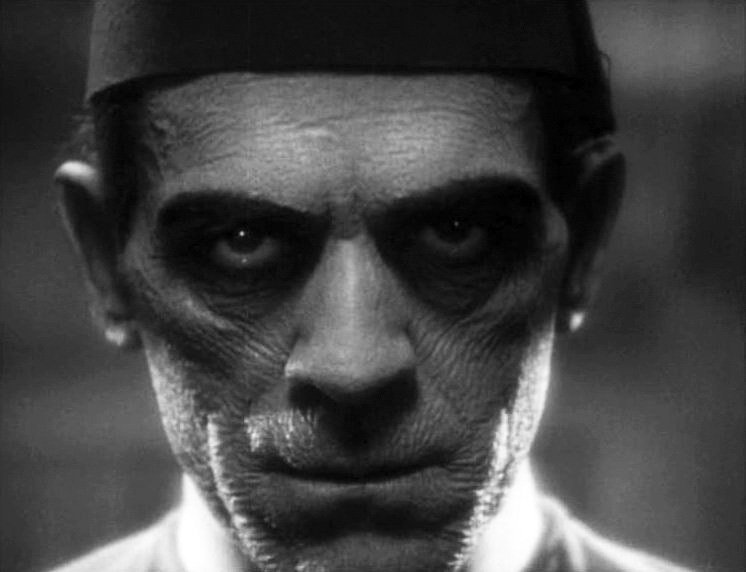
The image above of Boris Karloff as The Mummy is from the Internet Archive via Wikipedia and is in the public domain.
The image above of Boris Karloff as Frankenstein’s Monster is via Wikipedia and in the public domain.
The image above of Lon Chaney Jnr. as The Wolf Man is via Wikipedia.
The image above of Lon Chaney as The Phantom Of The Opera is via IMDb.
The image above of The Phantom Of The Opera 1925 film poster by unknown is via Wikipedia and in the public domain.
The image above of the Dracula 1931 film poster by unknown is via Wikipedia and in the public domain.
The image above of the Frankenstein 1931 film poster by Karoly Grosz is via Wikipedia and in the public domain.
The Frankenstein mask photos above are copyright of Universal via Universal Studios and Trick Or Treat Studios.
The image above of The Mummy 1932 film poster by Karoly Grosz is via Wikipedia and in the public domain.
The image above of Claude Rains as The Invisible Man is from IMDb.
The image above of The Invisible Man 1933 film poster by Karoly Grosz is via Wikipedia and in the public domain.
The image above of Frankenstein’s monster is via Wikipedia and in the public domain.
The image above of The Bride Of Frankenstein 1935 film poster is via Wikipedia and in the public domain.
The image above of The Wolf Man 1942 film poster by unknown is via Wikipedia.
The image above of Nelson Eddy as The Phantom Of The Opera is via IMDb.
The image above of Phantom Of The Opera 1943 film poster by inknown is via Wikipedia and in the public domain.
IMDb on YouTube.
Universal Pictures – U.K. official website.
Universal Pictures on YouTube.
Universal Pictures on Facebook.
Universal Pictures on Twitter.
Universal Studios – Official website.
Universal Studios on Facebook.
Trick Or Treat Studios – Official website.
Trick Or Treat Studios on YouTube.
Trick Or Treat Studios on Facebook.
Trick Or Treat Studios on Twitter.
Trick Or Treat Studios on Instagram.
Trick Or Treat Studios on TikTok.
Wikipedia – Official website. Wikipedia is a free online encyclopedia that anyone can edit in good faith. Its purpose is to benefit readers by containing information on all branches of knowledge. Hosted by the Wikimedia Foundation, it consists of freely editable content, whose articles also have numerous links to guide readers to more information.

What is there not to like about horror? It is an escapism from the real world and so damn cool. I love so much about it. This page concentrates on the Horror genre and anything I post about that can be seen in Blog Posts below.
I have been a fan of Horror, particularly Horror films since I was little. I have loved Universal classic monsters, for it is they that started my love of Horror off, even if they scared the hell out of me at first and I hid under my Mom’s arm or behind the settee at first watching them., ha ha. That changed the older I got.
If you mention anything to do with horror then it is inevitable Halloween is mentioned.
Growing up in England from a child to a teenager in the 1960’s, 1970’s and 1980’s, Halloween was an American thing you saw on the telly. There was no dressing up and trick-or-treating, not in my family home anyway. Even when my kids were younger I never really bothered much about Halloween. It was just all too American for me and just liked the English traditions I was brought up with. They had fun wearing masks, bobbing for apples etc. but we never went out dressed up knocking on people’s doors. in fact, I don’t recall ever seeing anyone else do it either.
Nowadays all of the above is a common sight. I am no killjoy and I don’t knock anyone who really enjoys it. I admit it’s a fun thing for kids to do and a good excuse for a party for the adults which I have enjoyed going to in the past few years. When you have suffered from depression and anxiety for as long as I have, just to be included can be a lifesaver.
The main thing I like about Halloween is dressing up and the Horror theme to it. I have never celebrated Halloween in my life in the past because, since I was a kid, I have loved horror. Every day is Halloween for me, ha ha.
Horror is a genre of fiction that is intended to disturb, frighten or scare. Horror is often divided into the sub-genres of psychological horror and supernatural horror, which are in the realm of speculative fiction. Literary historian J. A. Cuddon, in 1984, defined the horror story as “a piece of fiction in prose of variable length… which shocks, or even frightens the reader, or perhaps induces a feeling of repulsion or loathing”. Horror intends to create an eerie and frightening atmosphere for the reader. Often the central menace of a work of horror fiction can be interpreted as a metaphor for larger fears of a society.
Prevalent elements include ghosts, demons, vampires, monsters, zombies, werewolves, the Devil, serial killers, extraterrestrial life, killer toys, psychopaths, gore, torture, evil clowns, cults, cannibalism, vicious animals, the apocalypse, evil witches, dystopia and man-made or natural disasters.
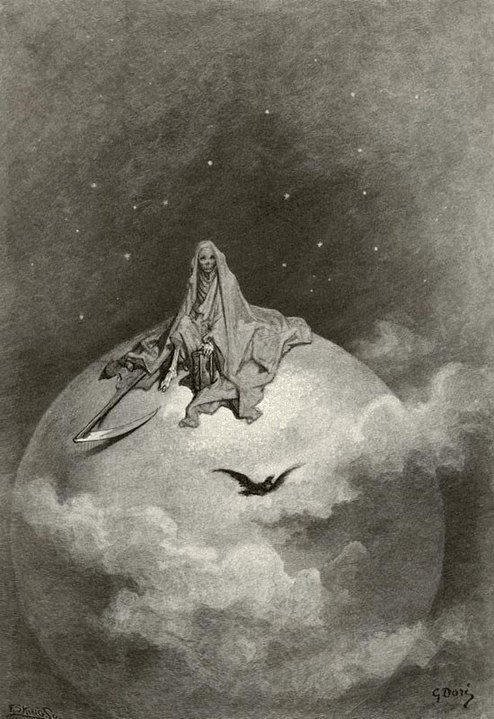
The Raven by Gustave Dore.
This is an illustration of the 1884 edition of Edgar Allan Poe’s The Raven. It is referring to the illustration “Doubting, dreaming dreams no mortal ever dared to dream before.”
The horror genre has ancient origins, with roots in folklore and religious traditions focusing on death, the afterlife, evil, the demonic and the principle of the thing embodied in the person. These manifested in stories of beings such as demons, witches, vampires, werewolves and ghosts. European horror fiction became established through the works of the Ancient Greeks and Ancient Romans. Mary Shelley’s well-known 1818 novel about Frankenstein was greatly influenced by the story of Hippolytus, whom Asclepius revives from death. Euripides wrote plays based on the story, Hippolytos Kalyptomenos and Hippolytus. In Plutarch’s The Lives of the Noble Grecians and Romans in the account of Cimon, the author describes the spirit of a murderer, Damon, who himself was murdered in a bathhouse in Chaeronea.
Pliny the Younger (61 to circa 113) tells the tale of Athenodorus Cananites, who bought a haunted house in Athens. Athenodorus was cautious since the house seemed inexpensive. While writing a book on philosophy, he was visited by a ghostly figure bound in chains. The figure disappeared in the courtyard and the following day, the magistrates dug in the courtyard and found an unmarked grave.
Elements of the horror genre also occur in Biblical texts, notably in the Book of Revelation.
The Witch of Berkeley by William of Malmesbury has been viewed as an early horror story. Werewolf stories were popular in medieval French literature. One of Marie de France’s twelve lais is a werewolf story titled Bisclavret.
The Countess Yolande commissioned a werewolf story titled Guillaume de Palerme. Anonymous writers penned two werewolf stories, Biclarel and Melion.
Much horror fiction derives from the cruellest personages of the 15th century. Dracula can be traced to the Prince of Wallachia Vlad III, whose alleged war crimes were published in German pamphlets. A 1499 pamphlet was published by Markus Ayrer, which is most notable for its woodcut imagery. The alleged serial killer sprees of Gilles de Rais have been seen as the inspiration for Bluebeard. The motif of the vampiress is most notably derived from the real-life noblewoman and murderer, Elizabeth Bathory, and helped usher in the emergence of horror fiction in the 18th century, such as through Laszlo Turoczi’s 1729 book Tragica Historia.
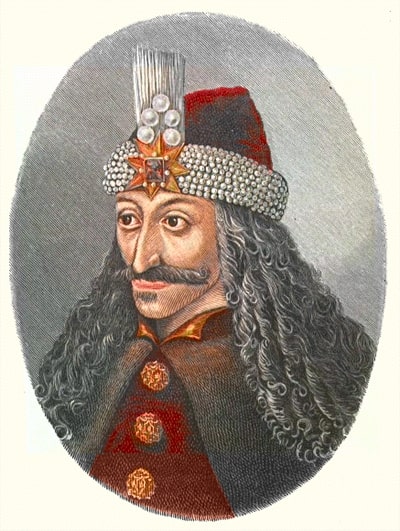
Vlad The Impaler.
This is a portrait of Vlad Tzepesh (Vlad III). He was the inspiration for Count Dracula. Tzepesh ruled from 1455 – 1462 and 1483 – 1496.
The 18th century saw the gradual development of Romanticism and the Gothic horror genre. It drew on the written and material heritage of the Late Middle Ages, finding its form with Horace Walpole’s seminal and controversial 1764 novel, The Castle of Otranto. In fact, the first edition was published disguised as an actual medieval romance from Italy, discovered and republished by a fictitious translator. Once revealed as modern, many found it anachronistic, reactionary, or simply in poor taste but it proved immediately popular. Otranto inspired Vathek (1786) by William Beckford, A Sicilian Romance (1790), The Mysteries of Udolpho (1794) and The Italian (1796) by Ann Radcliffe and The Monk (1797) by Matthew Lewis. A significant amount of horror fiction of this era was written by women and marketed towards a female audience, a typical scenario of the novels being a resourceful female menaced in a gloomy castle.
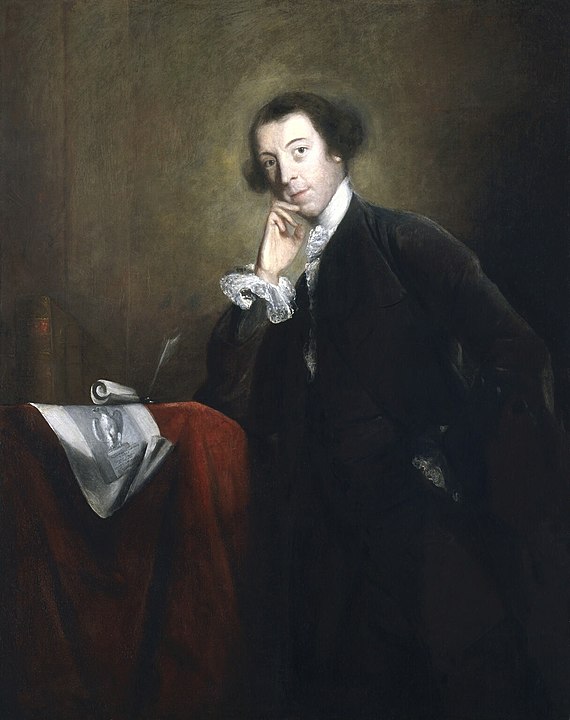
Horace Walpole by Joshua Reynolds.
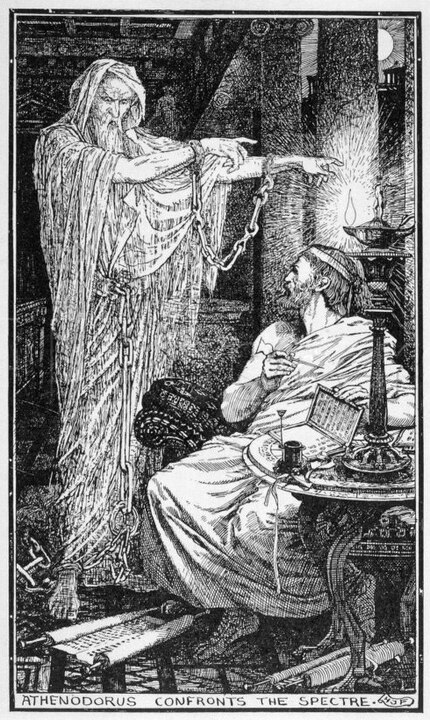
Athenodorus by Henry Justice Ford.
Here Athenodorus confronts the Spectre. It is from The Strange Story Book by Leonora Blanche Lang and Andrew Lang.
The Gothic tradition blossomed into the genre that modern readers today call horror literature in the 19th century. Influential works and characters that continue resonating in fiction and film today saw their genesis in the Brothers Grimm’s Hansel and Gretel (1812), Mary Shelley’s Frankenstein (1818), John Polidori’s The Vampyre (1819), Charles Maturin’s Melmoth the Wanderer (1820), Washington Irving’s The Legend of Sleepy Hollow (1820), Jane C. Loudon’s The Mummy!: Or a Tale of the Twenty-Second Century (1827), Victor Hugo’s The Hunchback of Notre Dame (1831), Thomas Peckett Prest’s Varney the Vampire (1847), the works of Edgar Allan Poe, the works of Sheridan Le Fanu, Robert Louis Stevenson’s Strange Case of Dr Jekyll and Mr Hyde (1886), Oscar Wilde’s The Picture of Dorian Gray (1890), H. G. Wells’ The Invisible Man (1897), and Bram Stoker’s Dracula (1897). Each of these works created an enduring icon of horror seen in later re-imaginings on the page, stage and screen.
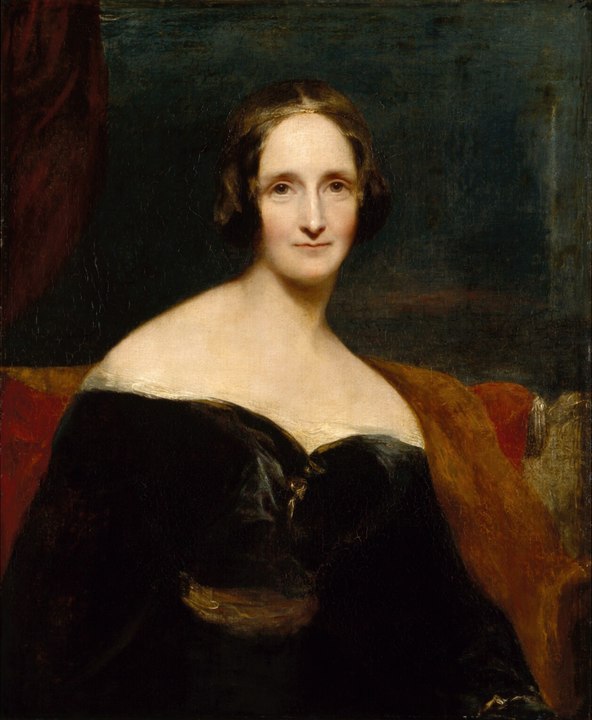
Mary Shelley By Richard Rothwell.
A proliferation of cheap periodicals around the turn of the century led to a boom in horror writing. For example, Gaston Leroux serialised his Le Fantome de l’Opera (The Phantom Of The Opera) before it became a novel in 1910. One writer who specialised in horror fiction for mainstream pulps, such as All-Story Magazine, was Tod Robbins, whose fiction deals with themes of madness and cruelty. In Russia, the writer Alexander Belyaev popularised these themes in his story Professor Dowell’s Head (1925), in which a mad doctor performs experimental head transplants and reanimations on bodies stolen from the morgue, and which was first published as a magazine serial before being turned into a novel. Later, specialist publications emerged to give horror writers an outlet, prominent among them were Weird Tales and Unknown Worlds.
Influential horror writers of the early 20th century made inroads into these mediums. Particularly, the venerated horror author H. P. Lovecraft, and his enduring Cthulhu Mythos transformed and popularised the genre of cosmic horror, and M. R. James is credited with redefining the ghost story in that era.
The serial murderer became a recurring theme. Yellow journalism and sensationalism of various murderers, such as Jack the Ripper, and lesser so, Carl Panzram, Fritz Haarman, and Albert Fish, all perpetuated this phenomenon. The trend continued in the postwar era, partly renewed after the murders committed by Ed Gein. In 1959, Robert Bloch, inspired by the murders, wrote Psycho. The crimes committed in 1969 by the Manson Family influenced the slasher theme in horror fiction of the 1970’s. In 1981, Thomas Harris wrote Red Dragon, introducing Dr. Hannibal Lecter. In 1988, the sequel to that novel, The Silence of the Lambs, was published.
Early cinema was inspired by many aspects of horror literature and started a strong tradition of horror films and subgenres that continues to this day. Up until the graphic depictions of violence and gore on the screen commonly associated with 1960’s and 1970’s slasher films and splatter films, comic books such as those published by EC Comics (most notably Tales From The Crypt) in the 1950’s satisfied readers’ quests for horror imagery that the silver screen could not provide. This imagery made these comics controversial, and as a consequence, they were frequently censored.
The modern zombie tale dealing with the motif of the living dead harks back to works including H. P. Lovecraft’s stories Cool Air (1925), In The Vault (1926), and The Outsider (1926), and Dennis Wheatley’s Strange Conflict (1941). Richard Matheson’s novel I Am Legend (1954) influenced an entire genre of apocalyptic zombie fiction emblematized by the films of George A. Romero.
In the late 1960’s and early 1970’s, the enormous commercial success of three books – Rosemary’s Baby (1967) by Ira Levin, The Exorcist by William Peter Blatty, and The Other by Thomas Tryon encouraged publishers to begin releasing numerous other horror novels, thus creating a horror boom.
One of the best-known late-20th-century horror writers is Stephen King, known for Carrie, The Shining, It, Misery and several dozen other novels and about 200 short stories. Beginning in the 1970’s, King’s stories have attracted a large audience, for which he was awarded by the U.S. National Book Foundation in 2003. Other popular horror authors of the period included Anne Rice, Brian Lumley, Graham Masterton, James Herbert, Dean Koontz, Richard Laymon, Clive Barker, Ramsey Campbell, and Peter Straub.

Stephen King.
This photo of King was taken at the 2007 New York Comicon in America.
Best-selling book series of contemporary times exist in genres related to horror fiction, such as the werewolf fiction urban fantasy Kitty Norville books by Carrie Vaughn (2005 onward). Horror elements continue to expand outside the genre. The alternate history of more traditional historical horror in Dan Simmons’s 2007 novel The Terror sits on bookstore shelves next to genre mash-ups such as Pride and Prejudice and Zombies (2009), and historical fantasy and horror comics such as Hellblazer (1993 onward) and Mike Mignola’s Hellboy (1993 onward). Horror also serves as one of the central genres in more complex modern works such as Mark Z. Danielewski’s House of Leaves (2000), a finalist for the National Book Award. There are many horror novels for children and teens, such as R. L. Stine’s Goosebumps series or The Monstrumologist by Rick Yancey. Additionally, many movies for young audiences, particularly animated ones, use horror aesthetics and conventions, for example, ParaNorman. These are what can be collectively referred to as children’s horror. Although it is unknown for sure why children enjoy these movies (as it seems counter-intuitive), it is theorised that it is, in part, grotesque monsters that fascinate kids. Tangential to this, the internalised impact of horror television programs and films on children is rather under-researched, especially when compared to the research done on the similar subject of violence in TV and film’s impact on the young mind. What little research there is tends to be inconclusive on the impact that viewing such media has.
History of horror films.
One defining trait of the horror genre is that it provokes an emotional, psychological, or physical response within readers that causes them to react with fear. One of H. P. Lovecraft’s most famous quotes about the genre is “The oldest and strongest emotion of mankind is fear, and the oldest and strongest kind of fear is fear of the unknown.”. This is the first sentence from his seminal essay, Supernatural Horror in Literature. Science fiction historian Darrell Schweitzer has stated, “In the simplest sense, a horror story is one that scares us” and “the true horror story requires a sense of evil, not in necessarily in a theological sense, but the menaces must be truly menacing, life-destroying, and antithetical to happiness.”
In her essay Elements of Aversion, Elizabeth Barrette articulates the need by some for horror tales in a modern world. She says, “The old fight or flight reaction of our evolutionary heritage once played a major role in the life of every human. Our ancestors lived and died by it. Then someone invented the fascinating game of civilization, and things began to calm down. Development pushed wilderness back from settled lands. War, crime, and other forms of social violence came with civilization and humans started preying on each other, but by and large daily life calmed down. We began to feel restless, to feel something missing, the excitement of living on the edge, the tension between hunter and hunted. So we told each other stories through the long, dark nights. when the fires burned low, we did our best to scare the daylights out of each other. The rush of adrenaline feels good. Our hearts pound, our breath quickens, and we can imagine ourselves on the edge. Yet we also appreciate the insightful aspects of horror. Sometimes a story intends to shock and disgust, but the best horror intends to rattle our cages and shake us out of our complacency. It makes us think, forces us to confront ideas we might rather ignore, and challenges preconceptions of all kinds. Horror reminds us that the world is not always as safe as it seems, which exercises our mental muscles and reminds us to keep a little healthy caution close at hand.”
In a sense similar to the reason a person seeks out the controlled thrill of a roller coaster, readers in the modern era seek out feelings of horror and terror to feel a sense of excitement. However, Barrette adds that horror fiction is one of the few mediums where readers seek out a form of art that forces themselves to confront ideas and images they “might rather ignore to challenge preconceptions of all kinds.”
One can see the confrontation of ideas that readers and characters would rather ignore throughout literature in famous moments such as Hamlet’s musings about the skull of Yorick, its implications of the mortality of humanity, and the gruesome end that bodies inevitably come to. In horror fiction, the confrontation with the gruesome is often a metaphor for the problems facing the current generation of the author.
There are many theories as to why people enjoy being scared. For example, people who like horror films are more likely to score highly for openness to experience, a personality trait linked to intellect and imagination.
It is a now commonly accepted view that the horror elements of Dracula’s portrayal of vampirism are metaphors for sexuality in a repressed Victorian era. But this is merely one of many interpretations of the metaphor of Dracula. Jack Halberstam postulates many of these in his essay Technologies of Monstrosity: Bram Stoker’s Dracula. He writes, “[The] image of dusty and unused gold, coins from many nations and old unworn jewels, immediately connects Dracula to the old money of a corrupt class, to a kind of piracy of nations and to the worst excesses of the aristocracy.”
Halberstram articulates a view of Dracula as manifesting the growing perception of the aristocracy as an evil and outdated notion to be defeated. The depiction of a multinational band of protagonists using the latest technologies (such as a telegraph) to quickly share, collate, and act upon new information is what leads to the destruction of the vampire. This is one of many interpretations of the metaphor of only one central figure of the canon of horror fiction, as over a dozen possible metaphors are referenced in the analysis, from the religious to the antisemitic.
Noel Carroll’s Philosophy of Horror postulates that a modern piece of horror fiction’s monster, villain, or a more inclusive menace must exhibit the following two traits which is a menace that is threatening (either physically, psychologically, socially, morally, spiritually, or some combination of the aforementioned) and a menace that is impure (that violates the generally accepted schemes of cultural categorisation.
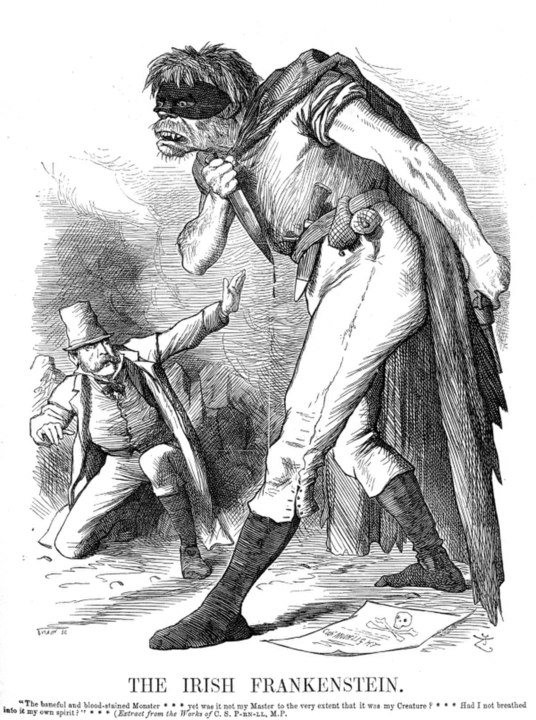
The Irish Frankenstein by John Tenniel.
This illustration is from an 1882 issue of Punch and is anti-Irish propaganda. Tenniel conceives the Irish Fenian movement as akin to Frankenstein’s monster, in the wake of the Phoenix Park killings. Menacing villains and monsters in horror literature can often be seen as metaphors for the fears incarnate of a society.
In addition to those essays and articles shown above, scholarship on horror fiction is almost as old as horror fiction itself. In 1826, the gothic novelist Ann Radcliffe published an essay distinguishing two elements of horror fiction, terror and horror. Whereas terror is a feeling of dread that takes place before an event happens, horror is a feeling of revulsion or disgust after an event has happened. Radcliffe describes terror as that which expands the soul and awakens the faculties to a high degree of life, whereas horror is described as that which freezes and nearly annihilates them.
Modern scholarship on horror fiction draws upon a range of sources. In their historical studies of the gothic novel, both Devandra Varma and S.L. Varnado make reference to the theologian Rudolf Otto, whose concept of the numinous was originally used to describe religious experience.
Achievements in horror fiction are recognised by numerous awards. The Horror Writers Association presents the Bram Stoker Awards for Superior Achievement, named in honour of Bram Stoker, author of the seminal horror novel Dracula. The Australian Horror Writers Association presents the annual Australian Shadows Awards. The International Horror Guild Award was presented annually to works of horror and dark fantasy from 1995 to 2008. The Shirley Jackson Awards are literary awards for outstanding achievement in the literature of psychological suspense, horror, and dark fantastic works. Other important awards for horror literature are included as subcategories within general awards for fantasy and science fiction in such awards as the Aurealis Award.
Some writers of fiction normally classified as horror tend to dislike the term, considering it too lurid. They instead use the terms dark fantasy or Gothic fantasy for supernatural horror, or psychological thriller for non-supernatural horror.
Alexas_Fotos on Pixabay – The image shown at the top of this page is the copyright of Alexas_Fotos. You can find more great work from the photographer Alexa and lots more free stock photos at Pixabay.
The image above of The Raven by Gustave Dore is via Wikipedia and is in the public domain.
The image above of Vlad the Impaler is unknown via Wikipedia and is in the public domain.
The image above of Horace Walpole by Joshua Reynolds is via Wikipedia and is in the public domain.
The image above of Athenodorus by Henry Justice Ford is via Wikipedia and is in the public domain.
The image above of Mary Shelley by Richard Rothwell is via Wikipedia and is in the public domain.
The image shown above of Stephen King is the copyright of Wikipedia user Pinguino Kolb. It comes with a Creative Commons licence (CC BY-SA 2.0).
The image above of The Irish Frankenstein by John Tenniel is via Wikipedia and is in the public domain.
Universal Pictures – U.K. official website.
Universal Pictures on YouTube.
Universal Pictures on Facebook.
Universal Pictures on Twitter.
Universal Studios – Official website.

I left my secondary school, Byng Kenrick Central School, Gressal Lane, Tile Cross, in 1982 and started my Youth Training Scheme for 13 weeks at Eastwic, Bordesley Green. I can’t remember the road it was on but it was near Third Avenue, Bordesley Green, Birmingham. After that, I started my first job in a factory at Britax, Muntz Street, Small Heath, which was where Birmingham City used to play when they were Small Heath Alliance. Suffice to say both my training scheme and job were not happy times for me at all. I got married in 1987 and we lived in Pithall Road, Shard End. The best thing to come out of that was my only Son, Frank Jnr who was born in 1988.
My most memorable memories of this decade would be going to The Red Welly Club at All Saints Church in Shard End, going on my C. B. Radio, the music and Jnr’s birth.
The information below was sourced from Wikipedia and is subject to change.
You can read other articles related to the 1980’s via Blog Posts below as well.
The decade saw major socioeconomic change due to advances in technology and a worldwide move away from planned economies and towards laissez-faire capitalism.
As economic deconstruction increased in the developed world, multiple multinational corporations associated with the manufacturing industry relocated into Thailand, Mexico, South Korea, Taiwan, and China. Japan and West Germany saw large economic growth during this decade. The AIDS epidemic became recognized in the 1980’s and has since killed an estimated 39 million people (as of 2013). Global warming became well known to the scientific and political community in the 1980’s.
The United Kingdom and the United States moved closer to supply-side economic policies beginning a trend towards global instability of international trade that would pick up more steam in the following decade as the fall of the USSR made right-wing economic policy more powerful.
The final decade of the Cold War opened with the US-Soviet confrontation continuing largely without any interruption. Superpower tensions escalated rapidly as President Reagan scrapped the policy of détente and adopted a new, much more aggressive stance on the Soviet Union. The world came perilously close to nuclear war for the first time since the Cuban Missile Crisis in 1962, but the second half of the decade saw a dramatic easing of superpower tensions and ultimately the total collapse of Soviet communism.
Developing countries across the world faced economic and social difficulties as they suffered from multiple debt crises in the 1980’s, requiring many of these countries to apply for financial assistance from the International Monetary Fund (IMF) and the World Bank. Ethiopia witnessed widespread famine in the mid-1980’s during the corrupt rule of Mengistu Haile Mariam, resulting in the country having to depend on foreign aid to provide food to its population and worldwide efforts to address and raise money to help Ethiopians, such as the Live Aid concert in 1985.
Major civil discontent and violence occurred, including the Iran–Iraq War, the Soviet-Afghan War, the 1982 Lebanon War, the First Nagorno-Karabakh War, the Bombing of Libya in 1986, and the First Intifada in the Gaza Strip and the West Bank. Islamism became a powerful political force in the 1980’s and many terrorist organizations, including Al Qaeda, started.
By 1986, nationalism was making a comeback in the Eastern Bloc and the desire for democracy in communist-led socialist states combined with economic recession resulted in Mikhail Gorbachev’s glasnost and perestroika, which reduced Communist Party power, legalized dissent and sanctioned limited forms of capitalism such as joint ventures with Western firms. After newly heated tension for most of the decade, by 1988 relations between the West and East had improved significantly and the Soviet Union was increasingly unwilling to defend its governments in satellite states.
1989 brought the overthrow and attempted overthrow of a number of governments led by communist parties, such as in Hungary, the Tiananmen Square protests of 1989 in China, the Czechoslovak Velvet Revolution, Erich Honecker’s East German regime, Poland’s Soviet-backed government, and the violent overthrow of the Nicolae Ceaușescu regime in Romania. Destruction of the 155-km Berlin Wall, at the end of the decade, signalled a seismic geopolitical shift. The Cold War ended in the early 1990’s with the successful Reunification of Germany and the USSR’s demise after the August Coup of 1991.
The 1980’s saw great advances in genetic and digital technology. After years of animal experimentation since 1985, the first genetic modification of 10 adult human beings took place in May 1989, a gene tagging experiment which led to the first true gene therapy implementation in September 1990. The first designer babies, a pair of female twins were created in a laboratory in late 1989 and born in July 1990 after being sex-selected via the controversial assisted reproductive technology procedure preimplantation genetic diagnosis. Gestational surrogacy was first performed in 1985 with the first birth in 1986, making it possible for a woman to become a biological mother without experiencing pregnancy for the first time in history.
The 1980’s was also an era of tremendous population growth around the world, surpassing even the 1970’s and 1990’s, thus arguably being the largest in human history. Population growth was particularly rapid in a number of African, Middle Eastern, and South Asian countries during this decade, with rates of natural increase close to or exceeding 4% annually.
The 1980’s saw the advent of the ongoing practice of sex-selective abortion in China and India as ultrasound technology permitted parents to selectively abort baby girls.
The global Internet took shape in academia by the second half of the 1980’s as well as many other computer networks of both academic and commercial use such as USENET, Fidonet and the Bulletin Board System. By 1989 the Internet and the networks linked to it were a global system with extensive transoceanic satellite links and nodes in most rich countries. Based on earlier work from 1980 onwards Tim Berners Lee formalized the concept of the World Wide Web by 1989 and performed its earliest demonstrations in December 1990 and 1991. Television viewing became commonplace in the Third World, with the number of TV sets in China and India increasing by 15 and 10 times respectively.
Video game consoles released in this decade included the continuing popularity of Atari 2600, Intellivision, Vectrex, Colecovision, SG-1000, NES/Famicom, Sega Master System, PC Engine/TurboGrafx-16, Mega Drive/Genesis and Game Boy. Super Mario Bros. and Tetris were the decade’s two best selling and most popular video games. 1980’s Atari VCS port of Space Invaders was the first killer app. Pac-Man was the decade’s highest-grossing arcade game. Home computers in that decade include the Commodore 64, VIC-20, the Apple II series, the Atari 8-bit family, Atari ST, Amiga, ZX Spectrum and MSX. Apple Macintosh, Microsoft Windows and IBM PC compatible were also introduced in that decade and helped popularize personal computers.
The most prominent events and trends in popular culture of the decade (particularly in the Anglosphere) include:
In the United States, MTV was launched and music videos began to have a larger effect on the record industry. Pop artists such as Michael Jackson, Whitney Houston, Duran Duran, Prince, Cyndi Lauper and Madonna mastered the format and helped turn this new product into a profitable business. New wave and synthpop were developed by many British and American artists, and became popular phenomena throughout the decade, especially in the early and mid-1980s’. The music grew fragmented and combined into subgenres such as house, goth, and rap metal.
The advent of numerous new technologies had a significant impact on 1980’s music and led to a distinct production aesthetic that included synthesizer sounds, drum machines and drum reverb.
Michael Jackson was one of the icons of the 1980’s and his leather jacket, glove, and Moonwalk dance were often imitated. Jackson’s 1982 album Thriller became—and currently remains—the best-selling album of all time, with sales estimated by various sources as somewhere between 65 and 110 million copies worldwide. His 1987 album Bad sold over 45 million copies and became the first album to have five number-one singles chart on the Billboard Hot 100. Jackson had the most number-one singles throughout the decade and spent the most weeks at number one (27 weeks). His 1987 Bad World Tour grossed over $125 million worldwide, making it the highest-grossing world tour by a solo artist during the decade. Jackson earned numerous awards and titles during the 1980’s, the most notable of which was a record eight Grammy Awards and eight American Music Awards in 1984, and the honour of Artist of the Decade by U.S. President George H.W. Bush. Jackson was arguably the biggest star during this time, and would eventually sell more than one billion records around the world.
Prince was a popular star of the 1980’s and the most successful chart act of the decade. His breakthrough album 1999, released in 1982, produced three top-ten hits and the album itself charted at number nine on the Billboard Hot 100. His sixth studio album Purple Rain was an international success, boosting Prince to superstardom and selling over 25 million copies worldwide. The album produced the US number-one singles, When Doves Cry and Let’s Go Crazy and sold 13 million copies in the U.S. as of 1996. Prince released an album every year for the rest of the decade, all charting within the top ten, with the exception of Lovesexy. In the 1990’s, he infamously changed his name to an unpronounceable symbol in response to a record dispute with Warner Brothers. He went on to sell over 120 million records worldwide and win seven Grammy Awards.
Madonna and Whitney Houston were groundbreaking female artists of the decade. The keyboard synthesizer and drum machine were among the most popular instruments in music during the 1980’s, especially in new wave music. After the 1980’s, electronic instruments continued to be the main component of mainstream pop.
Hard rock, heavy metal, and glam metal became some of the most dominant music genres of the decade, peaking with the arrival of such bands as Mötley Crüe, Guns N’ Roses, Metallica, Iron Maiden, Bon Jovi, Def Leppard, Poison, Europe, Megadeth, Slayer, Anthrax, and virtuoso guitarists such as Joe Satriani and Yngwie Malmsteen. The scene also helped 1970’s hard rock artists such as AC/DC, Heart, Ozzy Osbourne, Black Sabbath, Aerosmith, Alice Cooper, Blue Öyster Cult, Deep Purple, Queen, Van Halen, KISS, Ronnie James Dio, Rush and Judas Priest reach a new generation of fans.
The 1980’s were also known for song parodies becoming more mainstream, a trend-led by parodic musician Weird Al Yankovic. He was best known for his Michael Jackson parodies Eat It and Fat as well as other parodies like Another One Rides The Bus (parody of Another One Bites The Dust by Queen).
By 1989, the hip hop scene had evolved, gaining recognition and exhibiting a stronger influence on the music industry. This time period is also considered part of the golden age of hip hop. The Beastie Boys, Public Enemy, Run-D.M.C., Grandmaster Flash, the Furious Five, Boogie Down Productions, N.W.A, LL Cool J, De La Soul, A Tribe Called Quest, EPMD, Eric B. & Rakim, Ice-T, DJ Jazzy Jeff & The Fresh Prince, 2 Live Crew, Tone Lōc, Biz Markie, the Jungle Brothers, The Sugar Hill Gang and others experienced success in this genre.
Country music catapulted into a new realm of popularity with youth appeal and record-breaking marks. Groundbreaking artists such as Alabama, Hank Williams, Jr., Reba McEntire, George Strait, Ricky Skaggs, Janie Fricke, The Judds, and Randy Travis achieved multiple platinum and award status, foreshadowing the genre’s popularity explosion in the 1990’s. Country legends from past decades, however; such as George Jones, Waylon Jennings, Willie Nelson, Conway Twitty, the Oak Ridge Boys, Kenny Rogers, Dolly Parton, Merle Haggard, Don Williams, Crystal Gayle, Ronnie Milsap, Barbara Mandrell, and the Statler Brothers; also continued to score hits throughout the decade.
The techno style of electronic dance music emerged in Detroit, Michigan, during the mid-to late 1980’s. The house music style, another form of electronic dance music, emerged in Chicago, Illinois, in the early 1980’s. It was initially popularized in the mid-1980’s discothèques catering to the African-American, Latino and gay communities, first in Chicago, then in New York City and Detroit. It eventually reached Europe before becoming infused in mainstream pop and dance music worldwide.
Punk rock continued to make strides in the musical community. With bands leading the significance of this period such as Black Flag, Bad Brains, Minor Threat, Suicidal Tendencies, D.O.A., Bad Religion, Minutemen, Social Distortion, and Dead Kennedys, it gave birth to many subgenres like hardcore, which has continued to be moderately successful, giving birth in turn to a few counterculture movements, most notably the Straight Edge movement which began in the early era of this decade. College rock caught on in the underground scene of the 1980’s in a nationwide movement with a distinct D.I.Y approach. Bands like the Pixies, R.E.M., The Replacements, Sonic Youth, XTC, The Smiths, Echo & the Bunnymen, Hüsker Dü, The Stone Roses, The Jesus and Mary Chain etc. experienced success in this genre. The 1980’s also saw the birth of the grunge genre, with the arrival of such bands as Soundgarden, Green River, Melvins, Screaming Trees, Malfunkshun, Skin Yard, The U-Men, Blood Circus, Nirvana, Tad, Mudhoney, Mother Love Bone and Alice in Chains (who formed in 1987, but did not release their first album until three years later).
Several notable musical artists died of unnatural causes in the 1980’s: Bon Scott, at the time lead singer of rock band AC/DC, died of acute alcohol poisoning on February 19th, 1980; English drummer John Bonham of the rock band Led Zeppelin also died that year in a similar manner; The Beatles member John Lennon was fatally shot outside his home in New York City on the night of December 8th, 1980; Tim Hardin died of a heroin overdose on December 29th, 1980; Reggae musician Bob Marley died from a lentiginous skin melanoma on May 11th, 1981; Harry Chapin died of a car accident on July 16th, 1981; Motown singer Marvin Gaye was shot dead by his father at his home in Los Angeles on April 1st, 1984, one day before what would’ve been his 45th birthday; Ozzy Osbourne’s guitarist Randy Rhoads died in an airplane crash on March 19, 1982; Karen Carpenter died from heart failure caused by her anorexia condition on February 4th, 1983; Metallica bassist Cliff Burton was killed in a bus accident in Sweden on September 27th, 1986; and lastly, Andy Gibb died in 1988 as a result of myocarditis.
In 1984, the British supergroup Band Aid was formed to raise aid and awareness of the economic plight of Ethiopia. In 1985’s Live Aid concert, featuring many artists, promoted attention and action to send food aid to Ethiopia whose people were suffering from a major famine.
Oscar winners for Best Picture: Ordinary People (1980),Chariots of Fire (1981), Gandhi (1982), Terms of Endearment (1983), Amadeus (1984), Out of Africa(1985), Platoon (1986), The Last Emperor (1987), Rain Man (1988), Driving Miss Daisy (1989).
The highest-grossing films of the decade are (in order from highest to lowest domestic grossing): E.T. the Extra-Terrestrial, Return of the Jedi, The Empire Strikes Back, Indiana Jones and the Last Crusade, Batman, Rain Man, Raiders of the Lost Ark, Ghostbusters, Back to the Future, Who Framed Roger Rabbit, Top Gun, Indiana Jones and the Temple of Doom, Back to the Future Part II, Crocodile Dundee, Fatal Attraction and Beverly Hills Cop.
The 1980’s saw the return of studio-driven films, coming from the filmmaker-driven New Hollywood era of the 1970’s. The period was when high concept films gained popularity, where movies were to be easily marketable and understandable, and, therefore, they had short cinematic plots that could be summarized in one or two sentences. The modern Hollywood blockbuster is the most popular film format from the 1980’s. Producer Don Simpson is usually credited with the creation of the high-concept picture of the modern Hollywood blockbuster. In the mid-1980’s, a wave of British directors, including Ridley Scott, Alan Parker, Adrian Lyne and Tony Scott (with the latter directing a number of Don Simpson films) ushered in a new era of blockbusters using the crowd-pleasing skills they had honed in UK television commercials.
The 1980’s also saw the golden age of teen flicks and also spawned the Brat Pack films, many of which were directed by John Hughes. Films such as Class, The Breakfast Club, Fast Times at Ridgemont High, Mannequin, Porky’s, Pretty in Pink, Sixteen Candles, St. Elmo’s Fire, Ferris Bueller’s Day Off, Weird Science, and Valley Girl were popular teen comedies of the era and launched the careers of several major celebrities such as Emilio Estevez, Anthony Michael Hall, Forest Whitaker, Jennifer Jason Leigh, Andrew McCarthy, Judd Nelson, Molly Ringwald, Sean Penn, Nicolas Cage and Michael J. Fox. Other popular films included About Last Night…, Bill & Ted’s Excellent Adventure, Dirty Dancing, Flashdance, Footloose, Raging Bull and St. Elmo’s Fire which also launched the careers of high-profile celebrities like Demi Moore, Joe Pesci, Keanu Reeves, Kevin Bacon, Rob Lowe, Patrick Swayze, and River Phoenix.
Horror films were a popular genre during the decade, with several notable horror franchises being born during the 1980’s. Among the most popular were the Child’s Play, A Nightmare on Elm Street, Friday the 13th, Hellraiser, and Poltergeist franchises. Aside from these films, the concept of the B horror film gave rise to a plethora of horror films that went on to earn a cult status. An example of such is the 1981 film The Evil Dead, which marked the directorial debut of Sam Raimi. Comedy horror films such as Beetlejuice and Gremlins also gained cult status.
Several action film franchises were also introduced during the 1980’s. The most popular of these were the Indiana Jones, Die Hard, Lethal Weapon, and Rambo franchises. Other action films from the decade which are of notable status include The Terminator, Aliens, Escape from New York, Red Dawn, Predator, and RoboCop. These films propelled the careers of modern celebrities such as Arnold Schwarzenegger, Bruce Willis, Sigourney Weaver, Mel Gibson, Danny Glover, and Charlie Sheen to international recognition. On the other side of the globe, Hong Kong action cinema and martial arts films were being revolutionized by a new wave of inventive filmmakers that include Jackie Chan, Tsui Hark, and John Woo, while the American martial arts film movement was being led by actors like Chuck Norris, Jean-Claude Van Damme and Steven Seagal.
Five more James bond films were released, with Roger Moore continuing in the role in For Your Eyes Only, Octopussy, and A View To A Kill, before handing over the role to Timothy Dalton who starred in The Living Daylights and Licence To Kill.
A significant development in the home media business is the establishment of The Criterion Collection in 1984, an American company dedicated to gathering the greatest films from around the world and publishing them in editions that offer the highest technical quality. Through their releases, they were able to introduce what is now a standard to home video: letterboxing to retain the original aspect ratio, film commentaries and supplements/special features.
Although animated feature films did not gain mainstream popularity until the mid to late-1990’s due to public preference of television animation, some important films were produced during the decade. After leaving Disney in 1979, Don Bluth formed his own studio and went on direct The Secret of NIMH, An American Tail, The Land Before Time and All Dogs Go To Heaven. At the same time, the Disney studio wasn’t having good times and almost bankrupted after The Black Cauldron bombed at the box office. However, in later years, they slowly recovered with the modest success of Ron Clements and John Musker directed The Great Mouse Detective and eventually regained public confidence following the release of The Little Mermaid. Other animated films from the decade also gained notable status: Films based on popular works include Bon Voyage, Charlie Brown (and Don’t Come Back!!), Heavy Metal, The Adventures of Mark Twain, The Care Bears Movie, The Transformers: The Movie, The Chipmunk Adventure and Daffy Duck’s Quackbusters; while original films include The Last Unicorn, The Plague Dogs, Rock & Rule, Fire and Ice, The Brave Little Toaster and The BFG.
The 1980’s also saw a surge of Japanese anime films: Hayao Miyazaki’s The Castle of Cagliostro and Nausicaä of the Valley of the Wind were extremely successful enough to lead the foundation of Studio Ghibli which would then produce several successful films of the decade including Castle in the Sky, My Neighbor Totoro, Grave of the Fireflies and Kiki’s Delivery Service. Other well-known anime films of that decade include Golgo 13: The Professional, Macross: Do You Remember Love?, Lensman, Vampire Hunter D, Akira, Little Nemo: Adventures in Slumberland and the Urusei Yatsura film series. Additionally, the first-ever theatrical animated franchise: the Doraemon film series (based on the anime and manga series of the same name) began in 1980 with the release of Doraemon: Nobita’s Dinosaur.
Music video channel MTV was launched in the United States in 1981 and had a profound impact on the music industry and popular culture further ahead, especially during its early run in the 1980’s and early 1990’s.
The 1980’s was a decade of transformation in television. Cable television became more accessible and therefore, more popular. By the middle of the decade, almost 70% of the U.S. population had cable television and over 85% were paying for cable services such as HBO or Showtime. People who lived in rural areas where cable TV service was not available could still access cable channels through a large (and expensive) satellite dish, which, by the mid-1990’s, was phased out in favour of the small rooftop dishes that offer DirecTV and Dish Network services.
The 1980’s also saw the debut of prime-time soap operas such as Dallas, its spin-off Knots Landing, Dynasty, Falcon Crest, EastEnders and Neighbours.
During the 1980’s, sitcoms were also coming popular, including Bosom Buddies, Too Close for Comfort, Family Ties, Cheers, Newhart, Night Court and Married… With Children, which was the first show to hit the Fox airwaves on launch in 1987.
In 1985, two sitcoms premiered on the same day: The Golden Girls, starring Bea Arthur, Betty White, Rue McClanahan and Estelle Getty, which lasted for seven seasons and was also the first comedy ever to feature four older women in title TV roles, and 227, which was originally the sitcom vehicle for Marla Gibbs, who previously starred in The Jeffersons, and which also launched Jackée Harry’s career. Sketch comedy and variety show Saturday Night Live experienced turbulence for much of the 1980’s, however, it propelled the successful careers of cast members like Bill Murray, Eddie Murphy, Martin Short, and Julia Louis-Dreyfus.
The year 1986 marked the debut of the legal drama Matlock, which was the comeback vehicle for Andy Griffith, as the title character, which also launched the careers of Nancy Stafford, Clarence Gilyard Jr. and Daniel Roebuck.
TV talk shows expanded in popularity; The Tonight Show Starring Johnny Carson remained popular into its third decade, and some of the most viewed newer shows were hosted by Geraldo Rivera, Arsenio Hall and David Letterman.
TV documentary shows of the 1980’s as popular that included Frontline, Michael Palin: Around the World in 80 Days, Unsolved Mysteries with Robert Stack, and Rescue 911 with William Shatner.
The 1980’s also was prominent for spawning several popular animated shows such as The Smurfs, ThunderCats, Voltron, The Transformers, Masters of the Universe, G.I. Joe: A Real American Hero, Fist of the North Star, Inspector Gadget, Muppet Babies, Dragon Ball, Teenage Mutant Ninja Turtles, DuckTales, Garfield and Friends, as well as the earliest Simpsons shorts which aired on The Tracey Ullman Show.
Popular video games include Pac-Man, Super Mario Bros., The Legend of Zelda, Metroid, Donkey Kong, Frogger, Digger, Tetris, and Golden Axe. Pac-Man (1980) was the first game to achieve widespread popularity in mainstream culture and the first game character to be popular in his own right. Handheld electronic LCD games were introduced into the youth market segment. The primary gaming computers of the 1980’s emerged in 1982: the Commodore 64 and ZX Spectrum. Nintendo finally decided in 1985 to release its Famicom (released in 1983 in Japan) in the United States under the name Nintendo Entertainment System (NES). It was bundled with Super Mario Bros. and it suddenly became a success. The NES dominated the American and Japanese market until the rise of the next generation of consoles in the early 1990’s, causing some to call this time the Nintendo era. Sega released its 16-bit console, Mega Drive/Genesis, in 1988 in Japan and in North America in 1989. In 1989, Nintendo released the Game Boy, a monochrome handheld console.
Liverpool F.C. were the most successful club side of the era, becoming English champions on six occasions (1980, 1982, 1983, 1984, 1986, and 1988) and winning two European Cups (1981, 1984). They also won the FA Cup in 1986, completing the first double in their history, and four consecutive League Cup titles from 1981 to 1984.
Other highly successful club sides of the 1980’s include Juventus (7 major honours won), Real Madrid (ten major honours won), Bayern Munich (nine titles won) PSV Eindhoven (four times Dutch champions and European Cup winners in 1988), and Flamengo (four times Brazilian champions, South American and International Cup winners in 1981).
West Germany won the 1980 UEFA championship.
Italy won the 1982 FIFA World Cup in Spain.
France hosted and won the 1984 UEFA championship.
Argentina won the 1986 FIFA World Cup in Mexico. Diego Maradona produces the Goal of the Century.
The Netherlands won the 1988 UEFA championship.
In the NFL, the San Francisco 49ers became the dynasty of the decade, winning four Super Bowls under the leadership of Joe Montana; the Chicago Bears won Super Bowl XX in January 1986, in which the team has been widely remembered for their defence; the Washington Redskins also enjoyed success throughout the decade, winning two of their three Super Bowls under the leadership of head coach Joe Gibbs.
The Edmonton Eskimos of the Canadian Football League win the first three Grey Cup championships of the decade (having won the last two of the previous decade), adding one more in 1987.
Hawthorn Football Club dominated Australian football, reaching seven successive VFL Grand Finals and winning the premiership in 1983, 1986, 1988, and 1989.
On November 26th, 1986, Mike Tyson became the youngest boxing Heavyweight Champion in history at age 20.
On March 31st, 1985, the WWF presented the first WrestleMania at Madison Square Garden in New York City with an attendance of 19,121.
On March 29th, 1987, WrestleMania III had a record attendance of 93,173; the largest recorded attendance for a live indoor sporting event in North America until 2010. This also remained the WrestleMania attendance record until WrestleMania 32 at AT&T Stadium on April 3, 2016, in Arlington, Texas.
The 1980 Summer Olympics in Moscow were disrupted by a boycott led by the United States and 64 other countries in protest of the 1979 Soviet invasion of Afghanistan.
The 1984 Summer Olympics in Los Angeles were boycotted by the Soviet Union and most of the Communist world (China, Romania, and Yugoslavia participated in the games) in retaliation for the boycott of the 1980 Games in Moscow.
The 1988 Summer Olympics were held in Seoul, South Korea. Attempts to include North Korea in the games were unsuccessful and it boycotted along with six other countries, but with 160 nations participating, it had the highest attendance of any Olympics to date.
The 1980 Winter Olympics were well remembered for the Miracle on Ice, where a young United States hockey team defeated the heavily favoured Soviet Red Army team and went on to win the gold medal.
The 1984 Winter Olympics were held in Sarajevo, Yugoslavia (now Sarajevo, Bosnia and Herzegovina). Yugoslavia became the second communist country to host the Olympic Games, but unlike the Soviet Union in 1980, there were no boycotts of the Games by Western countries.
The Jamaica national bobsled team received major media attention and stunned the world at the 1988 Winter Olympics in Calgary, Alberta, Canada for its unexpected good performance. The events surrounding the Jamaica bobsled team in 1988 would lead to the creation of the Disney movie Cool Runnings five years later.
The 1983 Cricket World Cup was won by India while 1987 Cricket World Cup was won by Australia.
Major League Baseball experienced parity and tense championship moments during the decade as the Philadelphia Phillies won their first World Series championship in 1980, the Kansas City Royals win their first World Series championship in a dramatic manner in 1985, the New York Mets win their second World Series championship in 1986 in a dramatic manner, the Minnesota Twins win their first World Series in 1987, and both the 1988 and 1989 World Series be remembered as Kirk Gibson’s 1988 World Series home run, and the Loma Prieta Earthquake taking place occurring at 5:04 respectively.
American basketball player Michael Jordan burst onto the scene in the NBA during the 1980’s, bringing a surge in popularity for the sport and becoming one of the most beloved sports icons in the United States.
On June 8th, 1986, the Boston Celtics defeat the Houston Rockets in Game 6 of the 1986 NBA Finals to capture a record 16th championship. Larry Bird is named Finals MVP.
Magic Johnson and Larry Bird became the two most popular NBA players during the decade while even facing against each other in three NBA Finals (1984, 1985, and 1987) continuing the storied Celtics-Lakers rivalry.
The New York Islanders won the Stanley Cup for 4 straight years in 1980, 1981, 1982, and 1983. The Islanders also became the second NHL expansion team after the Philadelphia Flyers to win the Cup. Since their last Cup win in 1983, they were the third NHL team to win 4 consecutive championships and hold the NHL record for most consecutive playoff series wins at 19 (stretching from the 1980 Playoffs to the 1984 Playoffs).
Canadian hockey player Wayne Gretzky’s rise to fame in the NHL coincided with the Edmonton Oilers’ first four Stanley Cup championships (1984, 1985, 1987, and 1988) and becoming the second NHL dynasty team of the 1980s.
On August 9th, 1988, in what became the biggest trade in NHL history (also known as The Trade Of The Century), Wayne Gretzky was traded along with teammates Marty McSorley and Mike Krushelnyski from Edmonton to the Los Angeles Kings in exchange for Martin Gélinas, Jimmy Carson, three first-round draft picks, and US$15 million cash (approximately $18 million CAD in 1988).
Disc ultimate league play is introduced to Canada in 1980 by Ken Westerfield starting the first disc ultimate league (TUC), in Toronto.
FIA bans Group B rallying after a series of deaths and injuries take place in the 1986 season.
American interplanetary probes continued in the 1980’s, the Voyager duo being the most known. After making a flyby of Jupiter in 1979, they went near Saturn in 1980–1981. Voyager 2 reached Uranus in 1986 (just a few days before the Challenger disaster), and Neptune in 1989 before the probes exited the solar system.
No American probes were launched to Mars in the 1980’s, and the Viking probes, launched there in 1975, completed their operations by 1982. The Soviets launched two Mars probes in 1988, but they failed.
The arrival of Halley’s Comet in 1986 was met by a series of Soviet, Japanese and European Space Agency (ESA) probes, namely Halley Armada.
After a six-year hiatus, American space flights with astronauts resumed with the launch of the space shuttle Columbia in April 1981. The shuttle program progressed smoothly from there, with three more orbiters entering service in 1983 – 1985. But that all came to an end with the tragic loss of the Challenger (STS-51-L) on January 28th, 1986, taking with it seven astronauts, including Christa McAuliffe, who was to have been the first teacher in space. In full view of the world, a faulty O-ring on the right solid rocket booster allowed hot gases to burn through the external fuel tank and cause it to explode, destroying the shuttle in the process. Extensive efforts were made to improve NASA’s increasingly careless management practices and to make the shuttle safer. Flights resumed with the launch of Discovery in September 1988.
The Soviet program with cosmonauts went well during the decade, experiencing only minor setbacks. The Salyut 6 space station, launched in 1977, was replaced by Salyut 7 in 1982. Then came Mir in 1986, which ended up operating for more than a decade, and was destined to be the last in the line of Soviet space stations that had begun in 1971. One of the Soviet Union’s last super projects was the Buran space shuttle; it was only used once, in 1988.
The 1980’s had many fundamental advances in medicine and biology. The first surrogate pregnancy of an unrelated child took place on April 13th, 1986, in Michigan. The first genetically modified crops, tobacco (Nicotiana) plants were grown in China in 1988.
Gene therapy techniques became established by the end of the 1980’s, allowing gene tagging and gene therapy to become a possibility, both of which were first performed in human beings in May 1989 and September 1990, respectively.
The American auto industry began in the 1980’s in a thoroughly grim situation, faced with poor quality control, rising import competition, and a severe economic downturn. Chrysler and American Motors (AMC) were near bankruptcy, and Ford was little better off. Only GM continued with business as usual. But the automakers recovered with the economy by 1983, and in 1985 auto sales in the United States hit a new record. However, the Japanese were now a major presence and would begin manufacturing cars in the US to get around tariffs. In 1986, Hyundai became the first Korean automaker to enter the American market. In the same year, the Yugoslavian-built Yugo was brought to the US, but the car was so small and cheap, that it became the subject of jokes. It was sold up to 1991, when economic sanctions against Yugoslavia forced its withdrawal from the American market.
As the decade progressed, cars became smaller and more efficient in design. In 1983, Ford design teams began to incorporate aerodynamic styling to decrease drag while in motion. The Thunderbird was one of the first cars to receive these design changes. In 1985, Ford released the Taurus with a design that was revolutionary among domestic mass-market automobiles.
General Motors began suffering significant losses in the late 1980’s, partially the result of chairman Roger Smith’s restructuring attempts, and partially because of increasingly dated cars. An example was customers who increasingly purchased European luxury cars rather than Cadillacs. In 1985, GM started Saturn (the first new American make since the Edsel), with the goal of producing high-quality import fighters. Production would not begin until 1990.
Chrysler introduced its new compact, front-wheel drive K-cars in 1981. Under the leadership of Lee Iacocca, the company turned a profit again the following year, and by 1983 paid off its government loans. A succession of models using this automobile platform followed. The most significant were the minivans in 1984. These proved to be popular and they would dominate the van market for more than a decade. In 1987, Chrysler purchased the Italian makes of Lamborghini and Maserati. In the same year, Chrysler bought AMC from Renault laying to rest the last significant independent U.S. automaker, but acquiring the hugely profitable Jeep line and continuing the Eagle brand until the late 1990’s.
The DMC DeLorean was the brainchild of John DeLorean, a flamboyant former GM executive. Production of the gull-winged sports car began in Northern Ireland in 1981. John DeLorean was arrested in October 1982 in a sting operation where he was attempting to sell cocaine to save his struggling company. He was acquitted of all charges in 1984, but too late for the DeLorean Motor Company, which closed down in 1983. The DeLorean gained renewed fame afterwards as the time machine in the Back to the Future film trilogy.
The imposition of CAFE fuel-mileage standards in 1979 spelt the end of big-block engines, but performance cars and convertibles reemerged in the 1980’s. Turbochargers were widely used to boost the performance of small cars, and technology from fuel injection began to take over from the widely used application of carburettors by the late 1980’s. Front-wheel drive also became dominant.
The Eighties marked the decline of European brands in North America by the end of the decade. Renault, Citroen, and Peugeot ceased importation by the end of the decade. Alfa Romeo would continue until 1993. Fiat also ceased imports to North America in the Eighties.
Arcade and video games had been growing in popularity since the late 1970’s, and by 1982 were a major industry. But a variety of factors, including a glut of low-quality games and the rise of home computers, caused a tremendous crash in late 1983. For the next three years, the video game market practically ceased to exist in the US. But in the second half of the decade, it would be revived by Nintendo, whose Famicom console and mascot Mario had been enjoying considerable success in Japan since 1983. Renamed the Nintendo Entertainment System, it would claim 90% of the American video game market by 1989. The 1980’s are considered to be the decade when video games achieved massive popularity. In 1980, Pac-Man was introduced to the arcades and became one of the most popular video games of all time. Also in 1980, Game & Watch was created; it was not one of the most well-known game systems, but it facilitated mini-games and was concurrent with the NES. Donkey Kong, released in 1981, was a smash arcade hit and market breakthrough for Nintendo. Super Mario Bros., Super Mario Bros. 2, Super Mario Bros. 3, The Legend of Zelda, and the Mega Man series would become major hits for the console.
The personal computer experienced explosive growth in the 1980’s, transitioning from a hobbyist’s toy to a full-fledged consumer product. The IBM PC, launched in 1981, became the dominant computer for professional users. Commodore created the most popular home computers of both 8-bit and 16-bit generations. MSX standard was the dominant computer platform in Japan and in most parts of Asia. Apple superseded its Apple II and Lisa models by introducing the first Macintosh computer in 1984. It was the first commercially successful personal computer to use a graphical user interface (GUI) and mouse, which started to become general features in computers after the middle of the decade. Electronics and computers were also at the forefront of the advertising industry, with many commercials like 1984 from Apple achieving acclaim and pop-culture relevance.
Walkman and boomboxes, invented during the late 1970’s, became very popular as they were introduced to various countries in the early 1980’s, and had a profound impact on the music industry and youth culture. Consumer VCR’s and video rental stores became commonplace as VHS won out over the competing Betamax standard. In addition, in the early 1980’s various companies began selling compact, modestly priced synthesizers to the public. This, along with the development of Musical Instrument Digital Interface (MIDI), made it easier to integrate and synchronize synthesizers and other electronic instruments, like drum machines, for use in musical composition.
High definition television (HDTV) of both the analogue and digital variety was first developed in the 1980’s through their use did not become widespread until the mid-2000s.
In 1981, Hayes Microcomputer Products started selling the Smartmodem. The Smartmodem paved the way for the modern modems that exist today, mainly because it was the first modem to transform what had previously required a two-stage process into a process involving only one stage. The Smartmodem contributed to the rise in popularity of BBS systems in the 80’s and early 90’s, which were the main way to connect to remote computers and perform various social and entertainment activities before the Internet and the World Wide Web finally became popular in the mid-1990’s.
During the decade Microsoft released the operating systems MS-DOS (1981), Windows 1.0 (1985), and Windows 2.0 (1987).
The CD – the most basic CD (Digital Audio Compact Disc) was released in October 1982 for distribution and listening to digital audio, and at the time contained up to 74 minutes of music.
TCP/IP: ARPANET officially changed its main protocol from NCP to TCP/IP on January 1st, 1983, when the new protocols were activated. The TCP/IP protocol will become the dominant communications protocol from then onwards and would be used as the foundation on which the Internet would be based.
The GNU Project (1983). The Free Software Foundation (1985).
FidoNet: In 1984, FidoNet was launched, enabling BBS users to send private messages (e-mails) and public messages (in the forum) between all BBS systems that were connected to the FidoNet network, in addition to sending files to each other. The rise in popularity and availability of the Internet around the world around the mid-1990’s eventually contributed to the irrelevance of FidoNet.
World Wide Web: In 1989, the British computer scientist Tim Berners-Lee first proposed a project to his employer CERN, based on the concept of hypertext, to facilitate sharing and updating information among researchers. In mid-November 1989 he would develop the first successful communication between a Hypertext Transfer Protocol (HTTP) client and server via the internet. In the coming years, Berners-Lee developed the system which would later become the foundation of the World Wide Web.
For a list of 1980’s Musicians and information about them click here.
For a list of 1980’s Actors / Entertainers and information about them click here.
For a list of 1980’s Sports Figures and information about them click here.
The beginning of the decade saw the continuation of the clothing styles of the late 1970’s and evolved into heavy metal fashion by the end. However, fashion became more extravagant during the 1980’s. The 1980’s included teased and colourfully-dyed hair, ripped jeans, neon clothing and many colours and different designs which at first were not accepted.
Significant hairstyle trends of the 1980’s include the perm, the mullet, the Jheri curl, the hi-top fade, and big hair.
Significant clothing trends of the 1980;s include shoulder pads, jean jackets, leather pants, leather aviator jackets, jumpsuits, Members Only jackets, skin-tight acid-washed jeans, Izod Lacoste and preppy polo shirts, leggings and leg warmers (popularized in the film Flashdance), off-the-shoulder shirts, and cut sweatshirts (popularized in the same film). Miniskirts made a dramatic comeback in the mid-1980’s after a ten-year absence. Makeup in the 1980’s was aggressive, shining and colourful. Women emphasized their lips, eyebrows and cheeks with makeup. They used a lot of blush and eyeliner.
Additional trends of the 1980’s include athletic headbands, Ray-Ban Aviator sunglasses (popularized in the film Top Gun), Ray-Ban Wayfarer sunglasses (popularized in the films Risky Business and The Blues Brothers and the TV series Miami Vice), Swatch watches, and the Rubik’s Cube (became a popular fad throughout the decade). Girls and women also wore jelly shoes, large crucifix necklaces, and brassieres all inspired by Madonna’s Like a Virgin music video.
The early 1980’s was marked by a severe global economic recession that affected much of the developed world.
Inflation peaked in the U.S. in April 1980 at 14.76% and subsequently fell to a low of 1.10% in December 1986 but then rebounded to 4.65% at the end of the decade.
Finland’s economy grew by almost the fastest pace in the world, which eventually culminated in the recession of the 1990’s Finnish economy. In Finland, the 1980’s were called the Nousukausi, or economic upswing.
International debt crisis in developing countries, reliance of these countries on aid from the International Monetary Fund.
Revival of laissez faire/neoliberal economics in the developed world led by the UK and US governments emphasising reduced government intervention, lower taxes and deregulation of the stock markets associated with an economic revival in the mid-to late 80’s. Consumers became more sophisticated in their tastes (a trend begun in the 1960’s), and things such as European cars and designer clothing became fashionable in the US.
Mexico suffers from a debt crisis starting in 1982. Economic problems worsened in 1985 by the resignation of most officials of the Mexican government after a failed response of emergency aid in the Mexico City earthquake (September 19th) just after the 175th anniversary of the Independence holiday (September 16th). In 1988, Carlos Salinas de Gortari won a controversial presidential election amid charges of voter fraud, bribery, corruption and other abuses of power.
Enactment of the Canada–United States Free Trade Agreement in 1989 to further establish a strong economic bond between the two prosperous neighbouring countries of North America.
In the Soviet Union, the eleventh Five-Year Plan was initiated in 1981 during a period of economic stagnation that began in the late 1970’s. The Plan was a near failure, as most of the targets were not met. With the ascent of Mikhail Gorbachev as General Secretary of the Communist Party, the twelfth Five-Year Plan sought to accelerate and restructure the Soviet economy through reforms to decentralize production and distribution systems.
Under the leadership of Deng Xiaoping, China embarked on extensive reforms in the 1980’s, opening the country’s economy to the West and allowing capitalist enterprises to operate in a market socialist system. The corruption of Communist Party leadership was met by dissent from students and workers in the Tiananmen Square protests of 1989 which were suppressed by the People’s Liberation Army.
The Solidarity movement began in Poland in 1980, involving workers demanding political liberalization and democracy in Poland. Attempts by the Communist government to prevent the rise of the Solidarity movement failed and negotiations between the movement and the government took place. Solidarity would be instrumental in encouraging people in other communist states to demand political reform.
The financial world and the stock market were glamorized in a way they had not been since the 1920’s, and figures like Donald Trump and Michael Milken were widely seen as symbols of the decade. Widespread fear of Japanese economic strength would grip the United States in the 80’s.
The Black Monday stock market crash on October 19th, 1987, decreased the value of the Dow Jones Industrial Average by more than 22%, causing widespread secondary drops in world markets.
During the 1980’s, for the first time in world history, transpacific trade (with East Asia, such as China, and Latin America, primarily with Mexico) equalled that of transatlantic trade (with Western Europe or with neighbouring Canada), solidifying American economic power.
The Savings and Loan Scandal.
The phrase Big Bang, used in reference to the sudden deregulation of financial markets, was coined to describe measures, including the abolition of fixed commission charges and of the distinction between stockjobbers and stockbrokers on the London Stock Exchange and change from open-outcry to electronic, screen-based trading, effected by Margaret Thatcher in 1986.
Mount St. Helens erupted in Washington, U.S. on May 18th, 1980, killing 57 people.
On October 17th, 1989, the Loma Prieta earthquake struck the San Francisco Bay Area during Game 3 of the 1989 World Series, gaining worldwide attention. Sixty-five people were killed and thousands injured, with major structural damage on freeways and buildings and broken gas-line fires in San Francisco, California. The cost of the damage totalled $13 billion (1989 USD).
The 1988 – 89 North American drought decimated the US with many parts of the country affected. This was the worst drought to hit the United States in many years. The drought caused $60 billion in damage (between $80 billion and $120 billion for 2008 USD). The concurrent heat waves killed 5,800 to 17,000 people in the United States.
Hurricane Allen (1980), Hurricane Alicia (1983), Hurricane Gilbert (1988), Hurricane Joan (1988), and Hurricane Hugo (1989) were some notably destructive Atlantic hurricanes of the 1980’s.
Other natural disasters of the 1980’s include the 1982 – 1983 El Niño which brought destructive weather to most of the world; the 1985 Mexico City earthquake, which registered 8.0 on the moment magnitude scale and devastated Mexico City and other areas throughout central Mexico; the 1985 Nevado del Ruiz lahar in Colombia; the 1986 Lake Nyos limnic eruption in Cameroon; and the 1988 Armenian earthquake, which rocked the Caucasus region of the USSR.
On April 25th, 1980, Dan-Air Flight 1008 crashed on approach to Tenerife in the Canary Islands. All 146 people on board were killed.
On August 19th, 1980, Saudia Flight 163 caught fire moments after takeoff from the Saudi Arabian capital of Riyadh. The flight quickly returned to the airport, but the evacuation of the plane was delayed and all 301 people aboard died.
On July 9th, 1982, Pan Am Flight 759 was forced down by a wind shear microburst, killing 153 people.
In 1984, the Bhopal disaster resulted from a toxic MIC gas leak at the Union Carbide plant in Bhopal, India, killing 3,000 immediately and ultimately claiming 15,000–20,000 lives.
On September 1st, 1983, Soviet Union fighter jets shot down Korean Air Lines Flight 007, which was carrying 269 people, none of whom survived.
On August 2nd, 1985, Delta Air Lines Flight 191 crashed on approach to Dallas/Fort Worth International Airport in Texas. 137 people were killed while 27 survived.
On June 21st, 1985, Air India Flight 182, flying from Montreal Canada is blown up over Irish waters by a bomb placed in the luggage compartment. This was the greatest act of terrorism until the September 11th attacks of 2001.
Japan Airlines Flight 123, carrying 524 people, crashed on August 12th, 1985, while on a flight from Tokyo to Osaka killing 520 of the people on board, leaving four survivors. This was and still is, the worst single-plane crash ever.
On December 12th, 1985, Arrow Air Flight 1285 crashed seconds after lifting off from Gander, Newfoundland. All 256 people on board, many of them U.S. servicemen returning home from duty overseas, perished.
On January 28th, 1986, the NASA Space Shuttle Challenger disintegrated 73 seconds after launch, killing all of the crew on board. This was the first disaster involving the destruction of a NASA space shuttle. A faulty O-ring was the cause of the accident.
On April 26th, 1986, the Chernobyl disaster, a large-scale nuclear meltdown in the Ukrainian SSR, Soviet Union, spread a large amount of radioactive material across Europe, killing 47 people, dooming countless others to future radiation-related cancer, and causing the displacement of 300,000 people.
On June 14th, 1986, Fantasyland’s Mindbender inside West Edmonton Mall, derails and kills 3 people, injuring one, and slams into a concrete post.
On August 31st, 1986, Aeroméxico Flight 498 crashed after colliding with a private Piper Cherokee over Cerritos, California, killing everyone on both aeroplanes and several others on the ground. On the same day, the Soviet passenger ship Admiral Nakhimov sank after colliding with the bulk carrier Pyotr Vasev in the Black Sea, killing 423 people.
On September 27th, 1986 Cliff Burton died in a bus crash while on tour with his band, Metallica.
On May 9th, 1987, an uncontained engine failure on LOT Flight 5055 caused an in-flight fire on board the airliner, which subsequently crashed, killing all 183 passengers and crew.
On August 16th, 1987, Northwest Airlines Flight 255 crashed almost immediately after takeoff from Detroit Wayne Airport in Michigan, killing 156 people.
On November 28th, 1987, a fire broke out on South African Airways Flight 295, eventually causing the aircraft to crash into the Indian Ocean. All 159 aboard were killed.
On December 7th, 1987, 43 people were killed when an irate former USAir employee went on a rampage aboard PSA Flight 1771.
On December 20th, 1987, the Philippine passenger ferry MV Doña Paz burned and sank after colliding with the oil tanker MT Vector. With an estimated death toll of over 4,000, this was and remains the world’s deadliest peacetime maritime disaster.
On July 3rd, 1988, Iran Air Flight 655 was shot down by the U.S. missile cruiser USS Vincennes over the Strait of Hormuz, killing all 290 people on the plane. The event is one of the most controversial aviation occurrences of all time, with the true cause disputed between the Americans and the Iranians.
On December 21st, 1988, an American passenger 747 airliner en route from Frankfurt to Detroit (via London and New York) Pan Am Flight 103 was destroyed by a bomb while it was flying over Lockerbie, Scotland, killing the 259 passengers and crew members on board and 11 people on the ground. This was the worst terrorist attack to have occurred on British soil.
On March 24th, 1989, the oil tanker Exxon Valdez ran aground on Bligh Reef in Alaska’s Prince William Sound spilling an estimated equivalent of 260,000 to 750,000 barrels of crude oil. Although not among the largest oil spills in history, its remote and sensitive location made it one of the most devastating ecological disasters ever. The after-effects of the spill continue to be felt to this day.
On April 15th, 1989, The Hillsborough disaster occurs during a FA Cup Semi-Final in Sheffield, England fatally crushing 96 football fans and injuring nearly 1,000 more.
On July 19th, 1989, United Airlines Flight 232, carrying 296 people, suffered an in-flight engine failure and was forced to crash-land at Sioux City, Iowa. 185 survived, while 111 were killed when the plane burst into flames upon touchdown.
Prominent assassinations, targeted killings, and assassination attempts include:
On April 12th, 1980, William R. Tolbert, Jr., the President of Liberia, is killed during a military coup. His death marks the end of Americo-Liberian rule in Liberia.
Musician and former member of the Beatles John Lennon was assassinated in New York City on December 8th, 1980.
Ronald Reagan was shot in Washington, D.C. on March 30th, 1981, by John Hinckley, a mentally disturbed young man who also stalked actress Jodie Foster. Reagan’s press secretary James Brady was also shot, along with a police officer and a U.S. Secret Service agent. The latter two recovered, along with Reagan himself, but Brady used a wheelchair as a result of brain damage thereafter and would become an advocate of gun control.
On May 13th, 1981, there was an assassination attempt on Pope John Paul II in Saint Peter’s Square. The would-be assassin was a Turkish man named Mehmet Ali Agca, who was subsequently sentenced to life in prison but would be pardoned in 2000. At the time, it was widely believed that he was an agent of the Soviet Union or Bulgaria, due to the Pope’s vocal anti-communist stance. Agca himself told dozens of conflicting stories over the years, and his motive remains unclear.
Egyptian president Anwar Sadat was assassinated at a military parade in Cairo on October 6th, 1981.
Philippine Opposition Senator Benigno Aquino Jr. was assassinated in Manila on August 21st, 1983.
American singer-songwriter and musician Marvin Gaye was shot dead by his father at his home in Los Angeles on April 1st, 1984.
Indian prime minister Indira Gandhi was assassinated on October 31st, 1984, by her own bodyguards in response to the Indian Army’s attack on Golden Temple to destroy Sikh Militant stronghold in Amritsar earlier in the decade.
In 1984, there was an assassination attempt on the British Prime Minister, Margaret Thatcher and the Conservative Government by the IRA.
Swedish Prime Minister Olof Palme was assassinated in February 1986. The assassin has never been identified.
On October 15th, 1987, the President of Burkina Faso, Thomas Sankara, was killed during a coup d’état organised by his former colleague, Blaise Compaoré.
The most prominent armed conflicts of the decade include:
The Cold War (1947 –1991)
Soviet–Afghan War (1979 – 1989). A war fought between the Soviet Union and the Islamist Mujahideen Resistance in Afghanistan. The mujahideen found other support from a variety of sources including the Central Intelligence Agency of the United States (see Operation Cyclone), as well as Saudi Arabia, Pakistan and other Muslim nations through the context of the Cold War and the regional India–Pakistan conflict.
Invasion of Grenada (1983). A 1983 U.S.-led invasion of Grenada, triggered by a military coup that ousted a brief revolutionary government. The successful invasion led to a change of government but was controversial due to charges of American imperialism, Cold War politics, the involvement of Cuba, the unstable state of the Grenadian government, and Grenada’s status as a Commonwealth realm.
Salvadoran Civil War (1980 – 1992). Part of the cold war conflicts reached their peak in the 1980’s, 70,000 Salvadorans died.
Argentina invaded the Falkland Islands, sparking the Falklands War. It occurred from April 2nd to July 14th, 1982, between the United Kingdom and Argentina as British forces fought to recover the islands. Britain emerged victoriously and its stance in international affairs and its long-decaying reputation as a colonial power received an unexpected boost. The military junta of Argentina, on the other hand, was left humiliated by the defeat; and its leader Leopoldo Galtieri was deposed three days after the end of the war. A military investigation known as the Rattenbach report even recommended his execution.
Arab–Israeli conflict (early 20th century – present).
1982 Lebanon War. The Government of Israel ordered the invasion as a response to the assassination attempt against Israel’s ambassador to the United Kingdom, Shlomo Argov, by the Abu Nidal Organization and due to the constant terror attacks on northern Israel made by the terrorist organizations which resided in Lebanon. After attacking the PLO, as well as Syrian, leftist and Muslim Lebanese forces, Israel occupied southern Lebanon and eventually surrounded the PLO in West Beirut and subjected to heavy bombardment, they negotiated passage from Lebanon.
In October 1985 eight Israeli F-15 Eagles carried out Operation Wooden Leg intending to bomb the PLO’s new headquarters in Tunis, Tunisia, more than 2,000 km from Israel. The attack cost 270 lives, most of them Tunisian civilians. The attack was later condemned by the United Nations Security Council. The United States is thought to have assisted or known of the attack.
The Iran–Iraq War took place from 1980 to 1988. Iraq was accused of using illegal chemical weapons to kill Iranian forces and against its own dissident Kurdish populations. Both sides suffered enormous casualties, but the poorly equipped Iranian armies suffered worse for it, being forced to use soldiers as young as 15 in human-wave attacks. Iran finally agreed to an armistice in 1988.
The United States launched an aerial bombardment of Libya in 1986 in retaliation for Libyan support of terrorism and attacks on US personnel in Germany and Turkey.
The South African Border War between South Africa and the alliance of Angola, Namibia and Zambia ended in 1989, ending over thirty years of conflict.
The United States engaged in significant direct and indirect conflict in the decade via alliances with various groups in a number of Central and South American countries claiming that the U.S. was acting to oppose the spread of communism and end illicit drug trade. The U.S. government supported the government of Colombia’s attempts to destroy its large illicit cocaine-trafficking industry and provided support for the right-wing military government in the Salvadoran civil war which became controversial after the El Mozote massacre on December 11th, 1981, in which U.S.-trained Salvadoran paramilitaries killed 1000 Salvadoran civilians. The United States, along with members of the Organisation of Eastern Caribbean States, invaded Grenada in 1983. The Iran–Contra affair erupted which involved U.S. interventionism in Nicaragua, resulting in members of the U.S. government being indicted in 1986. U.S. military action began against Panama in December 1989 to overthrow its dictator, Manuel Noriega resulting in 3,500 civilian casualties and the restoration of democratic rule.
Battle of Cuito Cuanavale took place as part of the Angolan civil war and South African Border War from 1987 to 1988. The battle involved the largest fighting in Africa since World War II between military forces from Angola, Cuba (expeditionary forces) and Namibia versus military forces from South Africa and the dissident Angolan UNITA organization.
The First Nagorno-Karabakh War between Azerbaijan and Armenia started in 1988 and lasted six years.
The most notable internal conflicts of the decade include:
The Tiananmen Square protests of 1989 occurred in the People’s Republic of China in 1989, in which pro-democracy protesters demanded political reform. The protests were crushed by the People’s Liberation Army.
The First Intifada (First Uprising) in the Gaza Strip and West Bank began in 1987 when Palestinian Arabs mounted large-scale protests against the Israeli military presence in the Gaza Strip and West Bank, largely inhabited by Palestinians. The First Intifada would continue until peace negotiations began between the Palestinian Liberation Organization (PLO) and the Israeli government in 1993.
Lebanese Civil War (1975 – 1990). Throughout the decade, Lebanon was engulfed in a civil war between Islamic and Christian factions.
The Kanak Socialist National Liberation Front began a violent campaign for independence in New Caledonia.
Greenpeace’s attempts to monitor French nuclear testing on Mururoa were halted by the sinking of the Rainbow Warrior.
The Second Sudanese Civil War erupts in 1983 between the Muslim government of Sudan in the north and non-Muslim rebel secessionists in Southern Sudan. The conflict continues through the present day Darfur genocide.
Internal conflict in Peru. The communist Túpac Amaru Revolutionary Movement starts its fight against the Peruvian state in 1980, which would continue until the end of the 1990’s.
Haitian dictator Jean-Claude Duvalier was overthrown by a popular uprising on February 6th, 1986.
The Troubles in Northern Ireland continued.
To read more about 1980’s Politics And Wars and the 1980’s click here.