YouTube

YouTube Logo
Image © YouTube via Wikipedia

YouTube began in 2005, and most of you reading this are aware of it and have used it, or do use it often, unless you live on another planet!

I created my YouTube channel in 2006 and, sadly, I haven’t done much on it due to many personal and health reasons, mainly because of struggling with my Mental Health. I planned to do more, I planned to get better confidence wise and content wise and then my life got in the way and shit happened and often, but now, in 2026, I am trying hard to rectify all that.  I can’t change the past, and I am not looking into the future, but right now, I am doing the best I can to make the present a better place to live in for my state of mind.  I take every day as it comes, and working on My YouTube Channel and website is an important part of that for me.

The original videos I put up were about my favourite Football team Birmingham City, my beloved, and sadly missed, pets, Rocky and Rosie, a Black Country L.P. that was my Dad’s and one about fire! 

I added some short videos more recently and plan to add more related content that tie in with my website a.s.ap.   You can see my channel here.  However, on this page, you can read all about the history of YouTube. 

About YouTube 

YouTube is an American online video sharing platform owned by Google and is headquartered in San Bruno, California, U.S.A.  YouTube was founded on February the 14th, 2005 and is the second-most-visited website in the world, after Google itself.  In January 2024, YouTube had more than 2.7 billion monthly active users, who collectively consumed more than one billion hours of video content every day.  As of May 2019, videos were being uploaded to the platform at a rate of more than 500 hours of content per minute, and as of mid-2024, there were approximately 14.8 billion videos in total.

On November, the 13th, 2006, YouTube was purchased by Google for 1.65 billion dollars (equivalent to 2.44 billion dollars in 2025).  Google expanded YouTube’s business model from generating revenue through advertisements alone to offering paid content such as movies and exclusive content explicitly produced for YouTube.  It also offers YouTube Premium, a paid subscription option for watching content without ads.  YouTube incorporated the Google AdSense program, generating more revenue for both YouTube and approved content creators.  In 2023, YouTube’s advertising revenue totalled $31.7 billion, a 2% increase from the $31.1 billion reported in 2022.  From financial quarter 4 2023 to financial quarter 2024, YouTube’s combined revenue from advertising and subscriptions exceeded $50 billion.

Since its purchase by Google, YouTube has expanded beyond the core website, creating mobile apps, network television, games, and the ability to link with other platforms.  Video categories on YouTube include music videos, video clips, news, short and feature films, songs, documentaries, movie trailers, teasers, TV spots, live streams, vlogs, and more.  Most content is generated by individuals, including collaborations between YouTubers and corporate sponsors.  Established media, news, and entertainment corporations have also created and expanded their visibility on YouTube channels to reach bigger audiences.

YouTube has had unprecedented social impact, influencing popular culture, internet trends, and creating multimillionaire celebrities.  Despite its growth and success, the platform has been criticised for its facilitation of the spread of misinformation and copyrighted content, routinely violating its users’ privacy, excessive censorship, endangering the safety of children and their well-being, and for its inconsistent implementation of platform guidelines.

YouTube Logo Used Since 2025
Image © YouTube via Wikipedia

YouTube’s logo, used since June 2024.

The YouTube logo was introduced in June 2024, using a custom font based on YouTube New typeface.  It is similar to the 2017 logo except that the font is thinner and the play button symbol uses a more pinky shade of red.  As of February 2026, this logo has almost rolled out completely.  The 2017 logo is still used in a few instances.

The History Of YouTube

Founding And Initial Growth (2005 – 2006)

YouTube was founded by Chad Hurley, Steve Chen and Jawed Karim.  They were former employees of PayPal.  They had become wealthy after Google’s acquisition of the company on November the 13th, 2006.   It was purchased for 1.65 billion dollars (equivalent to 2.44 billion dollars in 2025).  Hurley had studied design at the Indiana University of Pennsylvania, and Chen and Karim studied computer science together at the University of Illinois Urbana-Champaign.

According to a story that has often been repeated in the media, Hurley and Chen developed the idea for YouTube during the early months of 2005, after they had experienced difficulty sharing videos that had been shot at a dinner party at Chen’s flat in San Francisco.  Karim did not attend the party and denied that it had occurred, but Chen remarked that the idea that YouTube was founded after a dinner party that was probably very strengthened by marketing ideas around creating a very digestible story.

Karim said the inspiration for YouTube came from the Super Bowl XXXVIII half-time show controversy when Janet Jackson’s breast was briefly exposed by Justin Timberlake during the half-time show.  Karim could not easily find video clips of the incident and the 2004 Indian Ocean tsunami online, which led to the idea of a video-sharing site.  Hurley and Chen said that the original idea for YouTube was a video version of an online dating service and had been influenced by the website Hot or Not.  They created posts on Craigslist asking attractive women to upload videos of themselves to YouTube in exchange for a $100 reward.  Difficulty in finding enough dating videos led to a change of plans, with the site’s founders deciding to accept uploads of any video.

YouTube began as a venture capital–funded technology startup. Between November 2005 and April 2006, the company raised money from various investors, with Sequoia Capital and Artis Capital Management being the largest two.  YouTube’s early headquarters were situated above a pizzeria and a Japanese restaurant in San Mateo, California.  In February 2005, the company registered www.youtube.com. The first video was uploaded on April the 23rd, 2005.  Titled Me at the zoo, it shows co-founder Jawed Karim at the San Diego Zoo and can still be viewed on the site.  The same day, the company launched a public beta and by November, a Nike ad featuring Ronaldinho became the first video to reach one million total views.  The site exited beta in December 2005, by which time the site was receiving 8 million views a day.  Clips at the time were limited to 100 megabytes, as little as 30 seconds of footage.

YouTube was not the first video-sharing site on the Internet, there was also Vimeo.  That was founded in November 2004, though that site remained a side project of its developers from CollegeHumor.  On December, the 17th, 2005, the same week YouTube exited beta, NBCUniversal Saturday Night Live ran a sketch called Lazy Sunday by The Lonely Island.  Besides helping to bolster ratings and long-term viewership for Saturday Night Live, the video‘s status as an early viral video helped establish YouTube as an important website.  Unofficial uploads of the skit to YouTube drew in more than five million collective views by February 2006 before they were removed when NBCUniversal requested it two months later based on copyright concerns.  Despite eventually being taken down, these duplicate uploads of the skit helped popularise YouTube’s reach and led to the upload of more third-party content.  The site grew rapidly.  In July 2006, the company announced that more than 65,000 new videos were being uploaded every day and that the site was receiving 100 million video views per day.

The choice of the name youtube.com led to problems for a similarly named website, utube.com.  That site’s owner, Universal Tube & Rollform Equipment (Universal Tube), filed a lawsuit against YouTube in November 2006, after being regularly overloaded by people looking for YouTube.  Universal Tube subsequently changed its website to www.utubeonline.com. 

Chad Hurley
Image © The Bui Brothers via Wikipedia

Chad Hurley.

Steve Chen
Image © TaiwanPlus via Wikipedia

Steve Chen.

Jawed Karim
Image © Robin Brown via Wikipedia and is in the public domain

Jawed Karim.

Original YouTube Logo Used Until 2007
Image © YouTube via Wikipedia and is in the public domain

The YouTube logo used from its launch until 2007.

It returned in 2008 before being removed again in 2010. Another version without “Broadcast Yourself” was used until 2011.

Broadcast Yourself Era (2006 – 2013)

On October the 9th, 2006, Google announced that they had acquired YouTube for 1.65 billion dollars in Google stock.  The deal was finalised on November the 13th, 2006.  Google’s acquisition launched newfound interest in video-sharing sites IAC, which now owned Vimeo, focused on supporting the content creators to distinguish itself from YouTube.  It was at this time that YouTube adopted the slogan Broadcast Yourself.  The company experienced rapid growth. The Daily Telegraph wrote that in 2007, YouTube consumed as much bandwidth as the entire Internet in 2000.  By 2010, the company had reached a market share of around 43% and more than 14 billion views of videos, according to comScore.  That year, the company simplified its interface to increase the time users would spend on the site.

In 2011, more than three billion videos were being watched each day with 48 hours of new videos uploaded every minute.  Most of these views came from a relatively small number of videos, according to a software engineer at that time, 30% of videos accounted for 99% of views on the site.  That year, the company again changed its interface and at the same time, introduced a new logo with a darker shade of red.  A subsequent interface change, designed to unify the experience across desktop, T.V., and mobile, was rolled out in 2013.  By that point, more than 100 hours were being uploaded every minute, increasing to 300 hours by November 2014.

During that time, the company also went through some organisational changes.  In October 2006, YouTube moved to a new office in San Bruno, California.  Hurley announced that he would be stepping down as chief executive officer of YouTube to take an advisory role and that Salar Kamangar would take over as head of the company in October 2010.  In April 2009, YouTube partnered with Vevo.  In April 2010, Lady Gaga’s Bad Romance became the most-viewed video, becoming the first video to reach 200 million views on May the 9th, 2010.

YouTube faced a major lawsuit by Viacom International in 2011 that nearly resulted in the discontinuation of the website.  The lawsuit was filed due to alleged copyright infringement of Viacom’s material by YouTube.  However, the United States Court of Appeals for the Second Circuit ruled that YouTube was not liable, and thus, YouTube won the case in 2012.

901 Cherry Avenue, San Bruno, California
Image © Coolcaesar via Wikipedia and is in the public domain

YouTube’s headquarters at 901 Cherry Avenue, San Bruno, California in April 2017.

Susan Wojcicki’s Leadership (2014 – 2023)

Susan Wojcicki was appointed C.E.O. of YouTube in February 2014.  In January 2016, YouTube expanded its headquarters in San Bruno by purchasing an office park for $215 million.  The complex has 51,468 square metres (554,000 square feet) of space and can house up to 2,800 employees.  YouTube officially launched the polymer redesign of its user interfaces based on Material Design language as its default, as well as a redesigned logo that is built around the service’s play button emblem in August 2017.

Through this period, YouTube tried several new ways to generate revenue beyond advertisements.  In 2013, YouTube launched a pilot program for content providers to offer premium, subscription-based channels.  This effort was discontinued in January 2018 and relaunched in June, with $4.99 channel subscriptions.  These channel subscriptions complemented the existing Super Chat ability, launched in 2017, which allows viewers to donate between $1 and $500 to have their comment highlighted.  In 2014, YouTube announced a subscription service known as Music Key, which bundled ad-free streaming of music content on YouTube with the existing Google Play Music service.  The service continued to evolve in 2015 when YouTube announced YouTube Red, a new premium service that would offer ad-free access to all content on the platform (succeeding the Music Key service released the previous year), premium original series, and films produced by YouTube personalities, as well as background playback of content on mobile devices.  YouTube also released YouTube Music, a third app oriented towards streaming and discovering the music content hosted on the YouTube platform.

The company also attempted to create products appealing to specific viewers.  YouTube released a mobile app known as YouTube Kids in 2015, which was designed to provide an experience optimised for children.  It features a simplified user interface, curated selections of channels featuring age-appropriate content, and parental control features.  Also in 2015, YouTube launched YouTube Gaming.  This is a video gaming-oriented vertical and app for videos and live-streaming, intended to compete with the Amazon.com owned Twitch.  In April 2018, a shooting occurred at YouTube’s headquarters in San Bruno, California, which wounded four and resulted in the death of the shooter.

By February 2017, one billion hours of YouTube videos were being watched every day, and 400 hours worth of videos were uploaded every minute.  Two years later, the uploads had risen to more than 500 hours per minute.  During COVID, when most of the world was under stay-at-home orders, usage of services like YouTube significantly increased.  Forbes estimated that YouTube accounted for 16% of all internet traffic, as of 2024, up from 11% in 2018, before COVID.  In response to E.U. officials requesting that such services reduce bandwidth to make sure medical entities had sufficient bandwidth to share information, YouTube and Netflix said they would reduce streaming quality for at least thirty days as to cut bandwidth use of their services by 25% to comply with the E.U.’s request.  YouTube later announced that they would continue with this move worldwide saying “We continue to work closely with governments and network operators around the globe to do our part to minimise stress on the system during this unprecedented situation.”

After a 2018 complaint alleging violations of the Children’s Online Privacy Protection Act (C.O.P.P.A.), the company was fined $170 million by the FTC for collecting personal information from minors under the age of 13.  YouTube was also ordered to create systems to increase children’s privacy.  Following criticisms of its implementation of those systems, YouTube started treating all videos designated as made for kids as liable under C.O.P.P.A. on January the 6th, 2020.  Joining the YouTube Kids app, the company created a supervised mode, designed more for tweens, in 2021.  Additionally, to compete with TikTok and Instagram Reels, YouTube released YouTube Shorts, a short-form video platform.  During that period, YouTube entered disputes with other tech companies.  For over a year, in 2018/ 19, no YouTube app was available for Amazon Fire products.  In 2020, Roku removed the YouTube TV app from its streaming store after the two companies were unable to reach an agreement.

After testing earlier in 2021, YouTube removed public display of dislike counts on videos in November 2021, claiming the reason for the removal was, based on its internal research, that users often used the dislike feature as a form of cyberbullying and brigading.  While some users praised the move as a way to discourage trolls, others felt that hiding dislikes would make it harder for viewers to recognise clickbait or unhelpful videos and that other features already existed for creators to limit bullying.  YouTube co-founder Jawed Karim referred to the update as a stupid idea and said that the real reason behind the change was not a good one, and not one that will be publicly disclosed.  He felt that users’ ability on a social platform to identify harmful content was essential, saying that the process works, and there’s a name for it –  the wisdom of the crowds.  He said the process breaks when the platform interferes with it and then, the platform invariably declines.  Shortly after the announcement, software developer Dmitry Selivanov created Return YouTube Dislike, an open-source, third-party browser extension for Chrome and Firefox that allows users to see a video’s number of dislikes.  In a letter published on January the 25th, 2022, by then YouTube C.E.O. Susan Wojcicki, acknowledged that removing public dislike counts was a controversial decision, but reiterated that she stands by this decision, claiming that it reduced dislike attacks.

In 2022, YouTube launched an experiment where the company would show users who watched longer videos on T,V,’s a long chain of short unskippable adverts, intending to consolidate all ads into the beginning of a video.  Following public outrage over the unprecedented amount of unskippable ads, YouTube ended the experiment on September the 19th of the same year.  In October, YouTube announced that they would be rolling out customisable user handles in addition to channel names, which would also become channel U.R.L’s.

YouTube Logo Used Since 2025
Image © YouTube via Wikipedia and is in the public domain

YouTube’s logo from 2015 until 2017.

Neal Mohan’s Leadership (2023 – Present)

On February the 16th, 2023, Wojcicki announced that she would step down as C.E.O., with Neal Mohan named as her successor.  Wojcicki took on an advisory role for Google and parent company Alphabet.  Wojcicki died a year and a half later from non-small-cell lung cancer, on August the 9th, 2024.  In late October 2023, YouTube began cracking down on the use of ad blockers on the platform.  Users of ad blockers may be given a pop-up warning saying “Video player will be blocked after 3 videos.” Users of ad blockers are shown a message asking them to allow ads or inviting them to subscribe to the ad-free YouTube Premium subscription plan.  YouTube says that the use of ad blockers violates its terms of service.  In April 2024, YouTube announced it would be strengthening their enforcement on third-party apps that violate YouTube’s Terms of Service, specifically ad-blocking apps.  Starting in June 2024, Google Chrome announced that it would be replacing Manifest V2 in favour of Manifest V3, effectively killing support for most ad-blockers.  Around the same time, YouTube started using server-side ad injection, which allows the platform to inject the ads directly into the video, instead of having the ad as a separate file which can be blocked.

In September 2023, YouTube announced an in-app gaming platform called Playables.  It was made accessible to all users in May 2024, expanding from an initial offering limited to premium subscribers.  In December 2024, YouTube began testing a new multiplayer feature for that service, supporting multiplayer functionality across desktop and mobile devices.  As of December 2024, the Playables catalogue has over 130 games in various genres, including trivia, action, and sports.  In December 2024, YouTube introduced new guidelines prohibiting videos with clickbait titles to enhance content quality and combat misinformation.  The platform aims to penalise creators using misleading or sensationalised titles, with potential actions including video removal or channel suspension.  According to YouTube, this guideline will gradually roll out in India first, but will expand to more countries in the coming months.

On February, the 14th, 2025, YouTube celebrated 20 years since its founding.  On July 30, 2025, amid the implementation of the Online Safety Act 2023 in the United Kingdom, Google announced that it would begin to enforce age assurance policies for selected users in the United States as a trial.  Machine learning will be used to determine the age of the user (regardless of any account information indicating their age) and restrict access to certain content and features across all Google properties, including YouTube (including, in particular, disabling personalised advertising and enabling certain digital wellbeing limits), if they are assumed to be under 18.  On YouTube, this will be based on factors such as searches and video history, and the age of the account.  The user must go through age verification via payment, scanned ID, or selfie to access all features if they are detected to be a minor.  On April, the 9th, 2025, YouTube expressed support for the NO FAKES Act of 2025, introduced by Senator Chris Coons (D-DE) and Senator Marsha Blackburn (R-TN), and announced an expansion of its pilot program that is designed to identify content generated by A.I.

YouTube's Logo From August 2017 Until February 2025
Image © YouTube via Wikipedia and is in the public domain

YouTube’s logo from August 2017 until February 2025.

YouTube Features

YouTube offers different features based on user verification, such as standard or basic features like uploading videos, creating playlists, and using YouTube Music, with limits based on daily activity (verification via phone number or channel history increases feature availability and daily usage limits), intermediate or additional features like longer videos (over 15 minutes), live-streaming, custom thumbnails, and creating podcasts, advanced features like content I.D. appeals, embedding live streams, applying for monetisation, clickable links, adding chapters, and pinning comments on videos or posts.

Read more here.

YouTube Videos

In January 2012, it was estimated that visitors to YouTube spent an average of 15 minutes a day on the site, in contrast to the four or five hours a day spent by a typical U.S. citizen watching television.  In 2017, viewers on average watched YouTube on mobile devices for more than an hour every day.  In December 2012, two billion views were removed from the view counts of Universal and Sony Music videos on YouTube, prompting a claim by The Daily Dot that the views had been deleted due to a violation of the site’s terms of service, which ban the use of automated processes to inflate view counts.  That was disputed by Billboard, which said that the two billion views had been moved to Vevo, since the videos were no longer active on YouTube.

On August, the 5th, 2015, YouTube patched the formerly notorious behaviour, which caused a video’s view count to freeze at 301 (later 301+) until the actual count was verified to prevent view count fraud.  YouTube view counts again began updating in real time.  Since September 2019, subscriber counts are abbreviated.  Only three leading digits of channels’ subscriber counts are indicated publicly, compromising the function of third-party real-time indicators such as Social Blade.  Exact counts remain available to channel operators inside YouTube Studio.

On November, the 11th, 2021, after testing out this change in March of the same year, YouTube announced it would start hiding dislike counts on videos, making them invisible to viewers.  The company stated the decision was in response to experiments which confirmed that smaller YouTube creators were more likely to be targeted in dislike brigading and harassment.  Creators will still be able to see the number of likes and dislikes in the YouTube Studio dashboard tool, according to YouTube.  YouTube has an estimated 14.8 billion videos with about 4% of those never having a view.  Just over 85% have fewer than 1,000 views.

Read more here.

Copyright Issues

YouTube has faced numerous challenges and criticisms in its attempts to deal with copyright, including the site’s first viral video, Lazy Sunday, which had to be taken down due to copyright concerns.  At the time of uploading a video, YouTube users are shown a message asking them not to violate copyright laws.  Despite this advice, many unauthorised clips of copyrighted material remain on YouTube.  YouTube does not view videos before they are posted online, and it is left to copyright holders to issue a D.M.C.A. takedown notice pursuant to the terms of the Online Copyright Infringement Liability Limitation Act.  Any successful complaint about copyright infringement results in a YouTube copyright strike.  Three successful complaints for copyright infringement against a user account will result in the account and all of its uploaded videos being deleted.   From 2007 to 2009 organisations including Viacom, Mediaset, and the English Premier League have filed lawsuits against YouTube, claiming that it has done too little to prevent the uploading of copyrighted material.

In August 2008, a U.S. court ruled in Lenz v. Universal Music Corp. that copyright holders cannot order the removal of an online file without first determining whether the posting reflected fair use of the material.  YouTube’s owner Google announced in November 2015 that they would help cover the legal cost in select cases where they believe fair use defences apply.  In the 2011 case of Smith v. Summit Entertainment LLC, professional singer Matt Smith sued Summit Entertainment for the wrongful use of copyright takedown notices on YouTube.  He asserted seven causes of action, and four were ruled in Smith’s favour.  In April 2012, a court in Hamburg ruled that YouTube could be held responsible for copyrighted material posted by its users.  On November, the 1st, 2016, the dispute with G.E.M.A. was resolved, with Google content I.D. being used to allow advertisements to be added to videos with content protected by G.E.M.A.

In April 2013, it was reported that Universal Music Group and YouTube have a contractual agreement that prevents content blocked on YouTube by a request from U.M.G. from being restored, even if the uploader of the video files a D.M.C.A. counter-notice.  As part of YouTube Music, Universal and YouTube signed an agreement in 2017, which was followed by separate agreements other major labels, which gave the company the right to advertising revenue when its music was played on YouTube.  By 2019, creators were having videos taken down or demonetised when Content I.D. identified even short segments of copyrighted music within a much longer video, with different levels of enforcement depending on the record label.  Experts noted that some of these clips said qualified for fair use.

Read more here and here.

Content I.D.

In June 2007, YouTube began trials of a system for automatic detection of uploaded videos that infringe copyright.  Google C.E.O. Eric Schmidt regarded this system as necessary for resolving lawsuits such as the one from Viacom, which alleged that YouTube profited from content that it did not have the right to distribute.  The system, which was initially called Video Identification and later became known as Content I.D., creates an I.D. File for copyrighted audio and video material, and stores it in a database.  When a video is uploaded, it is checked against the database, and flags the video as a copyright violation if a match is found.  When this occurs, the content owner has the choice of blocking the video to make it unviewable, tracking the viewing statistics of the video, or adding advertisements to the video.

An independent test in 2009 uploaded multiple versions of the same song to YouTube and concluded that while the system was surprisingly resilient in finding copyright violations in the audio tracks of videos, it was not infallible.  The use of Content I.D. to remove material automatically has led to controversy in some cases, as the videos have not been checked by a human for fair use.  If a YouTube user disagrees with a decision by Content I.D., it is possible to fill in a form disputing the decision.  Before 2016, videos were not monetised until the dispute was resolved.  Since April 2016, videos continue to be monetised while the dispute is in progress, and the money goes to whoever won the dispute.  Should the uploader want to monetise the video again, they may remove the disputed audio in the Video Manager.  YouTube has cited the effectiveness of Content I.D. as one of the reasons why the site’s rules were modified in December 2010 to allow some users to upload videos of unlimited length.

Read more here.

Russia

In 2021, two accounts linked to RT DE, the German channel of the Russian state-owned RT network, were removed for breaching YouTube’s policies relating to COVID.  Russia threatened to ban YouTube after the platform deleted two German RT channels in September 2021.  Shortly after the Russian invasion of Ukraine in 2022, YouTube removed all channels funded by the Russian state.  YouTube expanded the removal of Russian content from its site to include channels described as pro-Russian.  In June 2022, the War Gonzo channel run by Russian military blogger and journalist Semyon Pegov was deleted.

In July 2023, YouTube removed the channel of British journalist Graham Phillips, active in covering the war in Donbas from 2014.  In August 2023, a Moscow court fined Google 3 million rubles, around $35,000, for not deleting what it said was fake news about the war in Ukraine.  In October 2024, a Russian court fined Google 2 undecillion rubles (equivalent to $20 decillion) for restricting Russian state media channels on YouTube.  State news agency TASS reported that Google is allowed to return to the Russian market only if it complies with the court’s decision.  Kremlin spokesperson Dmitry Peskov labelled the court decision as symbolic and warned Google that it should not be restricting the actions of their broadcasters on its platform.

April Fools Gags

YouTube featured an April Fools’ prank on the site on April the 1st of every year from 2008 to 2016.  In 2008, all links to videos on the main page were redirected to Rick Astley’s music video Never Gonna Give You Up, a prank known as rick rolling.  The next year, when clicking on a video on the main page, the whole page turned upside down, which YouTube claimed was a new layout.  In 2010, YouTube temporarily released a TEXTp mode which rendered video imagery into A.S.C.I.I. art letters in order to reduce bandwidth costs by $1 per second.

The next year, the site celebrated its 100th anniversary with a range of sepia-toned silent, early 1900’s style films, including a parody of Keyboard Cat.  In 2012, clicking on the image of a D.V.D. next to the site logo led to a video about a purported option to order every YouTube video for home delivery on D.V.D.   In 2013, YouTube teamed up with satirical newspaper company The Onion to claim in an uploaded video that the video-sharing website was launched as a contest which had finally come to an end, and would shut down for ten years before being re-launched in 2023, featuring only the winning video.  The video starred several YouTube celebrities, including Antoine Dodson.  A video of two presenters announcing the nominated videos streamed live for 12 hours.

In 2014, YouTube announced that it was responsible for the creation of all viral video trends, and revealed previews of upcoming trends, such as Clocking, Kissing Dad, and Glub Glub Water Dance.  The next year, YouTube added a music button to the video bar that played samples from Sandstorm by Darude.  In 2016, YouTube introduced an option to watch every video on the platform in 360-degree mode with Snoop Dogg.

Read more here

YouTube Services

YouTube Premium

YouTube Premium (formerly Music Key and YouTube Red) is YouTube’s premium subscription service.  It offers advertising-free streaming, access to original programming, and background and offline video playback on mobile devices.  YouTube Premium was originally announced on November the 12th, 2014, as Music Key, a subscription music streaming service, and was intended to integrate with and replace the existing Google Play Music All Access service.  On October, the 28th, 2015, the service was relaunched as YouTube Red, offering ad-free streaming of all videos and access to exclusive original content.  As of November 2016, the service has 1.5 million subscribers, with a further million on a free-trial basis.  As of June 2017, the first season of YouTube Originals had received 250 million views in total.

Read more here.

YouTube's Premium Logo In 2024
Image © YouTube via Wikipedia and is in the public domain

YouTube’s Premium logo in 2024.

YouTube Kids

YouTube Kids is an American children’s video app developed by YouTube, a subsidiary of Google.  The app was developed in response to parental and government scrutiny on the content available to children.  The app provides a version of the service oriented towards children, with curated selections of content, parental control features, and filtering of videos deemed inappropriate viewing for children aged under 13, 8 or 5, depending on the age grouping chosen.  First released on February the 15th, 2015, as an Android and iOS mobile app, the app has since been released for LG, Samsung, and Sony smart T.V.’s, as well as for Android TV.  On May, the 27th, 2020, it became available on Apple TV.  As of September 2019, the app is available in 69 countries, including Hong Kong and Macau, and one province.  YouTube launched a web-based version of YouTube Kids on August the 30th, 2019.

Read more here.

YouTube's Kids Logo In 2019
Image © YouTube via Wikipedia and is in the public domain

YouTube’s Kids logo in 2024.

YouTube Music

On September, the 28th, 2016, YouTube named Lyor Cohen, the co-founder of 300 Entertainment and former Warner Music Group executive, the Global Head of Music.  In early 2018, Cohen began hinting at the possible launch of YouTube’s new subscription music streaming service, a platform that would compete with other services such as Spotify and Apple Music.  On May, the 22nd, 2018, the music streaming platform named YouTube Music was launched for people who mostly listen to music on YouTube.

Read more here.

YouTube's Music Logo In 2024
Image © YouTube via Wikipedia and is in the public domain

YouTube’s Music logo in 2024.

YouTube Movies & TV

YouTube Movies & TV is a video on demand (V.O.D.) service that offers movies and television shows for purchase or rental, depending on availability, along with a selection of movies (encompassing between 100 and 500 titles overall) that are free to stream, with interspersed ad breaks.  YouTube began offering free-to-view movie titles to its users in November 2018.  Selections of new movies are added and others removed, unannounced each month.  In March 2021, Google announced plans to gradually deprecate the Google Play Movies & TV app, and eventually migrate all users to the YouTube app’s Movies & TV store to view, rent and purchase movies and T.V. shows (first affecting Roku, Samsung, LG, and Vizio smart TV users on July the 15th).  Google Play Movies & TV formally shut down on January the 17th, 2024, with the web version of that platform migrated to YouTube as an expansion of the Movies & T.V. store to desktop users.  Other functions of Google Play Movies & TV were integrated into the Google TV service.

Read more here.

YouTube Primetime Channels

On November the 1st, 2022, YouTube launched Primetime Channels, a channel store platform offering third-party subscription streaming add-ons sold a la carte through the YouTube website and app, competing with similar subscription add-on stores operated by Apple, Prime Video and Roku.  The add-ons can be purchased through the YouTube Movies & TV hub or through the official YouTube channels of the available services.  Subscribers of YouTube TV add-ons that are sold through Primetime Channels can also access their content via the YouTube app and website.  A total of 34 streaming services (including Paramount+, Showtime, Starz, MGM+, AMC+ and ViX+) were initially available for purchase.

NFL Sunday Ticket, as part of a broader residential distribution deal with Google signed in December 2022 that also made it available to YouTube TV subscribers, was added to Prime-time Channels as a standalone add-on on August the 16th, 2023.  The ad-free tier of Max was added to Prime-time Channels on December the 12th, 2023, coinciding with YouTube TV converting its separate HBO (for base plan subscribers) and HBO Max (for all subscribers) linear/V.O.D. add-ons into a single combined Max offering.

Read more here.

YouTube TV

On February, the 28th, 2017, in a press announcement held at YouTube Space Los Angeles, YouTube announced YouTube TV, an over-the-top M.V.P.D.-style subscription service that would be available for United States customers for $65 per month.  Initially launching in five major markets (New York City, Los Angeles, Chicago, Philadelphia and San Francisco) on April the 5th, 2017, the service offers live streams of programming from the five major broadcast networks (ABC, CBS, The CW, Fox and NBC, along with selected MyNetworkTV affiliates and independent stations in certain markets), as well as approximately 60 cable channels owned by companies such as The Walt Disney Company, Paramount Global, Fox Corporation, NBCUniversal, Allen Media Group and Warner Bros. Discovery (including among others Bravo, USA Network, Syfy, Disney Channel, CNN, Cartoon Network, E!, Fox Sports 1, Freeform, FX and ESPN).

Subscribers can receive premium cable channels (including HBO (via a combined Max add-on that includes in-app and log-in access to the service), Cinemax, Showtime, Starz and MGM+) and other subscription services (such as NFL Sunday Ticket, MLB.tv, NBA League Pass, Curiosity Stream and Fox Nation) as optional add-ons for an extra fee, and can access YouTube Premium original content.  In September 2022, YouTube TV began allowing customers to purchase most of its premium add-ons (excluding certain services such as NBA League Pass and AMC+) without an existing subscription to its base package.

Read more here.

YouTube's TV Logo In 2018
Image © YouTube via Wikipedia and is in the public domain

YouTube’s TV logo in 2018.

YouTube Go

In September 2016, YouTube Go was announced, as an Android app created for making YouTube easier to access on mobile devices in emerging markets.  It was distinct from the company’s main Android app and allowed videos to be downloaded and shared with other users.  It also allowed users to preview videos, share downloaded videos through Bluetooth, and offered more options for mobile data control and video resolution.

In February 2017, YouTube Go was launched in India, and expanded in November 2017 to 14 other countries, including Nigeria, Indonesia, Thailand, Malaysia, Vietnam, the Philippines, Kenya, and South Africa.  On February, the 1st, 2018, it was rolled out in 130 countries worldwide, including Brazil, Mexico, Turkey, and Iraq.  Before it shut down, the app was available to around 60% of the world’s population.  In May 2022, Google announced that they would be shutting down YouTube Go in August 2022.

YouTube's Go Logo In 2025
Image © YouTube via Wikipedia and is in the public domain

YouTube’s Go logo in 2025.

YouTube Shorts

In September 2020, YouTube announced that it would be launching a beta version of a new platform of 15-second videos, similar to TikTok, called YouTube Shorts.  The platform was tested in India and later expanded to other countries, including the United States in March 2021, with videos allowed up to 1 minute long.  The platform is not a standalone app, but is integrated into the main YouTube app. Like TikTok, it gives users access to built-in creative tools, including the possibility of adding licensed music to their videos.  The platform had its global beta launch on July the 13th, 2021.  On October, the 15th, 2024, the platform officially extended the length of shorts to 3 minutes.

Read more here.

YouTube Stories

In 2018, YouTube started testing a new feature initially called YouTube Reels.  The feature was nearly identical to Instagram Stories and Snapchat Stories.  YouTube later renamed the feature YouTube Stories.  It was only available to creators who had more than 10,000 subscribers and could only be posted/seen in the YouTube mobile app.  On May the 25th, 2023, YouTube announced that they would be shutting down this feature on June the 26th, 2023.

YouTube VR

In November 2016, YouTube released YouTube VR, a dedicated version with an interface for V.R. devices, for Google’s Daydream mobile V.R. platform on Android.  In November 2018, YouTube VR was released on the Oculus Store for the Oculus Go headset.  YouTube VR was updated since for compatibility with successive Quest devices, and was ported to Pico 4.

YouTube VR allows for access to all YouTube-hosted videos, but particularly supports headset access for 360° and 180°-degree video (both in 2D and stereoscopic 3D).  Starting with the Oculus Quest, the app was updated for compatibility with mixed-reality pass-through modes on V.R. headsets.  In April 2024, YouTube VR was updated to support 8K SDR video on Meta Quest 3.

Read more here.

Playables

In 2010, YouTube added Snake as a hidden game inside their video player.  In May 2024, YouTube introduced Playables, a set of around 75 free-to-play games that can be played on the platform.

Automatic Language Dubbing

In December 2024, YouTube added the functionality of automatic language dubbing, which uses A.I. to produce translations of videos into different languages.  However, the feature has initially been criticised for providing robotic-sounding dubs, mistranslations, and lack of an option for the user to disable auto-dubbed voices.

Criticism And Controversies

YouTube has faced various criticisms over the years, particularly regarding content moderation, offensive content, and monetisation.  YouTube has faced criticism over aspects of its operations, its recommendation algorithms perpetuating videos that promote falsehoods and hosting videos ostensibly targeting children but containing violent or sexually suggestive content involving popular characters, videos of minors attracting paedophilic activities in their comment sections, and fluctuating policies on the types of content that is eligible to be monetised with advertising.

YouTube has also been blocked by several countries.  As of 2018, public access to YouTube was blocked by countries including China, North Korea, Iran, Turkmenistan, Uzbekistan, Tajikistan, Eritrea, Sudan and South Sudan.

Read more here.

Privacy Concerns

Since its founding in 2005, YouTube has been faced with a growing number of privacy issues, including allegations that it allows users to upload unauthorised copyrighted material and allows personal information from young children to be collected without their parents’ consent.

In September 2024, the Federal Trade Commission released a report summarising 9 company responses (including from YouTube) to orders made by the agency pursuant to Section 6(b) of the Federal Trade Commission Act of 1914 to provide information about user and non-user data collection (including of children and teenagers) and data use by the companies that found that the companies’ user and non-user data practices put individuals vulnerable to identity theft, stalking, unlawful discrimination, emotional distress and mental health issues, social stigma, and reputational harm.

Read more here.

Censorship And Bans

Read more here.

State Censorship Of YouTube Content

YouTube has been censored, filtered, or banned for a variety of reasons, including:

Limiting public access and exposure to content that may ignite social or political unrest.

Preventing criticism of a ruler (e.g. in North Korea), government (e.g. in China) or its actions (e.g. in Morocco), government officials (e.g. in Turkey and Libya), or religion (e.g. in Pakistan).

Morality-based laws, e.g. in Iran.

Access to specific videos is sometimes prevented due to copyright and intellectual property protection laws (e.g. in Germany), violations of hate speech, and preventing access to videos judged inappropriate for youth, which is also done by YouTube with the YouTube Kids app and with restricted mode.  Businesses, schools, government agencies, and other private institutions often block social media sites, including YouTube, due to its bandwidth limitations and the site’s potential for distraction.

As of 2018, public access to YouTube is blocked by China, North Korea, Iran, Turkmenistan, Uzbekistan, Tajikistan, Eritrea, Sudan and South Sudan mostly due to freedom of speech laws.  In some countries, YouTube is blocked for more limited periods of time, such as during periods of unrest, the run-up to an election, or in response to upcoming political anniversaries.  In cases where the entire site is banned due to one particular video, YouTube will often agree to remove or limit access to that video to restore service.

Reports emerged that since October 2019, comments posted with Chinese characters insulting the Chinese Communist Party (共匪 communist bandit or 五毛 50 Cent Party, referring to state-sponsored commentators) were being automatically deleted within 15 seconds.  Specific incidents where YouTube has been blocked include:

Thailand blocked access in April 2007 over a video said to be insulting the Thai king.

Morocco blocked access in May 2007, possibly as a result of videos critical of Morocco’s occupation of Western Sahara.  YouTube became accessible again on May the 30th, 2007, after Maroc Telecom unofficially announced that the denied access to the website was a mere technical glitch.

Turkey blocked access between 2008 and 2010 after controversy over videos deemed insulting to Mustafa Kemal Atatürk.  In November 2010, a video of the Turkish politician Deniz Baykal caused the site to be blocked again briefly, and the site was threatened with a new shutdown if it did not remove the video.  During the two and a half-year block of YouTube, the video-sharing website remained the eighth-most-accessed site in Turkey.  In 2014, Turkey blocked the access for the second time, after a high-level intelligence leak.

Libya blocked access on January the 24th, 2010, because of videos that featured demonstrations in the city of Benghazi by families of detainees who were killed in Abu Salim prison in 1996, and videos of family members of Libyan leader Muammar Gaddafi at parties.  The blocking was criticised by Human Rights Watch.  In November 2011, after the Libyan Civil War, YouTube was once again allowed in Libya.

Social Impact

Read more here.

Private individuals, as well as large production corporations, have used YouTube to grow their audiences.  Indie creators have built grassroots followings numbering in the thousands at very little cost or effort, while mass retail and radio promotion proved problematic.  Concurrently, old media celebrities moved into the website at the invitation of a YouTube management that witnessed early content creators accruing substantial followings and perceived audience sizes potentially larger than that attainable by television.  While YouTube’s revenue-sharing Partner Program made it possible to earn a substantial living as a video producer, its top five hundred partners each earning more than $100,000 annually and its ten highest-earning channels grossing from $2.5 million to $12 million (in 2012 C.M.U. business editor), characterised YouTube as a free-to-use promotional platform for the music labels.  In 2013, Katheryn Thayer of Forbes asserted that digital-era artists’ work must not only be of high quality, but must elicit reactions on the YouTube platform and social media.  Videos of the 2.5% of artists categorized as mega, mainstream and mid-sized received 90.3% of the relevant views on YouTube and Vevo in that year.  By early 2013, Billboard had announced that it was factoring YouTube streaming data into calculation of the Billboard Hot 100 and related genre charts.

Observing that face-to-face communication of the type that online videos convey has been fine-tuned by millions of years of evolution, TED curator Chris Anderson referred to several YouTube contributors and asserted that what Gutenberg did for writing, online video can now do for face-to-face communication.  Anderson asserted that it is not far-fetched to say that online video will dramatically accelerate scientific advance, and that video contributors may be about to launch the biggest learning cycle in human history.  In education, for example, the Khan Academy grew from YouTube video tutoring sessions for founder Salman Khan’s cousin into what Forbes Michael Noer called the largest school in the world, with technology poised to disrupt how people learn.  YouTube was awarded a 2008 George Foster Peabody Award, the website being described as a Speakers’ Corner that both embodies and promotes democracy.  The Washington Post reported that a disproportionate share of YouTube’s most-subscribed channels feature minorities, contrasting with mainstream television in which the stars are largely white.  A Pew Research Center study reported the development of visual journalism, in which citizen eyewitnesses and established news organisations share in content creation.  The study also concluded that YouTube was becoming an important platform by which people acquire news.

Some YouTube videos have themselves had a direct effect on world events, such as TED curator Chris Anderson who described a phenomenon by which geographically distributed individuals in a certain field share their independently developed skills in YouTube videos, thus challenging others to strengthen their own skills, and spurring invention and evolution in that field.  Journalist Virginia Heffernan stated in The New York Times that such videos have surprising implications for the dissemination of culture and even the future of classical music. 

In response to fifteen-year-old Amanda Todd’s video My story: Struggling, bullying, suicide, self-harm, legislative action was undertaken almost immediately after her suicide to study the prevalence of bullying and form a national anti-bullying strategy.  In May 2018, after London Metropolitan Police claimed that drill music videos glamorising violence gave rise to gang violence, YouTube deleted 30 videos.

Read more here.

Jordan Hoffner
Image © Anders Krusberg via Wikipedia

YouTube’s Finances

Before 2020, Google did not provide detailed figures for YouTube’s running costs, and YouTube’s revenues in 2007 were noted as not material in a regulatory filing.  In June 2008, a Forbes magazine article projected the 2008 revenue at 200 million dollars, noting progress in advertising sales.  In 2012, YouTube’s revenue from its ads program was estimated at 3.7 billion dollars.  In 2013, it nearly doubled and estimated to hit 5.6 billion dollars according to e-Marketer, while others estimated 4.7 billion dollars.  The vast majority of videos on YouTube are free to view and supported by advertising.  In May 2013, YouTube introduced a trial scheme of 53 subscription channels with prices ranging from 99 cents to $6.99 a month.  The move was seen as an attempt to compete with other providers of online subscription services such as Netflix, Amazon Prime, and Hulu.

Google first published exact revenue numbers for YouTube in February 2020 as part of Alphabet’s 2019 financial report.  According to Google, YouTube had made 15.1 billion dollars in ad revenue in 2019, in contrast to 8.1 billion dollars in 2017 and 11.1 billion dolars in 2018.  YouTube’s revenues made up nearly 10% of the total Alphabet revenue in 2019.  These revenues accounted for approximately 20 million subscribers combined between YouTube Premium and YouTube Music subscriptions, and 2 million subscribers to YouTube TV.  YouTube had 29.2 billion dollars ads revenue in 2022, up by 398 million dollars from the prior year.  In the financial quarter 2, 2024, ad revenue rose to 8.66 billion dollars, up 13% in the financial quarter 1.

Partnership With Corporations

YouTube entered into a marketing and advertising partnership with NBC in June 2006.  In March 2007, it struck a deal with the B.B.C. for three channels with B.B.C. content, one for news and two for entertainment.  In November 2008, YouTube reached an agreement with MGM, Lions Gate Entertainment, and CBS, allowing the companies to post full-length films and television episodes on the site, accompanied by advertisements in a section for U.S. viewers called Shows.  The move was intended to create competition with websites such as Hulu, which features material from NBC, Fox, and Disney.  In November 2009, YouTube launched a version of Shows available to U.K. viewers, offering around 4,000 full-length shows from more than 60 partners.  In January 2010, YouTube introduced a film rentals service, available in many countries, and T.V. shows can be bought in several countries.  The service offers over 6,000 films.  

YouTuber Earnings

In May 2007, YouTube launched its Partner Program (Y.P.P.), a system based on AdSense which allows the uploader of the video to share the revenue produced by advertising on the site.  YouTube typically takes 45 percent of the advertising revenue from videos in the Partner Program, with 55 percent going to the uploader.  There are over two million members of the YouTube Partner Program.  According to TubeMogul, in 2013 a pre-roll advertisement on YouTube (one that is shown before the video starts) cost advertisers on average $7.60 per 1000 views.  Usually, no more than half of the eligible videos have a pre-roll advertisement, due to a lack of interested advertisers.

YouTube’s policies restrict certain forms of content from being included in videos being monetised with advertising, including videos containing violence, strong language, sexual content, controversial or sensitive subjects and events, including subjects related to war, political conflicts, natural disasters and tragedies, even if graphic imagery is not shown (unless the content is usually newsworthy or comedic and the creator intends to inform or entertain), and videos whose user comments contain inappropriate content.

In 2013, YouTube introduced an option for channels with at least a thousand subscribers to require a paid subscription for viewers to watch videos.  In April 2017, YouTube set an eligibility requirement of 10,000 lifetime views for a paid subscription.  On January, the 16th, 2018, the eligibility requirement for monetisation was changed to 4,000 hours of watch-time within the past 12 months and 1,000 subscribers.  The move was seen as an attempt to ensure that videos being monetised did not lead to controversy, but was criticised for penalising smaller YouTube channels.  YouTube Play Buttons, a part of the YouTube Creator Rewards, are a recognition by YouTube of its most popular channels.  The trophies are made of nickel-plated copper-nickel alloy, golden-plated brass, silver-plated metal, ruby, and red-tinted crystal glass.  They are given to channels with at least one hundred thousand, a million, ten million, fifty million, and one hundred million subscribers, respectively.

YouTube’s policies on advertiser-friendly content restrict what may be incorporated into videos being monetised.  This includes strong violence, language, sexual content, and controversial or sensitive subjects and events, including subjects related to war, political conflicts, natural disasters and tragedies, even if graphic imagery is not shown, unless the content is usually newsworthy or comedic and the creator’s intent is to inform or entertain.  In September 2016, after introducing an enhanced notification system to inform users of these violations, YouTube’s policies were criticised by prominent users, including Philip DeFranco and Vlogbrothers.  DeFranco argued that not being able to earn advertising revenue on such videos was censorship by a different name. A YouTube spokesperson stated that while the policy itself was not new, the service had improved the notification and their appeal process to ensure better communication to creators.   In the United States as of November 2020, and June 2021 worldwide, YouTube reserves the right to monetise any video on the platform, even if their uploader is not a member of the YouTube Partner Program.  This will occur on channels whose content is deemed advertiser-friendly, and all revenue will go directly to Google without any share given to the uploader.

Revenue To Copyright Holders

The majority of YouTube’s advertising revenue goes to the publishers and video producers who hold the rights to their videos; the company retains 45% of the ad revenue.  In 2010, it was reported that nearly a third of the videos with advertisements were uploaded without permission from the copyright holders.  YouTube gives an option for copyright holders to locate and remove their videos or to have them continue running for revenue.  In May 2013, Nintendo began enforcing its copyright ownership and claiming the advertising revenue from video creators who posted screenshots of its games.  In February 2015, Nintendo agreed to share the revenue with the video creators through the Nintendo Creators Program.  On March, the 20th, 2019, Nintendo announced on Twitter (now known as X) that the company will end the Creators program.  Operations for the program ceased on March the 20th, 2019.

See Also

Lawsuits:

Ouellette v. Viacom International Inc.

Viacom International, Inc. v. YouTube, Inc.

Lists:

Comparison of video hosting services.

List of Google Easter eggs.

List of Internet phenomena.

List of most-disliked YouTube videos.

List of most-liked YouTube videos.

List of most-subscribed YouTube channels.

List of most-viewed YouTube videos.

List of online video platforms.

List of YouTubers.

Alternative mediaMedia sources that differ from established or dominant types of media.

blip.tvAmerican media platform for web series.

BookTube YouTube book community.

BreadTube Group of left-wing YouTubers.

Criticism of Google.

Google Video – Discontinued free video hosting service.

iFilm – Defunct video sharing website.

Invidious – A free and open-source alternative frontend to YouTube.

Metacafe – Defunct Israeli video-sharing website.

Multi-channel network – Type of online media organisation.

Reply girl – Female YouTube user uploading video responses.

Revver – Former video hosting website.

VideoSift – Video aggregation website.

vMix – Multimedia mixing software for Windows.

YouTube Awards – Promotion that rewarded YouTubers with the best video on the platform.

YouTube copyright issues.

YouTube Creator Awards – Media awards.

YouTube Instant – Real-time search engine.

YouTube Music Awards.

YouTube Poop – Video genre.

YouTube Rewind – Discontinued annual event on YouTube (2010–2019).

YouTube Theater – Music and theatre venue in Inglewood, California.

The above articles were taken from Wikipedia and are subject to change.

Blog Posts

Links

The YouTube image shown at the top of this page and the ones below of YouTube’s logo used since June 2024, the YouTube logo used from its launch until 2007, YouTube’s logo from 2015 until 2017, YouTube’s logo from August 2017 until February 2025, YouTube’s Premium logo in 2024, YouTube’s Kids logo in 2019, YouTube’s Music logo in 2024 and YouTube’s TV logo in 2018 are copyright of YouTube via Wikipedia and are in the public domain.

The image above of Chad Hurley is the copyright of Wikipedia users The Bui Brothers.   It comes with a Creative Commons licence (CC BY-SA 2.0).  You can see more of their photos on Flikr here.

The image above of Steve Chen is the copyright of Wikipedia user TaiwanPlus.  It comes with a Creative Commons licence (CC BY-SA 3.0).  

The image above of Jawed Karim is the copyright of Robin Brown and is in the public domain.

The image above of YouTube’s headquarters at 901 Cherry Avenue, San Bruno, California in April 2017 is the copyright of Wikipedia user Coolcaesar and is in the public domain.  It comes with a Creative Commons licence (CC BY-SA 4.0).

The image above of Jordan Hoffner is the copyright of Robin Brown.  It comes with a Creative Commons licence (CC BY-SA 2.0). 

YouTube on Facebook.

YouTube on X.

YouTube on Instagram


My YouTube Channel

Facebook And Instagram Profile Picture
Image © Frank Parker

YouTube began in 2005, and most of you reading this are aware of it and have used it, or do use it often, unless you live on another planet!

I created my YouTube channel in 2006 and, sadly, I haven’t done much on it due to many personal and health reasons, mainly because of struggling with my Mental Health.  I planned to do more, I planned to get better confidence wise and content wise and then my life got in the way and shit happened and often, but now, in 2026, I am trying hard to rectify all that.  I can’t change the past, and I am not looking into the future, but right now, I am doing the best I can to make the present a better place to live in for my state of mind.  I take every day as it comes and working on my YouTube channel and website are an important part of that for me.

The original videos I put up were about my favourite Football team Birmingham City, my beloved, and sadly missed, pets, Rocky and Rosie, a Black Country L.P. that was my Dad’s and one about fire! 

Since then, I added short videos to update the channel with more short and long website related content to come.

Below are links to all my YouTube channel playlists, blog posts, etc. 

To all my original subscribers, if you are still around THANK YOU so much for sticking with me, and if you are new, then THANK YOU equally as much for joining.

I hope you enjoy looking at my videos and if you do please like them, share them and subscribe. This means a lot to me and helps me grow my channel, which will only boost my confidence further.

Playlists

Click here to view a list of all my current playlists.

Blog Posts

Links

The image shown at the top is the copyright of Frank Parker.

YouTube on Facebook.

YouTube on X.

YouTube on Instagram.


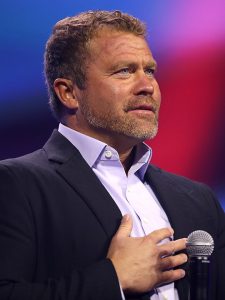
Films: Tim Ballard

Image © Gage Skidmore via Wikipedia

On the 9th of September, 2023 I went to see Sound Of Freedom at Cineworld Birmingham, Broad Street.  I got to see this free thanks to the generosity of its distributor Angel Studios and their How You Can Help page.  Click here to purchase tickets to give away yourself, buy tickets for yourself or claim a free ticket (like I did) from the kind people who purchased said tickets themselves to give away.

This movie is shocking and disturbing to watch as its content is about paedophilia and child sex trafficking, but not, thankfully, in a graphic way.  It doesn’t need to do that.  The truth sells itself here.  It isn’t like most films these days, woke, it simply tells a story and does it well.  A rarity these days.  It is thought-provoking and leaves you feeling happy and sad at the same time.  You feel happy for Tim Ballard, excellently played by Jim Caviezel, when he succeeds at what he is doing but then you feel sad for the children and the terrible things they go through.  Those terrible things happen far too often and in staggering numbers.

Some people left the cinema when the credits started rolling and missed an important message by Caviezel at the end of the film.  It was just as moving as the film was and the audience clapped and so did I.  

This is a well-produced film with very good cinematography, very good acting, very good editing and very good music that captures the mood of the film so well.

I recommend anyone with children to watch this film and if their kids go to big school, they watch it too when it comes out on DVD (if it is allowed to that is), you won’t be sorry you did.

Below is information about who the film is about, Tim Ballard. 

About Tim Ballard

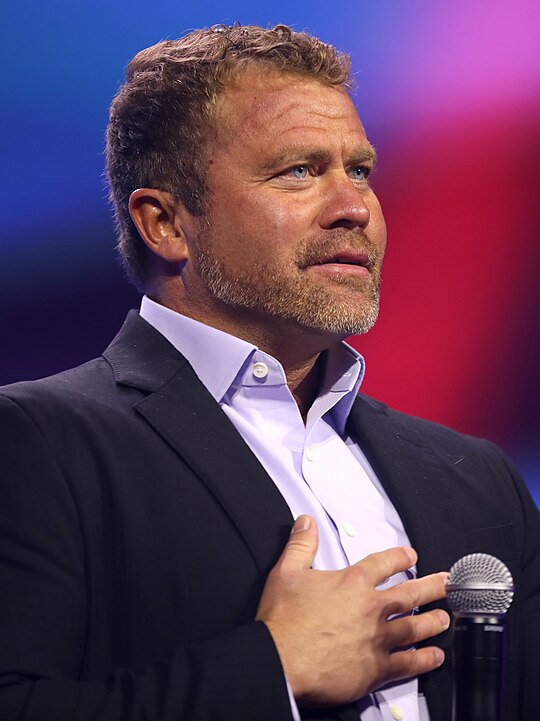
Tim Ballard was born in 1976 and is an American entrepreneur and author.  He is the founder and former C.E.O. of Operation Underground Railroad an anti-sex trafficking organization, and the author of several books.  The 2023 American action film Sound of Freedom starring Jim Caviezel was inspired by the work of Ballard.

Image © Gage Skidmore via Wikipedia

Tim Ballard speaking with attendees at the 2023 Turning Point Action Conference at the Palm Beach County Convention Center in West Palm Beach, Florida.

Early Life And Education

Ballard grew up in California.  As a member of The Church of Jesus Christ of Latter-day Saints, he served a two-year mission to Chile.  Afterwards, he attended Brigham Young University and graduated cum laude with a Bachelor of Arts in Spanish and political science.  He then obtained a Master of Arts in international politics from the Monterey Institute of International Studies, graduating summa cum laude.

Career

Operation Underground Railroad

Ballard founded the non-profit organization Operation Underground Railroad (O.U.R.) in 2013.  He has credited his organisation with rescuing thousands of trafficking victims.  He briefed politicians on the issue of child sex trafficking including special advisor to the President, Ivanka Trump, in October 2017.  As of 2014, Ballard trained Imperial County Sheriff’s Office personnel in the use of data mining software that led to the arrest of a man suspected of distributing child pornography.  Ballard testified before the United States Congress House Foreign Affairs Subcommittee on Global Human Rights during which he recommended procedures and practices for rescuing children from trafficking rings.  The hearing focused on partnerships between the U.S. government and non-governmental organizations that rescue trafficking victims.  On March the 6th, 2019, Ballard testified before the U.S. Senate Judiciary Committee about U.S. Mexico border security and its relation to child sex trafficking.  

Ballard was appointed to the White House Public Private Partnership Advisory Council to End Human Trafficking in 2019.  The Council was terminated on September the 30th, 2020.

In October 2020, the Attorney’s Office of Davis County, Utah initiated an investigation into complaints that O.U.R. and Ballard had conducted illegal fundraising efforts.  No charges were filed and the investigation was closed on March the 28th, 2023.

Ballard parted with O.U.R. in 2023. 

Personal Life

Ballard and his wife Katherine have been married for over 20 years with nine children, two of whom were adopted from a sting operation in Haiti.  They first met at Brigham Young University.  As of 2015, the family resided in Utah and Ballard was a member of The Church of Jesus Christ of Latter-day Saints.

In Popular Culture

Ballard has been interviewed on multiple news outlets including Fox News Sunday, The Meredith Vieira Show, CBS Evening News, ABC’s Nightline, HLN, MSNBC, The Glenn Beck Program and with Tim Pool on the TimcastIRL podcast, as well as many local news shows.

The 2016 documentary The Abolitionists, produced by Gerald Molen, featured the first operations undertaken by Ballard and Operation Underground Railroad.  Another documentary from director Nick Nanton, Operation Toussaint, was produced in 2018 and featured an operation in Haiti that had the support of Haitian President Jovenel Moïse and former U.S. congresswoman Mia Love of Utah.  The film was adapted into a book and released the following year.

The 2018 documentary Operation Toussaint and the 2020 documentary Triple Take were also based on Ballard’s work against sex trafficking.

E.S.P.N. featured Ballard and Pittsburgh Steelers head coach Mike Tomlin in a piece which highlighted the restavek issue near the border of Haiti and the Dominican Republic.  Tomlin would also write the foreword to Ballard’s book Slave Stealers: True Accounts of Slave Rescues – Then and Now.

A feature film, Sound of Freedom, starring Jim Caviezel as Ballard, was announced in 2018 and released in cinemas in 2023.  

Ballard started The Tim Ballard Podcast in June 2023.

Awards

Ballard won the 2017 Social Entrepreneur Award at the Ernst & Young Entrepreneur of the Year Award 2017 Utah Region Awards.

Read more about Tim Ballard here.

You can read about the film distributor here.

Blog Posts

Films: Angel Studios.

Films: Sound Of Freedom.


Notes And Links

Article source: Wikipedia and is subject to change.

The image shown at the top of this page is copyright of Wikipedia user Gage Skidmore.  It comes with a Creative Commons licence (CC BY 2.0).  You can find more great work from him by clicking here.

Sound Of Freedom On IMDb.

Angel Studios – Official website.

Angel Studios on Facebook.

Angel Studios on Twitter.

Angel Studios on Instagram.

Angel Studios on YouTube.

Tim Ballard – Official website.

Operation Underground Railroad – Official website.  O.U.R. lead the fight against child sex trafficking and sexual exploitation around the globe.  Their work has no boundaries.  They go to the darkest corners of the world to assist law enforcement in rescuing children and ensure ongoing aftercare. They provide critical resources to law enforcement and preventative efforts that benefit at-risk children worldwide.  Their resolve never falters, and they will faithfully persevere until every child is safe.

Operation Underground Railroad On Facebook.

Operation Underground Railroad On Twitter.

Operation Underground Railroad On YouTube.

Operation Underground On Instagram.

Operation Underground Railroad On LinkedIn.

Operation Underground Railroad On TikTok.

The SPEAR Fund – Official website.  The SPEAR Fund collaborates with and funds anti-trafficking organizations to provide quick and effective action when it matters most.

Wikipedia – Official website.  Wikipedia is a free online encyclopedia that anyone can edit in good faith. Its purpose is to benefit readers by containing information on all branches of knowledge.  Hosted by the
Wikimedia Foundation, it consists of freely editable content, whose articles also have numerous links to guide readers to more information.


Films: Angel Studios

Image © Angel Studios via YouTube

On the 9th of September, 2023 I went to see Sound Of Freedom at Cineworld Birmingham, Broad Street.  I got to see this free thanks to the generosity of its distributor Angel Studios and their How You Can Help page.  Click here to purchase tickets to give away yourself, buy tickets for yourself or claim a free ticket (like I did) from the kind people who purchased said tickets themselves to give away.

This movie is shocking and disturbing to watch as its content is about paedophilia and child sex trafficking, but not, thankfully, in a graphic way.  It doesn’t need to do that.  The truth sells itself here.  It isn’t like most films these days, woke, it simply tells a story and does it well.  A rarity these days.  It is thought-provoking and leaves you feeling happy and sad at the same time.  You feel happy for Tim Ballard, excellently played by Jim Caviezel, when he succeeds at what he is doing but then you feel sad for the children and the terrible things they go through.  Those terrible things happen far too often and in staggering numbers.

Some people left the cinema when the credits started rolling and missed an important message by Caviezel at the end of the film.  It was just as moving as the film was and the audience clapped and so did I.  

This is a well-produced film with very good cinematography, very good acting, very good editing and very good music that captures the mood of the film so well.

I recommend anyone with children to watch this film and if their kids go to big school, they watch it too when it comes out on DVD (if it is allowed to that is), you won’t be sorry you did.  

Below is information about the film’s distributor, Angel Studios.

Angel Studios logo.

What is Angel Studios?

Angel Studios is a curated, free streaming platform offering exceptional films, shows, and documentaries for all ages. Enjoy unlimited access to their award-winning, viewer-supported content designed to inspire, uplift, and unite through meaningful storytelling.

How Much Does Angel Studios Cost?

Angel Studios is completely free to watch. No payment or credit card is required.

Experience meaningful storytelling without barriers. You can support them by investing in their projects, using Pay It Forward, joining the Angel Guild, or buying their merchandise.

Angel’s North Star

Here is a message from Neal Harmon, Co-Founder and C.E.O. of Angel Studios regarding Angel’s North Star.

“We’re building a home for stories that amplify light (or, as we call it, our North Star).

How do we define light? True, honest, noble, just, authentic, lovely, admirable, and excellent.

Just as a compass, the stars and magnetic North guided sailors through dark waters centuries ago, our North Star for filmmaking helps us navigate dark times and focus on light in our day.

Darkness can seem pervasive. Last year introduced fires all over Australia, pandemic, economic turmoil, locusts infestations, rising food prices, protests and riots, earthquakes, and financial warfare (look up Hedge Funds and GameStop).  Sometimes it feels as if the tumultuous events are becoming more frequent.

There’s a reason the film business was one of the few industries that grew during the Great Depression.  Hope is a fundamental human need and in yesteryear, the filmmakers mastered storytelling to meet that need.

Unfortunately, most shows offered these days add to the cynicism, division, and darkness so pervasive in society.

Fortunately, darkness and light, hope and despair, cannot exist in the same place at the same time.  And we believe if we build a home for creators and communities to connect, specifically those who align with our North Star, Angel Studios will become known for fulfilling our universal human need for hope and light. Our time feels short.  Choosing, funding, creating, and spreading stories that matter has never felt more urgent.

Whether as a customer, investor or team member thank you for joining us.

Why Does Angel Studios Offer Free Streaming?

Angel Studios believes in making storytelling universally accessible.  Their commitment to sharing light-amplifying content allows them to offer their service for free. This model is made possible by fan contributions via Pay It Forward, merchandise sales, and sponsorships.

What You Can Watch On Angel Studios

Watch inspiring and award-winning content on Angel Studios, from original series like The Chosen and The Wingfeather Saga to movies such as Sound of Freedom and His Only Son, and unique comedy shows like Dry Bar Comedy.  New, compelling projects are added regularly. To see their full list, visit angel.com/watch.

Where You Can Stream Angel Studios

Stream Angel Studios on any internet-connected device.  Watch via their website at angel.com, or visit angel.com/app  to download the Angel app.

The Angel app is available for smartphones, tablets, and smart TV’s.  Search for Angel Studios in your device’s app store.  To see a full list of supported devices, go to angel.com/legal/devices.

Watch Angel Studios Offline

With the Angel Studios mobile app available for iPhoneiPad, and Android, you can download your favourite content and enjoy it offline, anytime, anywhere.

How To Sign Up For Angel Studios

Creating an Angel Studios account is easy.  Visit their website or download the Angel app, select Sign Up, and register using your email address and password.  This free sign-up grants you immediate access to their inspiring content.

Support Angel Studios

There are several ways to support Angel Studios.  You can help amplify light by Paying It Forwardwatching our content and live streams, sharing their content with your network, buying merchandise, or even investing in their projects.  Every bit of support helps them continue their mission to uplift and inspire through powerful storytelling.

How To Become An Investor For Angel Studios Projects

Angel Studios allows fans to financially support the content they feel passionate about through crowdfunding opportunities.  Visit invest.angel.com to view ongoing and past projects and to learn more about investment opportunities.

Does Angel Studios Offer Child-Friendly Content?

Yes, Angel Studios is dedicated to delivering content appropriate for viewers of all ages.  Their platform is designed with family values in mind, ensuring children’s content promotes positive messages.

How You Can Get In Touch With Angel Studios 

You can connect with them easily.  For any inquiries, feedback, or suggestions, head over to their Contact pageYou can also email them directly at support@angel.com or engage with them on their social media platforms (see below).

Blog Posts

Films: Sound Of Freedom.

Films: Tim Ballard.

Notes And Links

Article source: Angel Studios.

The image shown at the top of this page and the three below is the copyright of Angel Studios and was from their TouTube page.

Sound Of Freedom On IMDb.

Angel Studios – Official website.

Angel Studios on Facebook.

Angel Studios on Twitter.

Angel Studios on Instagram.

Angel Studios on YouTube.

Tim Ballard – Official website.

Operation Underground Railroad – Official website.  O.U.R. lead the fight against child sex trafficking and sexual exploitation around the globe.  Their work has no boundaries.  They go to the darkest corners of the world to assist law enforcement in rescuing children and ensure ongoing aftercare. They provide critical resources to law enforcement and preventative efforts that benefit at-risk children worldwide.  Their resolve never falters, and they will faithfully persevere until every child is safe.

Operation Underground Railroad On Facebook.

Operation Underground Railroad On Twitter.

Operation Underground Railroad On YouTube.

Operation Underground On Instagram.

Operation Underground Railroad On LinkedIn.

Operation Underground Railroad On TikTok.

The SPEAR Fund – Official website.  The SPEAR Fund collaborates with and funds anti-trafficking organizations to provide quick and effective action when it matters most.

Films: Sound Of Freedom

Image © Angel Studios

On the 9th of September, 2023 I went to see Sound Of Freedom at Cineworld Birmingham, Broad Street.  I got to see this free thanks to the generosity of its distributor Angel Studios and their How You Can Help page.  Click here to purchase tickets to give away yourself, buy tickets for yourself or claim a free ticket (like I did) from the kind people who purchased said tickets themselves to give away.

This important film was finalised in 2019 but many, including Disney (who acquired the original distributor Fox), tried to stop it from being shown at all.  Thankfully Angel Studios bought back the rights to it.  It is shocking and disturbing to watch as its content is about paedophilia and child sex trafficking, but not, thankfully, in a graphic way.  It doesn’t need to do that.  The truth sells itself here.  It isn’t like most films these days, woke, it simply tells a story and does it well.  A rarity these days.  It is thought-provoking and leaves you feeling happy and sad at the same time.  You feel happy for Tim Ballard, excellently played by Jim Caviezel, when he succeeds at what he is doing but then you feel sad for the children and the terrible things they go through.  Those terrible things happen far too often and in staggering numbers.

Some people left the cinema when the credits started rolling and missed an important message by Caviezel at the end of the film.  It was just as moving as the film was and the audience clapped and so did I.  

This is a well-produced film with very good cinematography, very good acting, very good editing and very good music that captures the mood of the film so well.

I recommend anyone with children to watch this film and if their kids go to big school, they watch it too when it comes out on DVD (if it is allowed to that is), you won’t be sorry you did.  

Sound Of Freedom was released in America on July the 4th and in the UK on September the 1st.

Official Trailer

About Sound Of Freedom

Sound of Freedom is based on an incredible true story, that shines a light on even the darkest of places.  After rescuing a young boy from ruthless child traffickers, a federal agent learns the boy’s sister is still captive and decides to embark on a dangerous mission to save her.  With time running out, he quits his job and journeys deep into the Colombian jungle, putting his life on the line to free her from a fate worse than death. 

What Will The Movie Be Like?

Sound of Freedom is a thriller based on a pivotal extraction operation that would eventually rescue dozens of children from child traffickers in Colombia. 

It has the hero energy of Hacksaw Ridge and Spotlight paired with the heart of films like Unbroken and 127 Hours.

With a star-studded cast, director, and original score, this film has gone to great lengths to bring the harrowing realities of child trafficking to life like it’s never been done before.  Expertly produced and acted, Sound of Freedom has a larger-than-life mission to ignite the movement to end child trafficking for good.

Spreading global awareness about the harrowing realities of child trafficking cannot happen without telling stories like this one.  Storytellers are the changemakers.

The Challenge 

Distributing a film theatrically with such a global appeal is always a significant hurdle.  Angel Studios has experience with global hits like The Chosen, which had a Christmas Special and Season 3 theatrical release.  Most recently, another Angel Studios project, His Only Son, successfully crowdfunded $1.235 million in just a few days for their theatrical release (which premiered in over 2,000 cinemas internationally).

Angel also has experience working outside of traditional studio paths and is hopeful audiences will be excited to have an incredible film like Sound of Freedom in their local cinemas.

Deeply Rooted Values

Director Alejandro Monteverde said,

I believe that as a society we need to be aware of the horrors of child trafficking, and my call was to use the power of cinema to bring light and poetry and hope into that  darkest corner of humanity — and to wrap it all in one man’s incredible, world-changing odyssey.”

Sound Of Freedom Team

Alejandro Monteverde 

Image © Angel Studios

Alejandro Monteverde, the Director of Sound Freedom.

Alejandro Monteverde is a Mexican filmmaker, best known for his work as a director, writer, and producer on the 2006 film Bella, which won the People’s Choice Award at the Toronto International Film Festival and the Audience Award at the Heartland Film Festival.

Monteverde began his career as a film director with the short film The Last Goodbye in 2004, which won the Crystal Heart Award at the Heartland Film Festival. He went on to direct and write several other films, including Little Boy in 2015, which was also well-received by audiences.

Monteverde’s work is known for its focus on family and faith, and he has been vocal about his Catholic beliefs.  In addition to his film work, Monteverde has also been involved in philanthropic efforts, including the founding of the nonprofit organization Esperanza para los Ninos (Hope for Children) in 2010, which provides education and support to underprivileged children in Mexico.

Eduardo Verastegui

Image © Angel Studios

Eduardo Verastegui is the Producer of Sound of Freedom and plays Pablo.

Eduardo Verastegui is a Mexican actor, producer, businessman and philanthropist, born in Mexico.  He began his entertainment career as a member of the Mexican pop group Kairo in the 1990’s before transitioning to acting in telenovelas.

Verastegui gained international recognition for his leading role in the 2006 film Bella, which he produced with the production company he co-founded called Metanoia Films.  He is also known for his humanitarian work and began a nonprofit organization called Manto de Guadalupe that aids those who don’t have access to food, shelter, health care or education.

Verastegui is the producer of Sound of Freedom and has since toured all over Mexico and beyond in an effort to partner with local government leaders, educators, law enforcement, and foundations to prevent child exploitation.

Jim Caviezel

Image © Angel Studios

Jim Caviezel plays Tim Ballard in Sound Of Freedom.

Jim Caviezel is an American actor born in Mount Vernon, Washington.  He graduated from the University of Washington with a degree in Fine Arts before pursuing his acting career in Los Angeles.

Jim’s breakout role was playing Edmond in The Count of Monte Cristo, quickly followed by his portrayal of Jesus Christ in Mel Gibson’s film The Passion of the Christ.  He also gained recognition for his performances in The Thin Red Line and Frequency.

Caviezel is known for his strong Christian faith and has been actively involved in various charitable causes.  He has been married to his wife Kerri for over 20 years and they have adopted three children together.

After meeting Tim Ballard and learning about Operation Underground Railroad, Caviezel was deeply moved and became passionate about spreading this message and helping end child trafficking.

Interview With Jordan B. Peterson

Angel Studios 

You can read about the film distributor here.

Blog Posts

Films: Angel Studios.

Films: Tim Ballard.

Notes And Links

Article source: Angel Studios. 

The image shown at the top of this page and the three below is the copyright of Angel Studios.

Sound Of Freedom on IMDb.

Angel Studios – Official website.

Angel Studios on Facebook.

Angel Studios on Twitter.

Angel Studios on Instagram.

Angel Studios on YouTube.

Tim Ballard – Official website.

Operation Underground Railroad – Official website.  O.U.R. lead the fight against child sex trafficking and sexual exploitation around the globe.  Their work has no boundaries.  They go to the darkest corners of the world to assist law enforcement in rescuing children and ensure ongoing aftercare. They provide critical resources to law enforcement and preventative efforts that benefit at-risk children worldwide.  Their resolve never falters, and they will faithfully persevere until every child is safe.

Operation Underground Railroad On Facebook.

Operation Underground Railroad On Twitter.

Operation Underground Railroad On YouTube.

Operation Underground On Instagram.

Operation Underground Railroad On LinkedIn.

Operation Underground Railroad On TikTok.

The SPEAR Fund – Official website.  The SPEAR Fund collaborates with and funds anti-trafficking organizations to provide quick and effective action when it matters most.

Jordon B. Peterson – Official website. 

Jordon B. Peterson on Facebook.

Jordon B. Peterson on YouTube.

Jordon B. Peterson on Instagram

Films

Image © of Bence Szemerey via Pixabay

Everyone loves watching a good film albeit at the cinema or at home on the television etc.  With a collection of over 1000 DVDs that includes a LOT of films, it is clear to see that this is another big passion of mine.

I can’t remember the very first film I went to see at the pictures but it was in the mid-1970’s and it possibly could have been the Disney animation adaptation of Robin Hood.  Visits to the cinema over the decades as a child and older, with family have always held special memories for me. 

Watching a film on the telly is always good but nothing beats the experience and sound quality of watching it on the big screen.  Having a home cinema has always been a dream of mine but that probably won’t ever happen but one day I would like to get a decent surround sound system and projector with a large screen or a large telly to watch films on.  I will say never say never on that one!

I like most film genres with my favourite being Horror and Science Fiction ones.  I have favourite actors and actresses the same as anyone else does and they will be shown on this page.  I am not going to list every film I have watched in my lifetime, that would be IMPOSSIBLE to remember but I will list films I have watched and enjoyed that I think are worth watching for someone else but of course, your opinions may differ from mine, that’s life.

About Film

A film, also called a movie, motion picture, moving picture, picture, photoplay, or flick is a work of visual art that simulates experiences and otherwise communicates ideas, stories, perceptions, feelings, beauty, or atmosphere through the use of moving images. Flick is, in general, a slang term, first recorded in 1926.  It originates in the verb flicker, owing to the flickering appearance of early films.  These images are generally accompanied by sound and, more rarely, other sensory stimulations.   The word cinema, short for cinematography, is often used to refer to filmmaking and the film industry, and the art form that is the result of it. 

The History Of Film

Precursors

The art of film has drawn on several earlier traditions in fields such as oral storytelling, literature, theatre, and visual arts.  Forms of art and entertainment that have already featured moving or projected images include shadowgraphy (probably used since prehistoric times), camera obscura (a natural phenomenon that has possibly been used as an artistic aid since prehistoric times), shadow puppetry (possibly originated around 200 BCE in Central Asia, India, Indonesia or China) and the magic lantern (developed in the 1650’s,  this multi-media phantasmagoria shows that magic lanterns were popular from 1790 throughout the first half of the 19th century and could feature mechanical slides, rear projection, mobile projectors, superimposition, dissolving views, live actors, smoke that was sometimes used to project images upon, odours, sounds, and even electric shocks).

Before Celluloid

The stroboscopic animation principle was introduced in 1833 with the stroboscopic disc (better known as the phenakisticope) and later applied in the zoetrope (since 1866), the flip book (since 1868), and the praxinoscope (since 1877) before it became the basic principle for cinematography.

Image © of Simon Ritter von Stampfer via Wikipedia

Prof. Stampfer’s Stroboscopische Scheibe No. X., created on the 22nd of June, 1833.  This is side Nr. 10 of the reworked second series of Stampfer’s stroboscopic disc published by Trentsensky & Vieweg in the same year.

Experiments with early phenakisticope-based animation projectors were made at least as early as 1843 and publicly screened in 1847.  Jules Duboscq marketed phenakisticope projection systems in France from circa 1853 until the 1890’s.

Photography was introduced in 1839, but initially, photographic emulsions needed such long exposures that the recording of moving subjects seemed impossible.  At least as early as 1844, a photographic series of subjects posed in different positions was created to either suggest a motion sequence or document a range of different viewing angles.  The advent of stereoscopic photography, with early experiments in the 1840’s and commercial success since the early 1850’s, raised interest in completing the photographic medium with the addition of means to capture colour and motion.  In 1849, Joseph Plateau published the idea to combine his invention of the phenakisticope with the stereoscope, as suggested to him by stereoscope inventor Charles Wheatstone, and to use photographs of plaster sculptures in different positions to be animated in the combined device.  In 1852, Jules Duboscq patented such an instrument as the Stereoscope-fantascope, ou Bioscope, but he only marketed it very briefly, without success.  One Bioscope disc with stereoscopic photographs of a machine is in the Plateau collection of Ghent University, but no instruments or other discs have yet been found.

By the late 1850’s the first examples of instantaneous photography came about and provided hope that motion photography would soon be possible, but it took a few decades before it was successfully combined with a method to record a series of sequential images in real-time.  In 1878, Eadweard Muybridge eventually managed to take a series of photographs of a running horse with a battery of cameras in a line along the track and published the results as The Horse in Motion on cabinet cards.  Muybridge, as well as Etienne-Jules Marey, Ottomar Anschütz, and many others, would create many more chronophotography studies.  Muybridge had the contours of dozens of his chronophotographic series traced onto glass discs and projected them with his zoopraxiscope in his lectures from 1880 to 1895.

Image © of Eadweard Muybridge via Wikipedia

An animation of the retouched Sallie Garner card from The Horse in Motion series by Eadweard Muybridge.  The series was from 1878 – 1879. 

Anschutz made his first instantaneous photographs in 1881.  He developed a portable camera that allowed shutter speeds as short as 1/1000 of a second in 1882.  The quality of his pictures was generally regarded to be much higher than that of the chronophotography works of Muybridge and Etienne-Jules Marey.  In 1886, Anschutz developed the Electrotachyscope, an early device that displayed short motion picture loops with 24 glass plate photographs on a 1.5-meter-wide rotating wheel that was hand-cranked to the speed of circa 30 frames per second.  Different versions were shown at many international exhibitions, fairs, conventions, and arcades from 1887 until at least 1894.  Starting in 1891, some 152 examples of a coin-operated peep-box Electrotachyscope model were manufactured by Siemens & Halske in Berlin and sold internationally.  Nearly 34,000 people paid to see it at the Berlin Exhibition Park in the summer of 1892.  Others saw it in London or at the 1893 Chicago World’s Fair.  On the 25th of November 1894, Anschutz introduced an Electrotachyscope projector with a 6 x 8 meter screening in Berlin.  Between the 22nd of February and the 30th of March 1895, a total of circa 7,000 paying customers came to view a 1.5-hour show of some 40 scenes at a 300-seat hall in the old Reichstag building in Berlin.

Image © unknown via Wikipedia

A picture of Ottomar’s Anschutz’s electrotachyscope, first published in Scientific American on the 16th of November, 1889.

Emile Reynaud already mentioned the possibility of projecting the images of the Praxinoscope in his 1877 patent application.  He presented a praxinoscope projection device at the Societe Francaise de Photographie on the 4th of June 1880 but did not market his praxinoscope before 1882.  He then further developed the device into the Theatre Optique which could project longer sequences with separate backgrounds, patented in 1888.  He created several movies for the machine by painting images on hundreds of gelatin plates that were mounted into cardboard frames and attached to a cloth band.  From the 28th of October 1892 to March 1900 Reynaud gave over 12,800 shows to a total of over 500,000 visitors at the Grevin Museu in Paris.

First Motion Pictures

By the end of the 1880’s, the introduction of lengths of celluloid photographic film and the invention of motion picture cameras, which could photograph a rapid sequence of images using only one lens, allowed the action to be captured and stored on a single compact reel of film.

Movies were initially shown publicly to one person at a time through peep show devices such as the Electrotachyscope, Kinetoscope, and the Mutoscope.  Not much later, exhibitors managed to project films on large screens for theatre audiences.

The first public screenings of films at which admission was charged were made in 1895 by the American Woodville Latham and his sons, using films produced by their Eidoloscope company, by the Skladanowsky brothers, and by the arguably better known  French brothers Auguste and Louis Lumiere with ten of their own productions.  Private screenings had preceded these by several months, with Latham’s slightly predating the others.

Roundhay Garden Scene is a short silent motion picture filmed by French inventor Louis Le Prince at Oakwood Grange in Roundhay, Leeds, in northern England on the 14th of October 1888.

Pauvre Pierrot or Poor Pete as it is known in English is a French short animated film directed by Charles-Emile Reynaud in 1891 and was released in 1892. 

Georges Melies’ Le Voyage dans la Lune or A Trip to the Moon as it is known in English is an early narrative film and also an early science fiction film, released in 1902.

The Bond is a two-reel propaganda film created by Charlie Chaplin at his own expense for the Liberty Loan Committee to help sell U.S. Liberty Bonds during World War I, released in 1918. 

Early Evolution

The earliest films were simply one static shot that showed an event or action with no editing or other cinematic techniques.  Typical films showed employees leaving a factory gate, people walking in the street, and the view from the front of a trolley as it traveled a city’s Main Street.  According to legend, when a film showed a locomotive at high speed approaching the audience, the audience panicked and ran from the theater.  Around the turn of the 20th century, films started stringing several scenes together to tell a story.  The filmmakers who first put several shots or scenes discovered that, when one shot follows another, that act establishes a relationship between the content in the separate shots in the minds of the viewer.  It is this relationship that makes all film storytelling possible.  In a simple example, if a person is shown looking out a window, whatever the next shot shows, it will be regarded as the view the person was seeing.  Each scene was a single stationary shot with the action occurring before it.  The scenes were later broken up into multiple shots photographed from different distances and angles.  Other techniques such as camera movement were developed as effective ways to tell a story with film.  Until sound film became commercially practical in the late 1920’s, motion pictures were purely visual art, but these innovative silent films had gained a hold on the public imagination.  Rather than leave audiences with only the noise of the projector as an accompaniment, theater owners hired a pianist or organist or, in large urban theaters, a full orchestra to play music that fit the mood of the film at any given moment. By the early 1920’s, most films came with a prepared list of sheet music to be used for this purpose, and complete film scores were composed for major productions.

The rise of European cinema was interrupted by the outbreak of World War I, while the film industry in the United States flourished with the rise of Hollywood, typified most prominently by the innovative work of D. W. Griffith in The Birth of a Nation (1915) and Intolerance (1916).  However, in the 1920’s, European filmmakers such as Eisenstein, F. W. Murnau, and Fritz Lang, in many ways inspired by the meteoric wartime progress of film through Griffith, along with the contributions of Charles Chaplin, Buster Keaton, and others, quickly caught up with American film-making and continued to further advance the medium.

Sound

In the 1920’s, the development of electronic sound recording technologies made it practical to incorporate a soundtrack of speech, music, and sound effects synchronized with the action on the screen.  The resulting sound films were initially distinguished from the usual silent moving pictures or movies by calling them talking pictures or talkies.  The revolution they wrought was swift.  By 1930, silent film was practically extinct in the US and already being referred to as the old medium.

The evolution of sound in cinema began with the idea of combining moving images with existing phonograph sound technology.  Early sound-film systems, such as Thomas Edison’s Kinetoscope and the Vitaphone used by Warner Bros., laid the groundwork for synchronized sound in film.  The Vitaphone system, produced alongside Bell Telephone Company and Western Electric, faced initial resistance due to expensive equipping costs, but sound in cinema gained acceptance with movies like Don Juan (1926) and The Jazz Singer (1927).

American film studios, while Europe standardized on Tobis-Klangfilm and Tri-Ergon systems.  This new technology allowed for greater fluidity in film, giving rise to more complex and epic movies like King Kong (1933).

As the television threat emerged in the 1940’s and 1950’s, the film industry needed to innovate to attract audiences.  In terms of sound technology, this meant the development of surround sound and more sophisticated audio systems, such as Cinerama’s seven-channel system.  However, these advances required a large number of personnel to operate the equipment and maintain the sound experience in cinemas.

In 1966, Dolby Laboratories introduced the Dolby A noise reduction system, which became a standard in the recording industry and eliminated the hissing sound associated with earlier standardization efforts.  Dolby Stereo, a revolutionary surround sound system, followed and allowed cinema designers to take acoustics into consideration when designing cinemas.  This innovation enabled audiences in smaller venues to enjoy comparable audio experiences to those in larger city cinemas.

Today, the future of sound in film remains uncertain, with potential influences from artificial intelligence, remastered audio, and personal viewing experiences shaping its development.  However, it is clear that the evolution of sound in cinema has been marked by continuous innovation and a desire to create more immersive and engaging experiences for audiences.

Colour

A significant technological advancement in the film industry was the introduction of natural colour, where colour was captured directly from nature through photography, as opposed to being manually added to black-and-white prints using techniques like hand-coloring or stencil-coloring.  Early colour processes often produced colours that appeared far from natural.  Unlike the rapid transition from silent films to sound films, colour’s replacement of black-and-white happened more gradually.

The crucial innovation was the three-strip version of the Technicolor process, first used in animated cartoons in 1932.  The process was later applied to live-action short films, specific sequences in feature films, and finally, to an entire feature film, Becky Sharp, in 1935.  Although the process was expensive, the positive public response, as evidenced by increased box office revenue, generally justified the additional cost.  Consequently, the number of films made in color gradually increased year after year.

The 1950’s: The Growing Influence Of Television

In the early 1950’s, the proliferation of black-and-white television started seriously depressing North American cinema attendance.  In an attempt to lure audiences back into cinemas, bigger screens were installed, widescreen processes, polarised 3D projection, and stereophonic sound were introduced, and more films were made in colour, which soon became the rule rather than the exception.  Some important mainstream Hollywood films were still being made in black-and-white as late as the mid-1960’s, but they marked the end of an era.  Colour television receivers had been available in the U.S. since the mid-1950’s, but at first, they were very expensive and few broadcasts were in colour.  During the 1960’s, prices gradually came down, colour broadcasts became common, and sales boomed.  The overwhelming public verdict in favour of colour was clear.  After the final flurry of black-and-white films had been released in mid-decade, all Hollywood studio productions were filmed in colour, with the usual exceptions made only at the insistence of star filmmakers such as Peter Bogdanovich and Martin Scorsese.

The 1960’s And Later

The decades following the decline of the studio system in the 1960’s saw changes in the production and style of film.  Various New Wave movements (including the French New Wave, New German Cinema wave, Indian New Wave, Japanese New Wave, New Hollywood, and Egyptian New Wave) and the rise of film-school-educated independent filmmakers contributed to the changes the medium experienced in the latter half of the 20th century.  Digital technology has been the driving force for change throughout the 1990’s and into the 2000’s.  Digital 3D projection largely replaced earlier problem-prone 3D film systems and has become popular in the early 2010’s. 

Image © unknown via Wikipedia

Salah Zulfikar, one of the most popular actors in the golden age of Egyptian Cinema.

Etymology And Alternative Terms

The name film originally referred to the thin layer of photochemical emulsion on the celluloid strip that used to be the actual medium for recording and displaying motion pictures.

The most common term in Europe is film while in the United States,  movie is preferred.

Archaic terms include animated pictures and animated photography. Common terms for the field, in general, include the big screen, the silver screen, the movies, and cinema.  The last of these is commonly used, as an overarching term, in scholarly texts and critical essays.  In the early years, the word sheet was sometimes used instead of screen.

Recording And Transmission Of The Film

The moving images of a film are created by photographing actual scenes with a motion-picture camera, by photographing drawings or miniature models using traditional animation techniques, by means of C.G.I. and computer animation, or by a combination of some or all of these techniques, and other visual effects.

Before the introduction of digital production, a series of still images were recorded on a strip of chemically sensitised celluloid (photographic film stock), usually at a rate of 24 frames per second.  The images are transmitted through a movie projector at the same rate as they were recorded, with a Geneva drive ensuring that each frame remains still during its short projection time.  A rotating shutter causes stroboscopic intervals of darkness, but the viewer does not notice the interruptions due to flicker fusion.  The apparent motion on the screen is the result of the fact that the visual sense cannot discern the individual images at high speeds, so the impressions of the images blend with the dark intervals and are thus linked together to produce the illusion of one moving image.  An analogous optical soundtrack (a graphic recording of the spoken words, music, and other sounds) runs along a portion of the film exclusively reserved for it and is not projected.

Contemporary films are usually fully digital through the entire process of production, distribution, and exhibition.

Film Theory

Film theory seeks to develop concise and systematic concepts that apply to the study of film as art.  The concept of film as an art-form began in 1911 with Ricciotto Canudo’s manifest The Birth of the Sixth Art.  The Moscow Film School, the oldest film school in the world, was founded in 1919, in order to teach about and research film theory.  Formalist film theory, led by Rudolf Arnheim, Bela Balazs, and Siegfried Kracauer, emphasized how film differed from reality and thus could be considered a valid fine art.  Andre Bazin reacted against this theory by arguing that film’s artistic essence lay in its ability to mechanically reproduce reality, not in its differences from reality, and this gave rise to realist theory.  More recent analysis spurred by Jacques Lacan’s psychoanalysis and Ferdinand de Saussure’s semiotics among other things has given rise to psychoanalytic film theory, structuralist film theory, feminist film theory, and others.  On the other hand, critics from the analytical philosophy tradition, influenced by Wittgenstein, try to clarify misconceptions used in theoretical studies and produce analysis of a film’s vocabulary and its link to a form of life.

Image © Janke via Wikipedia

The Bolex H16 Reflex camera.

Language

Film is considered to have its own language.  James Monaco wrote a classic text on film theory, titled How to Read a Film, that addresses this.  Director Ingmar Bergman famously said, “Andrei Tarkovsky for me is the greatest director, the one who invented a new language, true to the nature of film, as it captures life as a reflection, life as a dream.”  An example of the language is a sequence of back and forth images of one speaking actor’s left profile, followed by another speaking actor’s right profile, then a repetition of this, which is a language understood by the audience to indicate a conversation.  This describes another theory of film, the 180-degree rule, as a visual story-telling device with an ability to place a viewer in a context of being psychologically present through the use of visual composition and editing.  The Hollywood style includes this narrative theory, due to the overwhelming practice of the rule by movie studios based in Hollywood, California, during film’s classical era.  Another example of cinematic language is having a shot that zooms in on the forehead of an actor with an expression of silent reflection that cuts to a shot of a younger actor who vaguely resembles the first actor, indicating that the first person is remembering a past self, an edit of compositions that causes a time transition.

Montage

Read more about Montage here.

Montage is a film editing technique in which separate pieces of film are selected, edited, and assembled to create a new section or sequence within a film.  This technique can be used to convey a narrative or to create an emotional or intellectual effect by juxtaposing different shots, often for the purpose of condensing time, space, or information.  Montage can involve flashbacks, parallel action, or the interplay of various visual elements to enhance the storytelling or create symbolic meaning.

The concept of montage emerged in the 1920’s, with pioneering Soviet filmmakers such as Sergei Eisenstein and Lev Kuleshov developing the theory of montage. Eisenstein’s film Battleship Potemkin (1925) is a prime example of the innovative use of montage, where he employed complex juxtapositions of images to create a visceral impact on the audience. 

As the art of montage evolved, filmmakers began incorporating musical and visual counterpoint to create a more dynamic and engaging experience for the viewer.  The development of scene construction through mise-en-scène, editing, and special effects led to more sophisticated techniques that can be compared to those utilized in opera and ballet.

The French New Wave movement of the late 1950’s and 1960’s also embraced the montage technique, with filmmakers such as Jean-Luc Godard and François Truffaut using montage to create distinctive and innovative films.  This approach continues to be influential in contemporary cinema, with directors employing montage to create memorable sequences in their films.

In contemporary cinema, montage continues to play an essential role in shaping narratives and creating emotional resonance.  Filmmakers have adapted the traditional montage technique to suit the evolving aesthetics and storytelling styles of modern cinema:

Rapid editing and fast-paced montages: With the advent of digital editing tools, filmmakers can now create rapid and intricate montages to convey information or emotions quickly.  Films like Darren Aronofsky’s Requiem for a Dream (2000) and Edgar Wright’s Shaun of the Dead (2004) employ fast-paced editing techniques to create immersive and intense experiences for the audience.

Music video influence: The influence of music videos on film has led to the incorporation of stylized montage sequences, often accompanied by popular music.  Films like Guardians of the Galaxy (2014) and Baby Driver (2017) use montage to create visually striking sequences that are both entertaining and narratively functional.

Sports and training montages: The sports and training montage has become a staple in modern cinema, often used to condense time and show a character’s growth or development.  Examples of this can be found in films like Rocky (1976), The Karate Kid (1984), and Million Dollar Baby (2004).

Cross-cutting and parallel action: Contemporary filmmakers often use montage to create tension and suspense by cross-cutting between parallel storylines.  Christopher Nolan’s Inception (2010) and Dunkirk (2017) employ complex cross-cutting techniques to build narrative momentum and heighten the audience’s emotional engagement.

Thematic montage: Montage can also be used to convey thematic elements or motifs in a film.  Wes Anderson’s The Royal Tenenbaums (2001) employs montage to create a visual language that reflects the film’s themes of family, nostalgia, and loss.

As the medium of film continues to evolve, montage remains an integral aspect of visual storytelling, with filmmakers finding new and innovative ways to employ this powerful technique.

Film Criticism

Film criticism is the analysis and evaluation of films.  In general, these works can be divided into two categories, academic criticism by film scholars and journalistic film criticism that appears regularly in newspapers and other media.  Film critics working for newspapers, magazines, and broadcast media mainly review new releases.  Normally they only see any given film once and have only a day or two to formulate their opinions.  Despite this, critics have an important impact on the audience response and attendance at films, especially those of certain genres.  Mass marketed action, horror, and comedy films tend not to be greatly affected by a critic’s overall judgment of a film.  The plot summary and description of a film and the assessment of the director’s and screenwriters’ work that makes up the majority of most film reviews can still have an important impact on whether people decide to see a film.  For prestige films such as most dramas and art films, the influence of reviews is important.  Poor reviews from leading critics at major papers and magazines will often reduce audience interest and attendance.

The impact of a reviewer on a given film’s box office performance is a matter of debate.  Some observers claim that movie marketing in the 2000’s is so intense, well-coordinated and well financed that reviewers cannot prevent a poorly written or filmed blockbuster from attaining market success.  However, the cataclysmic failure of some heavily promoted films which were harshly reviewed, as well as the unexpected success of critically praised independent films indicates that extreme critical reactions can have considerable influence.  Other observers note that positive film reviews have been shown to spark interest in little-known films.  Conversely, there have been several films in which film companies have so little confidence that they refuse to give reviewers an advanced viewing to avoid widespread panning of the film.  However, this usually backfires, as reviewers are wise to the tactic and warn the public that the film may not be worth seeing and the films often do poorly as a result.  Journalist film critics are sometimes called film reviewers.  Critics who take a more academic approach to films, through publishing in film journals and writing books about films using film theory or film studies approaches, study how film and filming techniques work, and what effect they have on people.  Rather than having their reviews published in newspapers or appearing on television, their articles are published in scholarly journals or up-market magazines.  They also tend to be affiliated with colleges or universities as professors or instructors.

In 1986, Roger Ebert, winner of the Pulitzer Prize for Criticism said, “If a movie can illuminate the lives of other people who share this planet with us and show us not only how different they are but, how even so, they share the same dreams and hurts, then it deserves to be called great.”

Industry

Read more about Industry here. Read more about World Cinema

The making and showing of motion pictures became a source of profit almost as soon as the process was invented.  Upon seeing how successful their new invention, and its product, was in their native France, the Lumieres quickly set about touring the Continent to exhibit the first films privately to royalty and publicly to the masses.  In each country, they would normally add new, local scenes to their catalogue and, quickly enough, found local entrepreneurs in the various countries of Europe to buy their equipment and photograph, export, import, and screen additional product commercially.  The Oberammergau Passion Play of 1898 was the first commercial motion picture ever produced.  Other pictures soon followed, and motion pictures became a separate industry that overshadowed the vaudeville world.  Dedicated theaters and companies formed specifically to produce and distribute films, while motion picture actors became major celebrities and commanded huge fees for their performances. By 1917 Charlie Chaplin had a contract that called for an annual salary of one million dollars.  From 1931 to 1956, film was also the only image storage and playback system for television programming until the introduction of videotape recorders.

In the United States, much of the film industry is centered around Hollywood, California.  Other regional centers exist in many parts of the world, such as Mumbai-centered Bollywood, the Indian film industry’s Hindi cinema which produces the largest number of films in the world.  Though the expense involved in making films has led cinema production to concentrate under the auspices of movie studios, recent advances in affordable film making equipment have allowed independent film productions to flourish.

Profit is a key force in the industry, due to the costly and risky nature of filmmaking; many films have large cost overruns, an example being Kevin Costner’s Waterworld.  Yet many filmmakers strive to create works of lasting social significance.  The Academy Awards (also known as the Oscars) are the most prominent film awards in the United States, providing recognition each year to films, based on their artistic merits (but it has got so woke lately that is questionable indeed).   There is also a large industry for educational and instructional films made in lieu of or in addition to lectures and texts.   Revenue in the industry is sometimes volatile due to the reliance on blockbuster films released in movie theaters.  The rise of alternative home entertainment has raised questions about the future of the cinema industry, and Hollywood employment has become less reliable, particularly for medium and low-budget films.

World Cinema

Read more about World Cinema here.

World cinema is a term in film theory that refers to films made outside of the American motion picture industry, particularly those in opposition to the aesthetics and values of commercial American cinema.  The Third Cinema of Latin America and various national cinemas are commonly identified as part of world cinema.  The term has been criticized for Americentrism and for ignoring the diversity of different cinematic traditions around the world.

Image © unknown via Wikipedia

Most productive cinemas around the world based on IMDb (as of 2009).  Over 10,000 titles (green), over 5,000 (yellow), over 1,000 (blue).

Associated Fields

Read more about Film theory here, Product placement here, and Propaganda here.

Derivative academic fields of study may both interact with and develop independently of filmmaking, as in film theory and analysis.  Fields of academic study have been created that are derivative or dependent on the existence of film, such as film criticism, film history, divisions of film propaganda in authoritarian governments, or psychological on subliminal effects (e.g., of a flashing soda can during a screening).  These fields may further create derivative fields, such as a movie review section in a newspaper or a television guide.  Sub-industries can spin off from film, such as popcorn makers, and film-related toys (e.g., Star Wars figures).  Sub-industries of pre-existing industries may deal specifically with film, such as product placement and other advertising within films.

Terminology

The terminology used for describing motion pictures varies considerably between British and American English.  In British usage, the name of the medium is film.  The word movie is understood but seldom used.  Additionally, the pictures (plural) is used semi-frequently to refer to the place where movies are exhibited, while in American English this may be called the movies, but it is becoming outdated.  In other countries, the place where movies are exhibited may be called a cinema or movie theatre.  By contrast, in the United States, movie is the predominant form.  Although the words film and movie are sometimes used interchangeably, film is more often used when considering artistic, theoretical, or technical aspects.  The term movies more often refers to entertainment or commercial aspects, such as where to go for a fun evening on a date.  For example, a book titled How to Understand a Film would probably be about the aesthetics or theory of film, while a book entitled Let’s Go to the Movies would probably be about the history of entertaining movies and blockbusters.

Further terminology is used to distinguish various forms and media used in the film industry.  Motion pictures and moving pictures are frequently used terms for film and movie productions specifically intended for theatrical exhibition, such as, for instance, Star Wars. DVD and videotape are video formats that can reproduce a photochemical film.  A reproduction based on such is called a transfer.  After the advent of theatrical film as an industry, the television industry began using videotape as a recording medium.  For many decades, the tape was solely an analogue medium onto which moving images could be either recorded or transferred.  Film and filming refer to the photochemical medium that chemically records a visual image and the act of recording respectively.  However, the act of shooting images with other visual media, such as with a digital camera, is still called filming and the resulting works are often called films as interchangeable with movies, despite not being shot on film.  Silent films need not be utterly silent but are films and movies without an audible dialogue, including those that have a musical accompaniment.  The word, Talkies, refers to the earliest sound films created to have audible dialogue recorded for playback along with the film, regardless of a musical accompaniment.  Cinema either broadly encompasses both films and movies, or it is roughly synonymous with film and theatrical exhibition, and both are capitalised when referring to a category of art.  The silver screen refers to the projection screen used to exhibit films and, by extension, is also used as a metonym for the entire film industry.

Widescreen refers to a larger width to height in the frame, compared to earlier historic aspect ratios.  A feature-length film, or feature film, is of a conventional full length, usually 60 minutes or more, and can commercially stand by itself without other films in a ticketed screening.  A short is a film that is not as long as a feature-length film, often screened with other shorts, or preceding a feature-length film.  An independent is a film made outside the conventional film industry.

In U.S. usage, one talks of a screening or projection of a movie or video on a screen at a public or private theatre.  In British English, a film showing happens at a cinema, never a theatre, which is a different medium and place altogether.  A cinema usually refers to an arena designed specifically to exhibit films, where the screen is affixed to a wall, while a theatre usually refers to a place where live, non-recorded action or combination thereof occurs from a podium or other type of stage, including the amphitheatre.  Theatres can still screen movies in them, though the theatre would be retrofitted to do so.  One might propose going to the cinema when referring to the activity, or sometimes to the pictures in British English, whereas the U.S. expression is usually going to the movies.  A cinema usually shows a mass-marketed movie using a front-projection screen process with either a film projector or, more recently, with a digital projector.  But, cinemas may also show theatrical movies from their home video transfers that include Blu-ray Disc, DVD, and videocassette when they possess sufficient projection quality or based upon need, such as movies that exist only in their transferred state, which may be due to the loss or deterioration of the film master and prints from which the movie originally existed.  Due to the advent of digital film production and distribution, physical film might be absent entirely.  A double feature is a screening of two independently marketed, stand-alone feature films.  A viewing is a watching of a film.  Sales and at the box office refer to tickets sold at a theatre, or more currently, rights sold for individual showings.  A release is the distribution and often simultaneous screening of a film.  A preview is a screening in advance of the main release.

Any film may also have a sequel, which portrays events following those in the film.  Bride of Frankenstein is an early example.  When there are more films than one with the same characters, story arcs, or subject themes, these movies become a series, such as the James Bond series.  And, existing outside a specific story timeline usually, does not exclude a film from being part of a series.  A film that portrays events occurring earlier in a timeline with those in another film, but is released after that film, is sometimes called a prequel, an example being Butch and Sundance: The Early Days.

The credits, or end credits, are a list that gives credit to the people involved in the production of a film.  Films from before the 1970’s usually start a film with credits, often ending with only a title card, saying The End or some equivalent, often an equivalent that depends on the language of the production.  From then onward, a film’s credits usually appear at the end of most films.  However, films with credits that end a film often repeat some credits at or near the start of a film and therefore appear twice, such as that film’s acting leads, while less frequently some appearing near or at the beginning only appear there, not at the end, which often happens to the director’s credit.  The credits appearing at or near the beginning of a film are usually called titles or beginning titles.  A post-credits scene is a scene shown after the end of the credits.  Ferris Bueller’s Day Off has a post-credit scene in which Ferris tells the audience that the film is over and they should go home.

A film’s cast refers to a collection of the actors and actresses who appear, or star, in a film.  A star is an actor or actress, often a popular one, and in many cases, a celebrity who plays a central character in a film.  Occasionally the word can also be used to refer to the fame of other members of the crew, such as a director or other personality, such as Martin Scorsese.  A crew is usually interpreted as the people involved in a film’s physical construction outside cast participation, and it could include directors, film editors, photographers, grips, gaffers, set decorators, prop masters, and costume designers.  A person can both be part of a film’s cast and crew, such as Woody Allen, who directed and starred in Take the Money and Run.

A film goer, movie goer, or film buff is a person who likes or often attends films and movies, and any of these, though more often the latter, could also see oneself as a student of films and movies.  Intense interest in films, film theory, and film criticism, is known as cinephilia.  A film enthusiast is known as a cinephile or cineaste.

Preview

Read more about Test screening here.

A preview performance refers to a showing of a film to a select audience, usually for the purposes of corporate promotions, before the public film premiere itself.  Previews are sometimes used to judge audience reaction, which if unexpectedly negative, may result in recutting or even refilming certain sections based on the audience response.  One example of a film that was changed after a negative response from the test screening is 1982’s First Blood.  After the test audience responded very negatively to the death of protagonist John Rambo (a Vietnam veteran) at the end of the film, the company wrote and re-shot a new ending in which the character survives.

Trailer And Teaser

Read more about the Film trailer here.

Trailers or previews are advertisements for films that will be shown in 1 to 3 months at a cinema.  Back in the early days of cinema, with cinemas that had only one or two screens, only certain trailers were shown for the films that were going to be shown there.  Later, when cinemas added more screens or new cinemas were built with a lot of screens, all different trailers were shown even if they were not going to play that film in that cinema.  Film studios realised that the more trailers that were shown (even if it was not going to be shown in that particular cinema) the more patrons would go to a different cinema to see the film when it came out.  The term trailer comes from their having originally been shown at the end of a film.  That practice did not last long because patrons tended to leave the theatre after the films ended, but the name stuck.  Trailers are now shown before the film, or when the first film in a double feature begins.  Film trailers are also common on DVD’s and Blu-ray Discs, as well as on the Internet and mobile devices.  Trailers are created to be engaging and interesting for viewers.  As a result, in the Internet era, viewers often seek out trailers to watch them.  Of the ten billion videos watched online annually in 2008, film trailers ranked third, after news and user-created videos.  Teasers are a much shorter preview or advertisement that lasts only 10 to 30 seconds.  Teasers are used to get patrons excited about a film coming out in the next six to twelve months.  Teasers may be produced even before the film production is completed.

The Role Of Film In Culture

Films are cultural artefacts created by specific cultures, facilitating intercultural dialogue.  It is considered to be an important art form that provides entertainment and historical value, often visually documenting a period of time.  The visual basis of the medium gives it a universal power of communication, often stretched further through the use of dubbing or subtitles to translate the dialogue into other languages. Just seeing a location in a film is linked to higher tourism to that location, demonstrating how powerful the suggestive nature of the medium can be.

Education And Propaganda

Read more about Educational films here and Propaganda films here.

Film is used for a range of goals, including education and propaganda due to its ability to effectively intercultural dialogue.  When the purpose is primarily educational, a film is called an educational film.  Examples are recordings of academic lectures and experiments, or a film based on a classic novel.  Film may be propaganda, in whole or in part, such as the films made by Leni Riefenstahl in Nazi Germany, U.S. war film trailers during World War II, or artistic films made under Stalin by Sergei Eisenstein.  They may also be works of political protest, as in the films of Andrzej Wajda, or more subtly, the films of Andrei Tarkovsky.  The same film may be considered educational by some, and propaganda by others as the Film is used for a range of goals, including education and propaganda due to its ability to effectively intercultural dialogue. When the purpose is primarily educational, a film is called an educational film. Examples are recordings of academic lectures and experiments, or a film based on a classic novel. Film may be propaganda, in whole or in part, such as the films made by Leni Riefenstahl in Nazi Germany, U.S. war film trailers during World War II, or artistic films made under Stalin by Sergei Eisenstein. They may also be works of political protest, as in the films of Andrzej Wajda, or more subtly, the films of Andrei Tarkovsky.  The same film may be considered educational by some, and propaganda by others as the categorisation of a film can be subjective.

Production

Read more about Filmmaking here

At its core, the means to produce a film depend on the content the filmmaker wishes to show, and the apparatus for displaying it e.g. the zoetrope merely requires a series of images on a strip of paper.  Film production can, therefore, take as little as one person with a camera, or even without a camera, as in Stan Brakhage’s 1963 film Mothlight, or thousands of actors, extras, and crew members for a live-action, feature-length epic.  The necessary steps for almost any film can be boiled down to conception, planning, execution, revision, and distribution.  The more involved the production, the more significant each of the steps becomes.  In a typical production cycle of a Hollywood-style film, these main stages are defined as development, pre-production, production, post-production and distribution.

This production cycle usually takes three years.  The first year is taken up with development.  The second year comprises preproduction and production.  The third year, post-production and distribution.  The bigger the production, the more resources it takes, and the more important financing becomes.  Most feature films are artistic works from the creators’ perspective, e.g., film directors, cinematographers, screenwriters and for-profit business entities for the production companies.

Crew

Read more about the Film crew here.

A film crew is a group of people hired by a film company, and employed during the production or photography phase, for the purpose of producing a film or motion picture.  Crew is distinguished from cast, who are the actors who appear in front of the camera or provide voices for characters in the film.  The crew interacts with but is also distinct from the production staff, consisting of producers, managers, company representatives, their assistants, and those whose primary responsibility falls in the pre-production or post-production phases, such as screenwriters and film editors.  Communication between production and crew generally passes through the director and his/her staff of assistants.  Medium-to-large crews are generally divided into departments with well-defined hierarchies and standards for interaction and cooperation between the departments.  Other than acting, the crew handles everything in the photography phase such as props and costumes, shooting, sound, electrics, i.e., lights, sets, and production special effects.  Caterers (known in the film industry as craft services) are usually not considered part of the crew.

Technology

Read more about Cinema Techniques here.

Film stock consists of transparent celluloid, acetate, or polyester base coated with an emulsion containing light-sensitive chemicals.  Cellulose nitrate was the first type of film base used to record motion pictures, but due to its flammability was eventually replaced by safer materials.  Stock widths and the film format for images on the reel have had a rich history, though most large commercial films are still shot on (and distributed to theatres) as 35 mm prints.  Originally moving picture film was shot and projected at various speeds using hand-cranked cameras and projectors; though 1000 frames per minute (162/3 frame/s) is generally cited as a standard silent speed, research indicates most films were shot between 16 frame/s and 23 frame/s and projected from 18 frame/s on up (often reels included instructions on how fast each scene should be shown).  When synchronised sound film was introduced in the late 1920’s, a constant speed was required for the sound head.  24 frames per second was chosen because it was the slowest (and thus cheapest) speed which allowed for sufficient sound quality.  The standard was set with Warner Bros.’s The Jazz Singer and their Vitaphone system in 1927.  Improvements since the late 19th century include the mechanisation of cameras which allows them to record at a consistent speed and quiet camera design thus allowing sound recorded on-set to be usable without requiring large blimps to encase the camera, the invention of more sophisticated filmstocks and lenses, allowing directors to film in increasingly dim conditions, and the development of synchronized sound, allowing sound to be recorded at exactly the same speed as its corresponding action.  The soundtrack can be recorded separately from shooting the film, but many parts of the soundtrack are usually recorded simultaneously for live-action pictures.

As a medium, film is not limited to motion pictures, since the technology developed as the basis for photography.  It can be used to present a progressive sequence of still images in the form of a slideshow. Film has also been incorporated into multimedia presentations and often has importance as primary historical documentation.  However, historic films have problems in terms of preservation and storage, and the motion picture industry is exploring many alternatives.  Most films on cellulose nitrate base have been copied onto modern safety films. Some studios save colour films through the use of separation masters which are three B&W negatives each exposed through red, green, or blue filters (essentially a reverse of the Technicolor process).  Digital methods have also been used to restore films, although their continued obsolescence cycle makes them (as of 2006) a poor choice for long-term preservation.  Film preservation of decaying film stock is a matter of concern to both film historians and archivists and to companies interested in preserving their existing products in order to make them available to future generations (and thereby increase revenue).  Preservation is generally a higher concern for nitrate and single-strip color films, due to their high decay rates; black-and-white films on safety bases and color films preserved on Technicolor imbibition prints tend to keep up much better, assuming proper handling and storage.

Some films in recent decades have been recorded using analogue video technology similar to that used in television production.  Modern digital video cameras and digital projectors are gaining ground as well.  These approaches are preferred by some film-makers, especially because footage shot with digital cinema can be evaluated and edited with non-linear editing systems (N.L.E.) without waiting for the film stock to be processed.  The migration was gradual, and as of 2005, most major motion pictures were still shot on film.

Independent

Read more about Independent film here.

Independent filmmaking often takes place outside Hollywood or other major studio systems.  An independent film (or indie film) is a film initially produced without financing or distribution from a major film studio.  Creative, business and technological reasons have all contributed to the growth of the indie film scene in the late 20th and early 21st century.  On the business side, the costs of big-budget studio films also lead to conservative choices in cast and crew.  There is a trend in Hollywood towards co-financing (over two-thirds of the films put out by Warner Bros. in 2000 were joint ventures, up from 10% in 1987).  A hopeful director is almost never given the opportunity to get a job on a big-budget studio film unless he or she has significant industry experience in film or television.  Also, the studios rarely produce films with unknown actors, particularly in lead roles.

Before the advent of digital alternatives, the cost of professional film equipment and stock was also a hurdle to being able to produce, direct, or star in a traditional studio film.  The advent of consumer camcorders in 1985, and more importantly, the arrival of high-resolution digital video in the early 1990’s, have lowered the technology barrier to film production significantly. Both production and post-production costs have been significantly lowered.  In the 2000’s, the hardware and software for post-production could be installed in a commodity-based personal computer.  Technologies such as DVD’s, FireWire connections and a wide variety of professional and consumer-grade video editing software make film-making relatively affordable.

Since the introduction of digital video D.V. technology, the means of production have become more democratised.  Filmmakers can conceivably shoot a film with a digital video camera and edit the film, create and edit the sound and music, and mix the final cut on a high-end home computer.  However, while the means of production may be democratised, financing, distribution, and marketing remain difficult to accomplish outside the traditional system.  Most independent filmmakers rely on film festivals to get their films noticed and sold for distribution.  The arrival of internet-based video websites such as YouTube and Veoh has further changed the filmmaking landscape, enabling indie filmmakers to make their films available to the public.

Image © unknown via Wikipedia

The Lumiere Brothers were among the first filmmakers.

Open Content Film

Read more about Open content film here.

An open-content film is much like an independent film, but it is produced through open collaborations.  Its source material is available under a license which is permissive enough to allow other parties to create fan fiction or derivative works, than a traditional copyright.  Like independent filmmaking, open source filmmaking takes place outside Hollywood or other major studio systems.  For example, the film Balloon was based on a real event during the Cold War.

Fan Film

Read more about Fan films here.

A fan film is a film or video inspired by a film, television program, comic book or a similar source, created by fans rather than by the source’s copyright holders or creators.  Fan filmmakers have traditionally been amateurs, but some of the most notable films have actually been produced by professional filmmakers as film school class projects or as demonstration reels.  Fan films vary tremendously in length, from short faux-teaser trailers for non-existent motion pictures to rarer full-length motion pictures.

Distribution

Read more about Film distribution here and Film release here.

Film distribution is the process through which a film is made available for viewing by an audience.  This is normally the task of a professional film distributor, who would determine the marketing strategy of the film, the media by which a film is to be exhibited or made available for viewing, and may set the release date and other matters.  The film may be exhibited directly to the public either through a cinema (historically the main way films were distributed) or television for personal home viewing including on DVD-Video or Blu-ray Disc, video-on-demand, online downloading, television programs through broadcast syndication etc.  Other ways of distributing a film include rental or personal purchase of the film in a variety of media and formats, such as VHS tape or DVD, or Internet downloading or streaming using a computer.

Animation

Read more about Animation here.

Animation is a technique in which each frame of a film is produced individually, whether generated as a computer graphic (by photographing a drawn image), or by repeatedly making small changes to a model unit (see
claymation and stop motion), and then photographing the result with a special animation camera.  When the frames are strung together and the resulting film is viewed at a speed of 16 or more frames per second, there is an illusion of continuous movement (due to the phi phenomenon).  Generating such a film is very labour-intensive and tedious, though the development of computer animation has greatly sped up the process. Because animation is very time-consuming and often very expensive to produce, the majority of animation for television and films comes from professional animation studios.  However, the field of independent animation has existed at least since the 1950’s, with animation being produced by independent studios and sometimes by a single person.  Several independent animation producers have gone on to enter the professional animation industry.

Limited animation is a way of increasing production and decreasing the costs of animation by using shortcuts in the animation process.  This method was pioneered by U.P.A. and popularized by Hanna-Barbera in the United States, and by Osamu Tezuka in Japan, and adapted by other studios as cartoons moved from movie theatres to television.  Although most animation studios are now using digital technologies in their productions, there is a specific style of animation that depends on film.  Camera-less animation, made famous by filmmakers like Norman McLaren, Len Lye, and Stan Brakhage, is painted and drawn directly onto pieces of film, and then run through a projector.


Image © Janke via Wikipedia

Further Information

Blog Posts

Films: Angel Studios.

Films: Sound Of Freedom.

Films: Tim Ballard.

Notes And Links

Article source: Wikipedia and is subject to change.

Bence Szemerey on Pexels
– The image shown at the top of this page is the copyright of Bence Szemerey.  You can find more great work from the photographer Bence and lots more free stock photos at Pexels.

The Prof. Stampfer’s Stroboscopische Scheibe No. X animation above is the copyright of Simon Ritter von Stampfer and is in the public domain.

The Horse In Motion animation above is the copyright of Eadweard Muybridge and is in the public domain.

The image above of a picture of Ottomar’s Anschutz’s electrotachyscope is  copyright unknown as is in the public domain.

The video above of Roundhay Garden Scene is in the public domain.  You can read more about the film by clicking here.

The video above of Pauvre Pierrot is in the public domain.  You can read more about the film by clicking here.

The video above of Le voyage dans la lune is in the public domain.  You can read more about the film by clicking here.

The video above of The Bond is in the public domain.  You can read more about the film by clicking here.

The image above of a picture of Salah Zulfikar, is  copyright unknown as is in the public domain.

The image above of The Bolex H16 Reflex camera is the copyright of Wikipedia user Janke and is in the public domain.   

The image above of The Most Productive Cinemas Around The World is copyright unknown via Wikipedia.   It comes with a Creative Commons licence (CC BY-SA 3.0).

The image above of The Lumiere Brothers is copyright unknown as is in the public domain.

The image above of an Animated Horse is the copyright of Wikipedia user Janke and is in the public domain.  It comes with a Creative Commons licence (CC BY-SA 2.5).

Creative Commons – Official website.  They offer better sharing, advancing universal access to knowledge and culture, and fostering creativity, innovation, and collaboration. 

IMDb – Official website.   IMDb is an online database of information related to films, television series, podcasts, home videos, video games, and streaming content online, including cast, production crew and personal biographies, plot summaries, trivia, ratings, and fan and critical reviews.   

IMDb on Facebook.

IMDb on Twitter.

IMDb on YouTube.

Wikipedia – Official website.  Wikipedia is a free online encyclopedia that anyone can edit in good faith. Its purpose is to benefit readers by containing information on all branches of knowledge.  Hosted by the Wikimedia Foundation, it consists of freely editable content, whose articles also have numerous links to guide readers to more information.